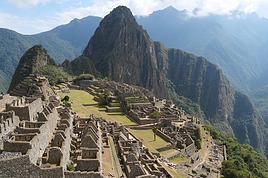
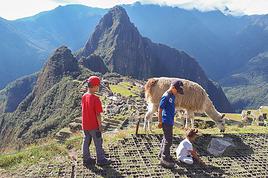
J'aimerais partir au Pérou l'été prochain (juillet ou août) et tout le monde me le déconseille. Côté sécurité, y a-t-il des problèmes particuliers en ce moment? De plus, j'ai une démarché bio où je rechigne à nous faire vacciner à droite et à gauche, je ne parle même pas des médicaments anti-malaria. J'aimerais faire la route Lima-Cuzco-Machu Pichu et peut-être finir en séjour détente plage (est-ce que ça existe au Pérou, ou bien faut-il forcément s'arrêter dans les Caraïbes si on veut éviter les pillules anti-malarias, vaccin de la typhoïde, requins etc...?). Les vaccins contre la typhoïde et hépatite A sont-ils vraiment indispensables ou bien le risque est-il vraiment faible si on fait attention à l'hygiène et l'alimentation (à 6 et 9 ans, ils n'ont plus l'âge de mettre tout à la bouche, quoique...)... Les dernières discussions sur la question date et en plus se focalisaient plutôt sur le mal des montagnes. Si vous avez des info récentes (sécurité) et fiables (réels risques pour la santé), merci beaucoup de me répondre.
J'aimerais partir au Pérou l'été prochain (juillet ou août) et tout le monde me le déconseille. Côté sécurité, y a-t-il des problèmes particuliers en ce moment? De plus, j'ai une démarché bio où je rechigne à nous faire vacciner à droite et à gauche, je ne parle même pas des médicaments anti-malaria. J'aimerais faire la route Lima-Cuzco-Machu Pichu et peut-être finir en séjour détente plage (est-ce que ça existe au Pérou, ou bien faut-il forcément s'arrêter dans les Caraïbes si on veut éviter les pillules anti-malarias, vaccin de la typhoïde, requins etc...?). Les vaccins contre la typhoïde et hépatite A sont-ils vraiment indispensables ou bien le risque est-il vraiment faible si on fait attention à l'hygiène et l'alimentation (à 6 et 9 ans, ils n'ont plus l'âge de mettre tout à la bouche, quoique...)... Les dernières discussions sur la question date et en plus se focalisaient plutôt sur le mal des montagnes. Si vous avez des info récentes (sécurité) et fiables (réels risques pour la santé), merci beaucoup de me répondre.
Fuxiabei
Vous ne pouvez JAMAIS savoir ce que les locaux mettent dans la préparation, par exemple, de jus de fruit....donc même si vous faites attention à l'alimentation, il est fort possible que les fruits et légumes soient lavés et préparés en jus avec de l'eau local !!
Quand au requins, y en a dans toutes les grandes mer, en particulier dans les caraibes :) On a vu des grands requins blancs jusqu'en gaspésie l'an dernier...:) fait de plsu en plus chaud et ils préfèrent les eaux fraiches alors...:)
quand à la pilule malaria, je ne veux pas non plus en prendre, alors je ne vais pas dans les endroits où j'y serai obligée...encore moins avec des enfants !
ha oui, j'oubliais, un copain a fait à peu près le route que vous mentionnez, avec son amie l'an dernier...:) elle s'est ramassée un soir avec une énorme tique de prise dans sa peau !! ca a été un problème de l'enlever, elle a eu peur pas mal aux maladies que cette bestiole peut transmettre...heureusement elle n'a rien eu...
mais bref tout ca pour vous dire qu'avec les choses que vous mentionner, peut-être un p'tit trip de ville serait plus indiquée :) car dans toutes les places un peu en retrait, campagne, endroit non développé, c'est certain que vous courrez plus de risque qu'au coeur de new york par exemple :)
Ne pas vouloir se faire vacciner c'est faire preuve d'un égoïsme total. En effet il est possible d'échapper à certaines maladies contagieuses sans vaccination parce que tous les autres autour de vous sont vaccinés et empêchent ainsi à la maladie de se propager. Si tout le monde adoptait votre attitude l'espérance de vie retomberait à 40 ans !
Vos enfant courront un risque énorme parce que vous ne les faites pas vacciner, pas parce qu'ils seront au Pérou
Je ne vois pas pourquoi tout le monde vous déconseille le Pérou, c'est un beau pays, pas forcément plus dangereux qu'un autre surtout si vous allez a Lima-Cuzco et machu picchu !
Pour connaitre d'éventuels problèmes il faut consulter le site du France diplomatie : http://www.diplomatie.gouv.fr/fr/conseils-aux-voyageurs/conseils-par-pays/perou-12345/
Pour la plage au Pérou il faut aller dans le nord à Mancora, sachant que pour se baigner avec des enfants ce n'est pas génial, il y a des grosses vagues et des courants assez forts, il convient donc d'être prudent ! (pas de secours...).
Les vaccins recommandé pour les zones dans lesquelles vous vous rendez sont : DTP et ROR a jour (indispensable dans n'importe quel pays), hépatites A .
En cas de long séjour ou de conditions d'hygiène précaires : fièvre typhoide, rage, hépatite B. Dans tous les cas il est recommandé de consulter un médecin spécialiste de la médecine tropical (prendre un rdv dans un hôpital).
En cas de séjour dans la jungle : fièvre jaune
Source : institut pasteur http://www.pasteur.fr/ip/easysite/pasteur/fr/sante/centre-medical/vaccinations-internationales-medecine-des-voyages/08perou
Pour évitez les traitement anti malaria et le vaccin contre la fièvre jaune, il suffit de ne pas se rendre dans la jungle.
En ce qui concerne le mal des montagne, il suffit de monter doucement (éviter de passer directement de Lima à cuzco en 1 jour par exemple !), en dessous de 4000m au Pérou, il n y a aucun problème si on monte doucement...
si je ne me trompe pas, les plages de Mancora que tu mentionnes sont dans la zone tumbes-chiclayo.
Pour mon info, pourquoi faudrait-il rester pjus d'une semaine à Tumbes?
los ninos
Les médecins recommandent rarement un traitement anti palu pour un séjour inférieur a 7 j, surtout en zone 1. Je prenais l'exemple de Tumbes car c'est un des endroits de passage des touristes ou il y a apparemment eu quelques cas de dengue et paludisme...
Je n'ai jamais entendu parler de paludisme et de dengue a mancora, mais c'est vrai qu'il y a un paquet de moustiques !!!
Pas de problème au Pérou de Tumbes à Cusco. La temprérature n 'est jamais très haute elle passe rarement à +28°.
Ne jamais boire des boissons non capsulées. Les jus de fruits qui sont un délice dans ce pays doivent être préparés devant vous et demander de ne pas ajouter d'eau, ( ils le font souvent et on ne peut pas savoir si elle a été bouillie).la cuisine est assez cuite , les legumes sont cultives sainements. Je n'ai jamais eu de gêne de moustiques. Les vaccinations à faire sont celles qu'on fait en Europe. Je n'ai pas vu de cas de Paludisme .
Le mal des montagne est plus handicapant, on en a beaucoup parlé ici.
pour résumer je te déconseillerai vivement d'aller au Pérou avec de jeunes enfants mais plutôt avec une autre personne adulte, tu ne dois pas oubliais que le Pérou "comme le disent eux mêmes les péruviens" est un pays du tiers monde avec tout ce qui va avec, pour la santé c'est une vraie catastrophe, si tu veux être soignée correctement tu dois aller en clinique et ça te coûteras les yeux de la tête car sans seguro "mutuelle" pris pour que ce que tu n'es rien de grave ou alors et si tu ne peux pas être rapatrié en urgence tu devras, enfin ta famille en France, faire un crédit pour les soins, si tu veux avoir un choque des cultures vas faire une visite des urgences dans un hôpital public à Lima par exemple. Je ne veux pas t'affoler "quoi que des fois il vaut mieux". Ah au fait dans les maladies c'est bizarre que personne ne mentionne la tuberculose et pourtant tu as beaucoup plus de chance de l'attraper qu'autre chose ou bien de te faire écraser par une voiture ou moto taxi.
Ensuite pour la sécurité, quoi dire... c'est à peu près pareil que pour la santé, l'argent domine tout ici, si tu as un problème avec un péruvien pris pour qu'il est moins d'argent que toi, car même si tu as raison la police ou le juge ira du coté du plus riche, tu auras aussi la possibilité que des drogués viennent t'agresser pour te faire comprendre les chose.
Je parle malheureusement de vécu, je n'imagine rien comme beaucoup sur ce forum.
Donc pour résumé si tu vas au Pérou tu as toutes les chances qu'il ne t'arrive rien mais dans le cas contraire cela peut très mal se passer, encore une fois le Pérou n'a rien à voire avec la France l'argent domine tout ici et la vie humaine n'a pas d'importance et ce n'est pas parce que s'il t'arrives quelque chose à toi ou à tes enfants que tu vas pleurer toutes les larmes de ton corps que la moindre personne d'un hôpital jettera les yeux sur ton cas car la première personne que tu rencontreras ce sera la sécurité qui te montrera le chemin de la caisse et ils te laisseront mourir si la personne qui va payer ton entrée ne reviens pas et avec le ticket de caisse la sécurité ouvrira enfin les porte des urgences, après ce n'est qu'un début.... au fait je n'ai aucune idée de ce qu'il peut se passer si personne est avec toi pour faire démarches c'est à dire aller à la pharmacie pour payer la moindre chose que tu nécessitera pour vivre et être soigné.
Je suis sur qu'il va y avoir des personnes qui diront que j'exagère le problème c'est que moi je vis à Lima et que je parle que de se qui m'est arrivé à moi ou à des proches à la différence des habitués de ce type de forum.
La malaria, c'est en Amazonie. Si vous restez dans les montagnes, aucun risque.
Je n'ai jamais ete malade au Perou a part peut-etre une ou deux fois une diarrhee passagere. Je mange tout le temps dans les restos locaux et meme sur les marches, y compris les salades, je bois les sirops qu'ils offrent avec le repas. Les risques dans ce domaine me semblent tres tres exageres.
NOn , non et non,
Vous racontez des choses inexactes . A Lima allez à la clinique peruano japonesa quartier Jesus Maria, très bons soins et pas chers. Si vous etes occidental avec votre assurance habituelle de santé vous etes pris en charge sur les trois mois du visa.
Si vous etes une personne serieuse personne ne viendra vous attaquer . Mois je vis entre les deux pays depuis 1999 et je n'ai jamais eu une agression.
La securité y est meilleure que dans les banlieues des grandes villes françaises
Oui allez y .Moi ca fais 5 ans que y vais a tout les ans pas plus de problème la bas que ailleure .
C' est un pays qui faut vister seul ou avec les enfants La nouriture est exellente . Eau en bouteille très bonne Les gens sont aceuillant , Bon voyage au perou
cuidate
" Vous racontez des choses inexactes . A Lima allez à la clinique peruano japonesa quartier Jesus Maria, très bons soins et pas chers. Si vous etes occidental avec votre assurance habituelle de santé vous etes pris en charge sur les trois mois du visa. "
Ce que tu écris n'a aucun rapport, toi tu parles dans le cas où tu vas voir un médecin dans un hôpital pardon clinique que tu as choisi bien tranquilement, tu peux faire les queues pour payer, moi je te parle des urgences au Pérou, trop marrant va présenter ta carte vitale aux urgences et tu verras leur réponse, tu dis que ce que je dis est inexacte, le problème c'est que l'ai vécu il y a pas très longtemps et je sais exactement comment cela fonctionne au Pérou ce que tu as l'air d'ignorer visiblement, donc tu prétends que si tu vas aux urgence d'un hôpital ils vont te recevoir et te soigner? Je pense que tu rêves et que tu donnes de mauvaises informations, juste à titre d'exemple jamais un hôpital au Pérou ne te fera le moindre soins sans payer ce soin avant à la caisse ensuite pour n'importe quel médicament ou même seringue tu devras les acheter à la pharmacie la plus proche, très souvent les pharmacie des hôpitaux n'ont pas les médicament qu'ils prescrivent donc imagines si tu es seul?
Tu sais tu devrais t'informer avant d'écrire que ce que j'écrit est inexacte.
"Si vous etes occidental avec votre assurance habituelle de santé vous etes pris en charge sur les trois mois du visa. "
oui mais ça c'est quand tu reviens en France, tu comprendras bien que ça tu en a rien faire quand tu te retrouve aux portes des urgences, qu'en penses-tu?
Donc pour résumer vas ce soir aux urgences de n'importe quel hôpital ou clinique de Lima, tu y vas avec ta carte vitale et sans argent et tu reviens pour me dire le résultat, ok? Et là tu pourras écrire que ce que je dis est faux.
"Si vous etes une personne serieuse personne ne viendra vous attaquer . Mois je vis entre les deux pays depuis 1999 et je n'ai jamais eu une agression.
La securité y est meilleure que dans les banlieues des grandes villes françaises"
Bon là sans commentaire il y aurait trop à dire...
Je vis aussi au Pérou et je dis ce que je vis là bas, oui il faut avancer les frais mais la secu en France rembourse les factures acquittées plus complémentaire si c 'est dans le cadre d'un visa de tourisme de 3 mois. Pour les urgences il faut appeler depuis l'hôpital le numero de l'assurance de la carte visa, ou de l'assurance voyage et eux règlent tout depuis la France , les soins sont faits en accord avec les médecins de l'assurance. J 'ai servi plusieurs fois d'intermédiaire entre clinique et assurances pour des jeunes français sans le sous arrivés en urgence dans des cliniques péruviennes et déjà dans un lit. Si grande difficulté, appeler le consulat de son pays à Lima, son rôle est d'aider au niveau de la gestion administrative , il n'aide pas financièrement.
Pour ma part je me suis retrouvée dans un petit hôpital vers Tingo Maria et on m'a soignée gracieusement sans me faire passer à la caisse . Si tu es étranger je t'assure que ça aide bien , on te considère beaucoup mieux qu'un péruvien (ce qui à priori n 'est pas juste pour eux). D'autre part les soins sont meilleurs dans les hôpitaux que dans les cliniques où on multiplie les examens voir soins inutiles pour faire de l'argent. Seul problème des hôpitaux c'est la vétusté et un matériel pauvre , le personnel est efficace, il faut en sortir vite pour éviter les maladies nosocomiales . J 'ai vu les chambres de GOOD HOPE San Isidro , pas terrible non plus...
Les péruviens sont assez bien soignés, je dirai que leur problème est surtout au niveau de la prévention et non des soins. Les médicaments et les soins payants ne sont pas inabordables, ils arrivent à payer les médicaments sans avoir d'assurance , le prix de journée n 'a rien à voir avec celui d'un hôpital français. Donc un français au Pérou qui ne va pas voyager s'il n'a pas d'argent, car ce serait ça irresponsable, n 'a pas à s’inquiéter.
" Pour les urgences il faut appeler depuis l'hôpital le numero de l'assurance de la carte visa, ou de l'assurance voyage et eux règlent tout depuis la France , les soins sont faits en accord avec les médecins de l'assurance. J 'ai servi plusieurs fois d'intermédiaire entre clinique et assurances pour des jeunes français sans le sous arrivés en urgence dans des cliniques péruviennes et déjà dans un lit. Si grande difficulté, appeler le consulat de son pays à Lima, son rôle est d'aider au niveau de la gestion administrative , il n'aide pas financièrement. "
C'est intéressant mais je confirme ce que j'ai déjà écrit, ils ne te font pas rentrer dans les urgences sans payer à la caisse, si tu es seul et que tu as eu un accident tu faits comment? Tu penses vraiment qu'un de la sécurité va appeler pour toi l'assurance de ta carte bleue? Ou alors attendre que le consulat ouvre ses portes pour les appeler, je suis pas sur qu'après avoir eu un accident tu es le temps de faire tout ça.
Tu sais j'ai eu cette mauvaise expérience il y pas très longtemps pour une amie et j'avoue que déjà je n'avais pas beaucoup d'affection pour les services publics du Pérou mais là j'avoue avoir été effrayé, tu dis qu'ils sont bien soigné moi franchement j'ai de gros doutes à ce sujet, ici tout dépend de son "seguro" dailleurs c'est la première chose qu'ils te demandent et pour chaque "seguro" ils ont leurs hôpitaux ou cliniques, heureusement pour les pauvres, Ollanta Humala à crée le "sis" un peu comme notre cmu, mais elle ne couvre pas tout comme le scanner par exemple qui coûte quand même au minimum 600 soles quand le salaire moyen ici est de 800 soles avec de la chance je suis pas sure que tous puissent se soigner correctement autre chose les médicament ne sont pas si peu cher que ça au Pérou, en quelques heures aux urgences cela a coûté 500 soles juste pour les médicaments et examens sanguins et à chaque fois il fallait aller à la caisse avant tout ou sortir chercher les médicament dans Lima, les hôpitaux n'ont mêmes pas les médicaments qu'ils prescrivent donc c'est à toi de te débrouiller donc je me répète on fait comment quand on est seul?
A Lima il y a une association de français qui s'appelle "Lima accueil" cherchez sur le web. Elle aide les résidents à s'adapter à la vie au Pérou. Si problème grave ils peuvent vous aider car ce sont des français résidents qui connaissent le pays. Les coordonnées de l'association apparaissent sur la page web de l'ambassade de France à lima , rubrique associations françaises et l'association est en contact étroit avec le consulat.
Merci beaucoup pour ces conseils très précis et très pratiques. En fait, je partirais là-bas avec une amie péruvienne qui a des enfants plus petits que les miens. Mais elle est de Lima, n'est jamais allée de sa vie au Machu Pichu et c'est pourquoi j'étais à la recherche d'info sur les coins - certes touristiques - mais plus retirés du Pérou, avec des climats différents. En fait, en y allant l'hiver, nous y serions très couverts, donc moins de risque de se faire piquer et peut-être des moustiques moins nombreux aussi... Nous n'irions pas du tout dans la jungle. Ce serait un petit circuit Lima - Cuzco - Machu Pichu, qui me semble largement suffisant avec 4 enfants de 4 à 9 ans. Y a-t-il des attaques de touristes dans les bus? De toute façon, pour m'être baladée seule dans pas mal de pays pauvres, je suis habituée à n'avoir aucun objet de valeur, encore moins de l'argent visible, et je ferai assez couleur locale au Pérou... C'est vrai que certains des commentaires sont effrayants... Mais bon...
Bonjour, je viens de lire votre message.Nous sommes allés au Pérou et en Bolivie 5 semaines avec nos enfants 11 et 12 ans en Juillet et aout 2011.Nous avons fait le chemin Lima Arequipa Puno Titicaca(Nous avons bu de l'eau bouillie du lac pendant 5 jours..)La Paz La route de la mort...puis nous sommes revenus à Cusco (cochon d'inde au menu, jus de fruit journalier au marché...)et avons visité tous les cites incas des environs.Puis nous avons fait un tour au canyon de Colca par nous même...Nous avons pris les mêmes cars que les péruviens donc pas touristique.Nous n'avons eu aucun problème. Nous n'étions pas plus vacciné qu'en France.Mais nous ne sommes pas allés en Amazonie.Nous avons bu de l'eau en bouteille.Nous sommes allés doucement la première semaine car effectivement le souffle nous manquait et nous avions des maux de tête(mon mari et moi!les enfants rien du tout...).Nous avons fait un voyage merveilleux car rien de fâcheux n'est arrivé.Mais comme n'importe où, nous ne sommes pas allés dans des quartiers qlauques, sortis la nuit...
C'est notre expérience et un autre voyage se prépare...toujours en famille!
PS:N'avons rencontré aucun moustique!
After scouring the forum without managing to decide, I thought I’d ask for your advice!
Before becoming a mom, we traveled for a year from Iran to Indonesia, and now my partner and I are finally ready to take our first big one-month trip with our kids.
We’d like 2 or 3 places to visit, settle in, and explore the surrounding area.
We’re looking for a destination that’s fairly easy (since our kids aren’t always easy themselves), but I’m hesitant about Thailand (which I didn’t enjoy because it felt too touristy at the time).
I was thinking about Vietnam, which I don’t know at all. Maybe Laos, but spending a few days near a nice beach would be relaxing with two little ones full of energy…
We don’t want to rush through crowded, commercial sites—we want to take our time and discover beautiful places.
We’re planning our second trip to Thailand (2 weeks on-site, late April/early May) as a family with our kids.
On our first trip, we visited Bangkok, Ayutthaya, the River Kwai, Koh Lipe, Koh Phi Phi, and Khao Lak. We especially loved Koh Phi Phi for its limestone cliffs and lush vegetation, as well as Koh Lipe for its crystal-clear waters and snorkeling.
This time, we’d like a trip more focused on nature. We don’t want to visit any cities (maybe a floating market if it’s really worth the detour).
We’re looking for:
- Spectacular jungle;
- Animals in their natural habitat;
- Beautiful hikes or boat rides;
- Paradise-like beaches;
- Turquoise water with excellent snorkeling, preferably directly from the beach (turtles, tropical fish, etc.).
We’re thinking of including Khao Sok, but we’re unsure which islands to combine with this park.
Do you have any suggestions for 2-week itineraries with reasonable travel times? We’re prioritizing landscapes, nature, and the sea above all else.
Hi there,
I’m heading to Oman this coming October with my 13-year-old son for 11 days. My plan is to rent a car, probably a 4x4, to reach villages in the mountains, among other places. We’ll be sleeping in a tent the whole trip.
Since it’s a short stay, we’ll stick to the eastern part of the country, from Muscat to Duqm, most likely.
Any recommendations?! Things to know, like where to exchange money without high fees, a reliable car rental agency, road safety tips, wildlife like snakes, and anything else... I’ve done a lot of research already, but any suggestions would be super helpful!!
Thanks in advance,
Happy travels to everyone,
Céline
I’ve read the forum a lot and found a wealth of information. I’ve tried to compile all of it into our itinerary and would love your feedback to finalize the bookings (we’re planning this *very* last-minute).
Here’s what we’re thinking of doing:
22 July: arrival in Johannesburg
Night of 22–23: Johannesburg
Nights of 23–26: Marloth Park (with Kruger visits on the 24th, 25th, and a crossing visit on the 26th)
Nights of 26–28: Graskop (visiting the canyon and Panorama Road on the 27th and 28th)
Nights of 28–30: Hoedspruit (visiting the central area of Kruger on the 29th?)
Nights of 30 July–1 August: Balule Park (private reserve with safari)
Nights of 1–5 August: flight from Hoedspruit to Cape Town, then 2 days in Cape Town, 1 day on the peninsula, and 2 days for wine (just the route) or something else based on your advice (we don’t know where to stay—whether to stay all 5 nights in Cape Town and where in the city, or do 2 nights in Cape Town and 3 nights nearby—but where?)
Night of 5–6 August: Kelders for penguins and whales
Nights of 6–8 August: Tsitsikamma (what is there to do/see?)
Nights of 8–10 August: Addo Park on the 9th
10 August: flight from Port Elizabeth to Johannesburg and back home
What do you think?
Is there a lot of driving time?
We’d really appreciate your comments and suggestions.
Thanks!
I’d love some advice on choosing a Christmas destination for a trip with my partner and our two kids, aged 10 and 12.
We’re looking for a place where we can enjoy great, easy snorkeling with the kids—ideally from the beach or in shallow water.
And if possible, a beautiful spot to explore, with nature, hikes, and a more laid-back, backpacker-friendly vibe than big resorts or mass tourism.
A "reasonable" flight time and not too much jet lag would be ideal!
I’ve been considering Mauritius, Zanzibar (plus possibly Tanzania), Martinique, or Guadeloupe—but maybe you have other suggestions or thoughts on these options?
I wanted to share our experience after a 5-day trip to Armenia with my wife and our 8-month-old baby.
It’s a destination that’s still relatively unknown, but it’s really worth the trip, especially if you enjoy cultural, spiritual, historical, and human-centered travel.
We were looking for a change of scenery but not too complicated with a baby—and easy to organize (even though our travel agency helped us a lot, thanks to them! 😊). In the end, Armenia was a wonderful surprise. It’s not a "postcard-perfect" destination. It’s a raw, mountainous, ancient country with real depth.
And most importantly: Armenians *love* children.
That’s probably what surprised us the most. In restaurants, waitresses, owners, or even other customers would naturally come over to play with our baby, hold them for a few minutes, smile at them, or keep them entertained while we ate.
It wasn’t intrusive. It was very natural, very family-oriented. You can tell that children have a real place in society. For parents traveling with a baby, it’s honestly a pleasure.
Day 1 — Yerevan
We started with Yerevan, a pleasant capital that’s quite easy to explore with a child.
The city isn’t huge. You can stroll around Republic Square, visit cafés, discover markets, and walk at a relaxed pace.
With a baby, it’s pretty practical: you can easily take breaks, return to the hotel, or go back out in the evening. The vibe is laid-back, family-friendly, and we felt safe.
In the evening, Yerevan is very lively. The restaurants are welcoming, and almost everywhere, our baby drew smiles.
Day 2 — Etchmiadzin and Khor Virap
On the second day, we headed to Etchmiadzin, the spiritual heart of Armenia. It’s an important place for understanding the country and its Christian identity.
Then, we visited Khor Virap, facing Mount Ararat.
It’s probably one of the most striking places on the trip. The monastery, the plain, the distant Ararat—everything is visually and symbolically powerful.
With a baby, you just need to plan a relaxed pace, avoid rushing, and take your time.
Day 3 — Garni and Geghard
The third day was one of our favorites.
We visited the Temple of Garni, very different from the monasteries, with a stunning setting in the mountains.
Then we went to Geghard, a monastery partially carved into the rock.
The atmosphere is incredible. It’s quiet, mineral, almost timeless. Even if you’re not very religious, you feel something.
With a child, the visit goes well, but again, it’s best not to overload the day. The key is to keep a flexible pace.
Day 4 — Noravank
On the fourth day, we headed to Noravank.
The road itself is an experience: dry landscapes, mountains, red rocks, valleys. The monastery is surrounded by impressive cliffs.
It’s one of the most beautiful sites we saw in Armenia.
You really get the sense that Armenian monasteries were built in impossible places—between sky, stone, and mountain.
Along the way, you can also pass through the Areni region, known for its wine. With a baby, we mostly prioritized simple breaks, relaxed meals, and uncompressed travel times.
Day 5 — Lake Sevan and return to Yerevan
For the last day, we went to Lake Sevan.
The lake is vast, bright, and surrounded by mountains. The Sevanavank Monastery, up high, offers a beautiful view.
It’s a gentler stop, perfect for ending the trip.
Then we returned to Yerevan for a final dinner. Once again, the welcome in restaurants stood out. In Armenia, traveling with a baby isn’t seen as a hassle. On the contrary, people spontaneously come up to the child.
Our overall impression
In 5 days, you obviously don’t see all of Armenia. To reach Tatev, Dilijan, Haghpat, or Sanahin, you’d need more like 7 to 10 days.
But for a first visit, 5 days are enough to feel the essence: Yerevan, the major monasteries, Mount Ararat, the landscapes, the Christian history, and the Armenian hospitality.
What we loved most:
- the kindness of people toward our baby;
- the very family-friendly atmosphere;
- the monasteries in incredible landscapes;
- the view of Mount Ararat from Khor Virap;
- the atmosphere of Geghard;
- the cliffs of Noravank;
- the food;
- the feeling of safety;
- the fact that the country is still relatively untouched by mass tourism.
What to know when traveling with a baby:
- distances can be longer than expected;
- some roads are mountainous;
- avoid overloading the day;
- it’s better to have a driver or a car;
- plan for breaks, water, diapers, baby meals;
- a stroller isn’t always practical on ancient sites;
- a baby carrier can be very useful.
Recommended 5-day itinerary
For a first trip, I’d suggest:
Day 1: Yerevan
Day 2: Etchmiadzin + Khor Virap
Day 3: Garni + Geghard
Day 4: Noravank + Areni
Day 5: Sevan + return to Yerevan
It’s balanced, not too tiring, and gives a great first impression of the country.
Conclusion
Armenia is a wonderful destination with a baby, as long as you travel slowly and don’t try to see everything.
What touched us most, beyond the landscapes and monasteries, was the attitude toward children. There, you feel that babies are welcomed with real tenderness. In restaurants, people naturally helped us, played with our child, and gave us a few minutes to breathe.
That’s rare, and it makes a big difference in the travel experience.
Armenia isn’t a destination you consume quickly.
It’s a country that you *feel*.
For those who love cultural, spiritual, historical, family, and human-centered travel, I highly recommend it.
Hi everyone,
We're heading to Colombia soon for two weeks as a family with our two 10-year-old boys. I'm a bit behind on planning our itinerary and could really use your advice!
We arrive in Cartagena, where we'll spend 3 nights.
Next, we're heading to the Tayrona area for 3 nights. Could you recommend a nice hotel with a pool, ideally family-friendly? Unfortunately, Senda Watapuy and Senda Koguiwa are already fully booked for our dates.
After that, we were thinking of spending a few days in Minca. Is that a good idea in late July/early August? How many nights would you recommend?
Finally, we're looking for a last stop before returning to France. We've heard about Mompox, but we're hesitant because it seems like a big detour. We love nature, animals, beautiful landscapes, beaches, and authentic places. Do you think Mompox is worth the detour with two kids, or would you recommend another destination (Palomino, Barú, La Guajira...) instead?
We don’t want to take any domestic flights.
Thanks in advance for all your tips and experiences!
This summer, we’ve decided to do a 3-week road trip starting from Nice and heading down to Ksamil in Albania.
We’re leaving from Nice, and our route is already pretty much set:
Nice - Verona (Italy) - Rijeka (Croatia) - Zadar - Split - Budva (Montenegro) - Shkodër (Albania) - Ksamil, then back through Italy via Bari.
The itinerary is packed! 🙂
Do you have any suggestions for things to see—visits, beaches, viewpoints, villages, or excursions—to make the most of our journey?
Hi there, we're planning our vacation in Indonesia. We're a family with two kids aged 11 and 14. We leave on July 26th and return on August 17th, 2026.
We initially planned to visit Bali, Komodo, and Flores, but after looking into it more, we came across Sumatra, which is less touristy... a real plus for us. However, skipping Bali might be a shame.
I was wondering if spending 12 days in Sumatra and finishing with about 7 days in Bali is a doable plan.
Hi,
I’m traveling with my 5-year-old son this summer to Northern Thailand, Northern Vietnam, Yunnan, and Indonesia. I plan to equip him with a GPS tracker, but the SIM cards come with a contract. Do you know what the options are in Asia?
Thanks,
Nora
Hi there,
We’d like to spend 2 days in Lyon in May with our 8- and 12-year-old kids, exploring the city on foot.
We’ll arrive on day 1 around 11 AM and leave on day 2 around 6 PM.
I’ve mapped out two routes and was wondering if they’re doable in our 2 days, and if you have any tips or info on visit prices.
We’re not sure where to stay yet, but we’d like to optimize by booking accommodation (hotel or Airbnb) between the two routes, maybe?
Hi there!
I’m planning a trip with my wife and our three kids (ages 9, 6, and 3) from April 16 to May 6.
I’ve started sketching out the itinerary, trying to alternate between visits, hikes, safaris, and downtime. I want to keep the pace relaxed given the kids’ ages.
Could you let me know what you think of this route? I removed Nuwara Eliya, which I had originally planned before Ella, to cut down on stops. I was also wondering if I should break up the Arugam Bay to Colombo leg with an overnight in Galle, since it’s a long drive.
Thanks in advance for your feedback!
Day 1 – 04/16: Wilpattu
Arrival at the airport (08:00) + transfer to Wilpattu (180 km, 4–5 h) + afternoon safari
Overnight: Wilpattu
Day 2 – 04/17: Wilpattu
Morning & afternoon safari
Overnight: Wilpattu
Day 3 – 04/18: Trincomalee
Transfer Wilpattu → Trincomalee (200 km, 4–5 h) + beach relaxation
Overnight: Trincomalee
Day 4 – 04/19: Trincomalee
Nilaveli Beach
Overnight: Trincomalee
Day 5 – 04/20: Trincomalee
Pigeon Island snorkeling
Overnight: Trincomalee
Day 6 – 04/21: Trincomalee
Fort Frederick & relaxation
Overnight: Trincomalee
Day 7 – 04/22: Sigiriya
Transfer Trincomalee → Sigiriya (120 km, ~3 h) + visit to Dambulla
Overnight: Sigiriya
Day 8 – 04/23: Sigiriya
Sigiriya Rock
Overnight: Sigiriya
Day 9 – 04/24: Sigiriya
Minneriya safari
Overnight: Sigiriya
Day 10 – 04/25: Sigiriya
Polonnaruwa & village tour
Overnight: Sigiriya
Day 11 – 04/26: Ella
Transfer Sigiriya → Ella (230 km, 5–6 h) + rest
Overnight: Ella
Day 12 – 04/27: Ella
Little Adam’s Peak & Nine Arches Bridge
Overnight: Ella
Day 13 – 04/28: Ella
Ella Rock
Overnight: Ella
Day 14 – 04/29: Ella
Tea Factory & relaxation
Overnight: Ella
Day 15 – 04/30: Yala
Transfer Ella → Yala (110 km, 2–3 h) + afternoon safari
Overnight: Yala
Day 16 – 05/01: Arugam Bay
Transfer Yala → Arugam Bay (80 km, 2.5–3 h) + beach time
Overnight: Arugam Bay
Day 17 – 05/02: Arugam Bay
Surfing & relaxation
Overnight: Arugam Bay
Day 18 – 05/03: Arugam Bay
Local exploration
Overnight: Arugam Bay
Day 19 – 05/04: Colombo
Transfer Arugam Bay → Colombo (320 km, 7–8 h) + rest
Overnight: Colombo
Day 20 – 05/05: Colombo
City tour & shopping
Overnight: Colombo
Day 21 – 05/06: Colombo
Morning return flight from Colombo
We’re heading to Sri Lanka for three weeks in July with two kids (ages 6 and 13).
We’ve drafted a rough itinerary but would love to hear from those who’ve already been there 😊
Of course, we want to see everything, but we have to make choices—even though three weeks on the ground lets us do quite a bit.
We originally planned a schedule that felt too packed, so we had to cut one stop. We decided to skip Tangalle, even though we were really tempted. The monsoon won’t let us swim there, and the weather in the south is too uncertain, so we preferred to keep our stops on the east coast. Plus, we don’t think it’s reasonable to cut nights from other places.
We’ve added a stop in Batticaloa, which we think will be a nice break between Arugam Bay and Sigiriya. What do you think?
We’re also debating between Batticaloa and Passikudah.
Does the itinerary seem logical to you?
Here it is:
Sri Lanka Itinerary
Day 1
Arrival around 1 PM at the airport
Night in Negombo
Day 2
Drive from Negombo to Galle
Visit Galle and surrounding areas
Night in Galle
Day 3
Visit Galle and surrounding areas
Night in Galle
Day 4
Visit Galle and surrounding areas
Drive from Galle to Udawalawe
Night in Udawalawe
Day 5
Visit Udawalawe National Park
Night in Udawalawe
Day 6
Drive from Udawalawe to Ella
Night in Ella
Day 7
Ella Rock
+ Nine Arch Bridge
Night in Ella
Day 8
Visit Haputale
Lipton’s Seat and Dambatenne Tea Factory
Train ride back from Haputale to Ella
Night in Ella
Day 9
Little Adam’s Peak
+ drive from Ella to Arugam Bay
Night in Arugam Bay
Day 10
Visit Arugam Bay and surrounding areas
Night in Arugam Bay
Day 11
Visit Arugam Bay and surrounding areas
Night in Arugam Bay
Day 12
Drive from Arugam Bay to Batticaloa
Night in Batticaloa
Day 13
Visit Batticaloa
Night in Batticaloa
Day 14
Drive from Batticaloa to Sigiriya
Night in Sigiriya
Day 15
Lion Rock and Pidurangala
Night in Sigiriya
Day 16
Visit Dambulla
Drive from Sigiriya to Trincomalee
Night in Trincomalee
Day 17
Visit Trincomalee and surrounding areas
Night in Trincomalee
Day 18
Visit Trincomalee and surrounding areas
Night in Trincomalee
Day 19
Drive from Trincomalee to Anuradhapura
Night in Anuradhapura
Day 20
Visit Anuradhapura
Night in Anuradhapura
Day 21
Visit Mihintale
Drive from Anuradhapura to Negombo
Night in Negombo
Day 22
Day in Negombo and return flight
We’d love to hear your thoughts and tips! Thanks in advance!
We’re planning a 4-month trip in spring 2027. We’re looking for a third destination that optimizes transport costs. Ideally, somewhere very different from the other two (Polynesia and Indonesia). Thanks
Hi everyone!
We’re so excited to be heading to Italy for the first time this April with our two kids for a week. We’ve booked our round-trip flight, and we’ll be arriving and departing from Pisa.
Our rough plan so far includes visiting Pisa, taking the train to Florence, and exploring the Cinque Terre. Last night, a friend also suggested adding Siena to the list.
Our kids are 12 and 9 and are used to walking, but we’re not looking to rush around too much. We’d love any advice, especially about accommodation. Should we stay in Pisa and take day trips by train, or split our nights between a couple of different places?
We’re just starting our research, so any tips would be amazing! 😉
Thanks in advance!
Hi everyone.
A few days ago, I asked my 14-year-old son to pick a destination for a trip, and he chose Germany. So, we’re heading to Berlin for four days in February. The catch is that I don’t know this city (or this country) at all—I hadn’t even considered visiting just a month ago .
Could you please share some suggestions to make this first mother-son trip abroad a success? 🙂
Thanks for your tips and great deals.
Nanyne
Next summer, we (2 adults and a 12-year-old child) have decided to visit Japan.
Admittedly, it’s still early to plan everything, but my wife will soon need to request her vacation time—either in August or July... and we’re hesitating.
I know summer isn’t the ideal time to visit Japan, but we don’t really have a choice... It’s either July or August. On one hand, I’d love to experience the O-Bon festivities from August 14th to 16th, and I’ve drafted an initial itinerary that would let us experience the Gujo Hachiman Bon Odori, possibly visit the Okunoin Cemetery in Koyasan, and be in Kyoto on the 16th for the Gozan Okuribi fires. But on the other hand, I’m worried it’ll be *packed*, especially in Kyoto, and less enjoyable than in July. So, have any of you experienced these celebrations? Are they worth it? Too crowded? Do you know of other celebrations or festivals in July?
Thanks for your input!
I’m reaching out because I’ve already read tons of info from other forums (thanks a million, by the way!) and blogs, but now I’m overwhelmed with details and have so many questions. I’m really hoping you can help us figure this out! Here’s the plan:
We’re leaving France for Senegal in our camper van (with two kids, aged 4 and 7), then shipping the van to South Africa before heading to Namibia. We’re planning to leave this summer and should arrive in South Africa in early September. The goal is to reach Réunion by early December, which gives us 3 months to explore Southern Africa. Originally, we wanted to pick up the van in Cape Town, head up to Namibia, and visit the main parks and iconic spots, then go north to Botswana (Etosha Park) and Zimbabwe (Victoria Falls) before heading back down to South Africa to enjoy the milder temperatures while exploring the country. But now we’re wondering how to get back to South Africa. We’ve come up with three options:
- Head back down through Botswana: I’ve read everywhere that Botswana isn’t recommended for kids under 6 (most parks) because it can be potentially dangerous—few enclosures for animals (even though we have a camper van with "secure" beds), and the agencies we’ve contacted don’t recommend it. Plus, southern Botswana is tough to navigate in a camper van.
- Return from central Botswana (Maun) to Windhoek and drive back to Cape Town via Namibia.
- Cross Zimbabwe and potentially Mozambique to head down to Kruger Park and Johannesburg.
Anyone familiar with this region have any recommendations?
Also, is it necessary to book accommodations in advance? Is that only required in certain countries (maybe Botswana/Zimbabwe)? We’d like a mix of camping and lodges.
Hi there,
We’re planning a two-week trip to Colombia with our two kids at the end of July – early August, with a round-trip flight to Cartagena.
What itinerary would you recommend, knowing we’d prefer to avoid domestic flights?
We were thinking of Cartagena, Tayrona Park, Mompox, and maybe an island.
Do you think it’s a shame to skip big cities like Bogotá or Medellín?
Thanks so much in advance for your help!
Good morning! We're heading to Cape Verde for 2 weeks at the end of April—São Vicente, Boa Vista, and Santiago. We’re a family of 5: 3 kids (4, 6, and 12) and 2 adults.
My questions revolve around beaches (a spot with interesting snorkeling and safe swimming for the kids), accommodation (kid-friendly, parks nearby, pool, beach, or nature—more like guesthouses or family-run pensions), hikes (accessible for kids), and whether renting a car makes sense depending on the island, even though local buses are an adventure in themselves.
**Santiago:**
- Beach & snorkeling: Tarrafal, Quebra Canela in Praia, Ribeira da Barca (okay for kids?), Águas Belas?
- Any nice places to stay?
- Hikes: Malagueta?, Baobab Boa Entrada, Pico António (accessible? elevation gain, time to climb, difficulty, interest for kids?)
**Boa Vista:**
- Beach + snorkeling: Santa Mónica, Praia de Chaves, Gatas, ... Estoril Beach in Sal Rei maybe?
- Can we swim at Turtle Bay to see the turtles even though it’s not nesting season?
- Any nice places to stay?
- Hikes: Viana Desert? Can we explore it solo by renting a 4x4 and easily find the points of interest?
- Is it worth renting a 4x4 for our stay in Boa Vista?
**São Vicente:**
- Beach + snorkeling: Laginha, Porto Grande, Praia Grande, Baía das Gatas, São Pedro...? (safe, good snorkeling?)
- Any nice places to stay?
- Hikes: cliffs?, Monte Verde?
Thanks for your feedback, great tips—especially for accommodation where we’re totally in the dark! And your thoughts on whether renting a car is a good idea and which beaches are safest for kids.
Hi,
We’d like to visit the Alpes de Haute-Provence for 2 weeks with our 2 (adult) kids.
Any ideas for things to see and do?
Where should we choose our accommodation (house only) to be centrally located for sightseeing? We’re looking for villages with restaurants and bakeries.
Thanks in advance for your tips!
Best regards
Hi there, we’re heading to Tuscany in the second half of August with two kids (8 and 6 years old).
We’ve zeroed in on the area around Siena and Florence for now.
I’m looking for recommendations on places to stay and things to see that are great for families.
Also, just to add, we’ll be traveling by train and plan to rent a car once we’re there—any tips on car rental companies?
Hello everyone,
We’ve decided to head to Quebec next year—it’s been a dream for the whole family (after watching so many travel shows and the like...). There’ll be five of us: 2 adults, 2 teens (16 and 13), and a child (8 years old). We’re all pretty good walkers, though maybe the teens a little less so—it’s just that age, you know? 😊 That said, they’ve got no problem doing 15 km hikes, just not every single day.
We’re planning to go from July 23 to August 14, arriving and departing from Montreal, so almost 3 weeks.
I’ve started looking into logistics and accommodation prices, but before I dive into bookings, I’d love some advice on the itinerary. I’ve read a few threads here and there.
Our idea is to visit between 3 and 5 different places over the 3 weeks, so that means the same number of accommodations. The goal is to optimize travel as much as possible—I’ve realized that getting around can take a long time.
I think the first two days will be in Montreal to adjust to the time difference, and the last two in Quebec City, though that’s not set in stone.
Anyway, I’m not really sure about the route. I’ve got time to plan everything, but I know the longer we wait, the more expensive and scarce accommodations will get.
Same goes for budget—we’ve set aside a mid-range budget, flights included: 3k per person (1k for the flight). So if you’ve got any great tips or advice, we’re all ears!
I was thinking of going up the St. Lawrence River, but I’m not sure how long that takes or where to stop. Maybe there are other places worth visiting farther away...
Anyway, thanks for reading this far! If you’ve got any questions, don’t hesitate.
I hope you're starting this new year with your head full of travel memories or plans!!
I’d love to spend a week in July on a Greek island with my 8-year-old son. I’m totally in love with Amorgos, but not all the beaches are accessible for him. I’ve been to Santorini and Naxos before and don’t want to go back. Would you have an island to recommend that’s not too crowded 😕, with a few accessible beaches and where we won’t have to fight to get around or park?
A few months ago, I posted a message in the Southern Africa section about a family trip in July/August. In the end, since I had too much trouble deciding on the destination and procrastinated too much with the planning 😎, I changed my mind and we’re going for a completely different trip—to Madagascar, a country we already know a bit since we’ve traveled there several times for 4 to 6 months each time, though our last visit was back in 2012!
The tickets are booked: 19 days on the ground (excluding arrival and departure days in Tana), spanning July and August.
We’re not looking to rack up landscapes (and kilometers). The kids really want to see lots of animals, while we mostly want to show them what daily life is like in Malagasy villages. So ideally, we’d like a trip split into two parts:
- For 8/10 days, a hiking portion. The idea isn’t to do a tough trek in very remote areas but rather to walk from one village to another. Let’s say 3-4 hours a day. And when we arrive in each village, we’d have time to explore a bit, chat with the locals, let our kids play with the village children, etc. Stay with locals when possible. Move to a new village every day or every 2-3 days.
- A few days visiting 1 or 2 national parks (with lemurs if possible to keep everyone happy!)
- With the inevitable travel days, we’ll quickly hit 19 days.
Does this kind of trip sound doable (and fun) to you? Do you know of any villages that would fit our hiking plans?
I don’t have a preferred region yet, except that very dry landscapes appeal to me less. My real love from past trips was the highlands and their bright green rice paddies against red earth, but I’m a bit worried about the cold at this time of year.
After my initial research (thanks to this forum), I get the impression that the Ambalavao/Ambohimahamasina area might meet our criteria. I saw there are "accueil paysan" (farm stays) in that area, which could match what we’re looking for and would let us visit Andringitra National Park and Ranomafana on the way there or back.
But I’m open to all your more original ideas!
For logistical questions (transport, guides, accommodations, etc.), I’ll tackle those later—it’ll depend on the area we choose.
We’re a family with young kids (6 years old, 3 years old, and a newborn) and we’d like to spend about ten days in Aquitaine (in Gironde or Les Landes).
We’d love to be near pretty villages to visit and, if possible, close to the sea.
We’re planning to stay at a campsite with a pool so the kids can play.
Could you recommend any places/villages/campsites for us?
We don’t know the region at all.
We’re a family of five (our kids are 6, 15, and 19) and we’d love to go somewhere warm with our feet in the water during the first two weeks of August 2026. We’d also like to do some cultural visits and a bit of hiking. We were thinking of Guadeloupe—I know it’s not the ideal time of year, but we don’t have much flexibility. Is it really a bad idea, or can we still enjoy it despite the weather?
Another option for us would be Madeira, which seems more reliable weather-wise, but it sounds like the beaches are less accessible and not as nice.
We haven’t really looked elsewhere because everything else (except the Canary Islands, Balearics, or Corsica) seems way too expensive. But if you’ve got any recommendations, don’t hesitate—we’re just starting to look into it.
Hi,
This summer, we’re spending a month in Malaysia. There are 3 adults and two kids in our group. I’ve just finished planning our itinerary and I’d love to get your thoughts on whether it feels "coherent."
Thanks in advance for your feedback!
Christelle
07/07 Depart France 10:30 AM
08/07 Arrive KL 7:50 PM
09/07 KL
10/07 KL / Batu Caves
11/07 KL
12/07 KL → Kuching (flight)
13/07 Kuching
14/07 Bako National Park
15/07 Bako → Kuching
16/07 Semenggoh Reserve
17/07 Kuching → Mulu (flight)
18/07 Mulu National Park
19/07 Mulu → Kota Kinabalu (flight)
20/07 Kota Kinabalu → Sandakan (flight)
21/07 Kinabatangan
22/07 Kinabatangan → Sandakan / Sandakan → KL (flight)
23/07 Malacca
24/07 Malacca → Chin Swee Caves Temple
25/07 Chin Swee Caves Temple → Kuala Tahan / Taman Negara Park
26/07 Taman Negara Park
27/07 Kuala Tahan → Kuala Besut
28/07 Perhentian Islands
29/07 Perhentian Islands
30/07 Perhentian Islands
31/07 Perhentian → George Town
01/08 George Town / Penang
02/08 George Town / Penang
03/08 Ipoh
04/08 Cameron Highlands
05/08 Return to KL
06/08 Return to France
Hi everyone,
I’m planning a 3-week trip to Malaysia this July with my 6-year-old son.
I’d thought we’d go this year, but we ended up returning to Samui instead.
I’ve decided to limit it to 4 stops to avoid moving around too often and to fully enjoy each place without rushing. The travel times between each spot aren’t too long, except for the one between Sandakan and Langkawi.
* 05: Arrival in KL in the afternoon.
06: Day in KL. I’ve been there a few times and know the city a bit.
* 07: Head to Kota Kinabalu
08 – 09: In KK
* 10: Flight from Sandakan to Sepilok
11: In Sepilok
* 12: Flight to Kinabatangan
13 – 14: In Kinabatangan
* 15: Head to Langkawi
15 – 21: In Langkawi
* 22: Return to KL
23 – 24: In KL
* 25: Return flight
Any thoughts on this itinerary? I have a rough idea of what we’ll do at each stop after checking online and with ChatGPT.
We’re heading out at the end of February for a road trip with our two kids, ages 3 and 7. Our itinerary includes Ait Ben Haddou, Tizi-n-Tichka, Sourate, Tinghir, Zagora, Ouarzazate, Ouzoud, and Essaouira. I’d love recommendations for accommodations, restaurants, and typical/spectacular spots to visit. We’d like to spend a night in the Zagora desert. We’re looking for authenticity and a friendly vibe—not tourist traps—for our trip. We’ll be there during Ramadan—any tips?
Thanks in advance!
Your fellow globetrotter’s perspective is invaluable.