Practical aspects spring 2026: border to Murmansk, to Pskov, SIM cards, internet.
FR

Translated into English.

Original post
ES
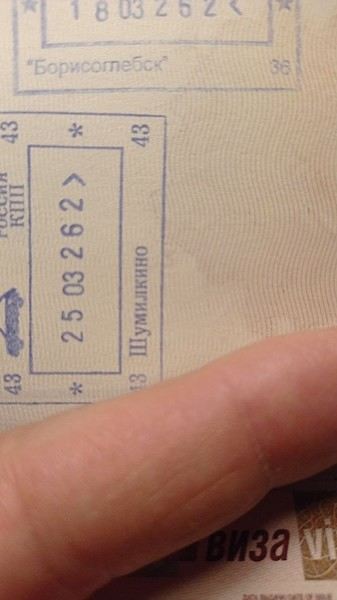
I took a few days to get some fresh air outside the Schengen-NATO prison. Between March 18, 2026, and March 25, 2026, as shown by the passport stamps:


Borisoglebsk is the Russian border checkpoint after Kirkenes, on the road to Murmansk.

Kirkenes is a tiny town with a correspondingly small airport. Nothing has changed there: the minibuses to Murmansk wait on the right as you exit the airport. They’re synchronized with the two daily flights from Oslo—the SAS around 11:00 AM and Norwegian around 11:30 AM. They stop in Kirkenes at the corner of the Scandic for an hour, where other passengers can board, then head straight to the nearby border.

This is the least hassle Frontex/Schengen border. The Norwegian agent quickly scans your passport, and that’s it. No customs, since Norway is Schengen but not in the EU. On the Russian side, there’s a passport check and a quick customs inspection. All in all, crossing both the Norwegian and Russian checkpoints takes about 15 minutes.

A paper visa is required; e-visas aren’t accepted.

Two companies run the route: Avto Ekspress and Borodin: https://ae51.ru/routes/kirkenes-murmansk/ https://borodinbus.com/

The one-way fare is 5,500 ₽. You can either buy it online in rubles with a MIR card or make a formal reservation and pay in NOK cash to the driver. I took Borodin, and the price in NOK was much more expensive than in ₽.

=========================

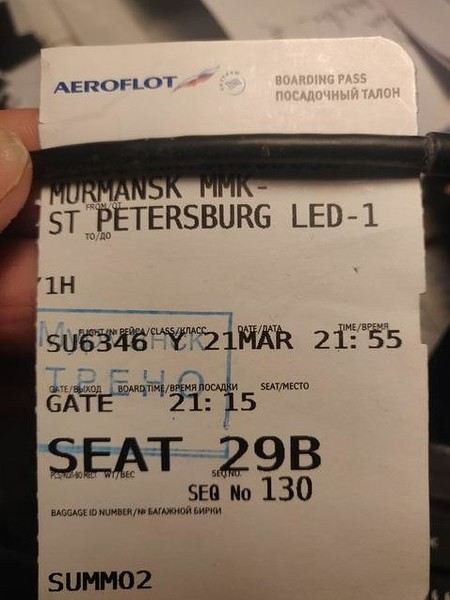
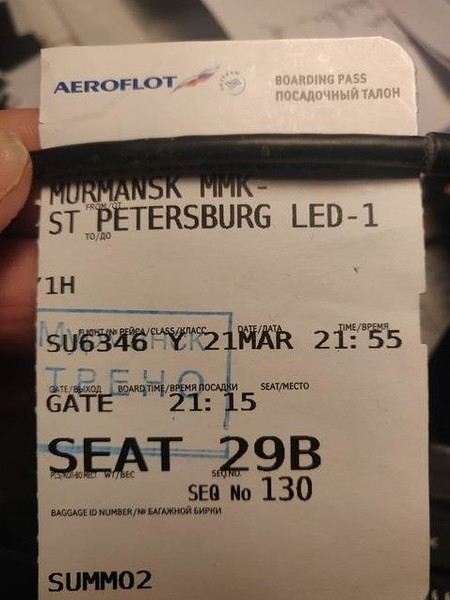
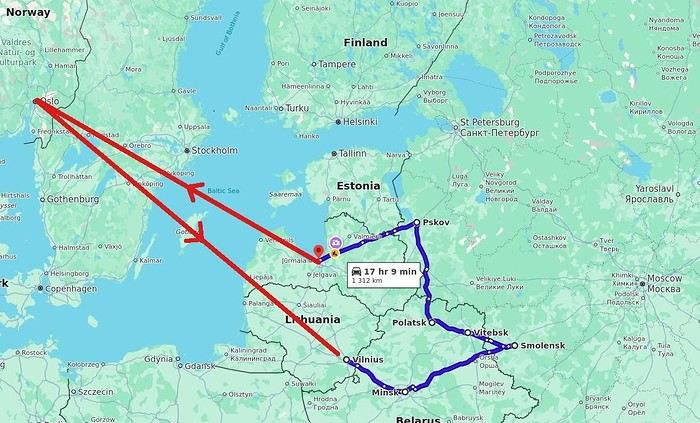
On March 25, I left from Pskov via the Estonian border post at Luhaama. I spent three days in Murmansk, flew to St. Petersburg (SPB), stayed there for two days, then took an evening train to Pskov.

Since the end of February—and reportedly until the end of May—the Estonians have restricted the opening hours of the two border crossings near Pskov: Koidula (Pechory on the Russian side) and Luhaama (Izborsk on the Russian side). They’re closed at night between 7:00 PM and 7:00 AM. Right now, there’s a bus from Pskov at 7:00 AM to the border. It drops you off at the end of the road where truckers—many Kazakh and Serbian—are parked on the side. You finish the rest on foot to the barrier, where there’s a quick initial check for Ukrainian stamps in passports. Then you walk to the customs building, followed by passport control at the kiosk for motorists. After that, it’s a 500-meter walk to the Estonian checkpoint. At the moment, things seem calmer. Passport control is quick. The usual silly questions in English: "Where were you? Where are you going?" I just gave my most clueless smile: "Sorry, I don’t understand." Yeah, right—I don’t speak English, especially not at an Estonian border with a French passport. If they’re in a mood, though... A very quick bag inspection. Once you exit the Estonian post, walk to the bus stop sign by the road where another coach takes you to Riga.

The catch: in my case, last Wednesday, there were two passengers (Russians) with old Ukrainian stamps in their passports. The bus from the Estonian post to Riga was supposed to leave around 9:30 AM. We ended up leaving around noon after the two were grilled by the FSB. Since it was a weekday outside of holidays, the bus was half-empty. The fuller the bus and the more people with Ukrainian stamps, the worse the nightmare. Don’t book a same-day flight from Riga. I had a flight at 6:00 PM, so it worked out.

=============

The Kirkenes-Murmansk route is still clearly the easiest and fastest. But it’s not the most convenient since it’s way up north.

Next, I’d say the Gdansk-Kaliningrad route in the middle of the week. Avoid weekends and holiday departures/returns.

Avoid the Narva-Ivangorod route during Christmas, Easter, May 9, and *all* summer.

==============

About flights from Murmansk to St. Petersburg: prices are good. I bought my ticket the day before departure on Rossiya for 7,500 ₽, including 10 kg of luggage + a handbag.


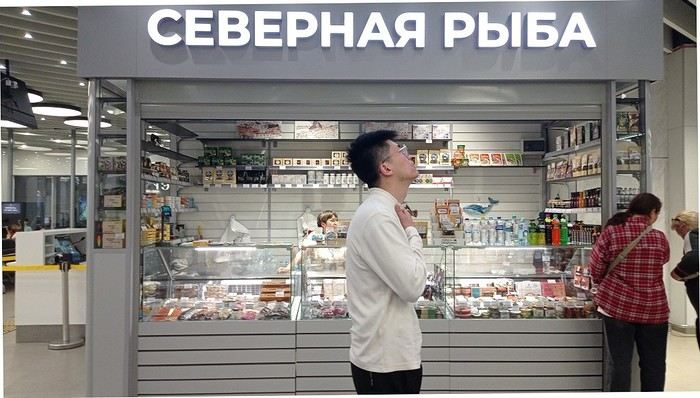
It’s the tail end of the northern lights season, and there were still crowds of Chinese tourists.


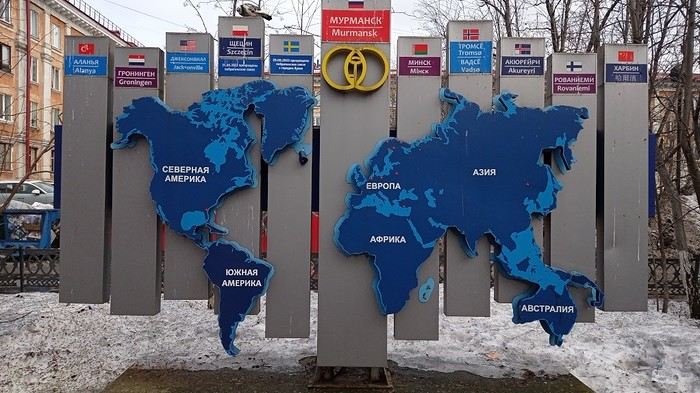
By the way, Murmansk is twinned with Harbin:


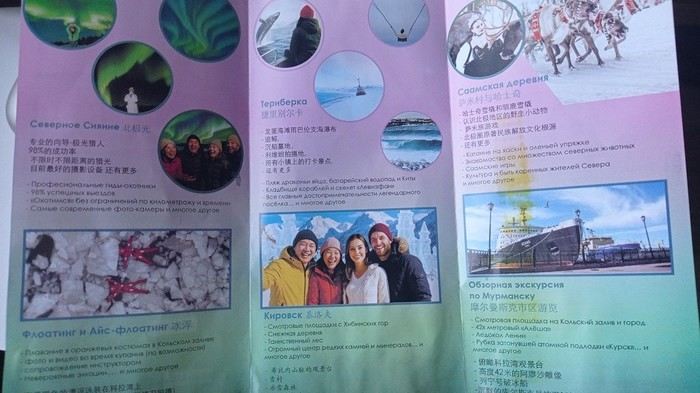
Chinese tourists are the largest foreign group, followed by Indians, then a mix of others from the Far East, Turks, Arabs, etc. Brochures are bilingual—Russian and Chinese:


============================

But let’s talk practical stuff. --

My domestic SIM card was restricted for SMS and internet for 24 hours. After that, if you want to keep using SMS, don’t turn off your phone—restarting triggers another 24-hour purgatory.

My Russian SIM cards (Megafon, MTS, Beeline) were activated as soon as I logged into their respective apps with my credentials.

Internet --

Telegram is heavily slowed down by authorities. To use it, you need to connect through proxy servers, which you load into the latest version of the app. Traffic is then rerouted internally within Telegram to servers outside Russia (Germany, Poland, Sweden, etc.). You can find these proxies on various channels. One is ChatVPN—check their website too.

For general internet use, like browsing the web, VPNs that work right now use the VLESS protocol. You can find several on Telegram by searching "VPN." A few free days, then payment in rubles or crypto.

Rozkomnadzor’s team are experts at this, so things can change. It’s a constant cat-and-mouse game.

Pskov is a special case. The city is near Estonia and has a large military base. Depending on NATO drone swarms launched from the Baltics, Wi-Fi can be completely suspended except for the most essential mobile apps. The drone swarms use the 4G network, and the powerful electronic jamming and drone suppression systems cause periods without Wi-Fi—including in hotels. Wired connections aren’t affected.
CH Chalembert Regular ·
Hey, Just a quick question—did you manage to "escape the Schengen prison" for good, so you won’t be going back? That’d be unheard of: an escapee voluntarily returning to their cell. For entering the Schengen Zone, it’s still super straightforward for citizens—just a passport scan, and you’re good to go, no matter where you enter. Otherwise, that’s interesting, but there’s something else I don’t quite get: what are these "drone swarms" you’re talking about? From where to where? What’s the goal?
ES Esantirulo Veteran ·
you managed to "escape the Schengen prison," so you won’t be going back?

Yes, I did go back. I live and work in the Schengen Area.

Entering the Schengen Area is always very simple for nationals—a passport scan, and you’re good to go, no matter where you enter.

I’m a Schengen citizen. That said, when arriving from Russia, most border checkpoints aren’t equipped with automated gates—except for Narva in Estonia, which recently added them. The officers always ask questions in English like: "Where were you?" "Where are you going?" I respond with: "Sorry, I don’t understand," and if the officer doesn’t speak French, that’s the end of the questions. Actually, they ask "Where are you going?" when you’re exiting toward Russia. I reply in French, "I don’t understand." A couple of times, I had persistent officers who pulled out their phones to translate the question online. I’d answer, "I’m going to Samarkand, Uzbekistan," just to get them off my back. Anyway, it’s none of their business where you’re headed when leaving Schengen. The fact that automated gates don’t ask questions proves these questions are nonsense.

When I called it a "prison," it’s precisely because the levels of digital tracking and surveillance—among other things—are very high in the EU. Less so in Norway, which is Schengen but not in the EU. Censorship is strong in some countries, and internet users are easily criminalized for political expression.

What are the "drone swarms" you’re talking about? From where to where? What’s the objective?

NATO, in the form of Ukrainian soldiers, regularly sends drone swarms with explosive payloads to try and damage industrial sites, hydrocarbon depots, etc. When targeting northern Russia, these drones don’t fly directly over southern Russian steppes from Ukraine but are launched or pass through NATO airspace—that is, the Baltic states. The city of Pskov is very close to the Estonian border. The drone formations drop mini 4G routers along the way to coordinate, in addition to the ones onboard. It’s low-altitude, slow navigation using 4G antennas for geolocation. That’s why, from time to time, when these formations are detected, 4G is almost suspended, reduced to basic services. Electronic neutralization systems that disrupt drones in flight also involve pausing 4G.
CH Chalembert Regular ·
Hey, Thanks for your detailed replies. So you're saying there’s no internet censorship in Russia? Less than in the EU, at least, and that opponents aren’t tracked online and are free to publish their negative opinions about the regime without being bothered? That’s interesting.

I’m a Schengen citizen but don’t live there anymore—I’ve never had any issues entering. Whether by plane, boat, or land, it’s never taken me more than 2 minutes at the entry point.

The drones you mentioned aren’t NATO-launched, then? If they are, you’ll need to provide some solid, convincing evidence to back that up.
TA Tatra Globetrotter ·
Hello,

I can understand your ironic disbelief, and it’s clear that Esantirulo speaks from the heart, feeling a sense of injustice and a world that’s closing in. That said, two things shouldn’t be overlooked: - On "the other side," since the world has reverted to pre-1990 norms, let’s call it that, the same disbelief reigns, along with the same conviction of being obviously in the right, based on similar arguments. - It’s hard to deny that freedom of expression has significantly declined in Europe over the past few years, and that the desire to control opinion and enforce conformity in speech is no longer even concealed. This is especially true in French political and media discourse, where the state’s push to regain control is front and center—think the Avia law, among others. Is it more intense on the other side of the world than ours? Perhaps, likely even, but the direction is the same.

In any case, everyone is free to think what they wish, but Esantirulo’s insights are very interesting, and their interpretation of events—when put into context—is highly enlightening.

Michel
CH Chalembert Regular ·
Hey Michel, I’m not talking about feelings or anything like that. It’s just that I’m surprised people willingly go back to the prison they managed to escape from.

I’m also talking about my experience entering Schengen—always very quick, even when coming from countries that, let’s say, aren’t exactly in the West’s good books, like China, Iran, or Russia, where I unfortunately only stayed for 2 nights—no time for sightseeing.

As for NATO’s drone swarms, I’m just quoting what I’ve heard. When you make claims like that, you’ve got to back them up.

On freedom of speech—I’m only talking about France here—it seems like a lot of newspapers and political parties don’t hold back when criticizing the current government. I was in France under Mitterrand, and *Le Figaro* was never shut down. Under Chirac or Sarkozy, *Libé* and *L’Humanité* were the same. I happen to live in a country where information is tightly controlled, to put it mildly, where criticizing the government on social media can land you in prison for "abuse of democratic freedom," as it’s officially called. Criticizing Schengen, the EU, NATO, or whatever doesn’t bother me, but openly saying—without any risk—that freedom of expression is in decline just proves it’s not true. In countries without freedom of speech, you *can’t* do that.

Now, Russia is definitely a beautiful country, one I’d love to visit as soon as I get the chance, and I’d come back just as enchanted as always.
TA Tatra Globetrotter ·
I’m not talking about feelings or anything like that. It’s just that I’m surprised people willingly go back to the prison they managed to escape from.

There’s a metaphorical dimension to his point that won’t have escaped you.

I’m also talking about my experience entering Schengen—always very quick, even when coming from countries that, let’s say, aren’t exactly in the West’s good books, like China, Iran, or Russia, where I unfortunately only stayed for 2 nights, not enough time for sightseeing.

In my opinion, he’s referring to the police and customs in the Baltic states, maybe Poland, and mainly the land borders of Russia, and probably Belarus. If you’re coming via Istanbul or Yerevan and by plane, entering Schengen isn’t an issue, though it’s still better not to enter directly into your country of residence.

I’m coming back to freedom of expression, but just talking about France—it seems to me that many newspapers and political parties don’t hesitate to criticize the current government.

Criticizing a government is one thing, but criticizing the foundations is very poorly accepted and understood. Debate exists, but it operates within a limited pool of conformist viewpoints, carried by a press that’s almost entirely subsidized. As long as you accept the regulatory principles and dogmas upfront, you’re free to express yourself. The moment you transgress or don’t share them, you fall under increasingly strict and intrusive control. Liberal opinions, for example, are very poorly received, as are nationalist ones. They exist, but everything is done to discredit them and sometimes ban their expression.

In countries without freedom of expression, you just can’t do that.

It’s a lot more complicated than that. In France and Europe, there’s a clear shift in what’s considered off-limits or subject to control. I don’t know how closely you follow life in Europe and France, but the state’s desire to regain control of the narrative, to monitor public and even private expressions, is openly asserted. You’ll easily find traces of this. Censorship isn’t direct; it’s indirect, through judicial and technocratic pressures. A system is being created where self-censorship becomes the safest way to protect economic interests. There’s also, in the discourse of AI—Western AI, I mean, I don’t know about others—a very strong normative force dictating what you should or shouldn’t think. That’s why they pose a huge danger to freedoms. Yet we’re increasingly, and more quickly, being ideologically shaped by them.

Michel
ES Esantirulo Veteran ·
So you’re saying there’s no internet control in Russia? Less than in the EU at least, and that opponents aren’t tracked online and are free to publish negative opinions about the regime without being harassed?

Yes, there’s significantly less surveillance and judicial harassment than in the EU, especially in Germany and then France.

My initial comment covers internet among other practical aspects. The internet is obviously partly controlled in Russia, but much less so than in the EU. It’s more about some control and a lot of recent blockages. The blockages mainly target American surveillance and data-collection tools like Facebook, X, Instagram, LinkedIn, etc. I explain how it’s currently possible to bypass these existing blockages.

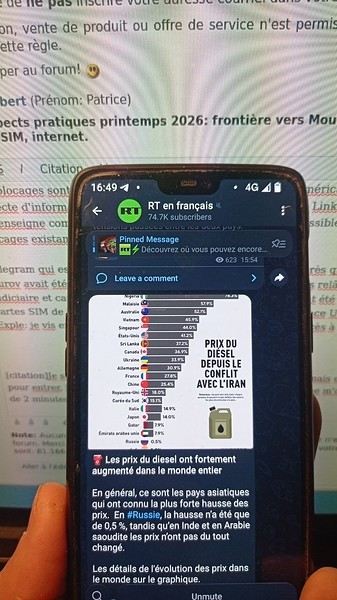
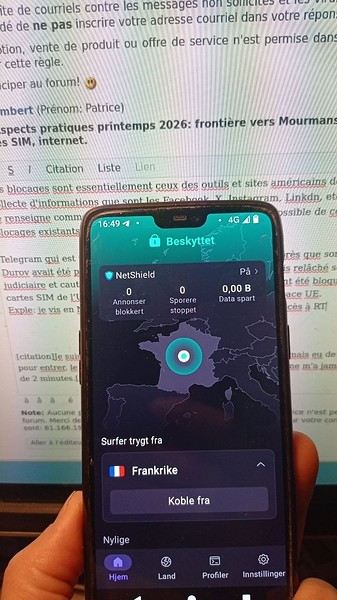
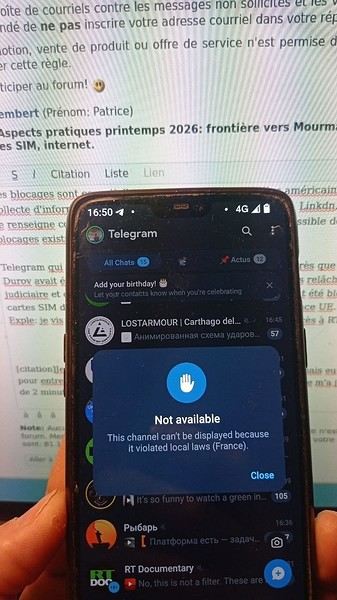
Telegram, which is very popular in Russia, was compromised after its CEO Pavel Durov was tricked into going to France, where he was arrested, then released under judicial supervision and bail. After that, some Telegram channels were blocked for EU SIM cards and for everyone when in EU territory. Example: I live in Norway, which is Schengen but not EU. I can access RT:


Here, I connect my phone to a VPN in France:


and RT is blocked:


Police repression in Germany and France is significant, particularly regarding the genocide in Gaza. Example: an Italian cartoonist, Elena Mistrello, traveling to a comic festival in France. She takes a flight to Toulouse, and as she exits the plane, police are waiting and order her to leave the country or be placed in a detention center. She’s Italian! The police tell her she’s on a territory ban list. Yet she was never informed—she’s Italian, an EU citizen from a founding country—that she’d be banned from France, which violates Schengen rules for an Italian. If such a measure by one Schengen country against another is possible, the person should at least be informed. Instead, she bought a flight ticket to Toulouse, and upon arrival, she’s ordered to turn back. She has no legal history whatsoever. Why was she put on a "serious threat to public order" list? A few years ago, she participated in drawing workshops in the West Bank. So clearly, it’s the Israeli lobby exerting huge control within the French regime. (There are Israeli MPs in the French Assembly without any issue. Imagine the same with Franco-Russian MPs....)

Considered a "serious threat to public order," Italian cartoonist Elena Mistrello expelled from France

This illustrates that when she bought her flight ticket, her name—likely flagged in France—appeared in the system. This is the result of complete digital tracking. Not only are flight tickets nominative, but so are train and bus tickets. There’s tracking of payment method owners (credit cards) and the ticket holder’s name. The EU’s Digital Services Act (DSA) strengthens total tracking and blockages without notice.

Control in the EU is far more powerful because it starts with full access to social security and banking data by regimes. Russia is far from having such an integrated level of control in its administrative system. They’re starting to work on it to counter terrorist measures the EU is trying to impose in Russia.

Where has Snowden been since his revelations about American surveillance systems? Sheltered in Russia. Assange, on the other hand, spent years in high-security prison in the UK after a judicial setup by a Swedish judge from the pro-American faction of the political class.

Since December 2025, a former Swiss officer specializing in conflict zones, who ended his career working for the OSCE and NATO in Ukraine (2014–2017) and became a conflict analyst, was banned from banking by an extrajudicial decision—no charges, no trial. His bank accounts were frozen, and he’s banned from staying or traveling in the EU, even though he lives in Brussels (!!!). In practice, this means he can’t leave the EU to return to his home country, Switzerland, and most importantly, he can’t use his bank account—he simply can’t live, i.e., buy food or pay bills. There was no judicial process. Friends and supporters buy him food and pay his bills; otherwise, he couldn’t survive. Yet no trial, no accusation, no review—just an administrative decision. See: Jacques Baud.

There are countless lesser cases of convictions in Germany for criticizing members of the government under Scholz and now Merz. Compiling a detailed list would require an entire book.

So yes, you’re more at ease in Russia.

I’m a Schengen citizen but don’t live there anymore. I’ve never had a problem entering—whether by plane, boat, or land—the entry point never took more than 2 minutes.

Try going to a manual Schengen border post (for now, only Narva in Estonia has automated gates) on the Russian border. Agents ask Schengen passport holders questions in English: "Where were you?" "Where are you going?" If you get a stubborn one, they might insist. But I insist: "French passport, I speak French." End of story. Though it’s nonsense—if there’s a question about the passport holder’s legitimacy, they compare fingerprints with those in the passport chip. They could call a sworn translator to whom I could say, "Tell them they’re idiots and I don’t give a damn about Estonia or Estonians." Maybe I’d end up in an Estonian gulag for criticizing the regime, the Estonian soul, and the people.

The drones you’re talking about aren’t NATO drones, then—unless you can provide solid, convincing evidence.

Drones flying over the Baltics to target Russia are *ipso facto* NATO drones. Let’s flip it: suppose a drone from Russia hits a fuel depot in Lithuania, and the Russians claim, "It’s not our drone—it took off from northern Ukraine, flew along the Belarusian border, exited and flew over a bit of Russia before diving into Lithuania."

But practically, this has little impact except for significant 4G degradation in the affected Russian border area, like Pskov, and occasionally in other cities with peripheral sites that might be targeted by low-altitude night drones.
LA Lapagaille Veteran ·
Hello, This is a fairly short trip. You also have the option (by bus) to travel from Berlin to Kaliningrad (+/- 10,000 rubles). E-visa accepted. To prevent your GSM with a European SIM card from being blocked, you need to disable the 4G or 5G network connection and only use GSM over Wi-Fi when a Wi-Fi network is available. The same applies in reverse if you have a Russian SIM card. Using and setting up a proxy or VPN for the Telegram app must be done before entering Russian territory—afterward, it’s more complicated... VPN and proxy server connections aren’t possible. I had indeed heard and seen the route taken by drones coming from Ukraine via Poland and the Baltic countries. It seems a drone (from Russia) hit a factory chimney in Estonia or Latvia. Funny how Article 5 of NATO isn’t operational... on the part of Poland and the Baltics. Replying to messages on this site is complicated when using a VPN—you often get blocked, unfortunately. Best regards, Patrick
Un concerné n'est pas obligatoirement un imbécile encerclé
ES Esantirulo Veteran ·
To prevent your GSM with a European SIM card from being blocked, you need to turn off the 4G or 5G network connection and use only GSM over Wi-Fi when a Wi-Fi network is available. The same applies in reverse if you have a Russian SIM card.

You seem to be mixing up internet via mobile network and internet via Wi-Fi :)

- Internet via Wi-Fi is wireless through your phone’s antenna, without needing a mobile operator or SIM card. It works in all cases as long as you have access to a wireless network.

- Internet via a mobile operator works through the SIM card, in 4G mode (3G is only possible for text-based internet, but for several years now, SIM cards have been 4G, and the latest ones are 4G/5G). This is the mode that gets blocked, along with SMS text functions, by Russian mobile operators during the first 24 hours after a foreign SIM card connects to the Russian network.

Example: Take the bus from Gdańsk with your phone and a non-Russian SIM card, always on. After Mamonovo, the SIM card connects to one of the Russian mobile operators (Megafon, MTS, Beeline), and you can no longer use SMS or 4G internet on that SIM card for 24 hours. However, when the bus arrives at the Kaliningrad bus station, in the Victoriya shopping center right across, you can use the same phone to access the internet via the shopping center’s free Wi-Fi network.

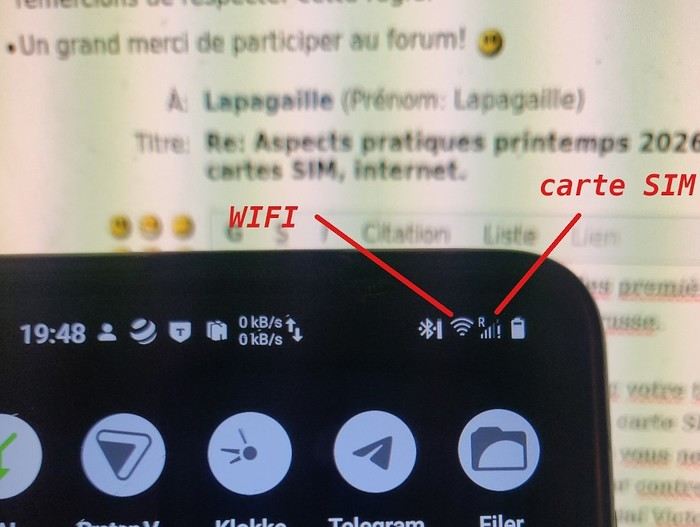
On a phone, this corresponds to the following: the icon with increasing bars represents the SIM card, while the one with waves represents Wi-Fi:


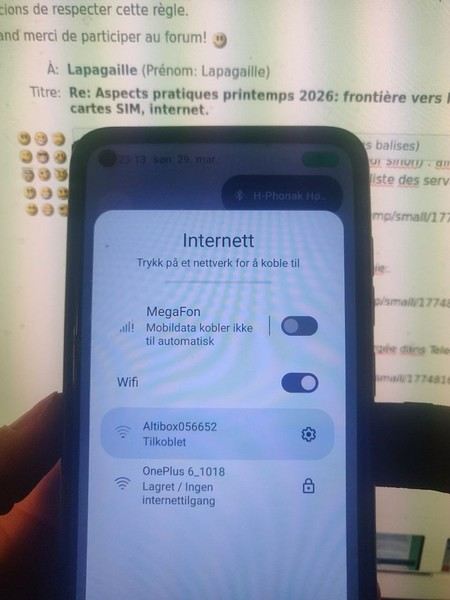
In the internet connection menu, accessed from the top-left corner, this corresponds to the following setup: Wi-Fi active and connected to a network "Altibox" in this case, but the SIM card (Megafon) inactive for internet:


Using and setting up a proxy or VPN for the Telegram app must be done before entering Russian territory; afterward, it’s more complicated... VPN and proxy server connections aren’t possible.

It’s possible for now. That’s exactly what I was doing last week. I was using VPNs installed while I was already in Murmansk.

Illustrations.

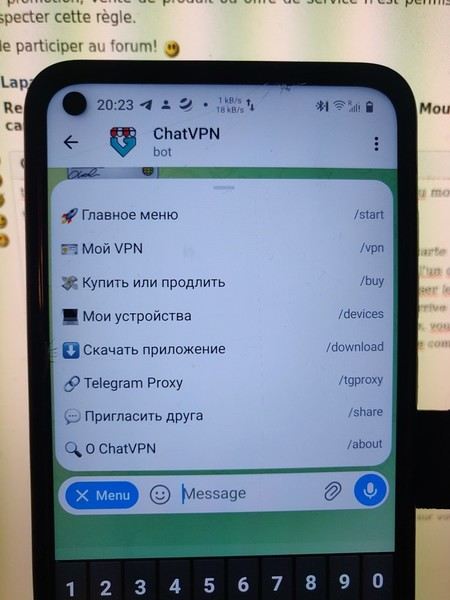
For Telegram, on the latest version (update if needed): go to the ChatVPN channel, sign up, and open the menu (type "/menu"), and the list of available services will appear:


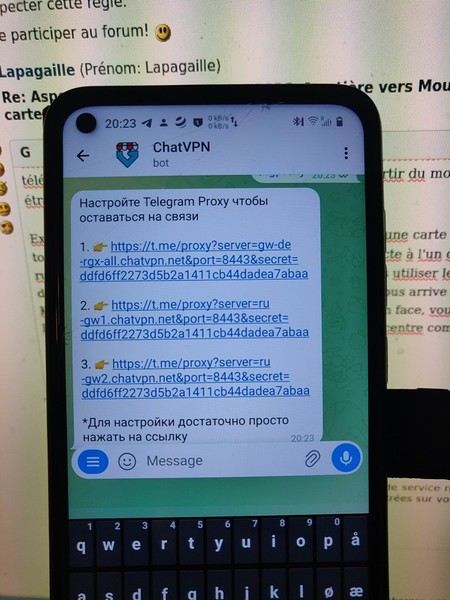
Type "/tgproxy" and their list of proxies is provided:


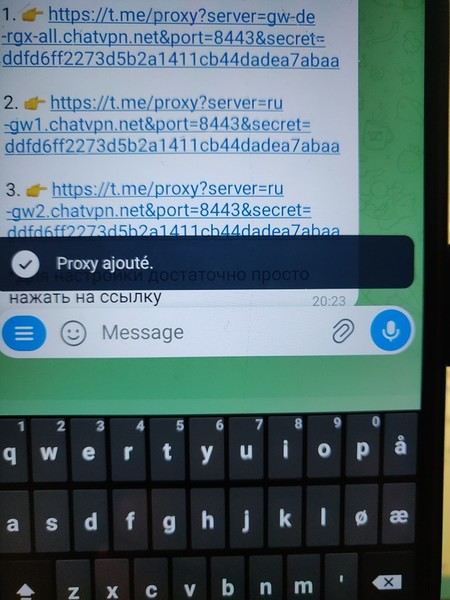
Tap on one of the links, and the list of proxies is loaded into Telegram:


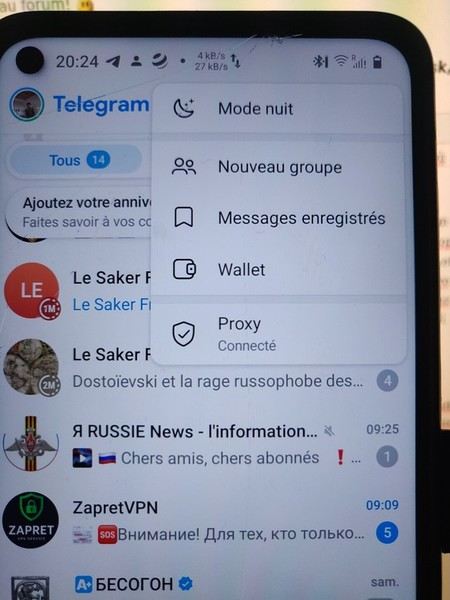
Go back to Telegram’s main page, open the settings menu by tapping the three dots in the top-right corner, and you’ll find a "Proxy" line at the bottom with the note "Connected":


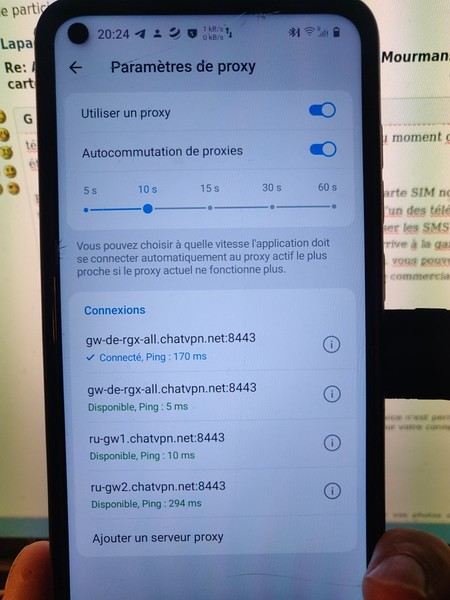
When you tap on the "Proxy" line, the page with their list, connection speeds, and proxy selection appears:


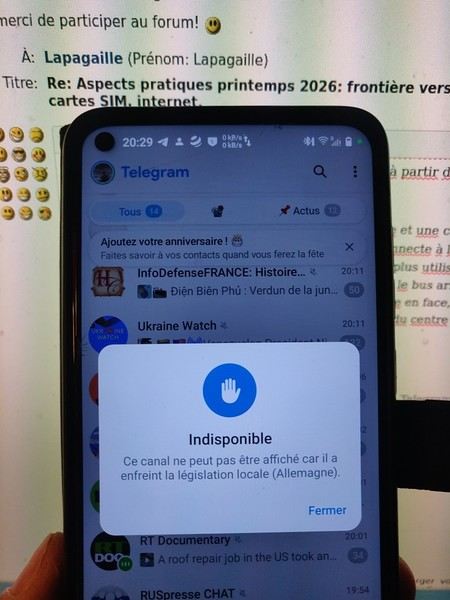
I did a test by opening a Telegram channel banned in the EU, and the blocking message appeared, specifying that Germany bans this channel. In this case, Germany is where the proxy is located. My phone and I were in Norway, where the channel in question is allowed:


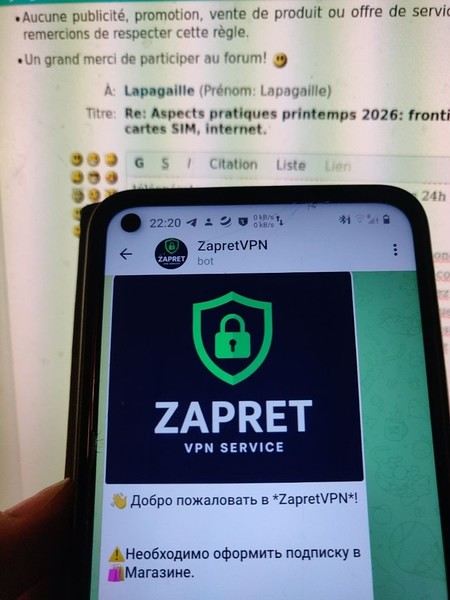
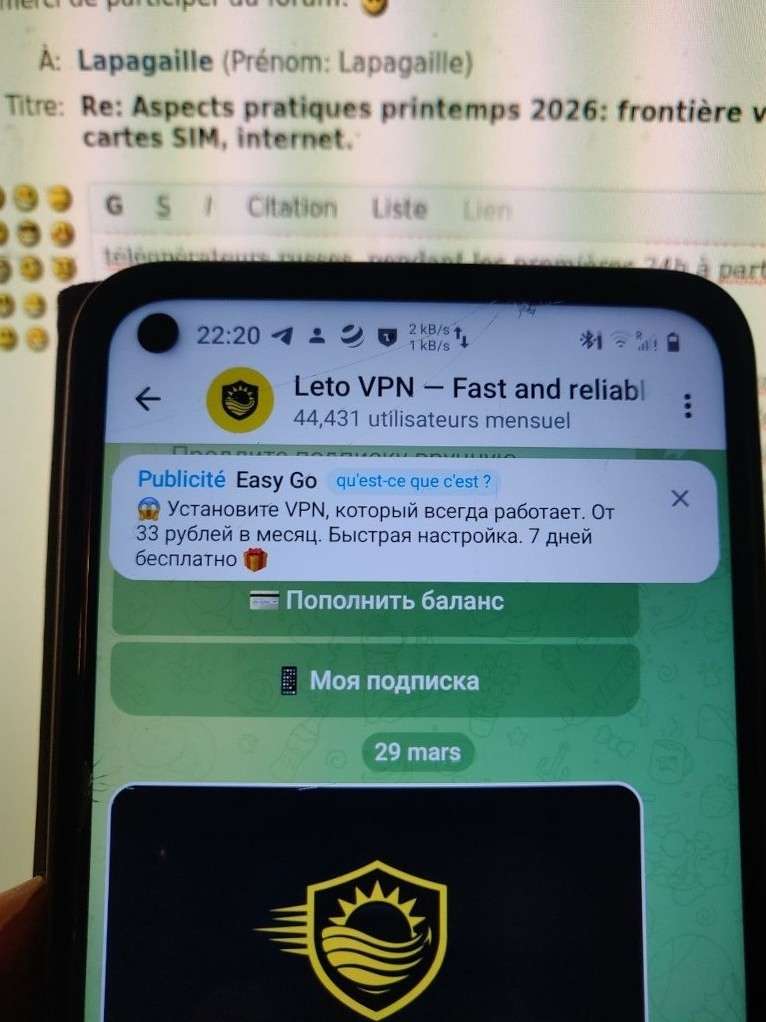
For general internet (not just in Telegram), the VPNs that currently work are those from small providers using a protocol called VLESS. You can find them on Telegram channels, like ChatVPN, LetoVPN, ZapretVPN, or D-VPN, etc:


These VPNs offer a short free trial period; otherwise, they’re paid, of course.
CH Chalembert Regular ·
Hey Esantirulo, Thanks for your long reply—at least you took the time. First, a small note about what you said on crossing the border. Insulting a public official isn’t the same as criticizing a political regime. You can try insulting a customs officer—no matter the country, you’ll likely run into some trouble.

Now, the main point. It’s clear you feel freer in Russia than in Schengen—that’s your feeling, and I’m not contesting it. But going back to what I said at the start: why come back in that case? Make the decision that’s necessary—choose freedom. And don’t tell me it’s not possible. It’s not easy, sure, but it’s possible if you put in the effort. You’re not one of those people who criticize but do nothing just because the situation’s comfortable, right? 😉
LA Lapagaille Veteran ·
Hi, No, I’m not confusing mobile data with Wi-Fi internet.🙁 You’re talking about Mamonovo—when I reach that border, I deactivate my European SIM card, and after crossing into Russia, I activate my Russian SIM card (which could’ve been blocked for 24 hours in Russia if I’d used it in the EU). Then, when I’m home (in Russia), the phone with the EU SIM automatically connects to the house Wi-Fi (set up for that 😉). This avoids the 24-hour outages you mentioned. True, for 2 or 3 hours I’m without service on the EU SIM, which is less than the 24 hours you deal with, but I can still use my Russian phone. As for sanctioned networks on "Telegram," when I’m in the EU, I use GSM with my Russian SIM to access all EU-sanctioned sites—but only over Wi-Fi when it’s available. (It’s the European phone number that’s sanctioned; even with a VPN, you can’t open those sites. I’d recommend getting a virtual SIM from Burundi or Comoros to access sanctioned sites.) I’m not sending photos—I think you’re smart enough to have understood. For info, the "Telegram" app is currently blocked in Russia (temporarily?), so you’ll need a proxy, VPN, or VPS. Best, Patrick
Un concerné n'est pas obligatoirement un imbécile encerclé
TI Tiger3 Veteran ·
Hi everyone. Thanks for all the well-documented info about staying connected after the border. Sometimes, relearning how to do without isn’t so bad.

For the rest, it’s certainly easier to criticize the West as a resident than to speak freely in other parts of the world: spontaneous balcony jumps and drownings are more common there. As for the misused term "genocide," it’s more of a slogan than a reality.

Thanks again
http://www.lesroutesdailleurs.fr

https://plus.google.com/u/0/117367592382272882283/posts
PA Parigino Veteran ·
Hey, Just a quick question—did you manage to "escape the Schengen prison" for good, or are you heading back? Would be a first: an escapee who voluntarily returns to their cell.

🤣🤣🤣
ES Esantirulo Veteran ·
For the foreign SIM card, there’s only a 24-hour delay, but roaming charges can be steep. It might be possible to buy SIM cards for internet only (no calls or texts), like the ones that were popular a few years ago for 4G USB modems for laptops. Worth checking—I haven’t had the chance since I don’t need it.

I haven’t traveled by car since the Finnish border closed, and crossing points through Estonia, Latvia, or Lithuania can be really long. But when driving, having internet is super handy for real-time traffic updates, especially in big cities. Moscow, for example—driving without rerouting based on traffic is risky, as the jams can be epic. You’d have to cross the MKAD in the dead of night, around 3 AM. Yandex Navigator is unmatched for real-time route tracking to avoid bottlenecks. In summer, it’s also useful for estimating travel times based on roadwork. For that, you need 4G.

eSIM offers might evolve, so keep an eye out.

But if you’re not on the road, it’s easy to stay online thanks to the abundance of Wi-Fi in malls, restaurants, and cafés—just avoid old-school dives.

Email software isn’t affected. Some email providers block access if they detect a VPN, though, so you’d need to disable it in that case.
For stays longer than a week or if you’re planning future trips, it’s worth registering with the pension fund (social security number, the SNILS) in the first city where you spend a day, then getting the certificate and signing up on Gosuslugi. You can handle the paperwork at any MFC. Some MFCs have a streamlined process, making it much faster. Worst case, it takes 5 days between two MFC visits.

It’s certainly easier to criticize the West as a resident than to speak freely in other parts of the world

The term "West" doesn’t mean much outside of cultural philosophy and history, where it refers to "European civilization." Over the past two or three decades, it’s become shorthand in the mainstream press for "the U.S. and its vassals."

Things and events that are completely normal in one EU country can be criminalized by judicial arbitrariness in another. Fines, social bans, prison. SLAPP lawsuits are common in the UK, Germany, and then France against opponents of Euro-American policy toward Russia, critics of Israel, and, to varying degrees, critics of the EU. Some cases have been particularly horrific, like Assange’s.

By contrast, in Norway, the prime minister can be heckled during his annual speech to the point that he stops after ten minutes and leaves as the crowd chants, "Jonas, listen, children in Gaza are dying" (with the rhyme in *ør*), and nothing happens—because: freedom of speech. No arrests, no custody, no terrorism charges, etc.

https://www.tv2.no/nyheter/jonas-gahr-stores-tale-avbrutt-av-aktivister-dere-ma-vise-respekt/17694569/

Right now, the push for digital mass surveillance is leading to numerous legal proceedings. Digital banking is about monitoring and silencing people when necessary.

What’s happening to Jacques Baud is absurd. His bank accounts are frozen, his pension isn’t being paid, and he’s living thanks to friends and supporters. Yet he hasn’t been subject to a court ruling in a case where he could defend himself. It’s just a decree from the European Commission with no possibility of appeal because it’s extrajudicial. I don’t know if you realize how serious this is.

Generally, there’s no physical punishment, but in the case of the Yellow Vests protests, there was clear intimidation through targeted beatings, sniper fire, and manipulation by groups to derail demonstrations.

I’m not a resident in Russia, but I’m still registered in the social security system and administrative portal (without the associated rights since I’m neither a resident nor employed). I have SIM cards and a bank account. The restrictions on freedoms could be worse. The same thing for a non-EU foreigner who isn’t a resident in France is impossible, and in 2022, French banks froze the accounts of Russian residents simply because they were Russian.
CH Chalembert Regular ·
Hi Esantirulo, Your love for Russia is undeniable and entirely respectable. I myself have an immoderate love for Iran, but I clearly distinguish between the country, its culture, and its history on one side, and its leaders on the other. You mention inconsistencies in the EU—no one disputes that. However, you don’t address my point: is it possible in Russia to openly criticize the regime, the government, the president—on TV, radio, in newspapers, online, or even in a café with strangers—without risking anything, as you do openly about the EU, Schengen, or NATO? I’m talking about criticizing a regime, not insulting a people, as you did in a previous message (I hope that was just a slip-up and not your true feelings).
AT Attila Globetrotter ·
Otherwise, all these practical aspects don’t exactly make me want to try the Russian adventure...

If your goal was to keep this destination under the radar, mission accomplished. 😄
Ponts du monde : concours de photos amical de juillet 2026 Rubrique Jeux Voyages C'est le moment de poster vos meilleurs clichés !
TA Tatra Globetrotter ·
Hi Agnès,

Otherwise, all these practical aspects don’t exactly make you want to try the Russian adventure...

If your goal was to keep this destination low-key, mission accomplished.
Don’t wait too long to visit Kazakhstan and Kyrgyzstan—expect our world to split into two blocs where navigating between them will be tough, like in the 70s or 80s when visiting Romania felt like a moon landing.
What a difference from our Western democracies, where no one’s been arrested yet, for example, for criticizing governments on travel forums or other sites!

There are some very alarming signs in France and Europe—not necessarily about personal criticism of power, but about political, religious, or moral stances, or existential and cultural choices. Michel
PA Parigino Veteran ·
Don’t drag your feet going to Kazakhstan and Kyrgyzstan—expect our world to split into two blocs where navigating between them will be as tough as it was in the 70s or 80s, when visiting Romania felt like a moon landing.

We know, thanks. You’ve been hammering this home since Russia launched its attack on Ukraine, and so far, we’ve still been welcomed with open arms in Kazakhstan, Kyrgyzstan, and even Tajikistan.
ES Esantirulo Veteran ·
All these practical aspects don’t exactly make you want to try the Russian adventure...

There’s nothing unusual about it. Before the EU existed, we crossed border checkpoints to go to Germany or Spain. In the summer, there were queues at Cerbère/Portbou with occasional customs checks. Currency exchanges. Well into the 90s, payment systems were heterogeneous—VISA cards were rarely accepted, for example, in Norway (cash or Bankaxept system), Germany, and the Netherlands (Eurocard or Mastercard). Visa requirements or e-visas are common in many countries.

Russia isn’t the only place where payment systems are separate from the US/EU-controlled one—it’s also the case in China, India, much of Africa, and partly in Brazil. Until recently, travel in Central Asia often required visas, special permits (for autonomous zones or enclaves), and cash-only payments.

The key is simply knowing what’s needed where.

For internet, China’s restrictions are far stricter. In the EU, there’s light blocking but much heavier monitoring and surveillance of connections and online speech. In France, you have to be *much* more careful about what you say and write online than in many other countries. And it’s even worse in Germany and the UK.

Note that the increased restrictions since 2022 on the Schengen-Russia border are due to the European Commission.
TA Tatra Globetrotter ·
We know, thanks. You’ve been hammering this home since Russia launched its attack on Ukraine, and so far, we’ve still been very well received in Kazakhstan, Kyrgyzstan, and even Tajikistan.

For now. And it’s not just about being well received or not—it’s about proximity to a system. The idea that these three states, at this critical moment, would side with the US/Europe when their cultural, political, and economic ties to Russia and China are so obvious—just walking down the streets makes that clear—seems highly unlikely to me. Do you follow the news and current events in these countries? Are you interested in their economies?

Michel
CH Chalembert Regular ·
So then: - Is it possible in Russia to openly criticize the regime, the government, the president—on TV, radio, in newspapers, on the internet, or even in a café with strangers—without risking anything, like you do openly about the EU, Schengen, or NATO? - Is it possible in Russia to freely create a political party that openly opposes presidential policies without any risks? - If Schengen is a prison and Russia is the embodiment of freedom, what’s stopping you from living there?
TA Tatra Globetrotter ·
We don’t realize how lucky we are to live outside the iron grip of the Russian empire or theocracies like Iran.

Yes, but that’s just a figure of speech, and it’s super biased. Russia is huge—there are dozens of official and recognized languages (yes, really!). Not folklore, but real everyday languages that shape human experience and identity, whether people live in communities or not, far from some abstract universalism or Rousseau-esque ideal. There’s also a lot of religious diversity in Russia, practiced very openly and explicitly, from Tatarstan to Birobidzhan. Most Russians feel Russian or something else, and honestly, they don’t care much about not being able to criticize Moscow’s power at the café. They don’t give political squabbles the same weight we do by making them central to citizenship. Attila, she reads the subsidized French press and struggles—it’s a shame—to put things in perspective. For most people, the central government is what it is, but it’s distant, not intrusive in private or intimate life, and in that sense, it’s not seen as oppressive. It’s a bias—you’re projecting a state’s ideology onto the diversity of a federation of nations.

I also wonder why people who feel trapped in democracies stay there? Stockholm syndrome, or do they deep down know their lives would be a living hell in the dictatorships they defend? Enough complaining over nothing...

You’re funny. 🤪 Imagine you don’t share the values of the Republic in France. What are you? You didn’t choose anything, didn’t ask for anything—you just happened to be born in France to French parents, and you’re automatically disqualified from citizenship. You can’t express yourself in public without being blamed or attacked, and you can’t run for office. They won’t throw you in prison, but for your whole life, you’ll have to be a stranger to the state’s politics. So what should you do? Leave? But this is your home, your country. The political regime is one thing—it’s temporary. That’s why Jafar Panahi went back to Iran. He’s constantly at odds with the regime, but the country, the nation—that’s not the regime. In France, we reduce the nation to the state and the state to the Republic. That doesn’t help us understand things clearly, because identity is complex and can’t be dissolved into universalism or transcendent values. I’ll grant you it’s an old way of thinking, but it’s so ingrained in many people’s minds that stepping back is often impossible.

Michel
PA Parigino Veteran ·
So Jafar Panahi returned to Iran; he constantly opposes the regime, but the country, the nation, isn't the regime.

Hundreds of thousands of Iranians have left and never returned. They didn’t make some fantastic story about "yay, I escaped prison" just to meekly go back home. That’s the difference between the mediocre and the courageous.
AT Attila Globetrotter ·
like in the 70s or 80s, when visiting Romania was a moon landing adventure.

Meh.

I drove to Romania before democracy. Nothing too difficult except understanding there were two lines at the border. One for Westerners, quick and with few hassles. The other for Easterners, slow and nitpicky.

Back then, there were also border checks between France and Spain. It just took a bit longer with that little thrill of the unknown.

The real difference came afterward. A rush toward Westerners to buy what was missing there—basically everything... And a rush to talk to them, to have free conversations away from prying ears.

There are very alarming signs in this direction in France and Europe, not necessarily about personal criticism of power, but about political, religious, or moral positions, or about existential and cultural choices.

Some of you here seem to think the grass is greener elsewhere. Yet, despite your critiques, you don’t strike me as having been handed a one-way ticket to some Western gulag.

What a difference from Russia!

I wonder if the author of this post would dare to criticize Vladimir’s system on a Russian forum. Normally, yes—since everything’s rosy there. They risk nothing...
Ponts du monde : concours de photos amical de juillet 2026 Rubrique Jeux Voyages C'est le moment de poster vos meilleurs clichés !
AT Attila Globetrotter ·
In France, you have to be much more careful about what you say and write online

More than in Russia?

After that, you’re kinda right since one of my messages disappeared...
Ponts du monde : concours de photos amical de juillet 2026 Rubrique Jeux Voyages C'est le moment de poster vos meilleurs clichés !
AT Attila Globetrotter ·
Most Russians feel Russian or something else, and honestly, they don’t care about not being able to criticize Moscow’s power at the café,

Not so great for Russian opposition...

Move along, nothing to see here.

And what should you do? Leave?

It seems logical to leave a place where you don’t feel good.

That’s what tons of people around the world do.

French people leave too, but usually not for political or religious reasons.

For the taste of adventure, economic reasons, or just being fed up with French complainers...

They even end up choosing dictatorships as their new home. Not because they support the regime’s ideology, but for the sunshine, to escape taxes, or a much more appealing cost of living. They come back when the wind changes or when health fails.

Still, they don’t pick overly oppressive dictatorships: North Korea doesn’t attract many, nor does Afghanistan.

On the other hand, the flow of political refugees between dictatorships and the West is significant. Reading some comments here, I wonder why?
Ponts du monde : concours de photos amical de juillet 2026 Rubrique Jeux Voyages C'est le moment de poster vos meilleurs clichés !
TA Tatra Globetrotter ·
Very nice for Russian opponents... Move along, there's nothing to see.

It’s not about being nice or not; there are opponents, activists, people involved in politics, generally from a certain urban, intellectual background. But are they representative? Actually, no. Western and French media highlight those who resemble them socially and sociologically.

It seems logical to leave a place where you don’t feel good.

Yes, I know you believe that; it’s not about "not feeling good," but about being in your own country and treated like a foreigner, intellectually and civically.

On the other hand, the flow of political refugees between dictatorships and the West is significant. Reading some here, I wonder why?

To make money and return home, not to flee a dictatorship as such. I looked into emigration from Iran: it’s higher than from France, but not by huge margins—maybe 50% more—and it’s mostly educated and intellectual people. A brain drain, not an exodus.

Michel
AT Attila Globetrotter ·
not to flee a dictatorship as such.

So OFPRA is useless and all asylum applications should be rejected since they're economic?

You’re gonna be real popular with some far-right parties.

I’ll leave you to your dubious theories.
Ponts du monde : concours de photos amical de juillet 2026 Rubrique Jeux Voyages C'est le moment de poster vos meilleurs clichés !
TA Tatra Globetrotter ·
So the OFPRA is useless and all asylum applications should be rejected because they're economic?

I never wrote that, but there’s a kind of narcissistic satisfaction in the French ideology of believing it’s envied and prized for its values, which borders on denial.

You’re going to make yourself very popular with some far-right political parties.

I don’t care. Is it hazy just because it’s not what the mainstream media feeds you?

Michel
AT Attila Globetrotter ·
I never wrote that

Oh really?

To make money and return home, not to flee a dictatorship as such.

You forget very quickly what you write.

It’s shady because you’re denying the suffering of millions of people who fled the country where they were born because they weren’t free there. (As a woman, as a sexual or religious minority, as an atheist, as a political opponent, as a cultural dissident, etc.)

In the case of Russia, fleeing also comes from not wanting to return home in a coffin after being forcibly enlisted in a "special operation."

I don’t know if I’ll ever travel to Russia. I missed the boat at the start of Putin’s reign. In the end, it’s worse today for an average traveler than in Soviet times. Much more uncertain.
Ponts du monde : concours de photos amical de juillet 2026 Rubrique Jeux Voyages C'est le moment de poster vos meilleurs clichés !
MA Mathews Globetrotter ·
You’re funny. Let’s say you don’t share the values of the Republic in France; what are you then? You didn’t choose anything, didn’t ask for anything;

You’ll have to excuse me, but I’ve never understood what your problem is. Is it living in France? If so, you should do like the Americans who sue over anything—you could take your parents to court for not being born in Russia. That’d make you happy for sure 😉 As for democracy in France and freedom of expression, nothing’s stopping you from speaking Breton in Brittany or Basque in the Basque Country. Even better, you could publish a regional daily in the local language.
LA Lapagaille Veteran ·
Hello South, Central, or North American, or possibly Canadian? Just to clarify what you're saying! Why always relate everything to France? You’re not the center of the world. Best regards, Patrick
Un concerné n'est pas obligatoirement un imbécile encerclé
TA Tatra Globetrotter ·
As for democracy in France and freedom of expression, nothing prevents you from expressing yourself in Breton in Brittany or in Basque in the Basque Country. Even better, you should publish a regional daily in the local language.

I don’t fully understand your message—it’s rather confusing. I’d like to point out that all of my grandparents were forced, legally and especially socially, to stop passing on their language, their imagination, and their culture. In Russia or Iran, that would never have happened.

My problem? Right now, it seems to me that it’s more and more—and especially... yours.

Michel
TA Tatra Globetrotter ·
It’s sketchy because you’re dismissing the suffering of millions who fled the country they were born in because they weren’t free there. (As a woman, as a sexual or religious minority, as an atheist, as a political or cultural dissident, etc.)

I’m not dismissing anything, but the reason you’re citing isn’t the majority one—it’s sensationalized and feeds into a national narrative.

I don’t know if I’ll ever travel to Russia. I missed the boat at the start of Putin’s reign. In the end, it’s worse today for an average traveler than in Soviet times. Much more uncertain.

Back in Soviet times, there was already strong pressure not to go; you’ll see with Kazakhstan if you like it or not.

Michel
MA Mathews Globetrotter ·
I don’t fully understand your message—it’s rather confusing;

Uh, my message is as clear as it gets. What’s confusing about it? I clearly wrote that you can express yourself in any language you want in France—isn’t that clear enough? As long as you make yourself understood, of course. And my point applies to living in Canada, Belgium, or anywhere else.

Right now, it seems to me that it’s more and more, and especially... yours.

Now *that* I don’t get at all—what’s the meaning of your sentence? If anyone’s confused, it’s you 😉 I don’t have any problems. I love traveling and sharing that joy with other members of this forum.
TA Tatra Globetrotter ·
uh, my message is as clear as it gets. What’s confusing about it? I did write that you can speak any language you want in France—isn’t that clear enough?

It hasn’t always been this way. Even naming your children was often a problem and subject to many restrictions. I don’t think you really know what I’m talking about or what this is about. No big deal.

Michel
MA Mathews Globetrotter ·
Even naming one’s children was often a problem and subject to many prohibitions. I think you don’t really know what this is about or what I’m talking about.

Well yeah, it’s obvious because you’re talking about your personal life. And your personal life isn’t any of my business. How about sharing a nice travel journal about Russia instead of whining about your situation 😎 Show us photos of Orthodox churches, steppes landscapes... instead. I’d love to know what the Volga Delta looks like...
TA Tatra Globetrotter ·
Well yeah, it's obvious because you're bringing up your personal life. And your personal life is none of my business.

Not my personal life—it’s the lives of millions of people deprived of their culture, heritage, and imagination by an ideology. I’m not keeping a "travel journal"; tourism doesn’t interest me.

Michel
AT Attila Globetrotter ·
tourism doesn’t interest me.

Strange for the main poster on a travel forum.

But we’re well past that now.
Ponts du monde : concours de photos amical de juillet 2026 Rubrique Jeux Voyages C'est le moment de poster vos meilleurs clichés !
ES Esantirulo Veteran ·
Thanks for this well-documented info on our communication options after the border. Sometimes, relearning to do without isn’t so bad.

I’ll give some concrete examples to demystify the fact that foreign SIM cards do work, and roaming charges aren’t any different from those in many non-EU/EEA countries. The only major difference is that these fees were much lower before 2022.

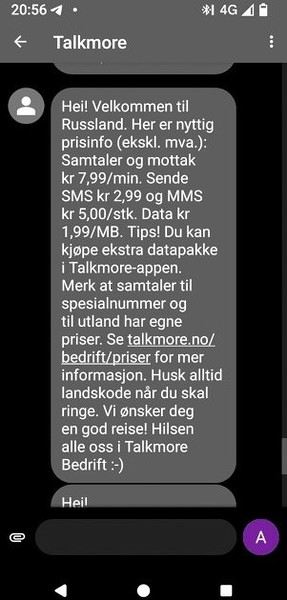
My domestic SIM is necessary if I need to make an online purchase with my VISA card, since the bank’s 3D Secure process requires online verification linked to my domestic SIM number. For example, buying a flight ticket for my return once I know which border point I’ll be re-entering Schengen from. But you might also need to log into your online banking to pay an overdue bill or for any other urgent reason.

Here’s the SMS I received after unlocking my domestic SIM, with the prices. It’s in Norwegian kroner, 1 NOK ≈ 0.9 €:


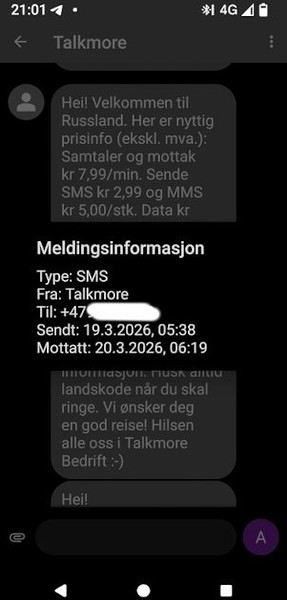
Details of the SMS: sent by my mobile operator on 19.3.2026 at 05:38 (when I turned on the phone with this SIM) and received on 20.3.2026 at 06:19, so well after 24 hours. (Phone was on the whole time):


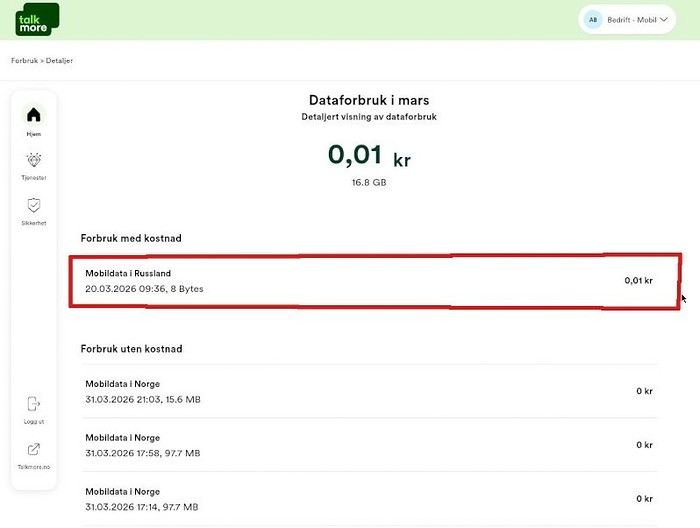
In last month’s bill, usage for Russia is almost zero since I didn’t need to use this SIM, but it’s there:


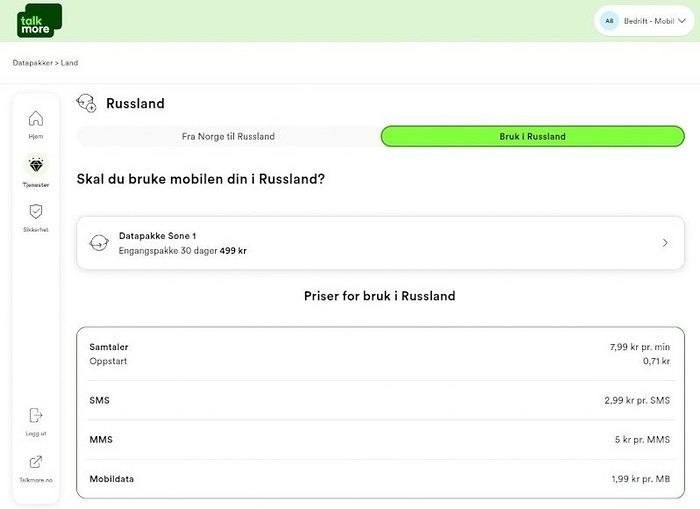
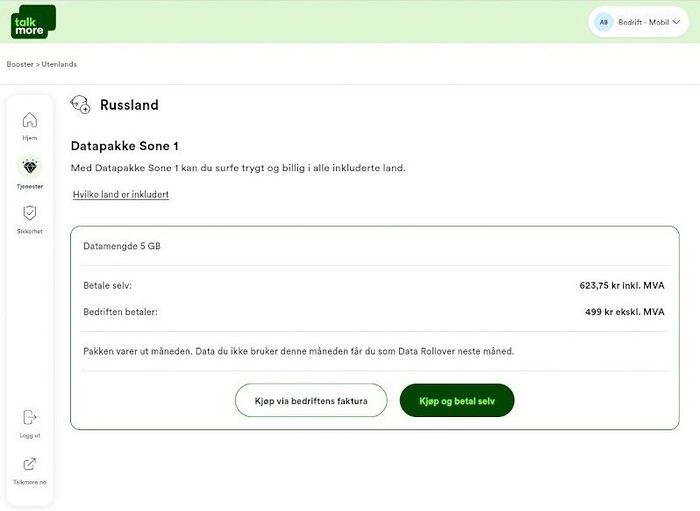
If I had to rely on this SIM for my entire stay, I could buy a plan at these prices. 5GB of data included:


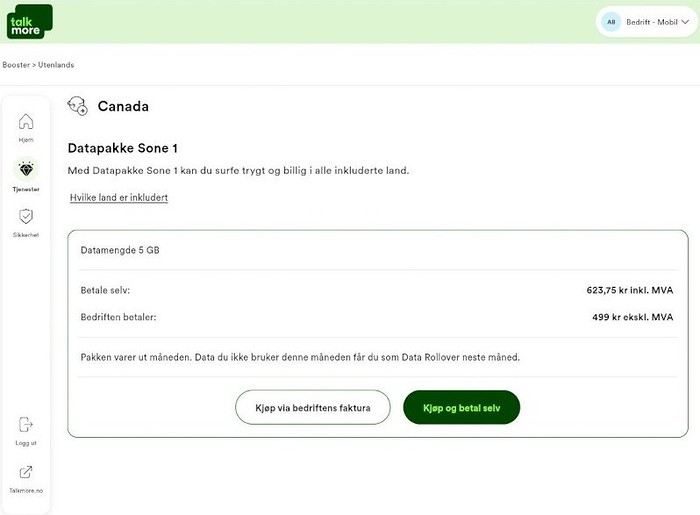
You can see that in the operator’s pricing grid, this falls under their Zone 1. It’s the same rate/zone as, for example, Canada:


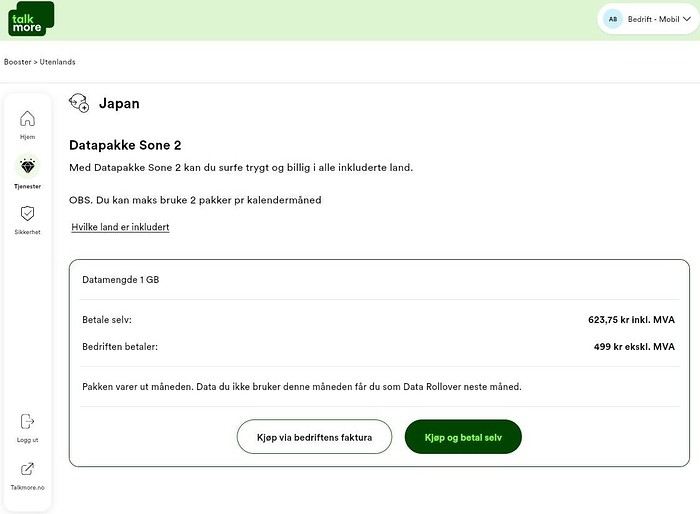
Japan is in Zone 2, much more expensive, for the same price plan but with only 1GB instead of 5GB:


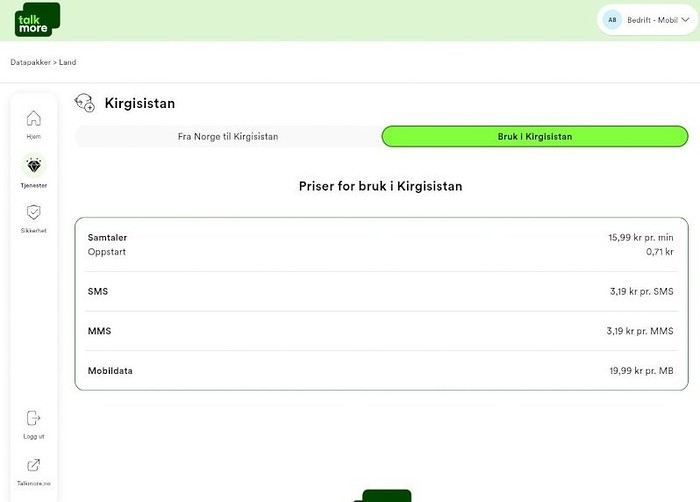
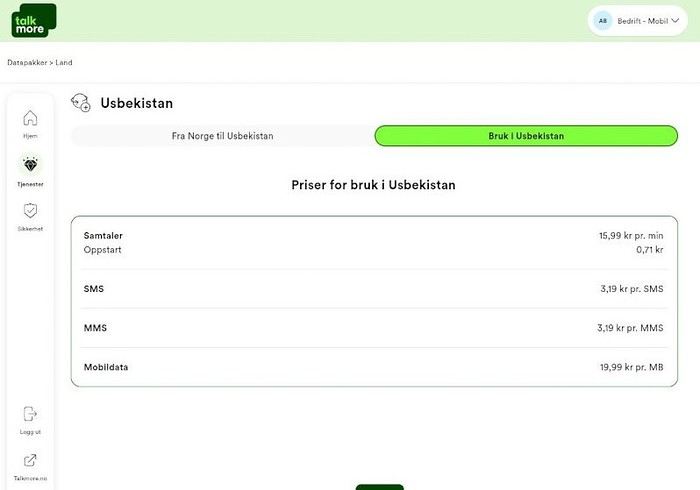
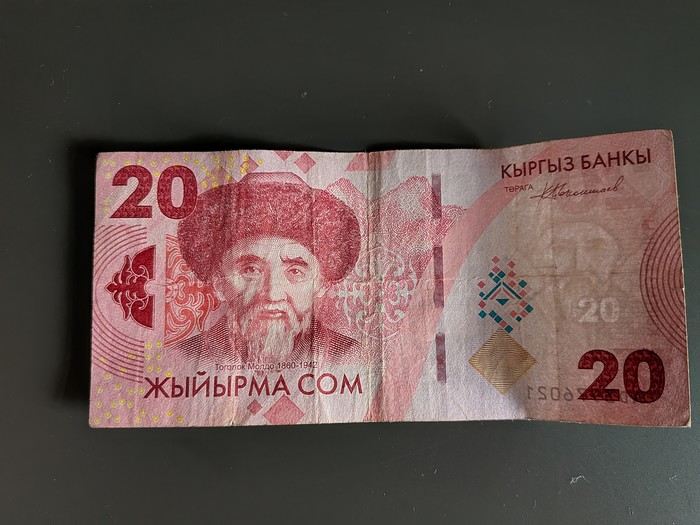
For comparison with trendy destinations, here are the rates for Kyrgyzstan and Uzbekistan, which are billed by usage with no plans:


CH Chalembert Regular ·
Hey Esantirulo, Here’s some detailed info that’ll help anyone planning to visit Russia. I’ve heard—this was late 2024—that Russian SIM cards worked in the EU, which would make sense for roaming, a reciprocal arrangement between operators. Can you confirm this? Honestly, you’re way more credible as a tech advisor than as a critic of the EU or Schengen Space 😉
TA Tatra Globetrotter ·
Strange for the main poster on a travel forum.

I’m heading to Japan next week, to two or three ports on the Sea of Japan side, and I can assure you I won’t be doing any touristy outings: no "sites," no museums, no temples. Just traveling.

Michel
LE Lescs Regular ·
Just traveling Michel

For your pleasure?
CS

www.lescs.fr
CH Chalembert Regular ·
Very nice for Russian opponents... Move along, there's nothing to see.

It's not about being nice or not; there are opponents, activists, people involved in politics, generally from a certain background—urban, intellectual. But are they representative? Actually, no.

Hey Tatra, so do these opponents have a prominent presence, can they freely share their ideas in the press, on TV, etc.? Can they freely say that the Russian government is doing whatever (right or wrong, that's not the issue)? Can they also create political parties openly opposed to the current power? Regardless of the audience—maybe it’d be ridiculous—my question is: is it possible?
TA Tatra Globetrotter ·
For your pleasure?

Yes, just out of curiosity.

Michel
TA Tatra Globetrotter ·
Hey Tatra, so these opponents have a public presence and can freely spread their ideas in the press, on TV, etc.? Can they freely say that the Russian government is messing up (whether rightly or wrongly isn’t the issue)? Can they also create political parties openly opposed to the current power? Regardless of their audience—maybe it’d be tiny—my question is: is it even possible?

Thinking that quality of life and individual freedom are tied to how easy it is to engage in politics is a very French, idealistic notion—an intellectual’s perspective. But in France, if you believe that the values of the Republic come after your religious values, personal ethics, individualism over collectivism, or liberalism, you won’t face legal consequences—well, not yet, anyway. But if you’re a foreigner, people dream of deporting you, and if you’re French without having asked for it, you’re offered internal exile.

Michel
TI Tiger3 Veteran ·
Thanks a lot! This info is really like a SIM card tutorial—super helpful.

I’m heading back to beautiful Russia in July. Hope it hasn’t changed too much since I last saw it. And I’m always happy to return to the West. No part of the world is perfect; travelers observe but steer clear of politics.
http://www.lesroutesdailleurs.fr

https://plus.google.com/u/0/117367592382272882283/posts
AT Attila Globetrotter ·
I forgot this fundamental difference that’s been shaking this forum since its inception: the basic tourist vs. The Traveler. 😇

But we’re really getting off topic here...
Ponts du monde : concours de photos amical de juillet 2026 Rubrique Jeux Voyages C'est le moment de poster vos meilleurs clichés !
TA Tatra Globetrotter ·
Good evening Agnès,

No need to be ironic. When I go to Japan, like next week, I couldn’t care less about museums, I don’t visit any natural sites, I’m not interested in onsens, and I only pass by temples by chance. That’s just how it is. I love business hotels, izakayas, konbinis, kei cars, markets, vending machines, airports, and walking down the streets looking at signs and passersby. I’m not going to make travel journals out of that. You love natural parks, recognized and certified villages, tourist sites. We’re different, and I don’t really feel like a tourist. To be honest, I don’t care.

Michel

Similar discussions

You might also like