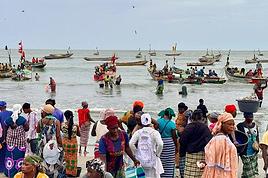
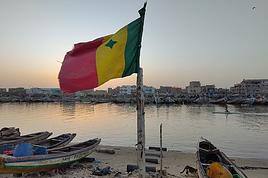
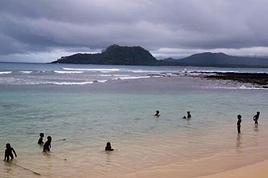
😕 Après mon séjour passé au Sénégal en début d'année, je suis revenu avec 1 mauvais souvenir, des déchets partout !
Quelqu'un connait il des actions qui auraient été menées dans ce domaine, collecte, retraitements, recyclage, création de décharges ...
J'ai chargé un de mes amis qui va m'accompagner au mois de novembre de réfléchir au problème .
Merci de vos infos
J-F M
Ah oui, ça gache un peu le paysage!! les sachets plastique remplacent les feuilles sur les arbres.
Mais peut etre parles tu + des villes!
Je n'ai pas connaissance d'actions envers ce problème. Il faudrait une grosse campagne d'information, à condition que ça rapporte(recyclage) en retour sinon ça risque de ne pas marcher...
Evidemment, les grandes ville sont principalement concernées par ce problème. Mais il y a aussi les villages, et c'est làqu'il faudrait commencer à traiter le problème. Deplus pour avoir rencontrer le médecin du dispensaire du village où je vais, cet état de fait apporte des problèmes d'insalubrité publique.
C'est sans doute une bonne idée...mais quel chantier nous attend...😕
J-F
Bonjour effectivement c est un gros probleme que l on rencontre quasiment partout en Afrique .
Pour notre part nous allons faire une sensibilisation dans le village de Djinack au Senegal, nous y serons pendant 5 jours et avons deja planifier un ramassage tout cela en collaboration avec le responsable des jeunes du village, l instituteur et le responsable du dispensaire .
Ce n est qu un debut mais il faut bien commencer, autour de cela il y aura quelques heures d informations dans l unique classe avec les eleves
Nous les sensibiliserons via photos ...........
Le plus gros probleme reste justement le recyclage ................................
Pour que ça marche il faut que le recyclage apporte en échange de quoi gagner un peu d'argent pour vivre ce qui est une préocupation journalière pour beaucoup.
Le recyclage des sachets plastiques surtout seraient intéressant, (hamacs, sacs, chapeaux, ...). Je crois qu'à Ouagadougou il y a une association de femmes "Lagm Yam" qui font ça. (faites une recherche avec ce nom)
salut! je vis une partie de l'année au sénégal, et je peux te dire que je ne connais pas d'autres formules que les transports en charrette avec ânes, organisés et gérés souvent par des groupement de femmes . Ca finit toujours dans la brousse et ça déborde allègrement à l'hivernage !voilà tiens moi au courant, bon courage
Bonjour Thierryangel,
Voulez-vous parler du village de Djinaky en Casamance ? Auquel cas nous pourrions échanger de par les actions que nous y menons avec les populations locales investies dans le développement et l'environnement.
Visitez notre site pour des infos concernant nos actions en Casamance et en France : http://asso.un.free.fr
et rejoignez-nous par mail pour échanger. Merci
Geli
Re thierry,
Non ce n'est pas de Djinak dont je parle mais de Djinaky, sur la route de Ziguinchor/Gambie. Mais pas grave, ce n'est pas une raison pour ne pas échanger nos expériences/compétences, n'est-ce pas.
Et pur revenir au pb de gestion de déchets, un service de répurgation se mettait en place progressivement sur Dk au début 2006; ça ne dit pas ce qu'ils font des ordures ménagères et je serais surprise qu'il existe actuellement des services de recyclage des déchets. Mais je pourrai en savoir plus en consultant l'un de nos partenaires qui vient prochainement nous visiter en France car il est impliqué dans l'environnement.
Ne pas hésiter à me relancer par mail, car la fin d'année est chargée avec nos actions inter associatives et la prépa de ma prochaine mission: départ le 12 janvier pour minimum 3 mois
A bientôt donc
Geli
A Popenguine, ils sont "réglé" le problème d'une curieuse façon : tous les matins, toutes les ménagères vont vider les ordures à la sortie du village....dans un grand fossé descendant à la mer.....dans ce grand fossé...vivent une multitude de porcs...qui mangent à peu près tout....je te passe les détails quant aux parfums à cet endroit...
A bientôt !
Merci à tous de l'intérêt que vous portez à ce problème. Pour ma part, fort de vos renseignements, que je vais transmettre à un de mes amis que j'ai chargé du sujet, je reste convaincu, qu'en appliquant des principes de base, ne serait-ce que par l'organisation d'un ramassage, et la mise en place d'un stockage géré, nous pourrions déjà nettoyer l'espace, et diminuer les problèmes de salubrité.
Merci encore de toutes vos infos et à bientôt.
PS: comment peut on mettre ce sujet en tête de forum pour mobiliser un maximum de monde ?
Bonjour,
Oui, j'ai vu récemment sur les berges du fleuve Sénégal à Saint Louis du Sénégal des pancartes annonçant un projet autrichien de nettoyage des berges devant des ... monceaux de détritus puants 😠 baignés, selon l'état de la marée, par ce si joli fleuve.
Moi je pense qu'au niveau du recyclage, ils savent déjà y faire, par exemple pour la ferraille...Je pense aussi qu' il manque l'organisation et la gestion, il faut trouver un responsable dans l'équipe.
C'est un vaste projet intéressant!! Dommage que le gouvernement du pays ne s'en préocupe pas plus!
😕 Tes photos sont éloquantes !
Pourrait on imaginer démarrer un programme expérimental sur le bassin amont du fleuve ?Je pense que sur ce sujet je pourrais (?) avoir l'appui du gouverneur de Matam, que j'ai déjà rencontré et avec qui j'ai d'excellentes relations.
Quels sont par ordre les produits à trier et qu'elles peuvent être leur valorisation?
J-F
J'ai moi aussi vue ces mêmes benne à ordure !! c'est bien d'en poser un peu partout, mais c'est mieux de les vider quelque part ?? ça déborde de partout et c'est encore plus poluant qu'avant !! déjà qu'ils ont cassé et suprimé la langue de Barbarie, par ignorance ou bétise humaine ? je me demande bien où vont'ils vider ces bennes pleines ?? St Louis a changé en mal !!!!!!!!
oui, ces cas de figurent existent sur toute la longueur des berges du fleuve, mais ce n'est que du "tape à l'oeil" concernant ce projet autrichien et récemment belge qui parlait d'un centre d'enfouissement technique depuis2004, les fonds sont disponible peut etre y'a pas un vrai responsable pour demarrer et pour resoudre le probléme de cette ville amphibie et même tout le pays il faudra un centre de recyclage et un centre d'enfouissement technique.
Oui vous avez raison Saint Louis a changé en mal, on ne doit plus dire la langue de barberie mais plutot la deuxiéme île de saint-louis, et concernant les ordures ménagéres ça servent de remblai😊
Dans le forum de sénégalaisement .com, il y a eu toute une discussion à ce sujet avec quelques infos sur ce qui se fait et peut se faire (surtout sur le recyclage des plastiques)
Allez voir "projet de recyclage"
Bonjour Janine je rentre de Toubacouta encore une fois nousne sommes pas rencontres mais je ne desepere pas .
Plusieures remarques : Le dispensaire de TOubacouta pousse comme un champignons dommage que JJ Pieters ne vera pas la ce dispensaire termine .
: Nous sommes alles a Djinack Bara ou nous sommes restes pendant 4 jours, la nous avons fait une journee de nettoyage du village, je peux que tout le village etait avec nous, il a fallu passe par les nobles du village mais ensuite tout le monde a participer .CONCERNAT LES BATTERIES, nous avons achete des bidons plastiques ou nous stockons les batteries, je pense qu il peut y avoir une societe interraissait par les plastiques et autres dechets, ce sont les cimenteries qui brulent tout pour alimenter les fourneaux, d autres part ayant ete sur place avec un ami belge qui travaille dans le domaine des fourneaux, nous mettons en places deux petits incinerateurs tres simple de construction .
La population a acceptee cette aide car 10 jours avant notre action, le village a perdu un ane apres avoir c etre etouffe avec un sac plastique . pour les piles nous leur montré que les poules manger n importe quoi ..
Par contre un autre sujet me preoccupe, il existe un appareil de desalement d eau, d ailleurs il y a en 4 dans les iles, ils furent installes par les Japonais, malheureusement depuis 2 ans celui ci ne fonctionne plus ..
Apres la collecte les femmes du village avaient prepare 90kg de Ceebu jen (riz au poisson) nous avions nous meme achete les ingredients avec Dierre et Insa .
J ai promis de revenir et continue a les aider .
Avant de partir beaucoup de Toubabs m avaient dit que j etais fous et que c etait impossible de sensibiliser la polulation, maintenant j affirme que c est possible, il faut juste savoir comment !!!!!!!!!!!!!!!!
3 ballons de foot pour l ASC Baracolong et je vous assure que tous les jeunes participent .
A+
Thierry
thierryangel a dit :
"3 ballons de foot pour l ASC Baracolong et je vous assure que tous les jeunes participent"
C'est justement cela le probleme, il n'y a pas de volonté endogène que ce soit de l'Etat ou des populations à régler ce problème. Nettoyer une fois c est bien mais c est comme faire une route, si il n y a pas localement une volonté d entretenir et de pérenniser les actions : a quoi cela sert il ? Juste un emplatre sur une jambe de bois. Faut il une rétribution a ce qui est une nécessité, y aura t il dans chaque village un solutionneur venu du Nord avec des ballons ou une motivation pour ce thème ?
Dans l Afrique de l Ouest en particulier, il n y a pas de prise de conscience du danger des déchets et de l importance du recyclage ou meme de l enfouissement.
Ainsi ici a Bamako, il y un système de récupération des déchets très bien faits, de petits GIE qui récupèrent les déchets chez les gens avec une charette en prélevant une petite somme (1000 par mois) mais après ???? le regroupement des déchets ne connait pas de lieu d absorption, pas de décharge et soit les saletés sont déversées dans les champs, soit dans les friches au milieu de Bamako. Au final Bamako et ses environs sont polluées de manière durable et difficilement réversible étant donné la durée de vie du plastique et autre joyeuseté.
Au Rwanda par exemple, les sachets plastiques sont interdits et les gens avaient de ttes facons pour habitude de tt récupérer. Au Mali c est jeté et assez peu recyclé (hors ferailles).
Sans prise de conscience des autorités, sans projet majeur drivé par l Etat, les communes etc, peu de chances que les choses bougent réellement.
Alors oui l action locale est importante et n a pas de prix a l echelle de petites communautés mais l interet est bien de mobiliser des energies surtt au niveau le plus haut.
Bonjour Rotsaka .
Pour revenir aux ballons, je l ai fait pour les motiver, sur place j ai confiance en 2 amis qui ont bien compris le probleme, ja i voulu leur faire comprendre que je peux participer a ma facon a les aider dans certains domaines, les instituteurs se sont engagés a continuer cette action 2 fois par mois .
Les piles par exemples seront recoltes par les militaires au niveau de TOubacouta, la féraille nous avons deja une personne de Toubacouta qui est interraissée, ensuite il reste le plastique d ou l installation de deux petits incinerateur .
Les ballons n ont servi qu a les encourager et a les motiver .
Actuellement je suis en contact avec des responsables du ministere de la cooperation entre le Luxembourg et le Senegal pour essayer de remettre en fonctionnement les appareils de dessalement, ce n est pas gagne, mais la porte est toujours ouverte .
Nous avons recolté 3 ou 4 bidons de piles, effectivement les piles sont toujours presentent dans le village mais maintenant dans des bidons de 20 litres qui coutent 500 cfa le bidon soit 90 cts d euros, je leur en ais achete 12, avec bon d achat signe par les responsables du village .
Tout ne ce fait en un jour, mais si nous arrivons a les motiver en leur expliquant, , ils feront un grand pas .
Je continue mon action meme si certains me disent que je suis fou
Je vais tous les we à Toubacouta et j'ai été très surprise de lire dans un de tes messages que des militaires transportent des piles usagées. Y a-t-il un endroit où l'on peut déposer ces piles? Pour que ces collectes soient efficaces, une campagne de sensibilisation a-t-elle déjà été menée (au niveau des écoles ou autre)?
Je constate effectivement que beacoup de choses sont faciles et parfois peu onéreuses à réaliser. Mais il faut avant tout pouvoir en assurer le suivi et la continuité.
Les incinérateurs dont tu parles, ce sont ceux dont du projet ATS?
Au plaisir d'avoir des contacts et qui sait, lors d'un prochain voyage, de se rencontrer,
J'ai beaucoup travaillé sur la gestion des déchets en Afrique. C'est un travail de longue haleine pour changer les comportements d'habitants dont la principale motivation est de savoir ce que l'on mange à midi. Une des solutions est de considérer les déchets comme une ressource. On ne jette plus sans discernement ce qui permet de gagner de l'argent. Voir : www.aimf.asso.fr/images/ville/149_1.pdf
C'est en somme faire entrer l'écologie dans l'économie.
Et dire que dans les grandes villes il existe un impot sensé servir pour le traitement des ordures ménagères...
Il y a deux semaines, les autorités de Saly ont eu une très bonne idée: ils ont arrosé certaines routes grâce au contenu de fosses sceptiques... Je ne vous raconte pas l'odeur pendant deux jours dans tout le quartier (de Niack Niackal)
Bonjour,
j'ai lu avec beaucoup d'intérêt le document que tu propose en pièces jointes.
Cela donne un bonne idée de base pour envisager une mise en place du traitement des ordures ménagères.
Je vais proposer ce principe aux responsables du village de Sadel (N/E) du Sénégal près de Matam, pour essayer de démarrer un processus de gestion des déchets.
Encore bravo et merci
Jean - François.
ps: je suis content de voir que le sujet que j'ai lancé sur le forum il y a quelques temps intérresse autant de monde.
Probablement trouvaient-ils que ça valait mieux que la poussière... 🤪
A Banfora, au Burkina, c'est la mélasse, résidu des transformations de la canne à sucre, qui est utilisée pour colmater la poussière des routes. T'as déjà mis les pieds dans un pot de miel ? Eh bien voilà...
Sam
pas la moindre idée... mais je pense en effet que c'était pour éviter la poussière tout en se débarrassant des ordures... ils n'ont pas pensés aux odeurs...
pour les touristes, ça donnepas une super image...
d'ailleurs, j'ai entendu un sondage effectué par l'ambassade de France il y a quelques mois: 8 touristes sur 10 venus à Saly n'envisagent "probablement pas ou pas du tout" d'y remettre les pieds... c'est tellement dommage... mais en même temps, c'est pas avec des comportements comme ça qu'on les fera revenir...
😄😕
ça me fait penser au Gabon à Oyem il y avait une boîte de nuit ôù ils nettoyaient le sol au gazoil!! Super l'odeur et le mal de tête!! je sais pas comment les clients faisait pour supporter!! Bonjour la santé et la pollution!! les microbes, insectes ne devaient pas y résister pour ça au moins c'était efficace!!🤪
La mélasse c'était pour respecter la dilatation de la route!!🤪
Je lis avec intérêt les remarques des européens sur la gestion des déchets dans les pays d'Afrique.
Il faut se garder d'avoir des solutions toute faites et de penser que parce que l'on a une bonne idée, on va régler d'un coup de baguette magique cette problématique sur laquelle de nombreux bailleurs de fonds et ONG se penchent depuis plusieurs années.
Il s'agit souvent d'un problème de moyens (la capitale du Tchad, N'djaména (plus d'un million de personnes a un budget inférieur à la ville française de 3 500 habitants dans laquelle j'habite) et de comportements (les habitants sont souvent peu formés et ont aussi une priorité immédiate : vivre et faire vivre leur famille) - comment ne pas couper les arbres si l'on a aucune autre énergie pour manger où qu'elle est trop chère ?).
La meilleure des actions est de discuter, échanger, imaginer ensemble les solutions économiquement et techniquement viables et les mettre graduellement en place, en en rectifiant au fur et à mesure les discordances, tout en privilégiant la durée. Vaste programme pour des européens préssés .....
Bonjour,
Je viens de passer un mois à Ziguinchor en Casamance. Effectivement la ville est dans un état de propreté lamentable. Je crois même que c'est ce que j'ai connu de pire en Afrique, même en Somalie c'était relativement plus propre. Curieusement, les petits villages sont plus propres que Ziguinchor.
Comme toujours et pour tout, le nerf de la guerre est l'argent. La Casamance est pauvre et les pouvoirs publics n'ont pas suffisamment de moyens pour traiter véritablement le problème. Il y a bien ici et là des grosses bennes à ordures, mais elles ne sont pas en nombre suffisant et ne sont pas vidées régulièrement. Lors d'une discussion avec la famille de mon épouse, j'avais suggéré que la commune paye ne serait-ce qu'un petit montant chaque dizaine de kilos de déchets qui serait ramenés à un endroit approprié. Vu le nombre de personne sans travail et de ce fait sans argent, il y aurait certainement une idée à creuser. D'autant plus que cela ferait économiser à la commune des frais de ramassage des ordures sans toute fois les supprimer.
A part ça, il y a effectivement une grande campagne de sensibilisation à faire auprès de la population pour que les déchets ne soient plus jetés n'importe où, surtout au centre ville. Mais vu le problème pour sensibiliser les habitants aux risques du palu et du sida, ce n'est pas demain que le problèmes des ordures sera réglé.
Pierre
Le Soleil (Dakar)
20 Janvier 2007
Publié sur le web le 22 Janvier 2007
MAMADOU CISSÉ
Exemple avéré dans le domaine de l'assainissement au niveau des grandes agglomérations, Fallou Mbaye, directeur de société et par ailleurs membre du bureau de la fédération urbaine Pds de Kaolack, veut apporter son expertise à sa ville natale, Kaolack. Cela est d'autant plus vrai que le natif de la capitale du bassin arachidier qui avait déjà eu l'idée d'aider les populations de cette localité, a décidé de répondre favorablement à l'appel du président Abdoulaye Wade qui a pris la résolution de s'attaquer à la problématique de l'assainissement de la ville de Kaolack.
Après avoir fait ses preuves sous d'autres cieux, M. Mbaye a organisé lors des journées des 13 et 14 de ce mois, une grande opération Augias qui a connu un franc succès. " J'ai été agréablement surpris de la dimension que les populations ont donnée à cet événement qui a enregistré la présence du ministre de l'Assainissement, M. Issa Mbaye Samb, du gouverneur, du préfet de Kaolack et du maire, entre autres ", a-t-il déclaré. Il a ajouté que ce sont toutes les couches de la ville qui ont participé aussi bien à la journée de lancement qu'aux opérations proprement dites, lesquelles se sont étalées sur 48 heures.
Plus de 350 tonnes d'ordures ont été collectées et transférées, 13 kilomètres d'égouts curés, l'ensemble des sites ciblés nettoyés, les cimetières de Médina Baye désherbés, les entrées de Kaolack, les abords de la Senelec, Boustane, Bongré, etc., débarrassés de leurs tas d'ordures. Voilà le bilan de cette opération qui a fait beaucoup de bien à la ville de Kaolack. Cependant, beaucoup reste à faire, surtout sur le plan du suivi.
Si l'initiateur de ces journées s'est engagé devant le ministre à renouveler l'opération tous les 6 mois, beaucoup souhaitent qu'il s'implique plus dans le cadre de l'assainissement de la cité. " Je suis prêt à m'engager pour venir en appoint à la municipalité dans le cadre d'un partenariat et soutenir le président Wade qui va exécuter un plan d'urgence pour l'assainissement de la ville de Kaolack ", a-t-il dit. À noter que M. Fallou Mbaye dispose de suffisamment de matériels, (pelles mécaniques, niveleuses, buldozers, camions de ramassage et beaucoup de petits matériels).
Je suis étudiant en dernière année d'école de commerce à Lille et je viens de rédiger mon mémoire de fin d'études sur la filière du recyclage des déchets d'équipements électriques et electroniques (DEEE) en France.
Je suis actuellement à la recherche d'un stage long (6 mois minimum) pour l'année 2008.
Conscient de mon manque de connaissances techniques (en terme de procédés et techniques de traitement par exemple) qui limite mon champ potentiel d'action, j'aimerais beaucoup m'investir dans une mission de sensibilisation des populations aux problématiques des déchets.
J'ai lu avec curiosité et intérêt vos différentes contributions à la question des déchets au Sénégal en particulier et en Afrique en général.
Je voulais savoir si vous pourriez me conseiller quant aux organismes (ONG, entreprises, etc.) ou éventuellement aux personnes à contacter pour candidater pour une mission relative aux déchets ménagers en Afrique.
assoritme2
bonjour
la gestion des ordures menageres est une preoccupation majeure pour les populations et c'est un sujet d'actualite ..recemment les ordures menageres de naples en italie, son ramassage et traitement en sardaigne
ont etes suivis de protestations .colere des napolitains et protectionnisme des habitants de sardaigne..du meme pays l'italie..pour ce qui est de l'afrique de l'ouest et precisement du senegal et de la mauritanie ..
lors de mon voyage en mauritanie ..en allant vers le port de nouakchott j'ai apercu sur la route les dechets plastiques qui brulaient ...j'ai suggere a un ami mauritanien de recycler ces dechets plastiques ..en etablissant
une unite de recyclage a rosso sur le fleuve senegal ..mon idée était de promouvoir le recyclge des dechets
plastiques avec la conjuguaison des efforts des riverains aussi bien senegalais que mauritaniens du fleuve senegal. bien entendu avec le concours des ongs sur la place..et des moyens financiers afferents à cet objectif d'amelioration de l'environnement et de renforcement socio-economique des populations..
il ne s'agit pas de stocker ces dechets plastiques mais de les commercialiser en granules apres densification et broyage...les ordures menageres non traitées affectent la sante de la population, le milieu agricole et le betail.
njm
Hello, I hope you and your loved ones are doing well.
I’m reaching out because I’m planning a trip to Senegal with three or four friends in our fifties, and we’d ideally like to stay in Toubab Dialao.
Our goal is to have a meaningful and human experience, as close to the locals as possible. We’re looking for a homestay (full board) to share daily life in the village, enjoy traditional meals, and discover the local culture.
Our travel dates are from Sunday, May 2 to Sunday, May 9, 2027 (7 nights, in three or four separate rooms).
Would it be possible to know if you have any trusted host families available for those dates?
Hello Community!
Back and happy to see this site resurfacing after the precious help I’ve gathered here before!
Today, the family has grown, and we’re looking for accommodation for 5 (2 adults, 3 kids) in Tarrafal to spend New Year’s… any ideas for a memorable stay? Guesthouse or hotel…
I'm heading to Cape Verde in July and I'd like some practical info: Are boat connections between the islands easy? Should we book tickets in advance? There are three of us women—are there any safety concerns?
Hi there,
We're planning a 2-week trip to Cape Verde, departing from Nantes in February 2027.
The only direct flight from Nantes goes to SAO VICENTE.
We'd like to visit a maximum of 3 or 4 islands—could you guide us in our choices?
THANKS SO MUCH TO FELLOW TRAVELERS!!!!!!!
C & JP
Hello,
We’re a family of 5 (2 adults and 3 kids who’ll be 2, 7, and 10 years old) planning to visit the islands of Santiago, Fogo, and Maio this summer. We’ll have 22 full days on the ground. It’s a shame (financially, logistically, and environmentally speaking!), but we’ll be taking 4 flights: a round-trip from Santiago to Fogo and another from Santiago to Maio. We’d like to position Maio toward the end of our stay since we enjoy ending our trips with a quieter beach phase.
For now, based on flight schedules and dates, we’re thinking of doing:
23/07: Arrival in Santiago
24/07 – 30/07: Fogo (5 full days)
30/07 – 05/08: Santiago (5 full days)
05/08 – 11/08: Maio (5 full days)
11/08 – 15/08: Santiago (3 full days)
15/08: Return to France
FOGO: Of course, we want to visit Cha das Caldeiras, where we’d like to spend 3 nights. We’d love to explore the valley and are also considering hiking the smaller Pico (the taller one seems too ambitious for us with the kids). Do you have any info on that hike?
What else do you recommend doing on the other days? Where can we go for other walks? I’ve seen that it’s possible to descend from Cha das Caldeiras to Monteiros, but I’m worried it might still be too challenging. It looks amazing!! But how do we manage with our luggage? Otherwise, the north of the island intrigues me, though we’re not thrilled about São Filipe, even though we know we’ll have to spend at least one night there before returning to Santiago.
On this island, we initially thought about not renting a car, but I’m wondering if that’s a good idea for us with all the luggage. If we do rent one, is it easy to reach Cha das Caldeiras by car?
Any advice is welcome!
MAIO: Here, I think renting a car will be essential for us to get around easily. We’d like to do an excursion to observe turtle nesting. I haven’t found much info on this—where and with whom should we go? Otherwise, the plan is to do some snorkeling directly from the beach, independently, since we’ll need to take turns so one adult can stay with our 2-year-old. Any spots you’d recommend?
Which towns would you suggest staying in? All options work for us—we’re fine with settling in one place or splitting our time (e.g., 3 nights in one spot and 3 nights elsewhere).
Basically, I’m open to all tips and recommendations for this little week on Maio (short walks, places to relax, beaches, etc.)!
SANTIAGO: Nothing too original, but for Santiago, we’re considering visiting Cidade Velha, Tarrafal, and Ribeira da Prata (for the black sand beach and natural pools), as well as Serra Malagueta for a hike.
There must be so much more to do, especially with the time we have. What else would you recommend?
I’m struggling to figure out how to organize our time there since we’ll have 5 full days first, then 3 more. How would you do it?
Hi,
We’re heading to Cape Verde in January. We’re scheduled to arrive in Praia on a Saturday around 11 AM.
I read somewhere that the exchange rate for Euros to Escudos is the same everywhere—110 escudos for 1 euro. Can anyone confirm this? If that’s the case, I assume there’s a currency exchange desk at the airport, and the rate isn’t too bad? So, it’s better to exchange at the airport, right? What do you think? I don’t want to use ATMs.
Otherwise, are banks in town open on Saturdays? I read they close by 3 PM?
I’m heading to Abidjan, Côte d'Ivoire for a long stay from July to September 2026. Could you please recommend any apartments for rent or a real estate agency? Thanks
I’ve been looking for a destination for a 2-week trip early next spring, and Cape Verde has been growing on me. (The flight isn’t too long, the temperatures are more than pleasant, and it’s an unknown country for me.)
The thing is, Cape Verde is pretty complicated when it comes to inter-island transfers, and I don’t want to spend my time in airports or on ferries—especially since those transfers aren’t exactly known for their reliability...
So, I’d like to limit internal flights to just 2, meaning the island I arrive on plus one other.
I’ve ruled out the all-inclusive islands: Sal and Boa Vista.
I’m torn between combining Santo Antão + São Vicente or Fogo + Santiago.
The goal of the trip is to see beautiful landscapes, go on day hikes (nothing multi-day), swim a little—though I prefer quiet spots—and enjoy 1 or 2 days in a city, but not much more than that!
In your opinion, which option would be the best, and why?
Hi,
Have you got any recent feedback from a trip back from São Tomé?
We're heading there in a few months.
One question among others: is swimming—well, snorkeling—risky there?
Thanks for your feedback, tips, etc.
I’m planning a trip to Benin in July, and I saw there were a few recent discussions about this destination. Would you have any suggestions for nice places to stay in Cotonou that won’t break the bank, as well as in other cities (Porto-Novo, Ouidah, etc.)? Thanks sooo much for all your valuable tips!
Hello,
We’re two senior travelers and would like to visit Cape Verde in Feb 2027.
We don’t hike but love meeting people, culture, and nature.
Which islands would you recommend, and do you know of any local agencies?
Thanks a million!
Hello from Quebec,
I’m a French-Canadian from Montreal. I’d love to go to Senegal during the Quebec winter to shorten this long season. Two people told me it’s not worth spending a lot of money to get there from Canada because there’s not much to discover. But I’m still skeptical. I’d love to read real testimonials from travelers who’ve been there, with as much info as possible. Thanks
Hello, my wife and I are planning a trip to Cape Verde at the end of May for 20 days. We’re still unsure which islands to prioritize (they all look amazing!). Santo Antão and São Vicente seem like must-sees. Which other islands should we visit, given that we love hiking (nothing too challenging) and swimming?
Thanks
Hi everyone!
The forum has been a huge help during my moments of doubt, and since Cape Verde isn’t a destination with many discussions, I felt I had to share my trip report 🙂
First, the EASE: I could never validate it from my phone—I tried 50 times without success, and on the computer, it worked the first time.
Then, Cabo Verde Airlines: forget online check-in. I went to the airport early to get my window seat (and in the end, the plane wasn’t full—I had three seats to myself, so I could finish my night peacefully). No in-flight entertainment for those who don’t sleep on planes.
Monday 9: Flight + arrival at Antonio’s (Oia Mindelo Guesthouse). Antonio’s apartment is up on the hill, but really, it’s only a 10-minute walk to the beach and 10 minutes to the city center (depending on where in the center). He picked me up at the airport (1000$). I continued relaxing by doing... nothing on the beach. Dinner in town at Café Mindelo: a pretty place, but otherwise meh—expensive and not necessarily good (2100$ for a beer and a fish that didn’t seem freshly caught as advertised).
Tuesday 10: Antonio offered to do a tour of the island (for cheap), and we left with his other guests (a lovely English couple, 76 and 77 years old). Stops at Salamansa (I felt something special on that beach—I could’ve stayed there for an hour doing nothing), then another scenic spot, a restaurant, and Baias das Gatas (I took a quick dip, but to me, it had less charm than Salamansa). Then we crossed the island to return to São Pedro (beautiful but windy; the village looks cute). Exhausted, I went to bed early because of the ferry to Santo Antão the next day.
Wednesday 11: Antonio took me to the ferry, and we’ll see each other again since he’s hosting me at his aunt’s place during Carnival. On the ferry, I had a Booking.com reservation for what I thought was in Ribeira Grande (the town), but it was actually *in* the ribeira—specifically in Manta Velha (aluguer to Cruzinha ~600$). I thought I’d fallen into a hole, but I ended up loving it—Casa Familiar Gilda. Gilda is a divine cook (dinner for 1000$—don’t eat lunch, or there won’t be room), the village has a typical rural Santo Antão vibe, the place has great energy, and you can get around easily by aluguer.
Thursday 12: I left early by aluguer to Ribeira Grande (250$), then another aluguer to Ponta do Sol (100$)—a sleepy beauty at that hour—to do the Ponta do Sol-Cruzinha hike, finishing in Cha de Igreja. Departure at 8:22 AM from the cemetery in Ponta do Sol, passing through Fontainhas (those doing it the other way will have a fabulous climb at the end 😏), and let’s go! I loved this glimpse of rural life—past or present—the sea is stunning, and we were shaded most of the way (though it goes up and down, it’s manageable). The arrival at Cha de Mar is breathtaking, and Cruzinha is a charming little town (arrived at 12:30 PM). I’d brought my swimsuit after reading there was a beach, but I packed it back up—too many waves and big pebbles. I continued to Cha de Igreja (25 more minutes) after a short break (ask for the path that doesn’t go by the road). It’s adorable with its church square (you don’t see this layout much elsewhere). I might’ve stayed longer to enjoy the place, but a taxi driver asked if I wanted to return to Manta Velha (1000$), and like a fool, I said yes (it was 2:30 PM—I could’ve waited for the 4:30 PM aluguer for 100$, but oh well).
But since I still had energy, I decided to see if I could find a grog distillery. I ran into a French guy arriving at Gilda’s, and we ended up talking to Rodrigo, who explained everything from A to Z about how they make grog (the simple cane juice is amazingly good—but the work is clearly tough).
Friday 13: Transfer to Xoxo on Djalma’s advice 😉, where I’d booked a room at Casa Xoxo. I did the hike to Rabo Crusto... it’s tough, but I kept quiet when I saw a pregnant woman doing it with her two little ones 😄. There’s also a distillery I didn’t linger in, and I took a tea break with that wonderful landscape before heading back. I couldn’t find the path Jean-Michel had told me about (take a right at the village entrance), so I went back down to the water reservoir to turn off and take the waterfall path (anyone can point it out if needed). The bedding at Casa Xoxo was perfect, but the dinner atmosphere was less family-like.
Saturday 14: No one at Casa Xoxo could tell me when the aluguer passed, so I scarfed down my breakfast and headed down a bit. I found one (not sure if he’d planned to work, but there were three of us, so he left). Arrived in Ribeira Grande, an aluguer driver told me the coastal road to Porto Novo was closed and we had to take the Corde road—but no one was leaving, so we’d have to charter... Sometimes, you just have to say it: aluguer drivers say there’s no ride just to make you pay the private price (3500$). But this time, it was true! With another French couple, we wanted to go to Tarrafal. Our driver called the Porto Novo-Tarrafal aluguer to wait for us. The Corde road is stunning—more different landscapes (thorny forest, misty peaks...). Changed aluguers in Porto Novo and headed to Tarrafal. Another world—lunar landscape on the way. Arrived in Tarrafal and relaxed.
Sunday 15: Hike from Tarrafal to Monte Trigo, left at 8 AM, and I’m glad I did—I was in the shade until about 9:30 AM, then the sun got strong. Beautiful walk, arrived in Monte Trigo around 11:30 AM. The people weren’t particularly friendly, but oh well. Swam at the little beach in Monte Trigo (the water is *so* good). I waited for other French people who had “booked” a boat for the return. Came back with Javi (50 min—1000$ each), who lent us masks and snorkels for some snorkeling. Had grog with Ludo, Estelle’s husband, who was waiting at the bar, then filled my grog bottle at the *mercearia*. I admit, it’s delicious, but I don’t remember much of that evening 😇🤪. Except Javi put on a show saying he’d been robbed, had no money, and needed to pay the boat owner, etc. People paid again (apparently not me, since Ludo, Estelle, and I arrived at the restaurant after Javi’s drama). FYI, Javi does this often—my host had warned the couple renting the other room to watch out for him because he scams people for money. So Javi is 35 with hazel/special-colored eyes. But if you don’t repay the “service,” the day was still great.
Monday 16: Several of us were taking the late-afternoon boat, so we chartered an aluguer (7000$) to avoid the 6 AM one—trip—boat to Mindelo. Antonio picked me up at the ferry, and boom—Carnival!
I found a spot on Rua de Lisboa. My neighbor was from Santo Antão just for Carnival, spoke French, and explained that last year’s Carnival started 3 hours late because a float couldn’t fit under the power lines 😏 (like they don’t know the height by now hahaha). On Monday, it’s the teachers (nice—kind of a warm-up) and the Madingas. Once they passed my spot, I followed them along the route—I LOVED it! By midnight, they still hadn’t reached Praça Nova, and the police told them to speed up, but I loved that energy!
Tuesday 17—Mardi Gras: Beach day, then Carnival! Antonio had bought me a seated ticket just in case (300$). Ended up in front of a punch stand, where I ran into two French women I’d met in Manta Velha. Two guys from Mindelo talked to us, and we did Carnival with them. And what was bound to happen, happened: a float couldn’t pass because... it was taller than the power lines 😏😏😏. The dancers kept dancing while the crowd tried to lift the cable. Finally, a guy in a tree climbed higher and used a pole to lift it... and the parade could continue 😉. Around 12:30–1:30 AM, when the concert was supposed to start, the power went out. I went home and later learned the concert started around 3 AM.
Wednesday 18: I went home because I was taking the boat back to Santo Antão, heading to Casa Familiar Gilda. Walked the loop from Manta Velha.
Thursday 19: Left early for Ribeira da Paul to do the loop to Sandra’s House. It’s truly breathtaking! Back at Gilda’s, I chilled. I wanted to go to Sinagoga’s natural pools, but the hike had worn me out.
Friday 20: Return to Mindelo on the red company’s ferry—no comparison: way more comfortable than the blue company’s, especially for someone prone to seasickness. Beach. Exhausted, I struggled to sleep because the shop on the ground floor of my rental had a party until 3 AM (and the windows aren’t double-glazed—*hi*—but that’s common in Mindelo).
Saturday 21: Ran into Estelle and Ludo by chance (the city’s small), and we arranged to share a taxi the next day since we had the same return flight. Beach (I tried Lazaretto Beach, but nope—not great—dead fish + weird smell = bad signs). So Laginhia was fine, and in the evening, a restaurant with singers, then Caravelle (the ground-floor shop didn’t bother me since I got home when they were saying goodbye 😏). Too bad—I dance salsa, bachata, kompa, zouk, but not kizomba hahaha, but it was still fun.
Sunday 22: Took a taxi with Ludo and Estelle (1200$). Arrived *ages* before takeoff (no exchange office—get escudos in town if you have any left). Boom—CDG, boom—RER... home.
There you go—a super long trip report. Not sure if it’ll help, but the digital detox was amazing. These two islands are very different but so beautiful. I only got a glimpse, but they’re worth the trip. I was lucky to see Carnival (what joy in that city!) and happy the Cambodia ticket (my first idea) was way too expensive 😉
Hi,
Without booking in advance through an agency, is it possible/easy to organize luggage transfer from one night to the next between accommodations in Santo Antão?
Thanks.
Easily accessible from Sal or São Vicente, São Nicolau is the forgotten island of the Barlavento group. With two large villages, volcanoes, jagged peaks, lush valleys, and vast rocky expanses, it has nothing to envy its big sister Santo Antão. It’s slipped under travelers’ radar a bit (in January, there were probably fewer than a hundred European tourists on the whole island), and that’s just fine! Accommodations aren’t overrun by groups like in Santo Antão, and connecting with locals is even easier. But don’t come to São Nicolau for wild nightlife—it’s incredibly peaceful here, and on Sundays, it’s total silence!
A little favorite of mine: Pensão Jardim in Ribeira Brava, the capital; Residencial Palice in Queimadas; and especially Pousada d’Anna in Estância de Brás, where the raging sea crashes against the black lava spurs.
Weather-wise, it was chilly this year but perfect for hiking. If you’re up high (like Monte Gordo), dress warmly or wait for spring! Fog gusts can ground you completely. Trails are generally less marked than in Santo Antão; if you’re wary of apps, you can find a 1:50,000 map at the small travel agency in Tarrafal.
Those who enjoy sharing experiences with other travelers over a Strela or two in the evening might feel a bit frustrated on São Nicolau, but the island’s beauty, the resilience of its farmers in extreme conditions, and the kindness of its people make it a fantastic stop for any visitor to Cape Verde!
Hi everyone,
I’m planning a trip to Senegal in early July 2026 for a week with my teenage daughter.
We’ll be staying in a bungalow at Club Les Filaos.
I’d love to hear your advice, especially about visits and excursions. The hotel offers them directly, but I’m wondering if it’s better to go with their organized tours or hire local guides you’d recommend.
What do you think are the pros and cons of each option?
I’d also appreciate tips on currency exchange—where’s the best place to do it to avoid any nasty surprises?
Finally, if anyone’s stayed at this hotel recently, I’d love to hear your thoughts! I’ve read both glowing and terrible reviews, so I’d really value your firsthand experiences.
Which taxi app do you recommend for Senegal? Are there shared taxis from Dakar Airport to La Somone? If not, do you have an idea of the price for a taxi?
Hi everyone,
After a year where I’ve worked way too much and with a house under renovation, it’s become essential to take a breather. My contract ends on 01/30, and I’ll try to find a new client for early March, so overall, let’s go somewhere in February!
I thought Réunion with the full trek around the Mafate cirque for reconnecting with Nature would be perfect, but since it’s cyclone season, it wasn’t such a great idea. Then came the idea that Southeast Asia could fulfill the peace-and-beach vibe, especially Cambodia with its cultural past, but the flight ticket price and a chat with a friend made me change my mind—and boom, Cape Verde popped up, with Santo Antão for hiking and São Vicente for culture and the beach.
So I bought a ticket a week ago, and oh, what a coincidence—it’s during Carnival!
Except now, I don’t know if it’s reality or just exhaustion talking, but I feel like I’m making a mess of things.
I’ve traveled a lot without even booking the first night, but this time, I pre-booked 2 nights in Mindelo (though one of them ended up canceling itself).
But the main issue is that I arrive on Monday, 02/09 at 6 PM and leave on Sunday, 02/22 at 11 AM, and there’s a little hiccup in the logical organization—actually, several hiccups—since I don’t really have any organization right now, and that’s where I need help
Because Carnival is in full swing from 02/15 to 02/17, right in the middle of my trip, so the logic of my visit to Santo Antão isn’t clicking for me. Plus, I just checked, and there’s zero accommodation available in Mindelo from 02/15 to 02/18 😕
So I don’t know: should I skip Carnival, should I forget about planning and just wing it once I’m there, should I stay on São Vicente after Carnival (because I read Montaganrd’s trip report, and he made São Vicente sound like a rock !), or should I keep in mind the option of heading to Santiago afterward and buying a return flight to Paris from Praia?
I need help 🏴☠️
Hi everyone, thanks for your advice! I’m starting a new thread because it seems my first one about Senegal was deleted—or maybe it’s just my computer acting up again 😉. Anyway, I’ve decided to go to Benin instead. I’ll be there from January 5th to February 2nd—why count the days when you love traveling😄? I’d love all your tips on accommodations, restaurants, and itineraries. I’m basically starting from scratch to plan my trip.
Hi there,
We’re heading to Senegal for 4 weeks in February 2025.
We’ve booked a 7-day cruise on the Bou el Mogdad departing from Saint-Louis.
That’s all we’ve planned so far—we’re also thinking of exploring Casamance after the cruise.
Any ideas for things to do while traveling between Dakar and Saint-Louis? We’ll arrive in Dakar 5 days before the cruise sets off.
Thanks so much for your tips!
Edith
I’d planned to go to Benin in 2026, but given the recent events and upcoming elections, I’m thinking I’ll wait to see what happens after the elections.
Has anyone traveled to Benin recently or is planning to go soon?
I’m trying to find out the dates for the best parades at the Mindelo Carnival in 2026, but I’m having trouble figuring it out. When I search for "Mindelo Carnival 2026," I get different dates and no clear schedule.
I’ve found the parade on Tuesday, February 17, 2026, and the one on Sunday, February 22, with the grotesque makeup, which seem the most interesting. On the other hand, some say the São Nicolau Carnival is more authentic than Mindelo’s.
If you’ve experienced this firsthand—not just theoretically but actually been there—I’d love to hear your practical tips.
Hi there, I’m planning a trip to Santo Antão with some hiking (for me) but not for my partner. I’d love some help figuring out if my plan is doable in terms of time and transportation:
- Day 1 – Arrival by boat from Mindelo, then aluguer to Cova (and overnight nearby)
- Day 2 – Hike to Paul / aluguer for my partner
- Day 3 – Aluguer to Ponta do Sol
- Days 4 & 5 – Ponta do Sol
- Day 6 – Hike to Cruzinha / aluguer for my partner (overnight in Cruzinha)
- Day 7 – Aluguer (or taxi) to Xoxo (overnight in Xoxo)
- Day 8 – Aluguer to Porto Novo + boat to Mindelo
Does this plan make sense with the local transport options?
For accommodations, I’d love any suggestions you might have.
Thanks so much for your help!
We’ve booked our tickets for July—there’ll be 4 of us, maybe 6 (all in our sixties). We’d like to visit 4 islands:
Arrival in Praia on July 8th
Return from São Vicente on July 29th
Between those dates, I’m not sure how to split our time across each island. We’ll definitely spend at least a week on Santo Antão. We’re planning to visit Santiago, Fogo, São Vicente, and Santo Antão.
We’re looking for easy hikes, diving, sightseeing, and a little beach time (but not too much).
How do you think we should divide the 3 weeks among the islands? Is 3 days in Fogo enough?
Are guides essential, and can we easily find them on the spot?
Should we rent a car, given we won’t just be hiking?
Thanks in advance for your advice, tips, warnings, and anything else you can share… and I’ve still got plenty more questions!
Valéry
I arrive in Fogo at 11 a.m. (if the ferry is on time) from the ferry departing Praia. From what I understand, the collectivos to Cha das Caldeiras leave late morning? Do you think I can leave the same day?
My question is: should I spend a night in São Filipe?
I don’t want to take a taxi—it’s too expensive.
Hello,
We’re a couple in our sixties and have finally decided to spend 15 days in Cape Verde from March 1 to 15, 2025, focusing exclusively on the four Leeward Islands.
We’ve planned to take the boat between these four islands and adjust our stays based on the ferry schedules. If there are any difficulties or need to adjust the route, we might take a flight instead.
Here’s our planned itinerary with the boats:
Day 1: Flight from France to Santiago Island
Day 2: Boat from Santiago Island to Brava Island
Day 3: Brava Island
Day 4: Brava Island
Day 5: Boat from Brava Island to Fogo Island
Day 6: Fogo Island
Day 7: Fogo Island
Day 8: Fogo Island
Day 9: Boat from Fogo Island to Santiago Island
Day 10: Santiago Island
Day 11: Boat from Santiago Island to Maio Island
Day 12: Maio Island
Day 13: Boat from Maio Island to Santiago Island
Day 14: Santiago Island
Day 15: Flight from Santiago Island to France.
Based on your experiences and knowledge, could you share:
- Your favorite places to visit and hikes
- Accommodations that charmed you
- Restaurants you enjoyed
Thanks in advance to all travelers and locals from these islands who’d like to share their favorite spots! !
Hello,
We’ve just returned (2 senior couples) from 18 days in Cape Verde (21/01 to 7/02) that we really enjoyed. The temperature was great—20° to 27°—admittedly a bit windy at times, but the friendliness of the Cape Verdeans made up for it.
Paris Orly, direct flight with Transavia (cheap if you book in advance). We landed in São Vicente, with a 12 € city transfer. We had a fantastic 2-bedroom apartment in downtown Mindelo—Av. Fernando Ferreira Fortes, "Casa So Morabeza"—for 58 € per night. The owner lives in France and communicates instantly via WhatsApp.
We spent 2 days exploring the (beautiful) city of Mindelo and its port activity, plus a private taxi tour of the island (6000 CVE for the day).
Then we took the Armas ferry (recommended company—1500 CVE) to Santo Antão.
From there, a collectivo (450 CVE per person) took us to Ribeira Grande, a central base for hikes.
We stayed in a brand-new, modern, and well-equipped 2-bedroom apartment—*Apartamentos Modernos*—for 6770 CVE per night, staying 6 nights. I highly recommend it for its location in town and proximity to *aluguers* and *collectivos* for hiking.
The hikes were stunning:
- The coastal trail from Fontainhas to Cruzinha (taxi for 1500 CVE)
- The route from Corda to Coculi (taxi for 2000 CVE + 100 CVE per person for the return)
- The trail from Cova to Cidade de Pombas (taxi for 2000 CVE + 100 CVE per person for the return)
- The hike from Miradouro to Ribeira Grande (taxi for 2000 CVE)
- The coastal road from Ribeira Grande to Ponta do Sol (visit and lunch at *Mini Familiar* in the city center—excellent and affordable) for the round trip.
Ribeira Grande has plenty of restaurants, but avoid *5 de Julho*—it’s loud and slow.
We loved: *Bellcanto*, *Cantinho da Amizade*, and *Boca-Fina Churrasqueria*.
Meals with drinks cost around 800–1000 CVE.
Back to São Vicente by ferry (1500 CVE), then an airport transfer (12 €) and a flight (99 €) to Santiago’s Praia. The airport-to-city transfer was 15 €.
We stayed at *Kelly’s* in Plato, Praia, which was disappointing—not ideal for two couples—but well-located.
One day was spent visiting the massive *Suspicia* market, then a collectivo to Cidade Velha (2 x 200 CVE round trip per person). We hiked up to the fort, explored *Rua Banana*, and had lunch at *Praça do Mar* by the beach.
We rented a car for 6 days (29000 CVE) from *Slimpycar* in Praia.
On Saturday, we visited the huge *Assomada* market—don’t miss it!—then hiked to *Boa Entrada* and *Poilon*, the largest and most impressive tree we’ve ever seen.
We stayed for 2 nights (138 €) in a beautiful valley in *Picos*—a spacious, lovely house with 2 bedrooms, 2 bathrooms, and a large living area, surrounded by nature and animals.
Lina, the charming neighbor, prepared dinner (8.50 €) and breakfast (4.50 €) for us.
Next, we headed to *Tarrafal*, stopping to visit the concentration camp (500 CVE)—a must-see—before arriving.
We spent 3 nights (184 €) in a fantastic house called *"Maison Familiale"*—huge, with 3 bedrooms, 2 bathrooms, 2 kitchens, 5 toilets, and a large terrace with sea views. It was absolutely stunning and very close to the beach and numerous restaurants.
We did a beautiful 3.8 km hike to the *Farol da Ponta Preta* lighthouse.
Tarrafal’s beach is lively and pleasant, with bars, restaurants, and even acrobats!
We also explored *Ribeira da Prata* to see the *Piscina Natural de Cuba* (not easy to find).
We loved discovering isolated villages like *Ponta Furna*, *Ponta Labrão*, and *Fazenda*.
For food, I recommend *Mira Mar* at *Mama’s*.
On the way back to Praia, we took the east coast route via *Calheta de São Miguel*, *Pedra Badejo*, and *Praia Baixo*—nothing extraordinary, just a rugged, wild coastline with beaches that seemed a bit tricky to access.
Our last evening in Praia was nice. The seaside esplanade was lively, and many Cape Verdeans were swimming at *Prainha* beach, which seemed very accessible and safe.
If you’d like more info—addresses, etc.—feel free to message me privately. I’ll respond.
Jacquesler.