bonjour,
il faut différencier les vaccins obligatoires et ceux considérés comme fortement recommandés. celui contre la fièvre jaune est obligatoire en Tanzanie ainsi que la présentation de son certificat de vaccination, pas au Kenya, sauf lorsqu'on est en provenance d'un pays d'endémie de la maladie (c'est à dire la zone intertropicale sauf Asie). il faut donc le faire et c'est uniquement dans un centre de vaccination agréé : une injection, valable 10 ans.
les vaccins recommandés sont :
- la mise à jour de DT Polio, ce sont des maladies actives dans ces pays (épidémie de polio en février 2009 au Kenya)
- la fièvre typhoïde, les hépatites A et B, en raison du risque lié aux conditions d'hygiène alimentaire, surtout pour la A et la typhoïde
- la méningite à méningocoque A+C
- la rougeole, si tu ne l'as pas faite et si doute, faire une sérologie sur un prélèvement sanguin
- la grippe saisonnière, le pays sera en saison d'hiver pour nous cet été
- la rage si tu pars en zone rurale et à plus de 24h de transport d'un centre hospitalier.
Ces vaccinations sont autant pour se protéger personnellement que pour éviter la transmission de maladies aux populations locales qui n'ont guère les moyens de se soigner.
pour ce qui est du paludisme, consulte les nombreux post où il en est fait allusion. se protéger des piqures est la première protection, d'autant que d'autres maladies peuvent être contractées par piqure (Dengue, fièvre de la vallée du Rift, maladie du sommeil). donc vêtements longs, sprays répulsif sur la peau, imprégnation au préalable des vêtements avec un répulsif, dormir sous ventilateur. la prophylaxie du paludisme passe également par la prise d'un médicament. le Kenya et la Tanzanie sont en zone 3 de chloroquino-résistance, donc les médicaments indiqués sont MALARONE, LARIAM et DOXYCYLINE. à se faire prescrire par son médecin traitant, ou lors de la consultation spécialisée en vue de la vaccination anti-fièvre jaune.
pour plus d'info :
http://www.diplomatie.gouv.fr/fr/conseils-aux-voyageurs_909/pays_12191/kenya_12271/index.htmlhttp://www.diplomatie.gouv.fr/fr/conseils-aux-voyageurs_909/pays_12191/tanzanie_12326/index.html
et enfin le tout nouveau bulletin de recommandations aux voyageurs :
http://www.invs.sante.fr/beh/2010/21_22/beh_21_22_2010.pdf
Bien sûr, on profitera de sa mise à jour du DTPolio pour faire un petit rappel coqueluche !
et pourquoi pas un vaccin contre la grippe pandémique ??
J'entends d'ici les hurlements des "anti-vaccins" !! Il est vrai qu'on ne meurt qu'une fois !!
j'espère que c'est une blague, parce que j'ai beaucoup ri avec ce message, mais n'empêche, qu'il y a vraiment des gens qui se surprotègent à ce point.
T'inquiète pas, c'était juste pour passer les frontières, je ne me vaccine jamais, même quand la mort est au tournant, par exemple lorsque je suis allée dans le jungle brésilienne cet été.
je ne pense pas que mon éminent confrère se permette de plaisanter, et moi non plus d'ailleurs ... Je suis vaccinée contre tout ou presque, et je garde pieusement un vaccin saisonnier de notre saison hivernale pour le cas où je partirais l'été suivant en hiver austral et que les souches seraient les mêmes (c'était le cas l'an dernier, virus pandémique mis à part) !! Et c'est parce que des gens sont vaccinés que certains virus circulent moins, et que les non - vaccinés sont "protégés" : la vaccination est un acte individuel mais aussi collectif .. On le voit très bien lors d' une baisse de niveau de vaccination au sein d'une population ( moins de vaccination contre la rougeole en grande-bretagne -> épidémie de rougeole avec les conséquences dramatiques sur la survenue des encéphalites post-rougeoleuses ...)
si tu ne veux pas de réponses ne pose pas de question et continue à faire n'importe quoi. sans le vaccin anti-fièvre jaune obligatoire, tu n'entreras pas en Tanzanie, tu peux donc d'ores et déjà modifier ton séjour.
si tu avais pris la peine de lire les liens que j'ai pris la peine de te mettre dans ma réponse, qui se voulais complète à propos des vaccins recommandés, tu aurais compris que ce sont des recommandations éditées par le ministère des affaires étrangères et l'Institut Nationale de Veille Sanitaire, basées sur des données épidémiologiques internationales. pas des brèves de comptoir énoncées un lendemain de biture. c'est dans ce cas là que ç'aurait été drôle.
les "voyageurs" comme toi qui ne prennent aucune précaution sont les vecteurs potentiels de maladies pour des populations sans aucune couverture médicale digne de ce nom, et rentrent ensuite en Europe avec celles qu'ils ont ramenées de là-bas. ainsi, les 4000 cas annuels de paludisme importé, dont 7 morts sur les 3-4 dernières années auraient en partie être évités. la rougeole et la diphtérie tuent des enfants en Afrique tous les jours, la polio laisse des générations entières d'handicapés moteurs, et je ne parle même pas du tétanos. comme le dit Titere, la vaccination est un acte de civisme et de santé publique, dont la compréhension n'est encore pas hélas à la portée de tous. et oui à une autre période était également recommandé le vaccin contre la grippe pandémique.
se vacciner ce n'est pas se surprotéger (et je n'ai pas dit qu'il fallait toutes les faire) mais agir un tout petit peu pour que régressent des maladies que l'on pourrait potentiellement éradiquer. ce n'est pas pour toi que je m'inquiète.
quelle agressivité pour rien !
cesse un peu de te prendre autant au serieux baaaaaya !!
les gens qui cherchent des info sur des forums de voyages n ont pas besoin de leçon de morale !
et toi inspecteur de police sur internet ?
pour ma part ma part médecin et internaute, mais les deux ne sont pas forcément liés. ce forum est pour les voyageurs et certains se posent des questions de santé. j'y réponds quand je peux.
j ai eu un doute
et vecu qque choses d atroce apres une vaccination dite anodine
j avais un doute vu le nombre de post par jour
mais apres avoir ecrit a qques personnes il m ont dit aussi aller compusilvement 20 fois par jour sur un forum
je decouvre le monde du net et suis plein de doutes
et surement legerment parano je voulais juste savoir s il n y avait un labo derriere des reponses sur un forum
cela vous semble impossible?
farfelue??je doute, je demande
reelement?
e doute, je demande
en toute franchise
sans la vue
sans l odeur
sur d autres ondes
Arno
Tout a été dit par docteur Coco, écoutes le; je conseille la même chose.
Par contre oublies les illuminés de l'anti vaccins; s'ils veulent crever c'est leur problème mais qu'ils ne le conseillent pas aux autres.
Afrique Subsaharienne pour résumer; Rappel DT polio, fièvre jaune, hépatite A et thyphoide sont la base, auquel on rajoute des précautions contre les piqures d'insectes et de moustiques (spray, moustiquaires..) et un prophylaxie de prévention du paludisme (grosso modo hormis quelques zones en Afrique australe et le Maghreb, tout le reste est en Zone 3).
En fonction de la saison et si on se rend dans une zone comprise dans la ceinture méningite; rajouter le vaccin anti méningite (A+C ou le A+C+W dans certains cas).
Dans tous les cas prendre un avis médical (centres de vaccination du voyageur) et une assurance de voyage au cas ou. Tout le reste n'est qu'idéologie et non conseils de voyage.
La dernière fois que j'ai pris à la légère j'ai fini 3 jours à l'hosto suite crise de palu; l' Afrique est sanitairement sinistrée; ce n'est pas de la surprotection; c'est se protéger un minimum tout ça. De plus ton corps arrivant d' Europe bien asseptisée est plus vulnérable.
Regardes les stats de mortalités et des diverses maladies en Afrique et tu comprendras mieux nos conseils.
a++🙂
Lorsque tu ne sais pas où tu vas, regarde d'où tu viens (proverbe Africain)
Ni aujourd'hui ni jamais, la richesse ne suffit à classer un homme, mais aujourd'hui plus que jamais la pauvreté le déclasse (Charles Maurras)
Bonjour,
Le vaccin fievre jaune étant fortementy recommandée, voire indispensable, pour le kenya, j'imagine qu'il me faut avoir un certificat à montrer lors du passage à la douane ?
merci
Je pars dans 10 jours en Afrique du sud en solo (pas de voyagiste) et les infos sont tellement diverses et variées quant aux vaccinations et traitement anti…
Je vais partir un mois à Cape Town et j'aimerais savoir s'il est impératif de se faire vacciner pour l'hépatite A et la fièvre typhoide si l'on séjourne dans…
Je pars trois semaines en Namibie fin juillet début août 2006 avec mes enfants. Je voudrais savoir quels sont les vaccins à faire obligatoirement et ceux…
Si l'un ou l'une d'entre vous peut me renseigner sur les conditions sanitaires et le type de vaccination conseillée pour cette destination, je suis tout à…
Je dois partir à la fin du mois pour un combiné Tanzanie/Zanzibar via Addis Abeba (02h00 de transit). J'ai rencontré des personnes qui m'ont dit que la…
Hi there,
Do you know of any good travel insurance? Usually, I go with the one from the agency. But this time, I want to travel independently, and I'm a bit lost.
Some people told me that when you pay with a credit card, you get the bank's insurance. But after checking with the bank, that's not true. Or else, you have to add an extra option and pay for it monthly.
So, I'm looking for insurance that covers cancellation, repatriation, lost luggage, etc.
Thanks for your tips!
Hi there,
A friend has osteoarthritis in the knee and a meniscus problem, treated with regular injections.
Do you know of any insurance companies that cover pre-existing conditions in case their knee locks up in Africa?
Thanks a bunch!
A one-month trip to Australia and New Zealand.
We’re bringing our current medications (for blood pressure, cholesterol, diabetes, and antibiotics if needed) along with the corresponding prescription.
Do we need to have it translated into English, or do translations only apply to medications we’d need to refill locally during a long stay?
Hi,
I’m planning a trip to Namibia for 3 weeks in November: should I take malaria prophylaxis, which medication, when to take it, and are there any side effects?
At the end of my trip, I’ll spend 5 days up north near the Angolan border and in Etosha National Park.
Thanks for sharing your travel tips and advice!
Martine
I’m planning a trip to Japan next year and I have asthma...
I wanted to know about the regulations regarding Ventolin (Salbutamol) in Japan—is it considered a drug? Can I bring my inhaler with me, or do I need to buy a similar product in Japan?
I have two American cousins. The older one was born in Paris, and his sister was born in California. The latter is planning a trip to Paris this summer, but she recently fell ill, and American doctors don’t know what’s wrong. I had the idea of letting her take advantage of her trip to get treated here, avoiding the high healthcare costs of the American system in the process. The problem is, I can’t find anything online about this—just testimonials from French people who used to be American, but nothing for a simple tourist.
I’m traveling to Portugal with my family and I have a treatment that requires injections. How can I take a flight with these? They look like injectable pens.
Thanks
We’re planning a trip to the Philippines from April 22 to May 8, 2026. Flight from Geneva with a layover in Turkey and Manila. Our itinerary: Angeles – Busuanga – Palawan…
The Philippines are a dream destination, but is it possible to travel there safely? I’ve heard that checked luggage often gets lost, tap water isn’t safe to drink, and mosquitoes are everywhere.
For water, what’s the best solution to carry in a backpack? Is a filtering water bottle 100% reliable?
For mosquitoes, should we treat our clothes with repellent? Are you vaccinated against hepatitis A, malaria, or dengue? Or is there an oral treatment to take?
Hi there,
Does anyone know if there’s travel insurance for someone who’s had a heart attack?
I can’t find an insurer that covers a pre-existing condition, even if it’s stable.
Thanks so much!
Hi everyone, next month my wife, our 6-year-old daughter, and I are flying to Thailand. It’ll be a great chance to soak up some sun—something we’ve been missing lately here in France! But speaking of sun, I burn easily, and our daughter even more so. I was wondering what SPF to get for sunscreen and whether it’s better to buy it there or before we leave? Thanks for your tips!
Hello,
We’re planning to spend 3 months in Madagascar starting in mid-February.
Areas: Mahajanga, Tulear, Diego Suarez, and Sainte Marie—the order isn’t set yet. We’ll either drive for part of the trip or take flights.
We’ve heard all sorts of things about required vaccines and medications (is anti-malarial mandatory?). What’s the exact situation for travelers?
I’ll come back to you for other topics (like finding a reliable driver, among others).
Thank you.
Best wishes to you all,
Nicole
We're about to go on an organized trip to South Africa, including Kruger Park. We were told that Malarone should preferably be taken in the evening at the same time during a meal. But it's hard to know what time we'll have dinner, especially since I've read that in South Africa, dinner is usually around 6 PM.
I'd love to hear from people who've been on organized trips to this destination and could share their experience. We were thinking of taking Malarone around 7:30 PM, assuming dinner would be closer to 7 PM than 6 PM. Also, if the meal ends up being earlier or later than when we take the pill, would a cookie or a piece of bread be enough to take with Malarone?
I’m planning to set off on a "round-the-world" trip/long journey at the start of next year, lasting between 4.5 and 6 months. For now, the itinerary looks like this: South Korea (2 weeks) -> Japan (1 month) -> New Zealand (1 month) -> Argentina (1 month) -> United States (1 month).
I’m on medication (paroxetine 20 mg/day) and was hoping to bring enough for the entire trip so I wouldn’t have to find a doctor on the spot, deal with a molecule that might be slightly different from what’s available in France, or wonder if that’s even a possibility. Basically, it seemed simpler on paper...
But after looking into the regulations for each country, it’s suddenly way less simple . Many seem to only allow the amount corresponding to the length of your "stay" in the country... Which is a problem if I arrive in Korea with 4.5 months’ worth of medication, for example.
After all that, and even though I’ll obviously contact the relevant authorities in each country (fingers crossed for a response 😛), here’s my question:
Has anyone here had any experience with this? (Even if it’s a different medication or different countries, any input would be helpful!)
I’m trying to plan a trip to Dubai with my mom. I’ve seen that some of our medications require prior authorization (sleeping pills, codeine, anti-anxiety meds, etc.).
I’d love to hear from anyone who’s been in our situation. A friend of mine applied to bring her tramadol, but it was denied—though she needed high doses!
Has anyone here gone through this process? Do we *really* need a prescription in English?
We just found out my wife is pregnant, and we’ve planned a trip to the Barlavento Islands in Cape Verde this November.
We’d like to know if there’s a real risk of Zika contamination on those islands, because from what we’ve found online, the recorded cases are old and come from the Sotavento Islands.
We’re thinking about canceling our trip.
If you’ve recently traveled to Cape Verde or live there, do you have any thoughts on this?
hi, I’m looking for information about the possibility of returning to Thailand with a portable liquid oxygen system and whether it’s possible to recharge it in Thailand, especially in Chiang Mai. thanks
I’m starting a new discussion on this topic since there doesn’t seem to be a recent one.
I have several chronic conditions (including asthma and related ones), and I’m planning to travel for a year across different countries.
Generally, I understand it’s possible to travel with approved medications (which should be my case), but often with a limit of 3 months’ worth of treatment.
Since I’m going for 12 months, that means for three-quarters of my trip, I’d have more than 3 months’ worth of medication.
I plan to bring my prescriptions with the INN (International Nonproprietary Name), as well as the original packaging (even though it’s a nightmare, but from what I understand, it’s necessary). But I’m not sure if that’s enough...
Have any of you been in this situation before? How does it work at customs—do I need to declare everything that exceeds the 3-month limit? Do I need a letter from my doctors?
I'm currently in Bangkok: How can I find a good doctor for a consultation? It's for a friend who'd like a second medical opinion compared to what they got in their country of residence.
Any professionals you'd recommend? How much does it cost?
I’ve already visited quite a few countries across several continents, but I’m pretty new to Asia.
I’m planning a trip to Thailand in October or November, and I wanted to check about health precautions: malaria treatment, vaccinations (hepatitis A or others...).
I’ll mostly be in the northern region, around Chiang Mai, where I’ll spend a lot of time in nature and the mountains. Then I’ll head south to Phuket or Krabi and visit Khao Sok National Park. I’ll finish up in Bangkok, with a likely detour to Kanchanaburi.
From what I understand, for a stay of less than 60 days, I don’t need a visa (I’m a French national)? I just need to fill out the TDAC form 3 to 5 days before arrival?
Hi there,
I was wondering if anyone is heading to Cuba soon and could bring me some over-the-counter Sildenafil (viagra) tablets—available at Varadero Airport, among other places.
Hi there! So, I'm hesitating about taking a long trip. I'd like to go away for 2 to 3 months and travel across several continents. I’d love some advice. I often have unexplained allergies and need to follow a daily treatment for my diabetes (insulin). I think I can get authorization from my doctor to travel for 6 months with the treatment—is that correct? After those 6 months, is it possible (instead of bothering a relative to send the medication) to see a foreign doctor to get another 6-month travel authorization? How does it work at the airport? Do I need just one medication transport authorization, or do I have to request a new one in each country (once the treatment runs out) for both the flight and a DCI? Also, travel insurance doesn’t cover chronic illnesses, so will I have to pay for foreign consultations out of pocket? I’m not sure if I explained myself clearly. Oh, and just to repeat—travel insurance doesn’t cover chronic illnesses, so foreign consultations will be at my own expense? Thanks in advance for your help!
Hi everyone.
After years of traveling to the USA without any medical insurance subscriptions—and luckily never having any major health issues (though I did get a scorpion sting buried in the sand at CBSouth, 😇)—life has caught up with us, and we’re now being forced into "wisdom" and leaving our carefree days behind.
So, I’m looking for the best compromise for a 2-month health insurance plan.
I’ve read the discussions on this topic, but the most recent one is from last year, and I’d love your take on the current situation.
I’m familiar with the usual options like Europ Assistance and AXA, but I’ve just discovered Chapka and Heymondo (the latter seems interesting in terms of both price and coverage).
What do you think of these last two? How do they compare in terms of value for money against the bigger companies?
Hi,
We’ve planned a 3-week trip to Bali this summer with our 7-year-old daughter. The itinerary includes Sanur, Nusa Lembongan, Sidemen, Amed, and Ubud. The more time passes, the more we read about people getting sick—some with mild to severe traveler’s diarrhea, and many ending up in the hospital. We, as parents, have been through it in Egypt with pretty bad cases, but we’d really like to avoid that for our daughter. Even though there’s no zero risk, and we’ll be careful, can any of you reassure me? Not everyone got sick, right? I’d love to hear positive feedback from parents, but not just them 😊. Thanks in advance!
Hi there...
I’m traveling with a friend for a month in November.
We booked our round-trip tickets from Paris to Phnom Penh, and yes, I know—it was a mistake. We should’ve flown out of Laos, but here we are.
But is it doable to backpack through both countries in a relaxed way?
I’ve seen that the transport takes a while...
Thanks so much for your replies.
Hi there,
I’ve started looking into getting dental implants, possibly in Costa Rica or Mexico.
Do you have any clinics to recommend or ones I should avoid?
For the next steps, I need to choose between Cuba Medika or Medigo—these are agencies that help with medical procedures. Do you have any info on either of them?
Hi everyone, a question for those who’ve been lucky enough to visit Raja Ampat—should you consider preventive malaria treatment given its proximity to Papua? And how was the food hygiene situation?
Thanks for your feedback! !
For several years now, increased aggression has been observed in Cape fur seals.
At least 70 unprovoked attacks on humans.
It was recently confirmed that this is due to rabies.
The suspected origin is contamination in Namibia by jackals.
The contagion seems to be spreading.
Preventive vaccination (of the animals) is being considered.
Just a reminder:
Rabies affects all mammals.
Once symptoms appear—sometimes weeks or even months later—death is inevitable.
It’s the bite that transmits the disease.
There are so-called "furious" forms with aggression, but also forms without aggression.
In case of a bite, in addition to standard wound care, tetanus prevention… rabies prevention is essential.
Stay careful out there…
Seeing seals from a boat along the coast isn’t rare in these parts…

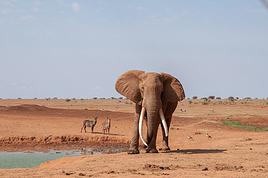 Kenya February 2020: From Tsavo to Samburu via Meru National Park
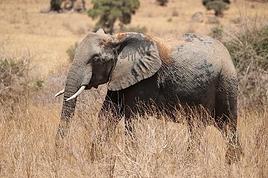 In the midst of Kenya's wildlife, October 2025
 Kenya - January 2025 - Tsavo East - Tsavo West - Samburu - Meru NP - Aberdare NP
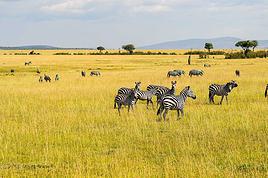 Masai Mara and Melting Pot Safari... So disappointed!
 That's Kenya too...
 Le Kenya hors sentiers battusFR
 On remonte le temps: Tanzanie - Kenya 1992FR
 From Ol Pejeta to Tsavo West (Kenya)