Voila ce qu'on me dit a propos du bateau pour les iles galapagos j'aimerai avoir votre avis :je vais aux galapagos l'année prochaine et je m'inquiète !
" mer très agitée, traversées longues et mouvementées entre les îles qui peuvent tourner à la galère pour les personnes sensibles aux mal de mer et même les autres ..J'ai vu que certains Tours Opérateurs mettent d'ailleurs les voyageurs en garde sur les circuits Galapagos............"
Sur quel bateau etes vous? nous avons fait les galapagos au mois d' aout sur le celebrity xpedition nous n' avons eu aucun probleme je n' ai pas vu de personne malade a bord nous avions par precaution mis un patch derriere l' oreille comme beaucoup d' autres passagers .
voici le programme bateau je n'ai pas de nom de bateau merci pour votre réponse
Arrivée à l’aéroport de Baltra.puis ferry jusqu’à l’île de Santa Cruz.
Arrivée à Puerto Ayora, installation à l’hôtel. Départ matinal et navigation jusqu’à l’île d’Isabela.
Départ en bateau à moteur pour découvrir les îlots face à Puerto Villamil.
Départ matinal vers Santa Cruz en bateau de ligne.
Journée d’excursion avec déjeuner inclus (sur le bateau) dans une des iles citées ci-après.
Le choix de l’île visitée sera confirmé en fonction des disponibilités, conformément à la réglementation en vigueur au niveau de l’organisation des visites sur les Iles Galapagos :
BARTOLOME
Petite île, aux paysages volcaniques spectaculaires, peuplée par des raies à aiguillons, de petits requins à pointes blanches ou pointes noires. On peut y apercevoir néanmoins des raies léopard, ainsi que des tortues noires qui viennent pondre sur le haut de la plage en novembre et décembre.
SEYMOUR NORTE
Ile aux paysages désertiques embellie par des cactus à raquette, dont se nourrissent quelques iguanes terrestres. Vous traverserez des colonies de fous à pattes bleues, puis de "Frégates magnifiques" dont les nids se mélangent avec ceux de la "Grande Frégate".
PLAZAS
Une importante colonie d’otaries et d’oiseaux marins habite l’île. Sans parler de quantité d’iguanes terrestres et des crabes rouges.
SANTA FE
Plages et lagunes habitées par iguanes terrestres, otaries, tortues marines, petits requins à pointes blanches.
A votre retour, dîner dans un restaurant local.
Nuit à l’hôtel NORTH SEYMOUR*** ou SIMILAIRE
Transfert à l’aéroport de Santa Cruz.
Arrivée à Guayaquil, puis connexion pour le vol régulier IBERIA, à destination de Paris.
Bonjour,
effectivement, quand tu fais des petits trajets entre les îles, ça va. Mais quand les trajets sont un peu plus longs pour rejoindre les îles un peu plus distantes, ça peut bien tanguer 😉
je souffre aussi du mal de mer, j'avais donc emporté des médicaments (chewing gum il me semble).
l'important c'est soit de te coucher sur ton lit et de rester tranquille, soit d'aller t'asseoir à l'avant du bateau et de fixer un point précis.
cela peut être un peu gênant par moments, effectivement, mais pas suffisamment pour renoncer à la croisière 😉
je suis allé aux galapagos en avril 2013.
j'ai utilisé des médicaments contre le mal de mer (mercalm que l'on trouve en pharmacie) à 2 reprises sur des traversées de nuit un peu houleuses, notamment pour aller à Floréana et espanola (iles un peu éloignées). c'est efficace. nous naviguions sur un petit bateau (16 passagers)
la seule chose est de prendre le médicament, soit en préventif avant ladite traversée, soit dès le tout début des premiers symptômes (ne pas trop attendre)
il y a un effet un peu somnolent.
Ca peut bouger beaucoup, nous avons eu une mer très agitée surtout quand on est allé vers l'ile de Genovesa. Ma copine qui est sujette au mal de mer a été malade pendant les 5 jours de la croisière malgré les médicaments (on était sur un petit bateau, l'encantada pr 12 passagers).
Il vaut mieux monter dans un catamaran, c'est plus stable.
Nous étions sur un monocoque, pour une croisière de 11 jours (1500€), c'était l'un des moins cher à l'époque, en 2005. J'ai eu les mal de mer assez souvent, notamment qd il fallait descendre ds la cabine. Nous étions vers le moteur, ce qui n'est pas terrible.
Peut être vaut-il mieux mettre un peu plus cher pour se sentir mieux. Mais, lamer n'était pas mauvaise du tout et naviguer la nuit n'a posé aucun pb. C'est juste la tangage à l'arrêt.
Si malgré les médicaments préventifs , vous êtes du genre "malade comme un chien" lors de la traversée de la Manche ou pour aller à Quiberon , n'allez pas aux Galapagos
J'y suis allé et , alors que je suis sensible au mal de mer , je n'ai ressenti qu'une seule fois le besoin de prendre de quoi :pendant 20 mn , moteurs de petit hors bord à FOND , le guide a essayé de nous approcher au mieux de quelques raies manta . Tout le reste du temps , aucun problème ! La personne qui parle de "longs trajets" : ? aucun n'est long
J'ai un grand ami , espoir international junior de rugby , en équipe réserve du Stade Toulousain dès 16 ans qui n'a jamais pu faire carrière : non seulement mal de mer mais lui , en plus , mal de transport par route ! quand il fallait aller jouer à l'extérieur , il dégueulait tripes et boyaux et rien n'y a fait : il ne peut pas supporter d'être passager !
Si vous êtes comme cela...
Merci à tous pour vos réponses
J'ai fait la traversée entre Guadeloupe et les Saintes ....pas été malade mais les Galapagos ne se refusent pas de toutes façons !
Ayant vécu en Guadeloupe , j'ai fait X fois cette traversée et quand ça secouait , ce fut limite pour moi : donc , sauf l'épisode spécial du hors bord , je n'ai pas plus été secoué aux Galapagos que pour Les Saintes : vous pouvez partir tranquille... avec quand même de quoi, pilules ou patch au cas où
Personnellement , en voyage , je suis ravi quand je pars avec 200g de pharmacie et que je reviens avec 195g ! ce n'est pas du poids inutile
Juste quelques souvenirs dans la "capitale " santa quelque chose , j'ai oublié son nom :
1) le soir , au retour des pêcheurs , quand ils commencent à remonter les filets et jeter quelques poissons non valables , c'est une vraie CORRIDA entre les frégates qui planent et font du sur-place avant de piquer et les pélicans sur l'eau pour se disputer les meilleurs morceaux : SUPERBE !
2) la promenade en bois est +- squattée les soir par quelques otaries ( la plage de sable en contrebas en est pleine le soir ) : pourquoi certaines préfèrent les lattes en bois au sable doux , mystère mais faites GAFFE ! si par inadvertance vous marchez sur une queue , sur 3m , c'est plus vif que vous et ce sont des morsures profondes et très douloureuses . Sur le sable ou le jour sur les plages , c'est plus simple : si vous vous approchez trop , l'otarie vous fixe et grogne ; retirez vous aussitôt
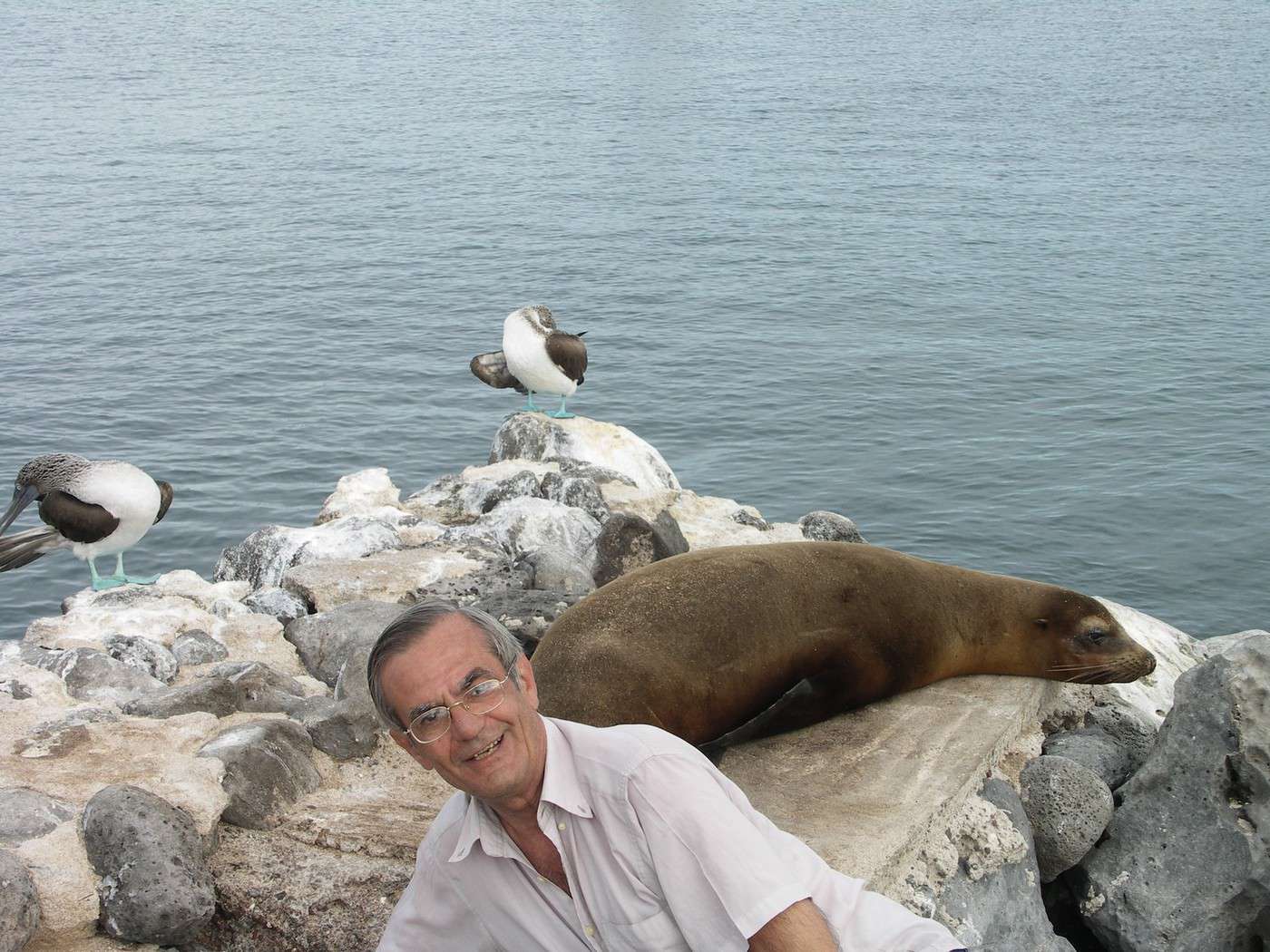
3) il y a ( avait ) un reste de jetée où tôt le matin , otaries et/ou fous à pattes bleues viennent se mettre , 5 à 10 mn : SUPERBE aussi voir photo
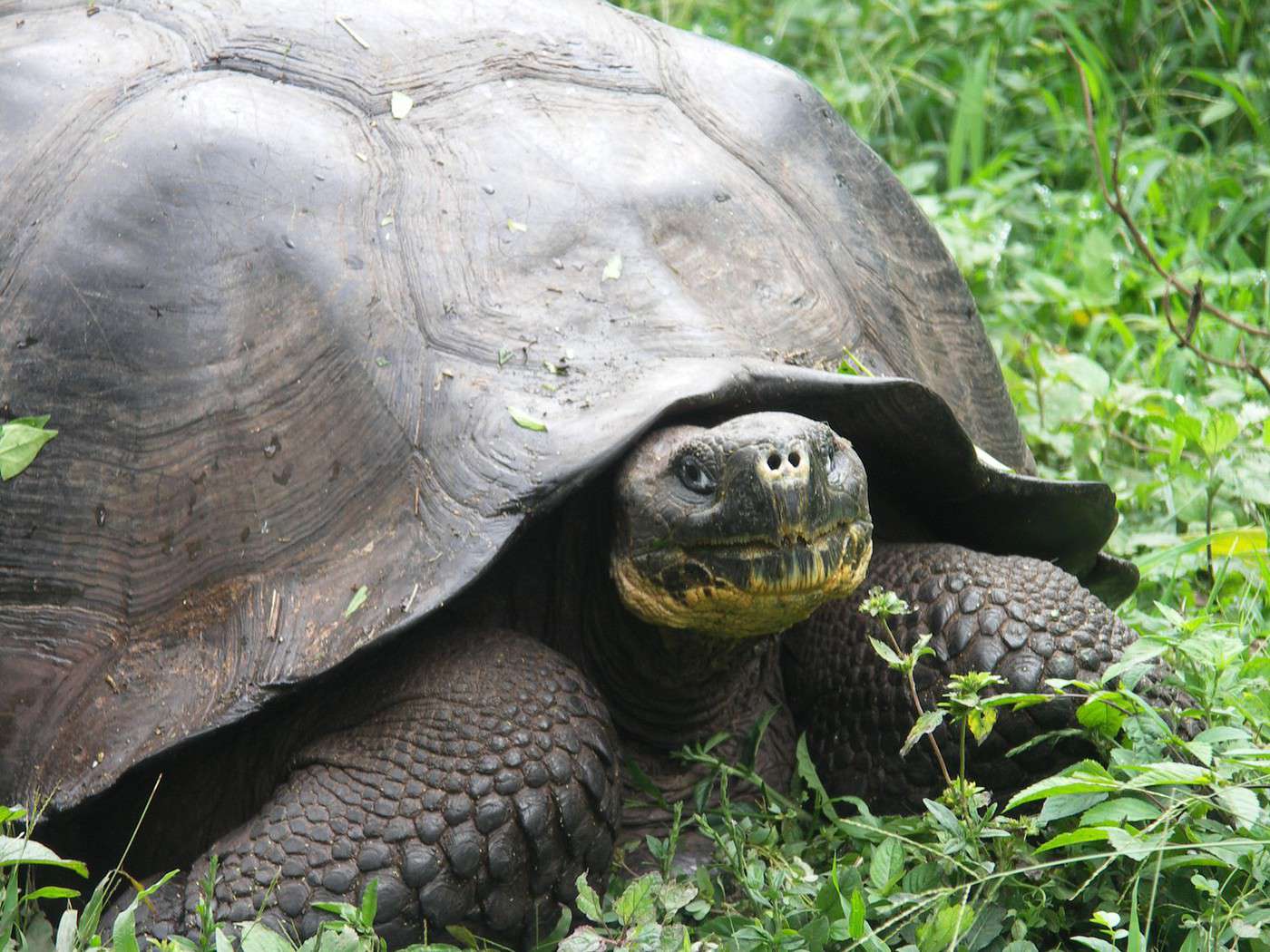
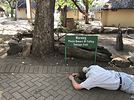
4) le principal parc aux tortues : vaste espace touffu , +- d'arbres mais hautes herbes et on doit impérativement rester sur les sentiers +- boueux . On se dit qu'on va rien voir : PAS DU TOUT; Elles ont compris que circuler dans les sentiers , même si ça rallonge, c'est plus facile : si vous en voyez une qui arrive , ne bougez plus les pieds et attendez ; elles sont très myopes et vous distinguent mal , surtout si vous avez des habits de couleur terne ; ce n'est quà +- 3m de vous qu'elles réagissent : elles soufflent et se carapaçonnent mais vous aurez eu entre temps largement le temps de les filmer/photographier cf photo
Hi there,
Do you know of any good travel insurance? Usually, I go with the one from the agency. But this time, I want to travel independently, and I'm a bit lost.
Some people told me that when you pay with a credit card, you get the bank's insurance. But after checking with the bank, that's not true. Or else, you have to add an extra option and pay for it monthly.
So, I'm looking for insurance that covers cancellation, repatriation, lost luggage, etc.
Thanks for your tips!
Hi there,
A friend has osteoarthritis in the knee and a meniscus problem, treated with regular injections.
Do you know of any insurance companies that cover pre-existing conditions in case their knee locks up in Africa?
Thanks a bunch!
A one-month trip to Australia and New Zealand.
We’re bringing our current medications (for blood pressure, cholesterol, diabetes, and antibiotics if needed) along with the corresponding prescription.
Do we need to have it translated into English, or do translations only apply to medications we’d need to refill locally during a long stay?
Hi,
I’m planning a trip to Namibia for 3 weeks in November: should I take malaria prophylaxis, which medication, when to take it, and are there any side effects?
At the end of my trip, I’ll spend 5 days up north near the Angolan border and in Etosha National Park.
Thanks for sharing your travel tips and advice!
Martine
I’m planning a trip to Japan next year and I have asthma...
I wanted to know about the regulations regarding Ventolin (Salbutamol) in Japan—is it considered a drug? Can I bring my inhaler with me, or do I need to buy a similar product in Japan?
I have two American cousins. The older one was born in Paris, and his sister was born in California. The latter is planning a trip to Paris this summer, but she recently fell ill, and American doctors don’t know what’s wrong. I had the idea of letting her take advantage of her trip to get treated here, avoiding the high healthcare costs of the American system in the process. The problem is, I can’t find anything online about this—just testimonials from French people who used to be American, but nothing for a simple tourist.
I’m traveling to Portugal with my family and I have a treatment that requires injections. How can I take a flight with these? They look like injectable pens.
Thanks
We’re planning a trip to the Philippines from April 22 to May 8, 2026. Flight from Geneva with a layover in Turkey and Manila. Our itinerary: Angeles – Busuanga – Palawan…
The Philippines are a dream destination, but is it possible to travel there safely? I’ve heard that checked luggage often gets lost, tap water isn’t safe to drink, and mosquitoes are everywhere.
For water, what’s the best solution to carry in a backpack? Is a filtering water bottle 100% reliable?
For mosquitoes, should we treat our clothes with repellent? Are you vaccinated against hepatitis A, malaria, or dengue? Or is there an oral treatment to take?
Hi there,
Does anyone know if there’s travel insurance for someone who’s had a heart attack?
I can’t find an insurer that covers a pre-existing condition, even if it’s stable.
Thanks so much!
Hi everyone, next month my wife, our 6-year-old daughter, and I are flying to Thailand. It’ll be a great chance to soak up some sun—something we’ve been missing lately here in France! But speaking of sun, I burn easily, and our daughter even more so. I was wondering what SPF to get for sunscreen and whether it’s better to buy it there or before we leave? Thanks for your tips!
Hello,
We’re planning to spend 3 months in Madagascar starting in mid-February.
Areas: Mahajanga, Tulear, Diego Suarez, and Sainte Marie—the order isn’t set yet. We’ll either drive for part of the trip or take flights.
We’ve heard all sorts of things about required vaccines and medications (is anti-malarial mandatory?). What’s the exact situation for travelers?
I’ll come back to you for other topics (like finding a reliable driver, among others).
Thank you.
Best wishes to you all,
Nicole
We're about to go on an organized trip to South Africa, including Kruger Park. We were told that Malarone should preferably be taken in the evening at the same time during a meal. But it's hard to know what time we'll have dinner, especially since I've read that in South Africa, dinner is usually around 6 PM.
I'd love to hear from people who've been on organized trips to this destination and could share their experience. We were thinking of taking Malarone around 7:30 PM, assuming dinner would be closer to 7 PM than 6 PM. Also, if the meal ends up being earlier or later than when we take the pill, would a cookie or a piece of bread be enough to take with Malarone?
I’m planning to set off on a "round-the-world" trip/long journey at the start of next year, lasting between 4.5 and 6 months. For now, the itinerary looks like this: South Korea (2 weeks) -> Japan (1 month) -> New Zealand (1 month) -> Argentina (1 month) -> United States (1 month).
I’m on medication (paroxetine 20 mg/day) and was hoping to bring enough for the entire trip so I wouldn’t have to find a doctor on the spot, deal with a molecule that might be slightly different from what’s available in France, or wonder if that’s even a possibility. Basically, it seemed simpler on paper...
But after looking into the regulations for each country, it’s suddenly way less simple . Many seem to only allow the amount corresponding to the length of your "stay" in the country... Which is a problem if I arrive in Korea with 4.5 months’ worth of medication, for example.
After all that, and even though I’ll obviously contact the relevant authorities in each country (fingers crossed for a response 😛), here’s my question:
Has anyone here had any experience with this? (Even if it’s a different medication or different countries, any input would be helpful!)
I’m trying to plan a trip to Dubai with my mom. I’ve seen that some of our medications require prior authorization (sleeping pills, codeine, anti-anxiety meds, etc.).
I’d love to hear from anyone who’s been in our situation. A friend of mine applied to bring her tramadol, but it was denied—though she needed high doses!
Has anyone here gone through this process? Do we *really* need a prescription in English?
We just found out my wife is pregnant, and we’ve planned a trip to the Barlavento Islands in Cape Verde this November.
We’d like to know if there’s a real risk of Zika contamination on those islands, because from what we’ve found online, the recorded cases are old and come from the Sotavento Islands.
We’re thinking about canceling our trip.
If you’ve recently traveled to Cape Verde or live there, do you have any thoughts on this?
hi, I’m looking for information about the possibility of returning to Thailand with a portable liquid oxygen system and whether it’s possible to recharge it in Thailand, especially in Chiang Mai. thanks
I’m starting a new discussion on this topic since there doesn’t seem to be a recent one.
I have several chronic conditions (including asthma and related ones), and I’m planning to travel for a year across different countries.
Generally, I understand it’s possible to travel with approved medications (which should be my case), but often with a limit of 3 months’ worth of treatment.
Since I’m going for 12 months, that means for three-quarters of my trip, I’d have more than 3 months’ worth of medication.
I plan to bring my prescriptions with the INN (International Nonproprietary Name), as well as the original packaging (even though it’s a nightmare, but from what I understand, it’s necessary). But I’m not sure if that’s enough...
Have any of you been in this situation before? How does it work at customs—do I need to declare everything that exceeds the 3-month limit? Do I need a letter from my doctors?
I'm currently in Bangkok: How can I find a good doctor for a consultation? It's for a friend who'd like a second medical opinion compared to what they got in their country of residence.
Any professionals you'd recommend? How much does it cost?
I’ve already visited quite a few countries across several continents, but I’m pretty new to Asia.
I’m planning a trip to Thailand in October or November, and I wanted to check about health precautions: malaria treatment, vaccinations (hepatitis A or others...).
I’ll mostly be in the northern region, around Chiang Mai, where I’ll spend a lot of time in nature and the mountains. Then I’ll head south to Phuket or Krabi and visit Khao Sok National Park. I’ll finish up in Bangkok, with a likely detour to Kanchanaburi.
From what I understand, for a stay of less than 60 days, I don’t need a visa (I’m a French national)? I just need to fill out the TDAC form 3 to 5 days before arrival?
Hi there,
I was wondering if anyone is heading to Cuba soon and could bring me some over-the-counter Sildenafil (viagra) tablets—available at Varadero Airport, among other places.
Hi there! So, I'm hesitating about taking a long trip. I'd like to go away for 2 to 3 months and travel across several continents. I’d love some advice. I often have unexplained allergies and need to follow a daily treatment for my diabetes (insulin). I think I can get authorization from my doctor to travel for 6 months with the treatment—is that correct? After those 6 months, is it possible (instead of bothering a relative to send the medication) to see a foreign doctor to get another 6-month travel authorization? How does it work at the airport? Do I need just one medication transport authorization, or do I have to request a new one in each country (once the treatment runs out) for both the flight and a DCI? Also, travel insurance doesn’t cover chronic illnesses, so will I have to pay for foreign consultations out of pocket? I’m not sure if I explained myself clearly. Oh, and just to repeat—travel insurance doesn’t cover chronic illnesses, so foreign consultations will be at my own expense? Thanks in advance for your help!
Hi everyone.
After years of traveling to the USA without any medical insurance subscriptions—and luckily never having any major health issues (though I did get a scorpion sting buried in the sand at CBSouth, 😇)—life has caught up with us, and we’re now being forced into "wisdom" and leaving our carefree days behind.
So, I’m looking for the best compromise for a 2-month health insurance plan.
I’ve read the discussions on this topic, but the most recent one is from last year, and I’d love your take on the current situation.
I’m familiar with the usual options like Europ Assistance and AXA, but I’ve just discovered Chapka and Heymondo (the latter seems interesting in terms of both price and coverage).
What do you think of these last two? How do they compare in terms of value for money against the bigger companies?
Hi,
We’ve planned a 3-week trip to Bali this summer with our 7-year-old daughter. The itinerary includes Sanur, Nusa Lembongan, Sidemen, Amed, and Ubud. The more time passes, the more we read about people getting sick—some with mild to severe traveler’s diarrhea, and many ending up in the hospital. We, as parents, have been through it in Egypt with pretty bad cases, but we’d really like to avoid that for our daughter. Even though there’s no zero risk, and we’ll be careful, can any of you reassure me? Not everyone got sick, right? I’d love to hear positive feedback from parents, but not just them 😊. Thanks in advance!
Hi there...
I’m traveling with a friend for a month in November.
We booked our round-trip tickets from Paris to Phnom Penh, and yes, I know—it was a mistake. We should’ve flown out of Laos, but here we are.
But is it doable to backpack through both countries in a relaxed way?
I’ve seen that the transport takes a while...
Thanks so much for your replies.
Hi there,
I’ve started looking into getting dental implants, possibly in Costa Rica or Mexico.
Do you have any clinics to recommend or ones I should avoid?
For the next steps, I need to choose between Cuba Medika or Medigo—these are agencies that help with medical procedures. Do you have any info on either of them?
Hi everyone, a question for those who’ve been lucky enough to visit Raja Ampat—should you consider preventive malaria treatment given its proximity to Papua? And how was the food hygiene situation?
Thanks for your feedback! !
For several years now, increased aggression has been observed in Cape fur seals.
At least 70 unprovoked attacks on humans.
It was recently confirmed that this is due to rabies.
The suspected origin is contamination in Namibia by jackals.
The contagion seems to be spreading.
Preventive vaccination (of the animals) is being considered.
Just a reminder:
Rabies affects all mammals.
Once symptoms appear—sometimes weeks or even months later—death is inevitable.
It’s the bite that transmits the disease.
There are so-called "furious" forms with aggression, but also forms without aggression.
In case of a bite, in addition to standard wound care, tetanus prevention… rabies prevention is essential.
Stay careful out there…
Seeing seals from a boat along the coast isn’t rare in these parts…