last edited Dec 11, 2019
Air Travel Principles
Location Map of Destinations
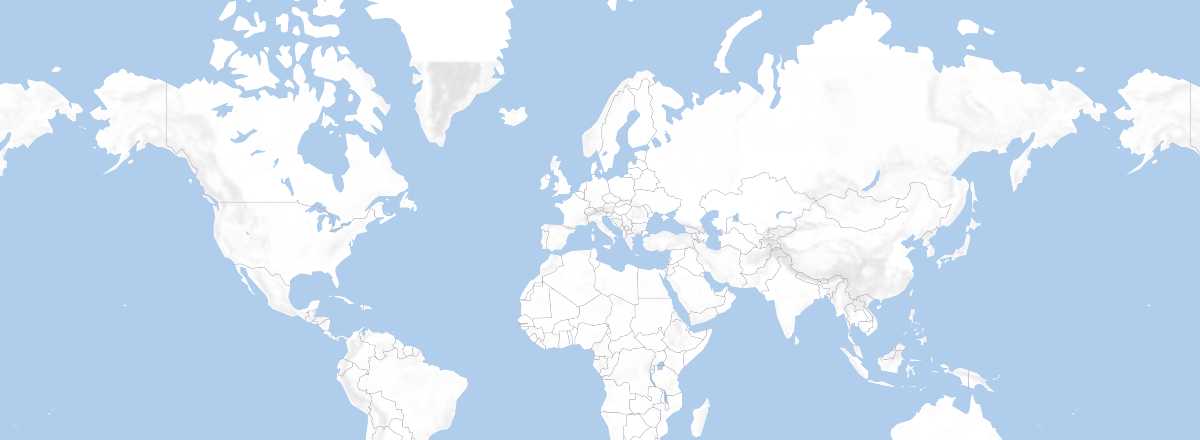 Destinations
Open the interactive map
Destinations
Open the interactive map
Major Air Routes
Routes
While you can fly anywhere from anywhere by plane, some air routes are still more financially attractive than others. So, of course, it's best to use them.
It's important to know that the "budget-friendly" major air routes correspond to high-traffic areas. Broadly speaking, in both directions, they run between:
-# Europe and other continents,
-# North America and the rest of the world except Africa,
-# Southeast Asia and the rest of Asia, the USA, the Pacific, and Europe.
So, a round-the-world trip that follows these routes can be obtained at a good price. In fact, the simplest or most traditional formulas always revolve around the Europe/Southeast Asia/Pacific/North America/Europe axis. These are generally the most economical, averaging 2 000 € for basic but interesting options.
Entry/Exit Points
Beyond these main routes, it's also preferable to carefully choose your entry and exit points for each region. Generally, these are large cities, often hubs for major airlines, offering a wide range of destinations at rather attractive fares.
North America: Prioritize New York and especially Miami for continuing to the Caribbean and Latin America. Also, Los Angeles for Latin America, the Pacific, and its Asian surroundings. Additionally, other North American carriers' hubs like Vancouver, Houston, or Atlanta.
Central America and the Caribbean: Both are considered, in terms of air routes, somewhat an extension of North American routes, particularly via Los Angeles and/or Miami.
South America: There aren't many interesting options except Buenos Aires and São Paulo for continuing to South Africa and/or Australia, or Santiago de Chile for the Pacific/Australia via Easter Island and Tahiti.
Pacific: Hawaii is a stopover between Australia/the Asian Pacific rim and North America. As for Australia, Sydney is a good starting point for Southeast Asia, the USA, or Chile/Argentina. Auckland is also worth considering.
Asia: Bangkok and Malaysia offer many good connections to multiple destinations, including South Africa (and even Argentina) for the latter. Delhi, and to a lesser extent Mumbai, are possible stopovers between Europe and Southeast or even Central Asia. Additionally, other Asian carriers' hubs like Singapore, Taipei, Hong Kong, Beijing, Tokyo, or even Bali and Jakarta.
Middle East: In the region, Istanbul is a good crossroads for continuing to Central Asia and other Asian destinations.
Africa: This is proportionally the least well-served continent. Overall, Johannesburg is the hub for Africa to other continents (or neighboring countries). However, for the northern part, it's often better to go back through Europe rather than hoping for economical connections to the rest of the world.
Airlines
In addition to major air routes, it can be useful to know the main routes of a few carriers that may be helpful in building a round-the-world (ticket), at least in terms of its framework. Especially if you want to plan your air itinerary yourself.
For each airline below, details of their networks can be found directly on their websites.
Airline Alliances
As already mentioned, these are groups of several airlines that effectively have a joint network of hundreds of destinations worldwide. Logically, this is perfectly suited to round-the-world trips and is offered through their pass systems.
The three main alliances are One World, SkyTeam, and Star Alliance.
The "Must-Haves"
These are the few airlines with "multi-continent" routes that are very useful for a round-the-world trip. Most are also members of alliances but can be chosen independently by those who do not opt for One World and others. However, it's best to prioritize partner airlines to, as always, limit costs.
Among these airlines: Air India (India), Air New Zealand (New Zealand), Delta (USA), Emirates (UAE), Malaysian Airlines (Malaysia), Qantas (Australia), South African Airways (South Africa), Turkish Airlines (Turkey), United (USA).
Trans-Siberian Railway
While it's not an airline, the Trans-Siberian Railway is part of some round-the-world trips offered by agencies and can easily be combined with air travel for a long-haul journey. This legendary train connects (on its main route) Moscow to Vladivostok, with "branch" lines such as the Trans-Mongolian and Trans-Manchurian railways allowing travel to China.
A Few Other Air Travel Tips
Miscellaneous...
A round-the-world ticket with one airline (and its partners) is, in a way, also considered a round-trip or circular flight and is therefore theoretically more economical than a series of one-way tickets bought as you go.
Don't forget stopover systems either, which mean, for example, that a Paris-Bangkok (stop)-Beijing flight with Thai Airways will generally cost less than two separate segments, even if the second is bought in Thailand.
Similarly, many airlines offer the possibility of what are called "combinations," meaning you can arrive in one city and depart from another in the same region.
It's important to know that almost everywhere in the world, for the same distance, a domestic flight is much cheaper than an international route.
Finally, there are numerous passes that also allow you to visit a country, a region, or even sometimes a continent.