last edited Dec 11, 2019
Money, Budget, and Shopping for Sweden
Location Map of Sweden
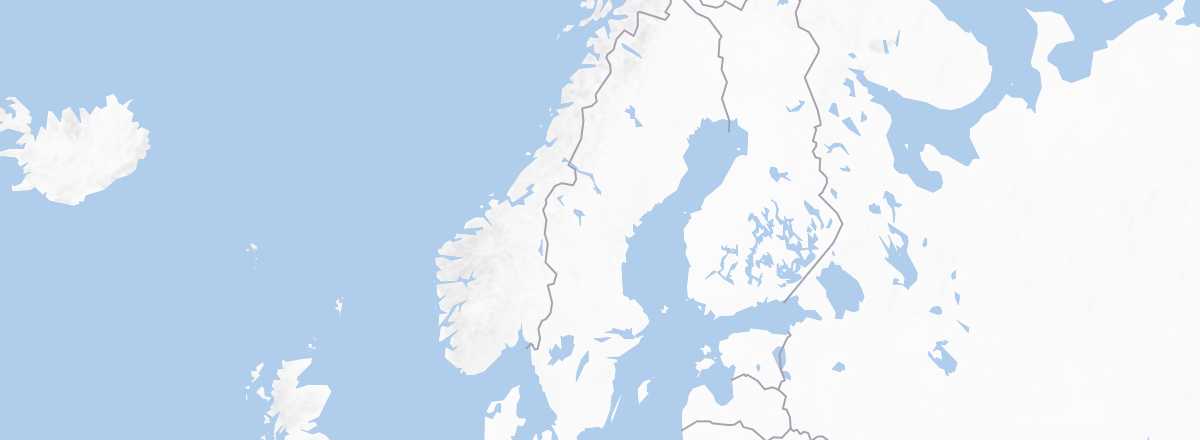 Sweden
Open the interactive map
Money
Currency
- Currency: Swedish krona (100 öre).
- Banknotes: 20, 50, 100, 200, 500, and 1000 kr.
- Coins: 1, 2, 5, and 10 kr.
- Exchange:
Since 2010, there are no longer any coins denominated in öre. As for the euro, it was rejected by the population in a referendum and still does not interest Swedes to the extent that new coins and banknotes in Swedish kronor were put into circulation between 2015 and 2016.
Exchange
Major currencies can be exchanged without any problem at exchange offices or banks that offer this service. These are generally open from Monday to Friday, 10:00 AM to 3:00 PM (4:00 PM/5:30 PM on Thursdays), with more flexibility in train stations and airports. You can also easily withdraw money from the numerous ATMs that are generally easy to find.
Which currency to bring
The currency of your home country; euros, Swiss francs, Canadian dollars, etc., can all be exchanged without difficulty. You can also easily order kronor from your bank before departure, though this does not necessarily mean the exchange rate will be better than on-site. Alternatively, some local shops occasionally accept payments directly in euros.
Payment methods
Card payments are possible almost everywhere. However, be mindful of bank fees if you make too many small purchases or withdrawals.
Upon return
You can exchange any remaining kronor upon return. But as always, it’s best to avoid ending your trip with a surplus of local currency that you’ll need to exchange later.
Budget
Scandinavia is traditionally an expensive travel destination. However, Sweden remains less costly than countries like Iceland, Denmark, or Norway, with a necessary budget roughly comparable to what you would spend in France.
But it all depends on how you travel, as while each expense category may seem pricey, there are often similar but more economical alternatives. For example, while traditional accommodation is expensive, camping is not. While dining out can be a luxury, the "dagens rätt" (daily special) options are affordable, as are snacks, takeaways, or picnics. While public transport requires a certain budget, there are always special offers and promotions to take advantage of if you’re flexible with your schedule. While museums and attractions are paid (though not necessarily overpriced), there are discounts, as well as days or time slots when some are free. And so on. In short, if you take the time to plan and look for "great tips" or alternatives, you can travel in Sweden on a daily budget of 60 to 80 € per person (based on two people).
What can be expensive
- Not seeking out alternatives or good deals for major expenses.
What doesn’t have to be expensive
- Flights to get there from much of Europe.
- Camping.
Price range
- Budget accommodation: expect at least 15 € per night in a dorm (or for two at a campsite) and 30/40 € for the cheapest double rooms in youth hostels.
- Mid-range hotel double room: 100 € minimum.
- Restaurant meals: less than 10/12 € for lunch on weekdays with the "dagens rätt" (daily special) at restaurants (or in brasseries and other takeaways), otherwise budget around 25/30 € per person for a full menu.
- Budget car rental:
- 100 km by bus: roughly the same as the cheapest train option.
- 100 km by train: at best 4 to 5 € per 100 km, though prices can vary from simple to triple for the same route depending on the time or day.
- Domestic flight: at best 50/60 € one-way on the busiest routes from the capital (Malmö, Gothenburg, etc.).
- Urban taxi:
- Urban bus:
Bargaining and tipping
Bargaining is not customary in Sweden. As for tipping, hotel and restaurant bills always include service charges, so tipping is not obligatory. Only taxi drivers may expect a tip of around 10% of the fare.