last edited Dec 11, 2019
Border Situations
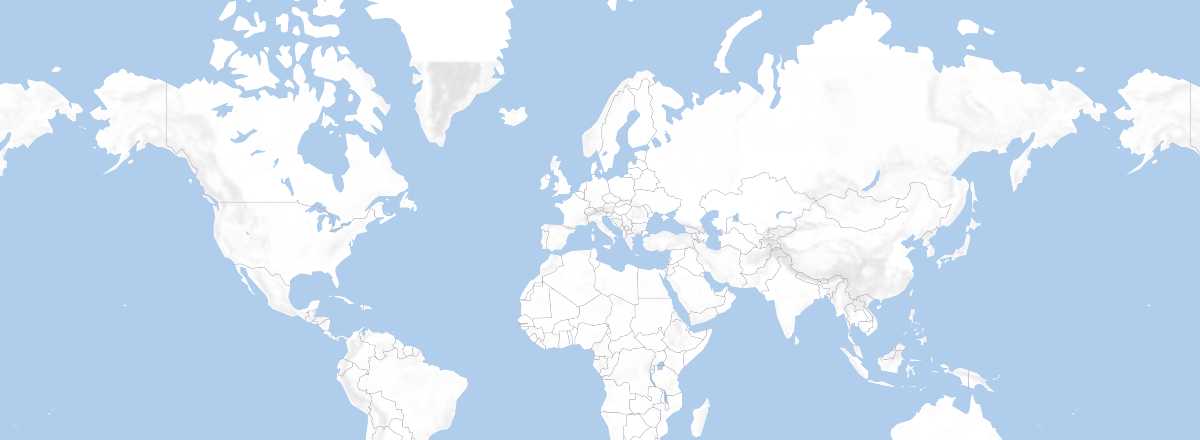
Location Map of Destinations
 Destinations
Open the interactive map
Destinations
Open the interactive map
North and Central America
No major issues except for the sometimes overly meticulous and unpleasant nature of U.S. customs, and especially the impossibility of traveling overland between Central America (Panama) and South America due to natural barriers (the Darien Gap jungle) and the lack of roads. Additionally, the area is known to be high-risk.
South America
Generally few problems except, of course, for the South/Central America crossing. Just take the usual precautions at Amazonian borders or when heading toward Colombia.
Colombia and Neighbors
- Panama: Due to natural barriers (the Darien Gap jungle) and the lack of roads, traveling overland between Central and South America remains impossible. Moreover, the area is considered high-risk due to various types of trafficking and potential incursions by Colombian guerrillas. Therefore, most travelers wanting to move between the two regions opt to fly from Panama to Colombia (or occasionally Ecuador) or, since late 2014, take a ferry.
- Brazil or Peru: Via the Amazon, there are crossing points, but most, if not all, border zones with Colombia are considered dangerous. If entering Colombia is unavoidable, it’s best to do so via the river port of Leticia on the Amazon, at the tri-border area.
- Ecuador or Venezuela: Here too, the border area is sometimes advised against due to risks linked to the presence of Colombian guerrillas/traffickers.
The Guianas
- Venezuela - Guyana: Impossible due to the lack of roads between the two (Amazon rainforest). Additionally, there is an old territorial dispute between the countries.
- Guiana(s) - Brazil: Rivers and the Amazon rainforest serve as borders. No issues between the Guianas themselves or between Guiana and Brazil, with possibilities via border rivers. However, in the Amazon region (southern Guianas), only Guyana offers a way to connect with Brazil (and even then, it’s not straightforward).
- Brazil - Neighboring Countries (Amazon regions): Crossings (by road or river) are possible at various points. However, precautions are necessary due to natural challenges and risks linked to trafficking (and guerrillas in Colombia), which are traditionally present in these areas.
Asia
North Korea and Neighbors
Borders closed with South Korea, China, and the Russian region of Vladivostok.
China and Neighbors
Depending on the case, you’ll find borders that are easy to cross (Vietnam, Mongolia, etc.), others with some difficulties (Central Asia) or conditional access (Myanmar), and a few that are closed (North Korea, etc.).
- Russia, Mongolia: Several possible crossing points, including by train.
- North Korea, India, Bhutan: Borders closed.
- Vietnam, Laos, Myanmar: China shares a long border with Myanmar, Laos, and Vietnam. Of these, the border with Vietnam is the easiest and is actually recommended. You can also enter via Laos in the Boten region (though other access points are theoretically not open to foreigners). As for Myanmar, while one crossing (the "Burma Road") is possible, you’ll quickly find yourself stuck.
- Nepal: Borders with China/Tibet are irregularly open or conditional. While it’s easy to cross the Nepali border when coming from Tibet (by bus or hitchhiking), it’s not "legally" possible in the opposite direction.
- Tibet: Access to Tibet from China requires a special permit. Occasionally, depending on events, the Chinese government may temporarily ban foreigners from entering.
- Pakistan: Possible to travel from Islamabad to Kashgar.
- Afghanistan: Theoretically possible but highly regulated and not advised via the Wakhan Corridor.
- Tajikistan: In principle, possible.
- Kyrgyzstan: Possible to cross independently to/from Kashgar via the Torugart Pass, but difficult and expensive.
- Kazakhstan: Border open.
India and Neighbors
For India, there are several access points from Nepal and Bangladesh, as well as very locally from Pakistan (a single crossing point) and Bhutan (access to the border town only for individuals). No possibilities, however, to/from Myanmar or China/Tibet.
Southeast Asia
Depending on the location, traveling overland between countries in Southeast Asia can sometimes be a bit complicated or at least require prior information, as certain possibilities may change over time.
- Myanmar: A prime example of variability. The border is closed if arriving from the west (India or Bangladesh). However, in 2007, the first border post between Laos and Myanmar opened 500 km north of Vientiane, allowing overland travel between the two. As for Thailand, while some overland crossings are permitted (but not in the Myanmar-Thailand direction), they don’t always allow you to leave certain zones, often forcing travelers to take a domestic flight to reach Mandalay or Yangon. In short, it’s best to fly if planning to visit Myanmar.
- Laos and Cambodia: No difficulties with either country when crossing to Vietnam or Thailand (several options). Between them, a crossing along the Mekong exists. However, it’s always best to check ahead, as situations can change without notice—especially if you plan to get visas at the border.
- Borders with China: See above.
Others
Borneo
You can travel between the Malaysian and Indonesian parts without necessarily taking a flight.
Papua - Irian Jaya (Indonesia)
In principle, overland travel between the two remains prohibited, as does maritime travel.