last edited Dec 11, 2019
Travel Grants and Sponsors
Contributionsversion #1created Dec 11, 2019Report this pageLatest contributions in this guideContributors to this guide
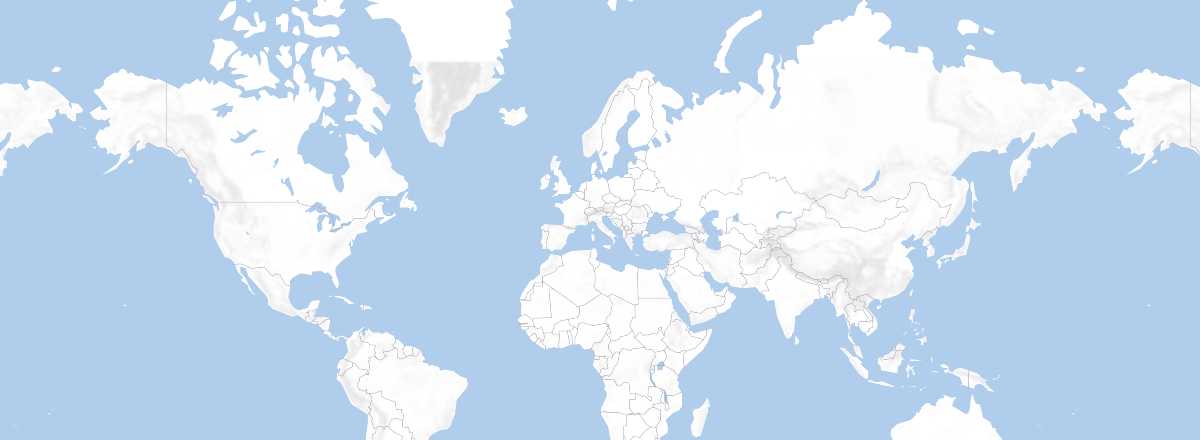
Location Map of Destinations
 Destinations
Open the interactive map
A Good Project
Travel grants (and sponsors, of course) are a great way to partially fund a project. There are quite a few of them, but they’re not always well known to the general public, which is a shame because they offer a lot of opportunities, especially for young people and students. In fact, for those who know how to go about it, securing some of these grants can be an excellent first step for anyone who dreams of making a living from their passion for travel one day...
Choosing and Feasibility of the Project
Obviously, everything starts with a project—an original idea, preferably driven by passion. Just like generous donors, the possible and chosen travel themes vary widely. However, if the project only reflects a simple desire for a holiday, there’s no point in hoping for anything...
The Right Theme
It’s important to know that pure adventure rarely stands a chance these days. What’s most sought after now are "intelligent" cultural, sporting, or humanitarian projects. There’s no need to mix all these themes to succeed. No need for an "alibi" objective.
Still, beyond the idea itself, trends in destinations or adventures—including media appeal—shouldn’t be overlooked. They can sometimes work against the applicant due to the "already seen, already done" effect (e.g., motorised projects in Africa), or, conversely, support their case (e.g., a topic on a country opening up to tourism).
Similarly, without giving up on your desires, be aware that for private funding, the project’s image should ideally align with the organisations you plan to approach. But be cautious: a project in a country or region currently in the news due to insecurity is unlikely to appeal to juries. The world is vast, and donors are still somewhat responsible for their laureates.
Feasibility
The project must above all be original and innovative, with a clear and credible goal that matches the applicants’ real abilities—both physical and psychological. There’s no point in planning a year-long trip in difficult terrain if you’ve never spent more than three weeks outside Europe!
Having some prior experience in the environment or type of adventure you’re about to undertake is a plus. So why not test yourself first through circuits offered by highly specialised adventure travel agencies or work with organisations active in your chosen field? These experiences will strengthen your application when the time comes.
Also, meeting people familiar with the chosen region or who have carried out similar projects will allow you to benefit from their advice and experiences. Likewise, bibliographic (not just tourist guides!) and cartographic research can help avoid some on-site setbacks. And for some major projects, why not consider a scouting trip? In any case, gathering information and contacts will help establish feasibility and the necessary planning for any project.
Help
Not all applicants know this, but donors often provide past winning projects on their websites, along with various documents to help shape and present projects and applications. Some even offer personalised support throughout the process. In short, these resources and aids shouldn’t be overlooked...
Preparing the Application
How to prepare an application, whether in paper or digital format?
Some General Rules
Generally, the presentation of a project is as important as the idea itself (especially if competition is fierce), because in most cases, potential funders will first discover the project through the application. So, to make them want to read it, don’t neglect this aspect—quite the opposite.
While there’s no magic formula, there are still some chapters or sub-chapters that are better to include in an application. The order is somewhat arbitrary, and you can choose to develop or ignore some. Depending on the case, it’s up to each applicant to judge based on their audience, while respecting the specific regulations of certain grants (and the application deadline). But in any case, it’s better to be concise and get to the point (maximum 10 to 12 pages).
Since a project isn’t prepared in a few days, it’s recommended not to leave it to the last minute. And of course, don’t wait for the results of one application before approaching other funders.
Application Elements
For a "paper" application (though many points also apply to online applications).
General Presentation, Format
It should make the reader want to continue and ideally strike a balance between being too sober or academic (off-putting) and too flashy (loss of credibility). Indeed, appearances matter. In short, your application should reflect who you are.
That said, there’s no need to spend a fortune, though sometimes having a few "high-end" applications can help convince certain potential partners. Choose the standard A4 format if possible and avoid anything that might complicate reading (dense text, small fonts, etc.). And of course, use all the advantages of digital tools to add depth to your text.
Cover
Reflecting the application’s format, it should include four essential elements: the project title, one or two catchy lines (like a slogan), your contact details, and a photo, drawing, or illustration symbolising the project. Then it’s up to you to find the best layout. Note that the application can be presented as a bound document (for a larger number of pages) or corner-stapled sheets (for fewer pages).
Project Summary
Always essential, if only because some of your audience will only read this. You need to present your idea, its originality, and its characteristics. Be brief, clear, direct, and get to the point—using short sentences, a lively style, and evocative headings and subheadings.
Curriculum Vitae
This is nothing like a job CV. While you can briefly mention your education and/or professional activity, the goal is primarily to highlight your travel experience and your ability to manage, plan, and carry out your project in a few lines.
So, it’s useful to mention your main trips, specifying any particular aspects (long duration, unique contexts, etc.), as well as any experiences directly related to the project. In the application, this CV can simply be presented as a box. If the trip is to be done in a group, you can also add each person’s role within the team, or even how the team was formed.
Goals, Itinerary, Entry Requirements, Equipment
These are chapters that either expand on the key points outlined in the project summary or demonstrate its good organisation. The organisational aspect will be particularly emphasised for grant applications or if you’re a "beginner traveller," or when equipment is crucial to success. However, for more experienced travellers and sponsor searches, this point may become secondary.
Budget
If your idea is of interest, this chapter will be scrutinised in detail.
It should include two columns with complete expenses and income by category (also expressed in percentages). Don’t hesitate to provide some details. And while it’s good practice to slightly overestimate some costs, they must remain realistic to avoid undermining the overall credibility.
In general, expenses include transport, accommodation, food, equipment, logistics (communication), and miscellaneous (insurance, visas, etc.). Income includes personal contributions, grants, donations, sponsors, and others. This can be money but also in-kind contributions or various facilities. For income, clearly indicate how you plan to obtain the missing amounts to balance the budget.
Promotion and Communication
These are essential elements of an application, especially if you’re seeking private sponsors. This is where you’ll include letters of support, promises of reports or publications, your press coverage, and generally any document showing the interest your idea has generated. All proof of dynamism. Often, it’s the media aspect and its potential impact that will most appeal to your future funders.
Final Tips
If sending an application by mail, include a cover letter that reintroduces you if you’ve already met your contact or if you have recommendations, or that introduces your project and its potential interest for future partners. Of course, avoid generic letters and make sure you know at least a little about the activity and/or people you’re approaching.
Finally, remember that an application, like a project, evolves over time. Have many people read it, listen to (and accept) their feedback, and don’t hesitate to modify it over time.
Standard Application
In some cases, the donor may require their own standard application with predefined chapters or questions that the candidate must answer.
Here too, take care with your work (and handwriting), answer everything requested, and even if not specified, attach your own application (or at least a summary) as an appendix. This will always be a plus, allowing the jury to get a clearer idea of the project if needed. However, unless it’s a photo or video grant, avoid documents on CD-ROM or USB drives.
Online Project/Application
Alongside the paper application, also set up a dedicated space for your project on your personal website. Beyond reaching a wider audience (and increasing outreach opportunities), this confirms that you know how to use digital tools.
Of course, give your project a distinct place and avoid mixing it with other more "personal" content on your blog. If possible, make the page address simple and create a specific email address for the occasion (or even a Facebook, Twitter account...). And most importantly, don’t forget to share all this with your contacts, including mentions in paper documents.
As for the format, keep it simple, airy, and concise with rather sober pages, avoiding unnecessary animations or anything that might slow down or complicate page display.
Promoting Your Project
Whatever you may think, communication (or promotion) is now key to success in many areas, including sometimes even for simply obtaining a travel grant.
Possible Grants
What to Expect?
While anything is possible with sponsors, in the case of grants, the amount of funding—though quite variable—is still fairly limited. Even for a first prize, grants rarely cover the full budget needed for the trip, as a grant is primarily a reward for initiative and an encouragement to carry it out, not full funding. However, it does bring significant credibility with future sponsors, other grants, or the media.
Note that grants can come in the form of cash prizes, equipment, or various on-site facilities. Also, being able to associate your project with the name of certain organisations or structures can be considered a grant, given the credibility and doors it can open for the rest of the adventure.
Project and Laureate Profiles
While there are no strict rules and everyone has a chance as long as they meet the regulations, some profiles or types of projects are more likely to catch attention... or not.
Projects
The Pros
Logically, a well-structured, realistic, and innovative project stands a good chance. Especially if it ultimately brings something to its author and, for certain categories like humanitarian work, obviously also to the communities encountered. It’s also better if there’s alignment between the applicants’ abilities or experience and what they plan to do, whether in terms of travel type (duration, destinations) or on-site activity (necessary knowledge, practice, etc.). Beyond the trip itself, thinking about its impact upon return is useful. Planning conferences, exhibitions, publications, etc., is generally appreciated. Finally, a project that’s already supported or somewhat publicised often gains better credibility.
The Cons
Above all, poorly prepared or rushed projects logically have the least chance, as do those that amount to nothing more than a holiday plan. Conversely, projects that seem too professional—or appear as such—may be considered outside the scope by juries. Also, watch out for the budget: unjustified or poorly estimated costs don’t go over well. Similarly, if organisational and logistical expenses for the team overshadow those planned for fieldwork, that’s not always a good sign. Across all themes, humanitarian work is the trickiest due to the potential on-site consequences of a (poor) project. In fact, humanitarian applications are perhaps the hardest and most delicate to prepare. And of course, a trip that in any way presents a risk won’t really stand a chance.
Applicants
The Pros
Without generalising, actions carried out by one or two people are often better perceived than group efforts. For the latter, one might sometimes wonder what each person’s role is, other than inflating the project’s budget with seemingly unnecessary presences on site. Similarly, the motivation—or even enthusiasm—of everyone involved should shine through in both the application and any interviews. However, be careful not to overdo it.
The Cons
The know-it-all attitude, having done and seen everything, often goes down poorly with donors and on site. The same goes for the naive, "saviours of humanity," or those who confuse travel with psychotherapy. In another area, it’s true that if for any reason the applicant (or project) doesn’t seem to have major financial difficulties, they won’t be seen as a priority (or will receive less aid) compared to others.
Main Travel Grants and Donations
Note that beyond what’s listed here, there are many other grants often offered at local or regional levels. Some, however, aren’t regular or don’t have much publicity.
So don’t hesitate, whatever your project, to contact your town hall, department, or region to find out if they offer grants or other forms of funding.
About Sponsors
In the world of sponsorship, anything is theoretically possible...
Searching for Sponsors
Overall, whether in choosing and feasibility of the project or in preparing and following up the application, everything that applies to travel grants also applies to sponsor searches. Simply put, many grants are primarily aimed at young people or students, and the aid is rather disinterested, as it’s mainly an incentive. Hence, perhaps, less strict requirements in terms of the project’s substance and form than when approaching a sponsor or patron.
In sponsorship, since anything is theoretically possible, it’s more than useful to add a targeted (and budgeted) action plan to your efforts, focusing on potential funders (large companies aren’t, by far, the most interesting). And of course, in this case, it’s also and above all the sponsor’s interest that should be highlighted throughout the application. The only downside is that you might gradually see your project transformed into someone else’s, with all the potential abuses that entails. But it’s also up to each person to set their limits.
Additional Resources
- Sponsorship Questions: covers everything about sponsorship: news, case studies, useful addresses, funding aids...
- Foundations Portal: among other things, grants, subsidies, competitions, and others offered by foundations or patrons for all types of projects.
What to Ask For?
While with grants you know what to expect—since it’s fairly easy to learn about donors, participation conditions, or aid amounts—with sponsors, the range is much broader and vaguer. In fact, it’s up to the traveller to set the terms of their partnership and be convincing enough to get what they want.
Different Levels
The ideal is to propose a partnership at different levels, outlining all possibilities. Of course, these should be detailed in the application and costed, while mentioning the resulting benefits.
The exclusive sponsor is the one who covers everything and benefits from all the impact. A dream solution but rarely achieved, and one that also has some drawbacks (sudden withdrawal, too many demands, etc.). At most, three or four major partners (preferably non-competing) seems less risky, each able to intervene at different levels (finance, logistics, equipment). However, in reality, ten or twelve are often needed to finalise the budget.
Beyond those who will enable the project’s realisation through their contributions, it can also be interesting to have a prestigious patron who, even if they don’t provide anything concrete, will bring significant credibility through their name. Thanks to them, contacts with other stakeholders will be easier. Some media, operating on a similar principle to the prestigious patron, can thus increase visibility before, during, and after a trip.
Final Tips
Be persistent, because even if some couldn’t help with your idea’s realisation, don’t hesitate to contact them upon return—their position may have changed. Also, don’t overlook those who can give advice or offer help. And finally, if later you’re approached (proof of some success?), try not to have too short a memory....