

Travel guide · Bulgaria
Bulgaria
For a long time, the country was the preferred holiday destination for Eastern Europeans during the Soviet era. Now, it attracts visitors from across Europe with its beaches, mountains, monuments, and—above all—one of the lowest costs of living and travel in Europe.
Introduction to Bulgaria
Relatively small in size, Bulgaria is nonetheless a geographically diverse country. The Black Sea coast to the east, as well as the northern part of the country, consist of vast plains that are home to the majority of the population, while the southern and…
Geography and Environment of Bulgaria
Geography of the Country
Natural Areas
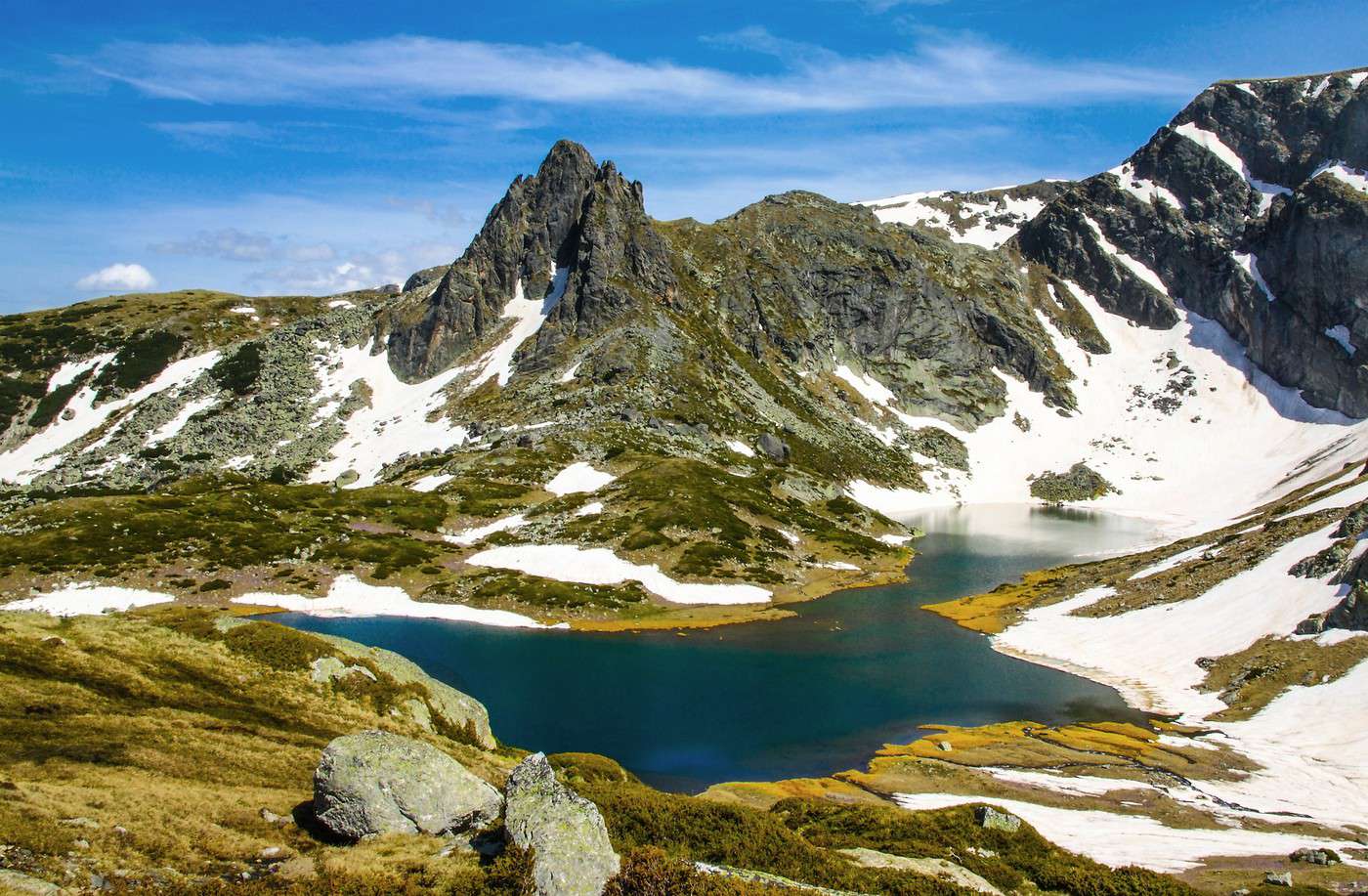
There are three national parks and 11 nature parks in the country, as well as numerous other areas of ecological interest (caves, cliffs, forests, etc.). Among the visitors' favorite sites:
- Dragoman Marshes: This marshy area near Sofia is home to many bird species.
- Rila Mountains: A beautiful mountainous region south of Sofia with excellent hiking and climbing opportunities. It is also home to the famous UNESCO-listed Rila Monastery.
- Mount Vitocha: This mountain overlooking Sofia offers a good selection of hikes and skiing in a scenic setting.
- Central Balkan National Park: A mountain range in the center of the country with lovely landscapes.
- Pirin National Park: A stunning UNESCO-listed park in the southwest, known for its landscapes where bears can sometimes be spotted. The site also offers great hiking.
- Bulgarka Nature Park: Located in the northern part of the country, this park is ideal for trekking, climbing, and birdwatching.
- Srébarna Nature Reserve: An important ornithological area along the Danube, facing Romania.
- Rhodopes: The Rhodopes are a mountain range running along the Greek border. They feature beautiful landscapes, diverse wildlife (birds, bears, wolves), and various outdoor activities (skiing, hiking).
Wildlife and Flora
Climate and Weather in Bulgaria
Climate Overview
Due to the Rhodope Mountains, which shield it from the Mediterranean climate experienced by neighboring Greece, Bulgaria has a continental climate. This is quite similar to France’s climate, both in the plains and in the mountains, with pleasant, hot, and dry summers, and cold, snowy winters at higher altitudes.
Best Time to Visit Bulgaria
Whether for the interior or the coast, which benefits from a relatively pleasant marine coolness in summer, the best time to visit Bulgaria is from May to late September, or even early October along the seaside.
| Jan. | Feb. | Mar. | Apr. | May | Jun. | Jul. | Aug. | Sep. | Oct. | Nov. | Dec. | |
|---|---|---|---|---|---|---|---|---|---|---|---|---|
| Inland Climate | / | |||||||||||
| Coastal Climate | / |
: very favorable | : favorable | : moderately favorable | : unfavorable.
Sea Temperature Throughout the Year
The Black Sea is most pleasant and suitable for swimming between June and September.
| Jan. | Feb. | Mar. | Apr. | May | Jun. | Jul. | Aug. | Sep. | Oct. | Nov. | Dec. | |
|---|---|---|---|---|---|---|---|---|---|---|---|---|
| Varna | 7 | 6 | 7 | 10 | 14 | 19 | 22 | 23 | 21 | 17 | 13 | 9 |
Climate by Region
Coast (Varna)
Inland (Sofia)
Additional Information
History of Bulgaria
Église de Boyana, Bulgarie · © VoyageForum 8th century BCE: First Greek colonies established along the coasts of the country, then inhabited by Thraces . 1st century: The region falls under Roman conquest and is integrated into the Roman Empire ,…
Bulgarian Society
Population
Bulgaria is primarily made up of ethnic Bulgarians, accounting for 77% of the population, along with an 8% Turkish minority and a 4% Roma community. As in many countries, the Roma are largely marginalised by authorities and much of the population, often living on the fringes of Bulgarian society.
Political Institutions
Economy
Religion
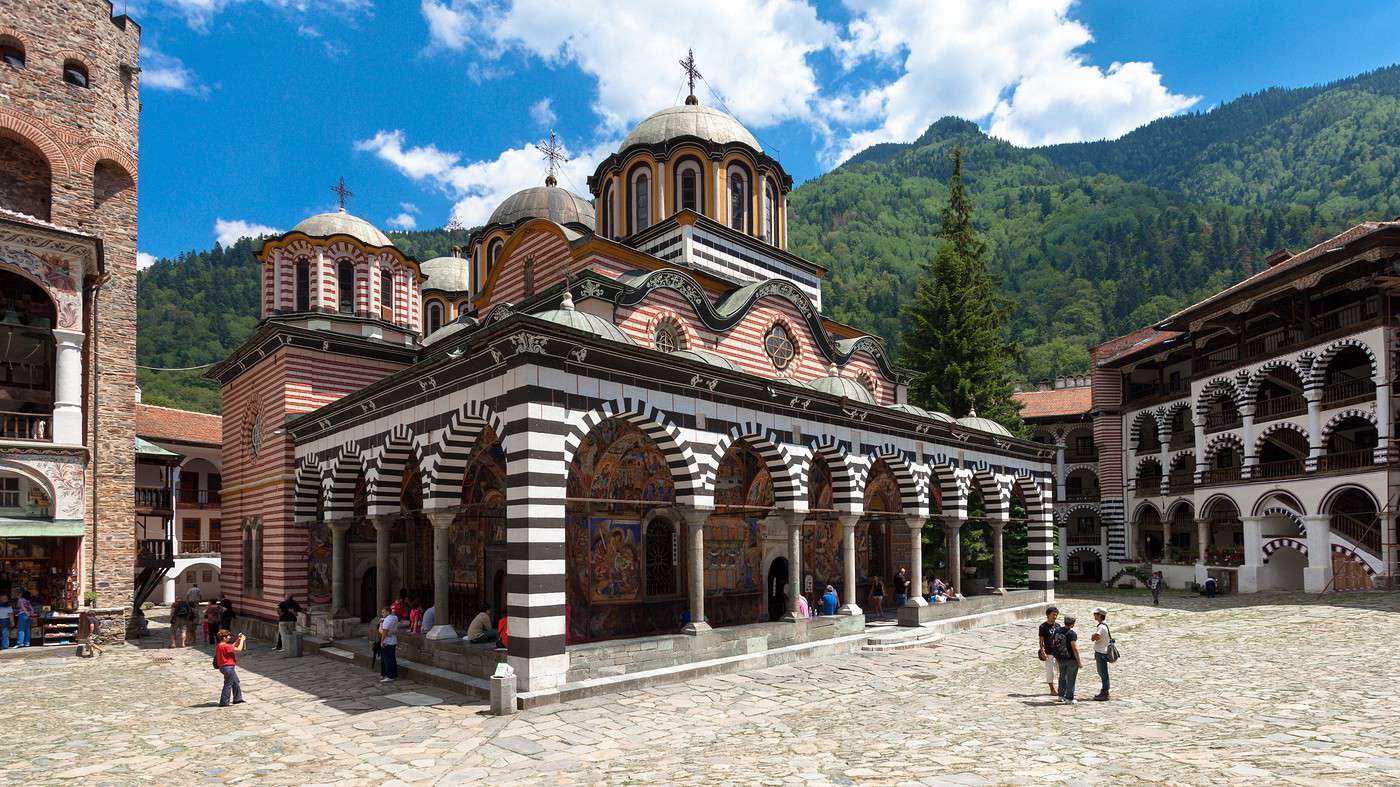
As its history and the many monasteries built in a certain era suggest, Bulgaria is predominantly Orthodox (60%), with a significant Muslim minority (8%), largely corresponding to the Turkish-origin population living in the country. Nearly a third of Bulgarians also identify as atheist or without a defined religion.
Culture and Customs of Bulgaria
Arts, Crafts, and Architecture
Arts
Crafts
Architecture
Museums
Customs and Traditions
Local Traditions
Etiquette
Dress and Behavior
Sensitive or Taboo Topics
Languages
While Bulgarian is the official language, there are also various minority languages such as Turkish, Romani (the language of the Roma), and Macedonian spoken locally. Among foreign languages, Russian and German are relatively common among older generations, unlike French, which is spoken by almost no one, even though Bulgaria is a member of the Francophonie. As for English, few people speak it fluently, though younger generations are starting to learn it well, and in all tourist areas, you will (almost) always find some English speakers.
Important to know: it is the Cyrillic alphabet that is officially used in the country, although the Latin alphabet is also present today, especially in tourist areas. In short, it may be useful to familiarize yourself with the Cyrillic alphabet, as it will help you decipher street names and city names, among other things.
Phrasebook
A few useful local words and expressions to know when traveling:
Festivals and Celebrations
Major Events and Public Holidays
Books, Films, and Music
What to See in Bulgaria
Bulgaria has nine sites inscribed on the UNESCO World Heritage list: Boyana Church ★★ (1979) This 10th-century church on the outskirts of Sofia is a UNESCO World Heritage Site for its frescoes and as the most representative monument of medieval art in Eastern…
Things to Do in Bulgaria
Nessebar, Bulgarie · © VoyageForum The beach and seaside resorts along the Black Sea have long been Bulgaria’s major tourist draw. Even during the socialist era, the coast attracted visitors from Eastern Europe, and with the country’s opening,…
Types of Travel in Bulgaria
Interests (rated ★★★★ ) : Nature ★★★ ; Adventure ★★ ; Culture ★★★ ; Relaxation-holidays ★★★★ . Bulgaria is a land of contrasts where nature is very much present and diverse. Beyond the coastline, which can admittedly be somewhat "crowded" with numerous…
When and Where to Go in Bulgaria
Best Times to Visit Bulgaria
Finding the best time to visit involves balancing climate conditions with crowd levels and the most attractive prices, both on-site and for travel.
Whether for the interior or the coast, which benefits from a relatively pleasant maritime coolness in summer, the best climatic period for Bulgaria runs from May to the end of September, or even early October along the seaside. That said, July and August are also the peak beach season, with prices rising sharply—though they remain very affordable for Western European travelers. Bulgaria is indeed among the continent’s least expensive destinations. As for the mountainous regions, nearly deserted in summer, they attract local and foreign skiers during the winter months. While this is also peak season with corresponding prices, it remains quite affordable.
| Jan. | Feb. | Mar. | Apr. | May | Jun. | Jul. | Aug. | Sep. | Oct. | Nov. | Dec. | |
|---|---|---|---|---|---|---|---|---|---|---|---|---|
| Inland climate | / | |||||||||||
| Coastal climate | / | |||||||||||
| Avoid crowds | ||||||||||||
| Low prices |
: very favorable | : favorable | : moderately favorable | : unfavorable.
Where to Go by Travel Style and Interest
Flying to Bulgaria
With airports in Sofia, and secondarily Plovdiv, and especially on the coast those of Burgas and Varna, Bulgaria has four international air gateways. Thanks to the appeal of its beaches, seasonal traffic is significant, to the point that the coastal airports…
Getting to Bulgaria by Land or Sea
By Land
Borders: Greece (472 km), North Macedonia (162 km), Romania (605 km), Serbia (344 km) and Turkey (223 km).
From Neighbouring Countries
By Sea
Ferries
Several ferry routes connect Bulgaria to neighbouring countries, as well as further afield via the Black Sea and the Danube, which forms the border with Romania.
Across the Black Sea
Georgia and Ukraine are linked to the port of Varna by cargo/ferry services, with activity often quite intense during the summer season. Navigulgar and Ukraine Line are among the companies operating routes, including services to Ilyichevsk (Ukraine) and Batumi (Georgia). However, connections to and from Russia and Crimea have been suspended due to the conflict between Russia and Ukraine.
Via the Danube
This long river, which crosses much of Europe, also serves as a transport route, with ferries and especially summer cruises that sometimes end at its mouth after starting in Vienna or even Germany. The river port of Vidin (in the far northwest) is the main stop in Bulgaria. From there, Vienna and Budapest (among others) are easily accessible.
In addition, small ferries connect the two banks of the Danube (Bulgarian and Romanian) at various points along its course. This is the case, for example, between Vidin and Calafat in Romania.
Cargo
Burgas and Varna are the two main Bulgarian commercial ports on the Black Sea.
Cruises
In addition to being a commercial and ferry port, Varna is also the classic Bulgarian stop for cruises operating in the Black Sea region.
Sailing Boats
Getting Around Bulgaria
Having your own vehicle is an excellent way to explore the country, as is often the case in Europe. It’s even the best option thanks to the freedom and time savings it offers compared to public transport, which isn’t always the fastest and doesn’t go…
Accommodation in Bulgaria
Bulgaria has invested heavily in tourism, so the accommodation options are quite extensive, varied, and constantly growing. What’s more, they often offer excellent value for money given the very affordable rates for Western European travellers, even in…
Entry Requirements and Visa for Bulgaria
People
For tourist travel purposes.
For French Citizens
A national identity card or passport is sufficient to enter the country and stay for less than 3 months. Since Bulgaria is not part of the Schengen Area, there are border checks upon arrival, even when coming from a member country of this zone.
Other Nationalities
The same rules apply to French citizens for all visitors from the European Union, Switzerland, Canada, and a few other countries.
Long Stays
In Case of Offense
Vehicles
If you plan to arrive with your own vehicle, the vehicle registration certificate and the green insurance card are mandatory. While not essential, an international multilingual driving permit (free at the prefecture) may occasionally prove useful during checks.
Note that to drive on Bulgaria's roads and highways (which are toll-free), all vehicles, including foreign ones, must have a vignette. This can be purchased at border crossings and some gas stations.
Consulates
In France
Consulate General: 1 av. Rapp, 75007 Paris. Tel.: 01 45 51 85 90.
Consulates in the provinces:
- Marseille: 2 rue Henri Barbusse, 13241 Marseille. Tel.: 06 08 25 73 72.
- Roubaix: 26 rue Dammartin, 59100 Roubaix. Tel: 03 20 73 70 84.
Other Countries
- Belgium:
- Canada:
- Switzerland:
Money, budget, and shopping in Bulgaria
Devise: Lev (100 stotinki) or leva in the plural. Bills: 2, 5, 10, 20, 50, and 100 leva. Coins: 1, 2, 5, 10, 20, and 50 stotinki + 1 lev. Exchange: Officially, the Bulgarian government abandoned plans to adopt the euro in 2012 and opted to keep its national…
Health and Safety in Bulgaria
In France, both for individuals and professionals, the "travel advice" from the Ministry of Foreign Affairs regarding precautions for each country has legal value. A similar online travel advice system exists in several countries: Foreign Affairs Belgium…
Other Practical Information for Bulgaria
Luggage and Equipment to Bring
Just like in France, for example, in summer, pack light clothing plus a woolen layer for inland areas and evenings. In winter, warm clothing is necessary everywhere, including on the coast where it can get very cold at times.
Communications
Telephone
International dialing code: (00 +) 359.
Internet
Internet is now widely available in the country, and many accommodations, bars, restaurants, etc., offer connections. Free Wi-Fi is also available in cities at shopping centers, train and bus stations, and various public spaces. In short, no need to worry about this.
Post
Time Difference
Local time: .
Bulgaria is on UTC+2, with daylight saving time changes generally aligning with those in France. There is thus a one-hour difference year-round with France; for example, it is 1:00 PM in Sofia when it is noon in Paris.
Electricity
230 V (50 Hz) with "French" plugs (officially type F), which will require an adapter for North American plugs.
Opening Hours
Laundromats
Local Tourist Offices
Weights and Measures
Bulgaria uses the metric and decimal system, just like France.
French Language Use
For foreign languages, Russian and German are relatively common among older generations, unlike French, which is spoken by almost no one, even though Bulgaria is a member of the Francophonie. As for English, few people speak it, though younger generations are starting to learn it well, and in all tourist areas, you will (almost) always find some English speakers.
Press and Media
Something wrong or out of date? Report this page