
UNESCO World Heritage Sites
Bulgaria has nine sites inscribed on the UNESCO World Heritage list:
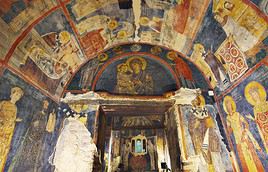
Boyana Church (1979)
This 10th-century church on the outskirts of Sofia is a UNESCO World Heritage Site for its frescoes and as the most representative monument of medieval art in Eastern Europe.
This 10th-century church on the outskirts of Sofia is a UNESCO World Heritage Site for its frescoes and as the most representative monument of medieval art in Eastern Europe.
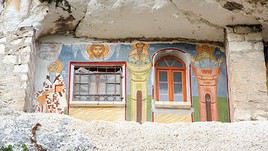
Rock-Hewn Churches of Ivanovo (1979)
Near the city of Ruse, in the eponymous village, this is a complex of churches, chapels, and monasteries carved into the rock from the 12th century onward. The site is part of UNESCO’s World Heritage.
Near the city of Ruse, in the eponymous village, this is a complex of churches, chapels, and monasteries carved into the rock from the 12th century onward. The site is part of UNESCO’s World Heritage.
Thracian Tomb of Kazanlak (1979)
This is a Thracian burial site and its frescoes dating from the 4th century BC, listed as a UNESCO World Heritage site.
This is a Thracian burial site and its frescoes dating from the 4th century BC, listed as a UNESCO World Heritage site.
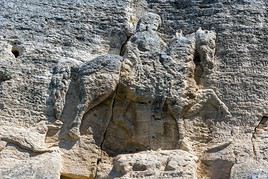
Madara Rider (1979)
This is a large rock relief carved in the 8th century depicting a rider. It is a UNESCO World Heritage Site.
This is a large rock relief carved in the 8th century depicting a rider. It is a UNESCO World Heritage Site.
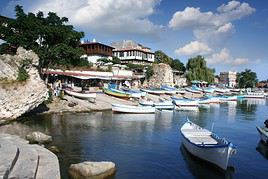
Nessebar (1983)
North of Burgas, the town is a UNESCO World Heritage site for its old quarter and churches. Very touristy, the listed area has now become primarily a shopping zone.
North of Burgas, the town is a UNESCO World Heritage site for its old quarter and churches. Very touristy, the listed area has now become primarily a shopping zone.
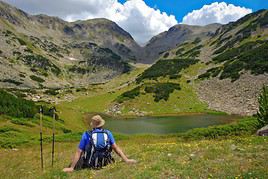
Pirin National Park (1983)
A stunning UNESCO-listed park in the southwest, known for its landscapes where bears can occasionally be spotted. The site also offers excellent hiking.
A stunning UNESCO-listed park in the southwest, known for its landscapes where bears can occasionally be spotted. The site also offers excellent hiking.
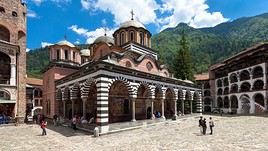
Rila Monastery (1983)
The most famous and beautiful monastery in Bulgaria is a UNESCO World Heritage site. It is located in the mountain range of the same name.
The most famous and beautiful monastery in Bulgaria is a UNESCO World Heritage site. It is located in the mountain range of the same name.
Srébarna Nature Reserve (1983)
This is a significant ornithological area located along the Danube, opposite Romania. It is a UNESCO World Heritage site.
This is a significant ornithological area located along the Danube, opposite Romania. It is a UNESCO World Heritage site.
Thracian Tomb of Sveshtari (1985)
This is a beautiful Thracian-era tomb classified as a UNESCO World Heritage site.
This is a beautiful Thracian-era tomb classified as a UNESCO World Heritage site.
The Coast
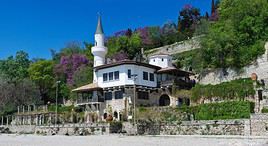
Balchik
On the northern coast, this former Romanian town is known for its botanical garden and the summer residence of Queen Marie of Romania. The place is quite popular in season.
On the northern coast, this former Romanian town is known for its botanical garden and the summer residence of Queen Marie of Romania. The place is quite popular in season.
Burgas
It's a major industrial port on the Black Sea, whose main appeal lies in the nearby beaches and the old towns of Nessebar and Sozopol.
It's a major industrial port on the Black Sea, whose main appeal lies in the nearby beaches and the old towns of Nessebar and Sozopol.
Nessebar
North of Burgas, the town is a UNESCO World Heritage site for its old quarter and churches. Very touristy, the listed area has now become primarily a shopping zone.
North of Burgas, the town is a UNESCO World Heritage site for its old quarter and churches. Very touristy, the listed area has now become primarily a shopping zone.
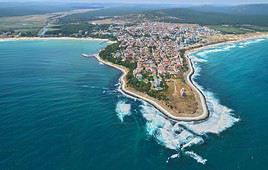
Primorsko
This is the main seaside resort between Burgas and Turkey, yet it is far less crowded than its counterparts on the northern coast.
This is the main seaside resort between Burgas and Turkey, yet it is far less crowded than its counterparts on the northern coast.
Golden Sands
One of the very first seaside resorts on the Bulgarian coast, just a few kilometres north of Varna.
One of the very first seaside resorts on the Bulgarian coast, just a few kilometres north of Varna.
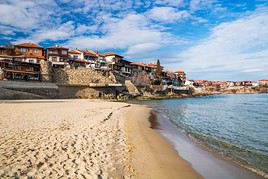
Sozopol
This charming little coastal town near Burgas has become a major tourist destination thanks to its old quarters overlooking the sea and its beaches.
This charming little coastal town near Burgas has become a major tourist destination thanks to its old quarters overlooking the sea and its beaches.
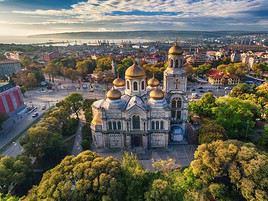
Varna
Bulgaria's third-largest city. While Varna has a few monuments, its main tourist appeal lies in the many seaside resorts nearby (Golden Sands, Sunny Beach, etc.).
Bulgaria's third-largest city. While Varna has a few monuments, its main tourist appeal lies in the many seaside resorts nearby (Golden Sands, Sunny Beach, etc.).
Natural Heritage
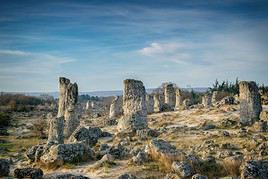
Pobiti Kamani
Or the Petrified Forest. These are unusual limestone and sand formations 18 km from Varna.
Or the Petrified Forest. These are unusual limestone and sand formations 18 km from Varna.
Kaliakra Nature Reserve
It's a series of cliffs riddled with caves overlooking the sea, almost at the Romanian border, near the village of Kamen Bryag.
It's a series of cliffs riddled with caves overlooking the sea, almost at the Romanian border, near the village of Kamen Bryag.
The Interior
Bansko
A major ski resort in southwestern Bulgaria and one of the gateways to Pirin National Park, where you can go hiking.
A major ski resort in southwestern Bulgaria and one of the gateways to Pirin National Park, where you can go hiking.
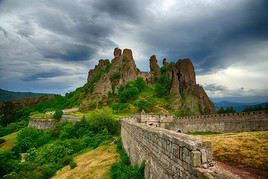
Belogradchik
A small town in the northwest of the country known for its fortress and rock formations.
A small town in the northwest of the country known for its fortress and rock formations.
Madara Rider
This is a large rock relief carved in the 8th century depicting a rider. It is a UNESCO World Heritage Site.
This is a large rock relief carved in the 8th century depicting a rider. It is a UNESCO World Heritage Site.
Shumen
A city in northeastern Bulgaria with a few old buildings, a fortress, and especially the proximity of the UNESCO-listed "Madara Rider.".
A city in northeastern Bulgaria with a few old buildings, a fortress, and especially the proximity of the UNESCO-listed "Madara Rider.".
Devin
This spa town in the south is also a good base for exploring the surrounding area (Trigrad Gorge, caves, etc.).
This spa town in the south is also a good base for exploring the surrounding area (Trigrad Gorge, caves, etc.).
Boyana Church
This 10th-century church on the outskirts of Sofia is a UNESCO World Heritage Site for its frescoes and as the most representative monument of medieval art in Eastern Europe.
This 10th-century church on the outskirts of Sofia is a UNESCO World Heritage Site for its frescoes and as the most representative monument of medieval art in Eastern Europe.
Rock-Hewn Churches of Ivanovo
Near the city of Ruse, in the eponymous village, this is a complex of churches, chapels, and monasteries carved into the rock from the 12th century onward. The site is part of UNESCO’s World Heritage.
Near the city of Ruse, in the eponymous village, this is a complex of churches, chapels, and monasteries carved into the rock from the 12th century onward. The site is part of UNESCO’s World Heritage.
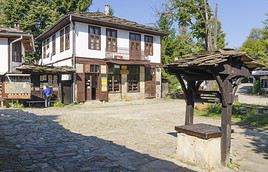
Etara
This site, near the town of Gabrovo, is an "open-air museum" showcasing local architecture and crafts.
This site, near the town of Gabrovo, is an "open-air museum" showcasing local architecture and crafts.
Kazanlak
A small town in the Rose Valley that, in addition to roses and a dedicated festival, is home to several Thracian tombs listed as UNESCO World Heritage sites.
A small town in the Rose Valley that, in addition to roses and a dedicated festival, is home to several Thracian tombs listed as UNESCO World Heritage sites.
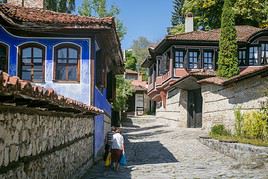
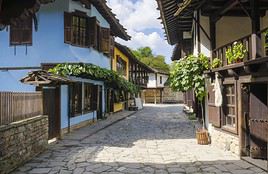
Koprivshtitsa
This is a stunning "museum-village" east of Sofia, renowned for its typical 19th-century architecture.
This is a stunning "museum-village" east of Sofia, renowned for its typical 19th-century architecture.
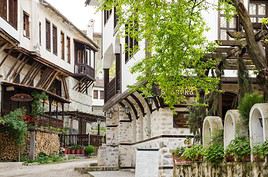
Melnik
This small town in the far southwest is home to many historic buildings. In the surrounding area, you can also see strange rock formations shaped by erosion.
This small town in the far southwest is home to many historic buildings. In the surrounding area, you can also see strange rock formations shaped by erosion.
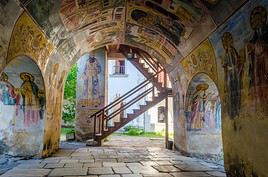
Bachkovo Monastery
South of Plovdiv, this is one of the oldest Orthodox monasteries in Europe, built in 1083.
South of Plovdiv, this is one of the oldest Orthodox monasteries in Europe, built in 1083.
Rila Monastery
The most famous and beautiful monastery in Bulgaria is a UNESCO World Heritage site. It is located in the mountain range of the same name.
The most famous and beautiful monastery in Bulgaria is a UNESCO World Heritage site. It is located in the mountain range of the same name.
Rojen Monastery
Perched high in the Pirin Mountains, this monastery near the town of Melnik is one of the most visited in the country.
Perched high in the Pirin Mountains, this monastery near the town of Melnik is one of the most visited in the country.
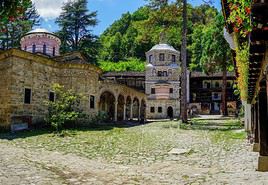
Troyan Monastery
It is the third-largest monastery in Bulgaria and one of the most interesting to visit.
It is the third-largest monastery in Bulgaria and one of the most interesting to visit.
Pamporovo
Bulgaria’s main ski resort, located in the Rhodope Mountains. You can hike in the surrounding area in summer.
Bulgaria’s main ski resort, located in the Rhodope Mountains. You can hike in the surrounding area in summer.
Perperikon
These are the remains of an ancient Thracian city located in southern Bulgaria, not far from the Greek border.
These are the remains of an ancient Thracian city located in southern Bulgaria, not far from the Greek border.
Pleven
A city in northern Bulgaria with some old buildings and remnants of the 1877 Russo-Turkish conflict.
A city in northern Bulgaria with some old buildings and remnants of the 1877 Russo-Turkish conflict.
Pliska
These are ruins dating from the 8th and 9th centuries, once the first capital of the Bulgarian Kingdom. They are located about a hundred kilometres west of Varna.
These are ruins dating from the 8th and 9th centuries, once the first capital of the Bulgarian Kingdom. They are located about a hundred kilometres west of Varna.
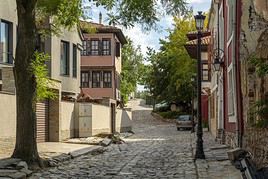
Plovdiv
Bulgaria’s second-largest city, Plovdiv is also considered the most beautiful, with its exceptionally well-preserved old quarters.
Bulgaria’s second-largest city, Plovdiv is also considered the most beautiful, with its exceptionally well-preserved old quarters.
Preslav
These are the remains of what was the second capital of the First Bulgarian Empire in the 10th century.
These are the remains of what was the second capital of the First Bulgarian Empire in the 10th century.
Ruse
On the Danube, this city on the Romanian border is visited for the architectural quality (primarily 19th-century style) of its urban centre.
On the Danube, this city on the Romanian border is visited for the architectural quality (primarily 19th-century style) of its urban centre.
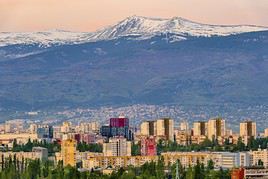
Sofia
Bulgaria’s capital offers "just" a few historical remains and interesting religious buildings. The Vitocha Mountains are nearby for hiking or skiing enthusiasts.
Bulgaria’s capital offers "just" a few historical remains and interesting religious buildings. The Vitocha Mountains are nearby for hiking or skiing enthusiasts.
Thracian Tomb of Sveshtari
This is a beautiful Thracian-era tomb classified as a UNESCO World Heritage site.
This is a beautiful Thracian-era tomb classified as a UNESCO World Heritage site.
Tatul
In the south of the country, not far from Greece, Tatul is home to several remnants of the Thracian civilization.
In the south of the country, not far from Greece, Tatul is home to several remnants of the Thracian civilization.
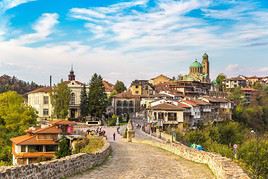
Veliko Tarnovo
This much-visited city in the heart of the country boasts charming old quarters and a striking fortress.
This much-visited city in the heart of the country boasts charming old quarters and a striking fortress.
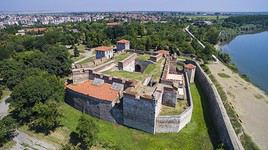
Vidin
On the borders with Romania and Serbia, along the Danube, the city has two medieval fortresses and various interesting religious buildings.
On the borders with Romania and Serbia, along the Danube, the city has two medieval fortresses and various interesting religious buildings.
Vratsa
This northern town is quite picturesque, and its surroundings offer great opportunities for outdoor activities.
This northern town is quite picturesque, and its surroundings offer great opportunities for outdoor activities.
Natural Heritage
Trigrad Gorge
These are beautiful gorges located in the Rhodope Mountains, one kilometre north of the village of the same name.
These are beautiful gorges located in the Rhodope Mountains, one kilometre north of the village of the same name.
Devil's Gorge Caves
Near the Trigrad Gorge, these lovely caves are a major Bulgarian tourist attraction in the region.
Near the Trigrad Gorge, these lovely caves are a major Bulgarian tourist attraction in the region.
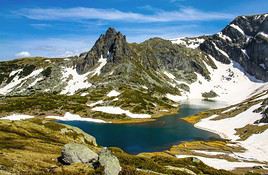
Rila Mountains
A stunning mountainous region south of Sofia, largely designated as a national park, offering excellent hiking and climbing opportunities. It is also home to the famous UNESCO-listed Rila Monastery.
A stunning mountainous region south of Sofia, largely designated as a national park, offering excellent hiking and climbing opportunities. It is also home to the famous UNESCO-listed Rila Monastery.
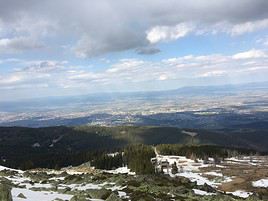
Mount Vitocha
This mountain, designated as a natural park, overlooks Sofia and offers a great selection of hikes and skiing in a beautiful setting.
This mountain, designated as a natural park, overlooks Sofia and offers a great selection of hikes and skiing in a beautiful setting.
Central Balkan National Park
It's a mountain range in the centre of the country with beautiful landscapes.
It's a mountain range in the centre of the country with beautiful landscapes.
Pirin National Park
A stunning UNESCO-listed park in the southwest, known for its landscapes where bears can occasionally be spotted. The site also offers excellent hiking.
A stunning UNESCO-listed park in the southwest, known for its landscapes where bears can occasionally be spotted. The site also offers excellent hiking.
Bulgarka Nature Park
In the central part of the country, this park is ideal for trekking, climbing, and birdwatching.
In the central part of the country, this park is ideal for trekking, climbing, and birdwatching.
Srébarna Nature Reserve
This is a significant ornithological area located along the Danube, opposite Romania. It is a UNESCO World Heritage site.
This is a significant ornithological area located along the Danube, opposite Romania. It is a UNESCO World Heritage site.
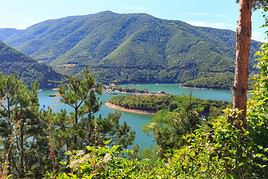
Rhodopes
The Rhodopes are a mountain range running along the Greek border. They offer beautiful landscapes, diverse wildlife (birds, bears, wolves), and various outdoor activities (skiing, hiking).
The Rhodopes are a mountain range running along the Greek border. They offer beautiful landscapes, diverse wildlife (birds, bears, wolves), and various outdoor activities (skiing, hiking).
Rose Valley
This small valley in the centre of the country, between Kazanlak and Karlovo, is known for its rose fields.
This small valley in the centre of the country, between Kazanlak and Karlovo, is known for its rose fields.