

Travel guide · Canary Islands
Canary Islands
Off the coast of Morocco but more European than African, the archipelago is a major tourist destination. Visitors come for the landscapes, nature, tranquility (in some areas), or, on the contrary, to party or enjoy a holiday in one of the many all-inclusive resorts the Canary Islands have to offer.
Overview of the Canary Islands
Off the coast of Morocco , but more European than African, the Canary Islands archipelago consists of seven main islands (from east to west): Lanzarote, Fuerteventura, Gran Canaria, Tenerife, La Gomera, La Palma, and El Hierro. The entire archipelago is…
Geography and Environment of the Canary Islands
Physiognomy of the Archipelago
Natural Areas

Although the Canary Islands are home to over two million people, a large part of the islands and the archipelago consists of natural spaces. There are thus several dozen more or less protected sites and four national parks, which are ideal for beautiful hikes. The four parks are Timanfaya (Lanzarote), the Caldera de Taburiente (La Palma), plus Garajonay National Park (La Gomera) and Teide (Tenerife), both UNESCO-listed.
Wildlife and Flora
What to See in the Canary Islands
The Canary Islands have three sites listed as UNESCO World Heritage Sites: La Gomera: Garajonay National Park ★★★ (1986) This mountainous park in the centre of the island is a UNESCO World Heritage Site for its vegetation and beautiful rainforest. It’s great…
Things to Do in the Canary Islands
Beaches and Resorts
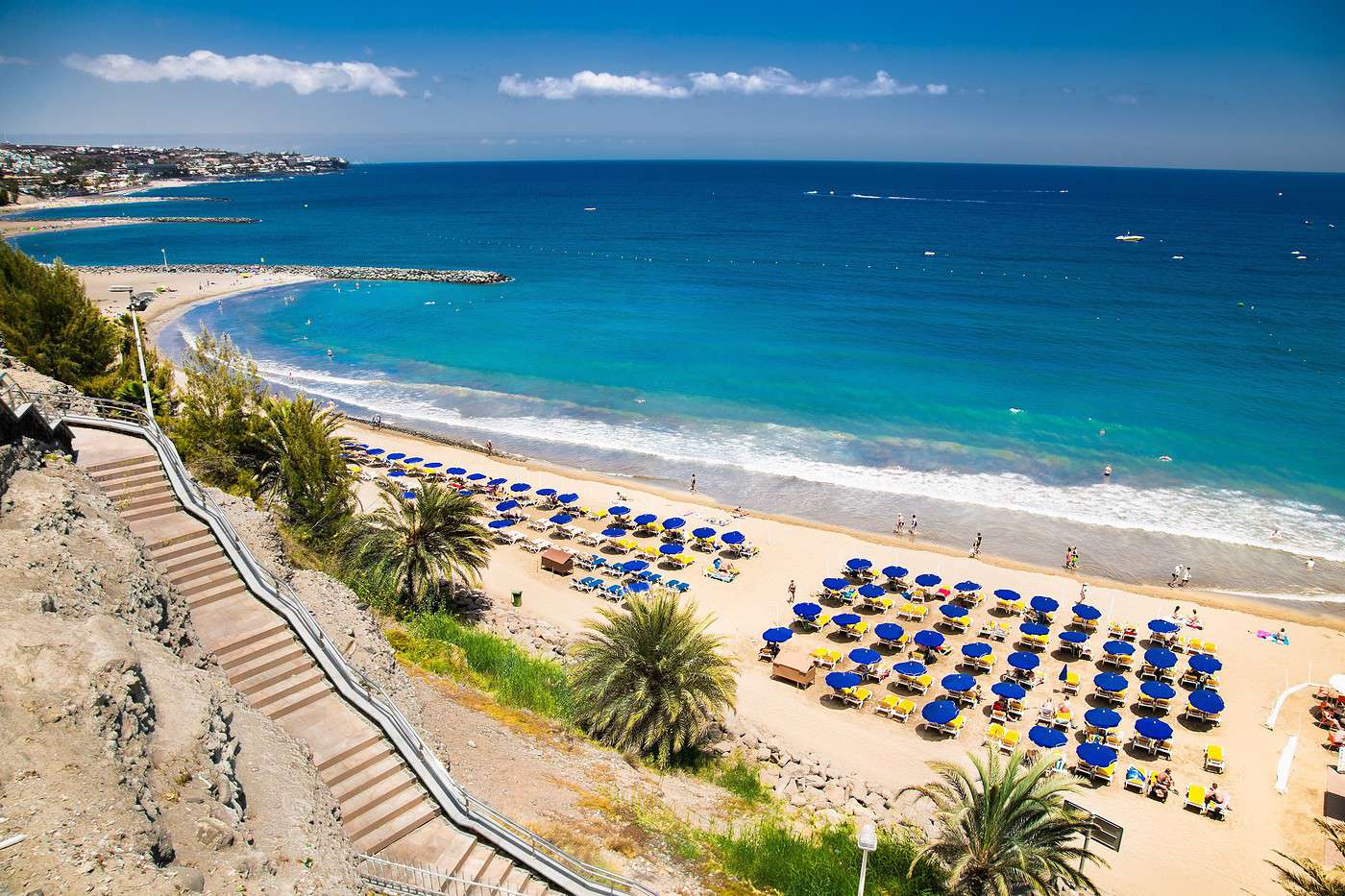
While all the islands have beaches of light or volcanic sand, sometimes almost deserted, not all have developed seaside tourism. La Palma, La Gomera, and especially El Hierro are the least well-equipped. The other islands offer more options, from highly developed areas like Maspalomas (Gran Canaria), the Canaries' main tourist hub, to much quieter spots off the beaten track.
Diving
This is the main activity. You can dive around all the islands, with well-developed clubs and facilities. La Restinga, on El Hierro, remains one of the archipelago's most renowned spots.
Other Water Activities
Whale watching: Whales and dolphins can be seen south of Tenerife, off the port of Los Cristianos.
Fishing:
Windsurfing and kitesurfing: The south of Tenerife and Gran Canaria, along with the coasts of Fuerteventura (especially around Corralejo) and Lanzarote, offer the best spots, particularly in summer when the winds are strong.
Surfing: Several interesting options, primarily on La Gomera, some on Tenerife, and especially Lanzarote, which is considered an international hotspot for the sport.
Sailing:
Thalassotherapy and Wellness
Hiking
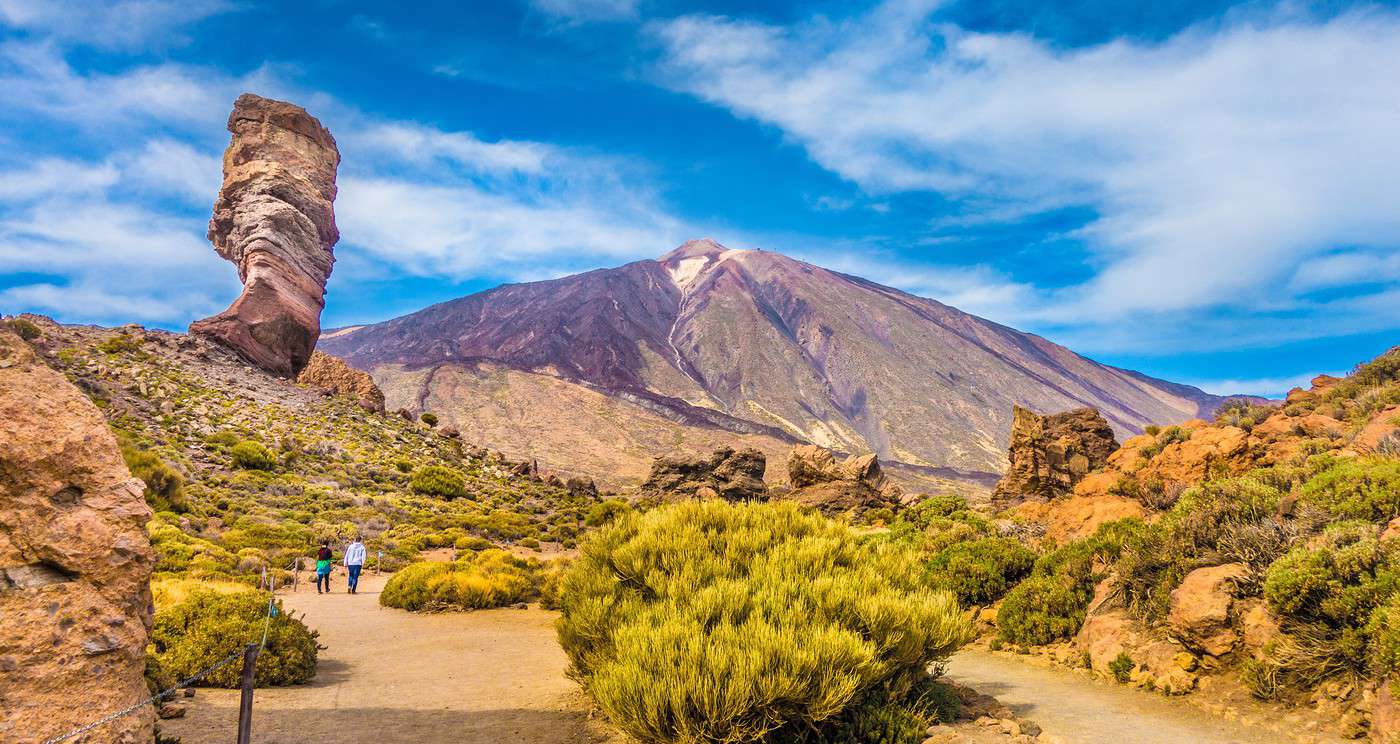
Alongside beaches and water activities, hiking is another highlight of the Canary Islands for outdoor enthusiasts. Every island has trails or places to walk, catering to both beginners and experienced trekkers. La Gomera, La Palma, and Tenerife, particularly with Teide National Park, are the most interesting islands, offering the most opportunities.
Mountain Biking
Horseback Riding
Outdoor and Adventure Sports
Golf
Other Activities
Canyoning: It can be practiced on Tenerife.
Climbing:
Cultural Life and Activities
Nightlife and Going Out
Flying to the Canary Islands
All seven main islands of the Canary Islands have an airport, with Tenerife even having two. Overall, five of them welcome international flights and the millions of holidaymakers who visit the archipelago each year. However, each airport also has its own…
Getting Around the Canary Islands
In general, the Canary Islands' road network is very good, even if the number of roads isn't particularly high on some islands. Traffic rules and driving regulations are largely the same as in the rest of Spain (and much of Europe), and they're generally well…
Accommodation in the Canary Islands
A highly popular tourist destination, the Canary Islands offer a wide range of accommodation to suit almost all budgets and travellers. However, depending on the island and its popularity, the range and capacity of accommodation vary significantly. In…
Provinces and Islands of the Canary Islands
Morro Jable, Canaries · © VoyageForum The province consists of the eastern islands of the Canaries. That is, Gran Canaria, Fuerteventura, and Lanzarote, plus the Chinijo Archipelago , which groups five small islands near Lanzarote, of which La…
Climate and Weather in the Canary Islands
Climate Overview
The climate of the Canary Islands is generally described as "subtropical to semi-desert." It is quite mild, moderated by the proximity of the sea and summer winds, though it can occasionally get very hot in July-August. Year-round coastal temperatures range from 20 to 30°C during the day and 15 to 20°C at night. That said, it’s important to note variations depending on the island and, especially, altitude, as the archipelago has diverse microclimates. Rainfall is low. Even on the western islands, which receive the most precipitation, both the amount and number of rainy days during the season—roughly from November to March—remain limited.
Best Time to Visit the Canary Islands
The climate isn’t a major constraint for visiting the Canary Islands, though winter can bring a few rainy days (along with slightly cooler sea temperatures), and July-August can sometimes be a bit hot. If anything, spring and early autumn are the best times.
| Jan. | Feb. | Mar. | Apr. | May | Jun. | Jul. | Aug. | Sep. | Oct. | Nov. | Dec. | |
|---|---|---|---|---|---|---|---|---|---|---|---|---|
| Climate | / |
: very favorable | : favorable | : moderately favorable | : unfavorable.
Sea Temperatures Throughout the Year
| Jan. | Feb. | Mar. | Apr. | May | Jun. | Jul. | Aug. | Sep. | Oct. | Nov. | Dec. | |
|---|---|---|---|---|---|---|---|---|---|---|---|---|
| Canary Islands | 19 | 18 | 18 | 19 | 19 | 20 | 21 | 22 | 23 | 22 | 21 | 19 |
Climate and Weather on the Main Islands
Fuerteventura (Puerto del Rosario)
Gran Canaria (Las Palmas de Gran Canaria)
La Palma (Santa Cruz de La Palma)
Lanzarote (Arrecife)
Tenerife (Santa Cruz de Tenerife)
Additional Information
History of the Canary Islands
Telde, Canaries · © VoyageForum Mid-14th century: Known since antiquity and inhabited by the Guanches , the Canary Islands were "rediscovered" by the Portuguese. 1402: Conquest of Fuerteventura, Lanzarote, and La Gomera by Jean de Béthencourt on…
Types of Trips to the Canary Islands
Interests (out of ★★★★ ) : Nature ★★★★ ; Adventure ★★ ; Culture ★★ ; Relaxation-holidays ★★★★ El Hierro: Nature ★★★★ ; Adventure ★ ; Culture ★ ; Relaxation-holidays ★ Fuerteventura: Nature ★★★ ; Adventure ★ ; Culture ★ ; Relaxation-holidays ★★★ Gran Canaria:…
When and Where to Go to the Canary Islands
Best Times to Visit the Canary Islands
Finding the best time to visit means balancing climate considerations with crowd levels and the most attractive prices, both on the ground and for travel.
While winter can bring a few rainy days (along with slightly cooler sea temperatures) and July-September can sometimes be quite hot, the climate isn’t usually the issue for enjoying a trip to the Canary Islands. The real challenge is the tourist pressure—and the associated prices—during certain periods. Winter (December to Easter) draws crowds with its mild weather, as does the traditional July-August peak. In short, the shoulder seasons are the best bet, particularly May-June and late September to early November. It’s also worth noting that the concept of "low" or "high" season varies by island. For example, El Hierro and La Gomera, which see far fewer visitors, are much less affected than Gran Canaria or Tenerife.
| Jan. | Feb. | Mar. | Apr. | May | Jun. | Jul. | Aug. | Sep. | Oct. | Nov. | Dec. | |
|---|---|---|---|---|---|---|---|---|---|---|---|---|
| Climate | ||||||||||||
| Avoid crowds | / | |||||||||||
| Low prices | / |
: very favorable | : favorable | : moderately favorable | : unfavorable.
Where to Go Based on Travel Style and Interests
Getting to the Canary Islands by Sea
Ferries
While the Canary Islands don’t have ferry links with neighbouring Morocco, there are routes from "mainland Spain". Ferries depart from Cádiz with the company Transmediterranea to Las Palmas and Arrecife. The weekly service takes between 30 and 40 hours, depending on the island, and costs at least 150 € one-way for foot passengers. Meanwhile, Naviera Armas runs Huelva–Santa Cruz de Tenerife or Las Palmas routes for roughly the same price, slightly cheaper.
Cargo
Cruises
Sailboats
Additional Information
Inter-Island Transport in the Canary Islands
Each island has its own airport, and Tenerife even has two (North and South). Local airlines Binter Canarias (the main one), CanaryFly , and Naysa operate the routes. Prices are generally very affordable, with many of the shortest flights available from 20 €…
Other practical information for the Canary Islands
Luggage and equipment to bring
At any time of year on the coasts, plan for light clothing plus a woollen layer for "winter", evenings, and air conditioning. Warmer clothes are also useful, if not essential, for mountainous areas (the summit of the Canary Islands is still over 3,700 m). Don’t forget sun protection, rain gear when needed, and especially proper footwear for walking, as well as the necessary equipment if you plan to hike.
Communications
Telephone
International dialling code: (00 +) 34. Same as the rest of Spain.
Internet
Wi-Fi (often free) is widely available across the archipelago, with more and more hotspots, as well as connections of this type in many hotels, bars, restaurants, and other places. You’ll also find plenty of cybercafés in the most tourist-heavy areas.
Post
Time difference
Local time: .
The Canary Islands are on GMT, meaning there’s a one-hour difference year-round compared to France. When it’s 14:00 in France, it’s 13:00 in the Canary Islands.
Electricity
230 V (50 Hz) with "French" plugs (officially types C + E + L), which will require an adapter for North American plugs.
Opening hours
In the Canary Islands, life follows Spanish time, though in tourist areas, schedules often adapt to those of holidaymakers. Generally, shops are open weekdays and Saturdays from 10:00 until the end of the day, or even early evening for some, with a break during the afternoon siesta.
Laundromats
Local tourist offices
Weights and measures
The Canary Islands use the metric and decimal system, just like France.
French language use
Press and media
Entry Requirements and Visa for the Canary Islands
People
For tourist travel purposes.
For French Citizens
A valid passport or national identity card is sufficient. That said, the Canary Islands, like Spain, are part of the Schengen Area and are therefore theoretically free of border controls when arriving from another member country.
Other Nationalities
The same applies to Canadians (for stays under 3 months), Swiss citizens, European Union nationals, and a few other nationalities. For other visitors, a Schengen visa valid for all 26 member states is required for tourist stays of less than 3 months.
Long Stays
In Case of Offense
Consulates
In foreign countries, it is logically the consulates of Spain that handle all matters concerning the Canary Islands.
Money, Budget, and Shopping in the Canary Islands
Money
Currency
- Currency: Euro (100 cents).
- Notes: 5, 10, 20, 50, 100, 200 and 500 €.
- Coins: 1, 2, 5, 10, 20 and 50 cents + 1 and 2 €.
- Exchange:
Exchange
For those outside the eurozone, banks and exchange bureaus accept major currencies. Banks are usually open until early afternoon on weekdays and sometimes on Saturday mornings. ATMs are also widely available.
Payment Methods
You can pay in cash or by card without any fees for euro-denominated accounts (just like in France).
Budget
More than for many other destinations, the budget needed for a trip to the Canary Islands can vary widely depending on the season, the islands you choose, and especially the type of stay. However, if you travel independently and "locally," you can expect to spend around 45 to 60 € per day per person (for two), though a little extra will always help you enjoy your trip more. Note that for those who prefer upscale hotels or all-inclusive beach holidays, booking a package from home can be financially worthwhile.
What Can Be Expensive
- Peak season.
What Doesn’t Have to Cost (Too) Much
- Flights, especially in the low season.
- The many promotions and special offers for this destination.
- Inter-island travel.
Price Range
- Budget double room: expect at least 20/25 € for a double in youth hostels or small guesthouses.
- Mid-range double room: around 40 to 60 € on average for decent options.
- Mid-range restaurant meal:
- Inter-island transport: from 20 to 30 € by plane or 15 to 25 € by ferry for the shortest routes.
- Budget car rental: small vehicles can be found for 25 to 35 €/day.
- Bus fare: around 1 € per 10 km.
- Urban taxi:
Bargaining and Tipping
Shopping and Souvenirs
What to Bring Back
Health and Safety in the Canary Islands
In France, for both individuals and professionals, the "travel advice" from the Ministry of Foreign Affairs regarding precautions for each country has legal weight. A similar online travel advice system exists in several countries: Foreign Affairs Belgium…
Something wrong or out of date? Report this page