
Travel guide · Canary Islands
Tenerife
The largest, tallest, most populous, and most visited island, and the one that is home to the province’s capital and the co-capital of the Canary Islands autonomous community. In short, it’s the main island, which also hosts Teide National Park, with its summit—the highest point in the archipelago.
Overview of Tenerife
Overview of Tenerife
It's the largest, tallest, most populous, most visited, and the island that hosts the capital of the province and the "co-capital" of the autonomous community of the Canary Islands. In short, Tenerife is the main island, which also boasts the Teide National Park with its summit as the highest point in the archipelago and one of the most visited parks in the world.
Key Facts
- Type of place: main island.
- Location: at the heart of the archipelago and neighboring Gran Canaria.
- Latitude/longitude: 28.16' N, 16.36' W.
- Main city: Santa Cruz de Tenerife.
- Population: 904,713 inhabitants (2018).
- Area: 2,034 km².
- Highest point: Mount Teide (3,718 m).
- Lowest point: sea level.
- Local time: .
- Tourist interest: (must-see or highly recommended).
History and Culture of Tenerife
Tourism
In terms of visitors, out of nearly 5 million people who stay on Tenerife each year (accounting for one in two tourists in the archipelago), the British are by far the most numerous (30% of arrivals), followed by "mainland" Spaniards (22%), Germans (11%), and Scandinavians (9%). Meanwhile, the French and Belgians each make up just 3% of the total visitors.
Travel Essentials
- By air: France-Tenerife.
- Daily backpacker budget:
- Best for accommodation:
- Best for getting around:
- Best time for climate/crowds/prices:
- Interests (out of ): Nature ; Adventure ; Culture ; Relaxation/Holidays
- Website: - Website: http://www.tenerife.es
Flying to Tenerife
General Information
The island has two airports: Tenerife North and Tenerife South.
- Tenerife North Airport: Primarily serves mainland Spain (including low-cost flights), some flights to Morocco or Dakar, and local carriers, including connections to all other islands internally.
- Tenerife South Airport: The second busiest in the Canary Islands, handling all types of flights from numerous European countries, including France. However, domestic flights are very limited here.
Transport Between Airports
Other Nearby Airports
Types of Flights
Charters, Scheduled, and Low-Cost Flights
Promotions and Special Offers
From the Rest of the Archipelago
From the Rest of Europe
From France
From Belgium
From Switzerland
From Africa
From Elsewhere
Additional Information
Tenerife North Airport
Primarily serves mainland Spain (especially low-cost flights), a few routes to Morocco or Dakar, and local carriers, including connections to all other islands internally.
View guide page: Tenerife North AirportTenerife North Airport
The airport primarily serves mainland Spain (especially low-cost flights), a few routes to Morocco or Dakar, and local carriers, including connections to all other islands internally.
- Name: Aeropuerto de Tenerife Norte (formerly Los Rodeos).
- IATA code: TFN
- Hub: No.
- Number of terminals: 1.
- Passenger capacity/year:
- Passenger traffic: 5,493,994 (2018).
- Distance to city centre: 11 km west of Santa Cruz de Tenerife.
- Website: www.aena.es/tenerife-norte-airport/
Services
Sleeping at the airport
Transport to the city centre
Public transport
Taxis
Additional information
Tenerife South Airport
The second busiest in the Canary Islands, handling flights from numerous European countries, including France. However, domestic flights are very limited.
View guide page: Tenerife South AirportTenerife South Airport
Reina Sofia Airport (its other name) is the second busiest in the Canary Islands (and the main one on Tenerife), with over 11 million passengers per year. It is located at the very south of the island in the municipality of Granadilla de Abona. The traffic consists of all types of flights from numerous European countries, including France. However, domestic flights are limited to Gran Canaria.
- Name: Aeropuerto Internacional Reina Sofia.
- IATA code: TFS
- Hub: no
- Number of terminals: 1.
- Passenger capacity per year:
- Passenger traffic: 11,042,481 (2018).
- Distance to city centre: 60 km south of Santa Cruz de Tenerife.
- Website: www.aena.es/tenerife-sur-airport/
Services
Sleeping at the airport
Transport to the city centre
Public transport
Taxis
Additional information
Getting Around Tenerife
Transport
Car
Bus
There is a bus network comprising several dozen small routes across the island. It is operated by the company Titsa.
Tram
Since 2007, there has been a tram line, Tranvía de Tenerife, connecting Santa Cruz de Tenerife to La Laguna. It spans around a dozen kilometres, with about twenty stops and takes just over half an hour from one end to the other. Since then, another 3.7 km line was added in 2009. The ticket costs 1.35 € at full price.
Taxis
Two wheels
Hitchhiking
Which transport to choose?
Distances
Distances (km) between the main towns on the island.
| Garachico | La Laguna | La Orotava | Los Crist. | Sta Cruz | |
|---|---|---|---|---|---|
| Garachico | |||||
| La Laguna | |||||
| La Orotava | |||||
| Los Cristianos | |||||
| Santa Cruz |
Further information
What to See in Tenerife
Tenerife is home to two of the three sites in the archipelago listed as World Heritage: La Laguna ★★★ (1999) Officially San Cristobal de La Laguna. This large university city on the outskirts of Santa Cruz has a UNESCO-listed historic centre. Teide National…
Things to Do in Tenerife
Tourist Attractions
Interests (out of ): Nature ; Adventure ; Culture ; Relaxation-Holidays
Even though the island is quite touristy, it offers the widest diversity in the entire archipelago in terms of attractions. Nature, landscapes, historical sites, hiking, water activities, not to mention the beaches, seaside resorts, and their lively atmosphere, make it a place where you can easily spend a good week or even longer.
Cultural Heritage
Tenerife is the island with the most traces of its past, including the pyramids of unknown origin in Güímar, various buildings in Santa Cruz or La Orotava, and above all, the historic center of La Laguna, a UNESCO World Heritage site.
Beaches and Seaside
Like Gran Canaria, Tenerife is a highly popular destination for relaxation and holidays. Several resorts even have a certain "reputation," such as Playa de las Américas and its neighbors in the southern region, which alone account for two-thirds of the island's tourist accommodation. You can also see whales and dolphins offshore in this part of Tenerife.
Nature and Activities
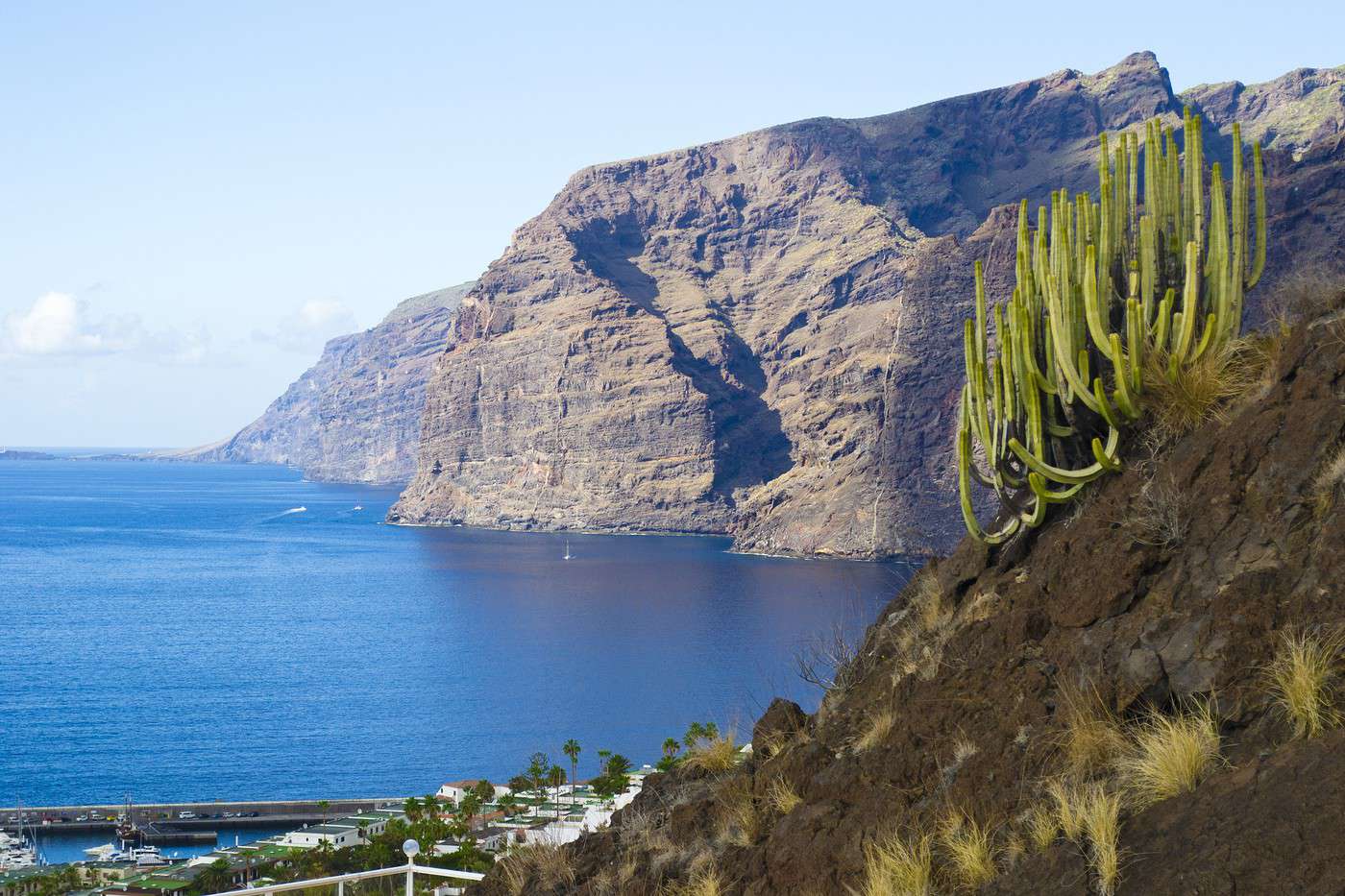
Tenerife offers stunning landscapes, sometimes breathtaking, like the cliffs of Los Gigantes Cliffs, and nature is very much present once you move away from the most touristy areas. Hiking is easy here, with 4,000 km of more or less marked trails across the island. Among the best spots for walking, Teide National Park, a UNESCO site, is the most popular.
Life and Cultural Activities
Nightlife and Going Out
Climate and Weather in Tenerife
Climate Overview
The island has a subtropical climate with pleasant year-round temperatures on the coasts thanks to the trade winds. This doesn’t prevent snow in winter on the highest peaks or the occasional "sea of clouds." Generally, the southern coast is drier than the north, which is also windier.
Best Time to Visit Tenerife
The climate isn’t a major constraint for visiting Tenerife, though winter can bring a few rainy days (along with slightly chilly sea temperatures), and July-August can sometimes be quite hot. If anything, spring and early autumn are the best times.
| Jan. | Feb. | Mar. | Apr. | May | Jun. | Jul. | Aug. | Sep. | Oct. | Nov. | Dec. | |
|---|---|---|---|---|---|---|---|---|---|---|---|---|
| Climate | / |
: very favorable | : favorable | : moderately favorable | : unfavorable.
Sea Temperatures Throughout the Year
| Jan. | Feb. | Mar. | Apr. | May | Jun. | Jul. | Aug. | Sep. | Oct. | Nov. | Dec. | |
|---|---|---|---|---|---|---|---|---|---|---|---|---|
| Tenerife | 19 | 18 | 18 | 19 | 19 | 20 | 21 | 22 | 23 | 22 | 21 | 19 |
Climate and Weather
Additional Information
Getting to Tenerife by Sea
By Sea
To/From Mainland Spain
While the Canary Islands have no connections with neighbouring Morocco, there are routes to and from "mainland Spain". For example, Naviera Armas operates weekly services from Huelva to Santa Cruz de Tenerife or Las Palmas, taking roughly 30 to 40 hours depending on the island, with pedestrian fares starting at a minimum of 150 € per trip.
To/From Other Islands in the Archipelago
As the main island, Tenerife is logically the best connected. All other islands are linked from Santa Cruz (in the north) or Los Cristianos (in the south) via one or both of the ferry companies operating in the archipelago: Fred Olsen, Garajonay Express, Naviera Armas, and Trasmediterranea.
Inter-Island Distances
Approximate distances (km) between islands.
| El Hierro | Fuerteventura | Gran Canaria | La Gomera | La Palma | Lanzarote | Tenerife | |
|---|---|---|---|---|---|---|---|
| El Hierro | 350 | 200 | 70 | 80 | 420 | 120 | |
| Fuerteventura | 350 | 90 | 280 | 350 | 15 | 190 | |
| Gran Canaria | 200 | 90 | 150 | 200 | 180 | 60 | |
| La Gomera | 70 | 280 | 150 | 60 | 350 | 35 | |
| La Palma | 80 | 350 | 200 | 60 | 390 | 90 | |
| Lanzarote | 420 | 15 | 180 | 350 | 390 | 240 | |
| Tenerife | 120 | 190 | 60 | 35 | 90 | 240 |
Additional Information
Something wrong or out of date? Report this page