last edited Jul 31, 2020
Climate and Weather in Réunion
Location Map of Réunion
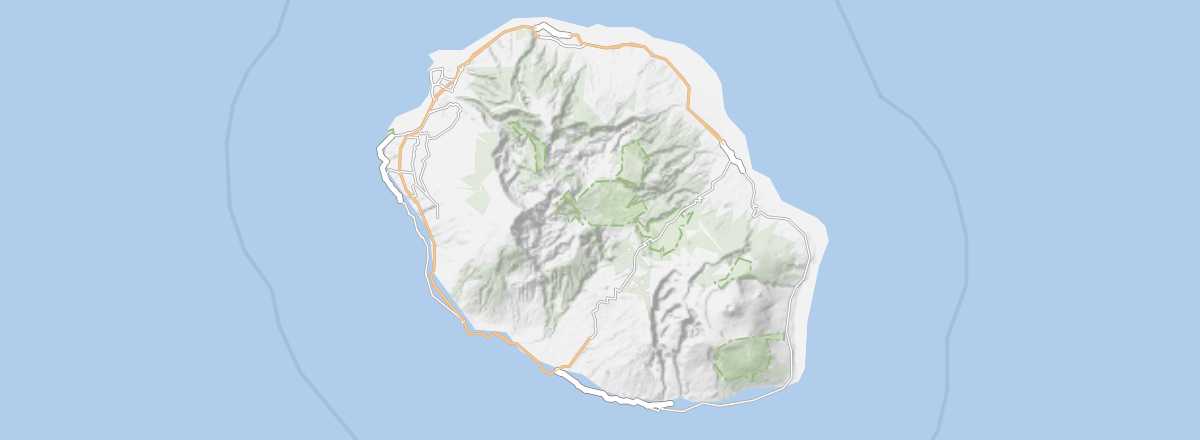 Réunion
Open the interactive map
Climate Overview
Réunion has a humid tropical climate with winds blowing from east to west. The high central reliefs play a significant role in the climate, both in terms of temperatures, which drop with altitude, and rainfall, which is heavier on the island's east coast than on the west, protected by the mountains. These reliefs also create microclimates found across the island.
Generally, temperatures are never extreme on the coasts, while in the "Hauts" (highlands), it can get quite chilly during the austral winter, with occasional morning frosts. Like the east coast, the "Hauts" also receive significant rainfall.
The austral summer, from January to March, is cyclone season. Though these cyclones are less "spectacular" than those in the Caribbean, for example, they can still cause considerable damage. In any case, authorities take the necessary steps to inform and protect the population.
Best Time to Visit Réunion
Rather than the fairly pleasant year-round temperatures, it's the rainfall that defines the best times to visit. The "dry season," from May to November, is the most favorable, though in reality, you'll still encounter some rain on the east coast and inland.
| Jan. | Feb. | Mar. | Apr. | May | Jun. | Jul. | Aug. | Sep. | Oct. | Nov. | Dec. | |
|---|---|---|---|---|---|---|---|---|---|---|---|---|
| Coastal Climate | / | |||||||||||
| Highlands Climate |
: very favorable | : favorable | : moderately favorable | : unfavorable.
Sea Temperatures Throughout the Year
| Jan. | Feb. | Mar. | Apr. | May | Jun. | Jul. | Aug. | Sep. | Oct. | Nov. | Dec. | |
|---|---|---|---|---|---|---|---|---|---|---|---|---|
| Saint-Gilles | 26 | 27 | 27 | 26 | 25 | 24 | 23 | 22 | 23 | 23 | 24 | 26 |