African Indian Ocean Islands
Travel guide
The Indian Ocean encompasses all the islands located east of Africa and, to put it simply, south of India. Although in common parlance the term usually refers to the islands off the African coast, in reality this geographical area officially also includes…
Interests (out of ★★★★ ) : Nature ★★★★ ; Adventure ★★★★ ; Culture ★★ ; Relaxation-Holidays ★ . "The Red Island" , as Madagascar is nicknamed due to its unique and grand nature, is one of those destinations you dream of visiting but which, in a way, also…
The islands of the African Indian Ocean use the metric and decimal system, like France.
The Comoros (including Mayotte) form an archipelago made up of four main islands and numerous islets. Since 1978, Grande Comore (Ngazidja), Anjouan (Ndzuani), and Mohéli (Mwali) have formed the Union of the Comoros, while Mayotte (Mahore) has been a French…
More than the fairly constant temperatures year-round, it’s humidity and rainfall that define the best time to visit. Generally, this corresponds to the dry season, particularly from May to October.
| Jan. | Feb. | Mar. | Apr. | May | Jun. | Jul. | Aug. | Sep. | Oct. | Nov. | Dec. | |
|---|---|---|---|---|---|---|---|---|---|---|---|---|
| Climate |
: very favorable | : favorable | : moderately favorable | : unfavorable.
| Jan. | Feb. | Mar. | Apr. | May | Jun. | Jul. | Aug. | Sep. | Oct. | Nov. | Dec. | |
|---|---|---|---|---|---|---|---|---|---|---|---|---|
| Anjouan | 28 | 28 | 28 | 27 | 27 | 25 | 24 | 25 | 25 | 25 | 26 | 27 |
A few local words and expressions useful to know when traveling:
The Comoros have no sites listed as UNESCO World Heritage Sites. Bambao ★ A large town on the east coast of Anjouan, with the beautiful Tratringa waterfalls nearby. Domoni ★★ The second-largest city on the island, featuring an old quarter within its medina,…
Finding the best time to visit means balancing climate conditions with crowd levels and the most attractive prices for travel and on-site expenses.
| Jan. | Feb. | Mar. | Apr. | May | Jun. | Jul. | Aug. | Sep. | Oct. | Nov. | Dec. | |
|---|---|---|---|---|---|---|---|---|---|---|---|---|
| Climate | ||||||||||||
| Avoid crowds | ||||||||||||
| Low prices |
: very favorable | : favorable | : moderately favorable | : unfavorable.
There are no direct scheduled flights to or from Europe. This means connecting flights, most commonly via Madagascar or Réunion/Mayotte.
For tourist travel.
A passport valid for at least 6 months after the planned return date, a return or onward ticket, hotel reservation or host contact details, and a visa are required to enter the archipelago. The visa is obtained on arrival (or from consulates) for 60 € and allows a 45-day stay.
Belgium:
Canada:
Switzerland:
The Comorian franc is permanently pegged to the euro at a fixed rate, roughly 1 € = 492 FC.
In France, both for individuals and professionals, the "travel advice" from the Ministry of Foreign Affairs regarding precautions for each country has legal standing. A similar online travel advice system exists in several countries:
If you encounter problems while traveling abroad, your country's consular services can assist you. It's also worth noting that if you are a citizen of the European Union and your country is not represented, you can contact any other representation of an EU member state.
Belgium:
Canada:
Switzerland:
At any time of year, pack light clothing plus a sweater for evenings or air conditioning, but don’t forget that the Comoros is an Islamic republic when it comes to dress. Also bring sun protection, mosquito repellent, and—most importantly—rain gear, as the archipelago sees plenty of rain during the austral summer. Good walking shoes are also a must, especially if you plan to climb Mount Karthala on Grande Comore.
Local time: .
230 volts (50 Hz) with "French" plugs (officially types C and E), which will require an adapter for North American plugs.
At over 1,500 km long and 600 km wide, the island is located in the tropical zone of the Indian Ocean, 600 km from the African coast, from which it is separated by the Mozambique Channel. Madagascar is a "platform" composed of hills and high plateaus (in the…
Since 2007, Madagascar has been divided into 22 regions, resulting from a redrawing of the island's six former provinces, which were named after their capitals. Although this division is no longer current, it still helps simplify the way one can view the…
Allée des baobabs, Madagascar · © VoyageForum If there is one destination synonymous with nature, it’s Madagascar! The country is indeed rich in exceptional natural areas, as it is home to 18 national parks and around thirty terrestrial or marine…
Madagascar's climate varies greatly depending on altitude and coastal orientation. The east coast (and the north, incidentally), from Antsiranana to Tolanaro , is the wettest, while the southwest is much drier and even arid. The rainy season runs from…
Toamasina, Madagascar · © VoyageForum 12th century: the island, until then settled by peoples from Indonesia and then Africa, sees Arabs settle on the west coast 1500: arrival of the first European, the Portuguese navigator Diego Dias . 1643-1674:…
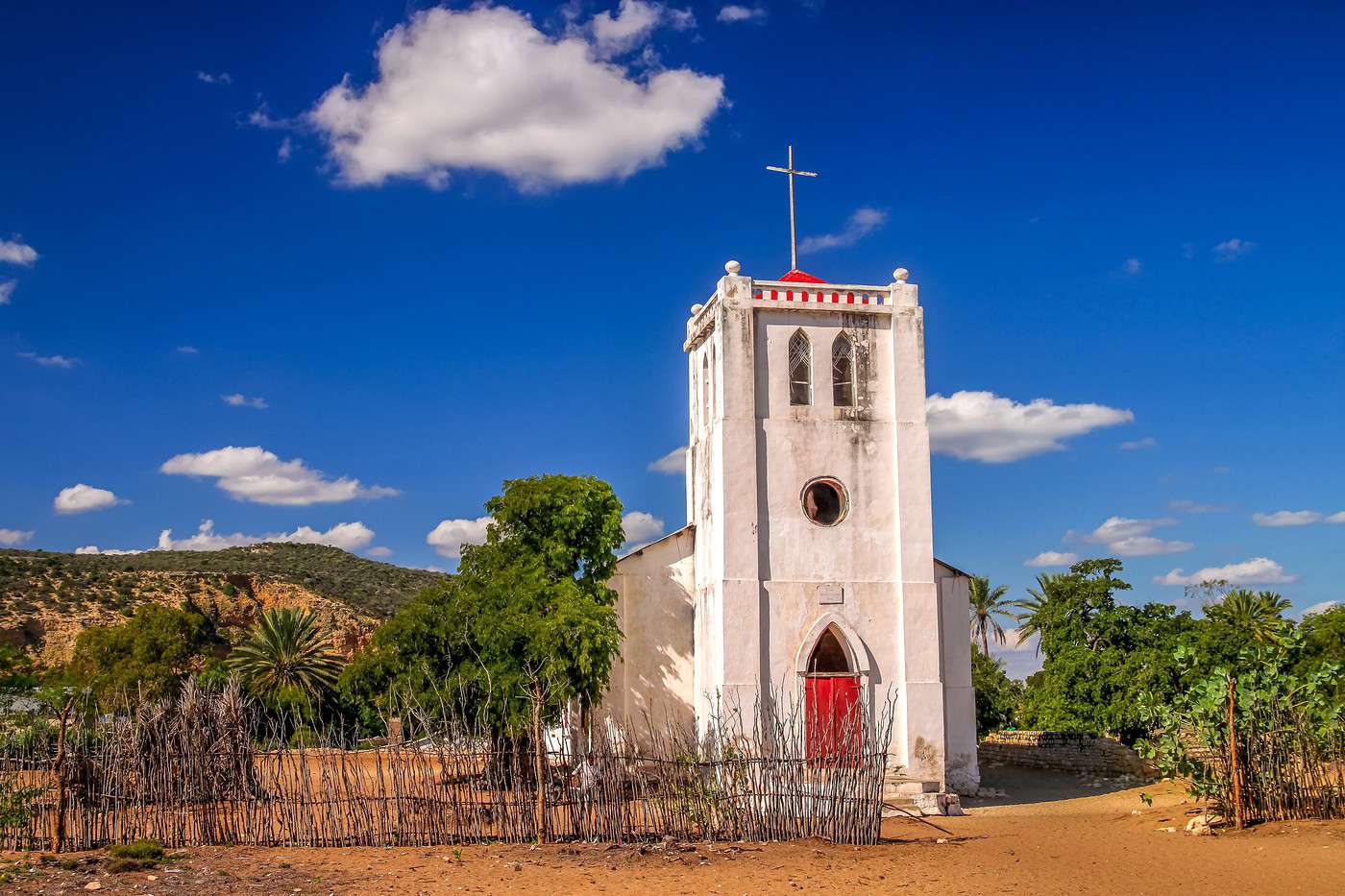
While the island is officially Christian, with equal numbers of Catholics and Protestants, a majority of the population also practices or retains animist beliefs and follows the ancestor worship. There is also a small Muslim minority on the island, representing 1 to 2%.
While there are no strict dress codes for visitors, it’s important to know that Malagasy society is generally modest. Malagasy culture differs significantly from Western culture, especially outside cities or tourist areas. It is deeply rooted in the concept…
Malagasy cuisine has rice as its "traditional" ingredient, which means that in many places the main dish will revolve around it, either alone or accompanied by chicken or other meats. As for romazava (a beef and vegetable stew), it is the national dish. Other classics of Malagasy cuisine include soups (Chinese, vegetable...), chicken (roasted, in sauce), zebu meat (as steak, tournedos...), and duck (magret and foie gras), served with rice or sautéed vegetables. Sea and river fish, as well as seafood, are also common. Generally speaking, while Malagasy gastronomy is quite spicy, it is more fragrant than hot.
It is in the cities, particularly in the capital, that you will find other types of cuisine. French cuisine is logically well represented and has even strongly inspired local cooking, with dishes like magret, foie gras, zebu steak and fries, and a full range of bakery products, including croissants. Among foreign cuisines, you will also find dishes from Réunion (such as curries), Italian pasta and pizzas, as well as Chinese restaurants and, occasionally, Indian ones in certain areas.
There are two categories of restaurants in Madagascar: the hotelys, where bush taxis often stop, and more "classic" restaurants offering Chinese or "French-style" cuisine but rarely Malagasy food. The former are by far the cheapest—you can eat for less than 4 or 5 €—but also the least varied, with meals typically revolving around chicken, zebu, and the ever-present rice. For more diversity in the more "classic" establishments, expect to pay around 10 € for a meal.
Madagascar has three sites inscribed on the UNESCO World Heritage list: Ambohimanga ★★ (2001) This "royal hill" is one of the twelve surrounding the capital. It is home to the ancient city that gave rise to the Merina kingdom. The site and its buildings are…
Anakao, Madagascar · © VoyageForum Madagascar has beautiful and even stunning beaches, but very few beach resorts given its hundreds of kilometres of coastline, which, admittedly, isn’t always easily accessible. The best places to enjoy the sea…
Interests (out of ★★★★ ) : Nature ★★★★ ; Adventure ★★★★ ; Culture ★★ ; Relaxation-holidays ★ . If there’s one destination synonymous with nature, it’s Madagascar! The country is incredibly rich in exceptional natural areas, home to 18 national parks and…
The island is vast, and depending on the areas you wish to visit, the climatically favorable periods won’t necessarily be the same. Above all, it’s the climate and weather conditions you’ll need to consider—more than tourist crowds, which are minimal, or slight price variations from one month to the next. In any case, to be sure of the "best" time everywhere, May and especially mid-September to mid-November are the periods to prioritize.
| Jan. | Feb. | Mar. | Apr. | May | Jun. | Jul. | Aug. | Sep. | Oct. | Nov. | Dec. | |
|---|---|---|---|---|---|---|---|---|---|---|---|---|
| East Coast Climate | ||||||||||||
| West Coast Climate | ||||||||||||
| South Coast Climate | ||||||||||||
| Inland Climate | ||||||||||||
| Avoid Crowds | ||||||||||||
| Low Prices |
: very favorable | : favorable | : moderately favorable | : unfavorable.
Madagascar has around sixty airports, half of which have regular commercial traffic. Among these, Antananarivo and five or six others ( Tamatave , Mahajanga , Nosy Be ...) have international activity, mostly limited to Réunion and Mayotte . Logically, the…
Même s'il s'est un petit peu amélioré ces dernières années, le réseau routier malgache n'est pas vraiment ce qu'on fait de mieux. Sur les 35 000 km de routes, à peine 15 à 20% est goudronné et encore s'agit-il pour beaucoup des principaux axes partant de la…
Accommodation is not Madagascar’s strong point. Hotels and other types of mid-range to high-end lodging are rare (except, at a stretch, in the capital and Nosy Be ), and basic comfort is the norm once you leave the cities or a few tourist spots. What’s more,…
For tourist travel purposes. A passport valid for at least 6 months beyond the end of your stay in the country is required, as is a visa allowing a maximum of 3 months on site. Note that this "tourist" visa cannot be extended later. Since January 1, 2016, a…
Currency: Ariary (5 iraimbilanja) Banknotes: 100, 200, 500, 1,000, 2,000, 5,000 and 10,000 Ar Coins: 1/5, 2/5 + 1, 2, 4, 5, 10, 20 and 50 Ar Exchange: The Ariary (Ar) was already the monetary unit of the Kingdom of Madagascar in the 19th century. It was…
In France, both for individuals and professionals, the "travel advice" from the Ministry of Foreign Affairs regarding precautions for each country has legal value. A similar online travel advice system exists in several countries: Foreign Affairs Belgium…
For the coast, pack light clothing for all seasons plus a sweater for evenings or air conditioning. For the interior, warmer clothes are recommended. Since Madagascar is a very rainy island, it’s best to also prepare for rain, as well as for sun at the other…
From Madagascar to... Comoros (Anjouan): Diego Suarez 530 km; Majunga 440 km. African Coast (Mozambique): Majunga 620 km; Tuléar 930 km. Mayotte : Diego Suarez 450 km; Majunga 350 km. Mauritius : Diego Suarez 1,250 km; Tamatave 890 km. Réunion : Diego Suarez…
Preview temporarily unavailable.
Preview temporarily unavailable.
Preview temporarily unavailable.
Preview temporarily unavailable.
Preview temporarily unavailable.
Preview temporarily unavailable.
Preview temporarily unavailable.
Preview temporarily unavailable.
Preview temporarily unavailable.
Preview temporarily unavailable.
Preview temporarily unavailable.
Preview temporarily unavailable.
Preview temporarily unavailable.
Preview temporarily unavailable.
Preview temporarily unavailable.
Preview temporarily unavailable.
Preview temporarily unavailable.
Preview temporarily unavailable.
Preview temporarily unavailable.
Preview temporarily unavailable.
Preview temporarily unavailable.
Preview temporarily unavailable.

Mayotte and the Comoros form an archipelago made up of four main islands and numerous islets located in the Mozambique Channel, east of Madagascar . Since 1978, Grande Comore, Anjouan, and Mohéli have formed the Union of the Comoros, while Mayotte (Mahore)…
Mayotte has no sites listed as UNESCO World Heritage Sites. Dzaoudzi ★ This is the larger of the two municipalities that make up Petite-Terre. It's where the ferry to Mamoudzou departs from. Pamandzi ★ This is the locality where the only airport in Mayotte is…
La Passe en S, Mayotte · © VoyageForum Lagoons, clear and warm waters, lovely sand, turtles, and generally few people—Mayotte has all the ingredients beach lovers could wish for. What’s more, you can swim safely in most places. The island boasts…
Since Mayotte isn’t a major tourist destination, the island doesn’t experience the crowds or seasonal price fluctuations seen in other places like Mauritius. Instead, visits tend to peak during school holidays (both those in mainland France and Réunion), when many people come to see friends and family living on the island. Ultimately, the best time to visit is largely determined by the climate, though it’s never truly problematic.
| Jan. | Feb. | Mar. | Apr. | May | Jun. | Jul. | Aug. | Sep. | Oct. | Nov. | Dec. | |
|---|---|---|---|---|---|---|---|---|---|---|---|---|
| Climate | ||||||||||||
| Avoid crowds | ||||||||||||
| Low prices |
: very favourable | : favourable | : moderately favourable | : unfavourable.
Mayotte has only one airport, Dzaoudzi-Pamandzi, located on Petite-Terre. It receives flights from around half a dozen airlines connecting it to about twenty cities and serves as the hub for the local carrier Ewa Air. Mayotte has only one carrier, Ewa Air ,…
The road traffic code in Mayotte is the same as in metropolitan France. The island's road network is fairly average, with roads not always in good condition and often congested during rush hours, especially around and in Mamoudzou . Speed rarely exceeds 50…
Since the island is only very lightly touristed and many visitors stay with friends or family, accommodation in Mayotte has always been quite limited and not always the most economical. In short, it's best to choose and book your nights before leaving. However, once there, it's easy to explore from your accommodation given the small size of the department.
There are very few hotels in Mayotte, and even fewer at budget prices since they mainly cater to business travelers. There are also a few rather high-end tourist establishments. In any case, expect to pay at least around 40 € for a double room.
The island has a number of guesthouses and B&Bs approved by the Tourism Committee and rated from 1 to 5 "ylang" based on their facilities and services. They represent the most common type of accommodation in Mayotte, available both in towns and in the countryside.
Generally speaking, this is a good accommodation option, offering some independence and contact with locals, both Mahoran and metropolitan. Expect to pay 25 € to 30 € per night for two at the lowest prices.
There are no youth hostels in Mayotte.
There are no official campsites in Mayotte, but wild camping is practiced along the beaches, especially on weekends on the southern coast of Grande-Terre.
This is always a possible solution for those staying for a longer period. Some people look for someone to watch their home while they're away (theft is very common in Mayotte), particularly during school holidays. It's usually free or very low-cost.
Unless you have a place to stay with acquaintances, guesthouses and/or B&Bs are generally the best option for accommodation in Mayotte.
Mayotte has two distinct culinary traditions: metropolitan cuisine (expensive when it involves imported products) and traditional Mahoran cuisine. The latter is budget-friendly and often based on local ingredients like cassava, plantains, potatoes, rice, and spices. Fish also plays a major role in this cuisine.
Given its size, Mayotte doesn’t offer a wide variety of international cuisines. You’ll find just two or three places serving Asian or Italian specialties.
Eating in Mayotte can be very affordable or quite expensive, depending on what and where you choose. Opting for traditional or local food at small eateries or from street vendors (the "mamas brochettis") will cost around 5 or 6 € per meal. However, if you prefer metropolitan dishes (even from supermarkets) or dine at restaurants, prices can quickly add up. A practical option for outings, especially at the beach, is to bring your own picnic.
Mayotte has a tropical maritime climate with a rainy season—hot and humid from late October to March—and a dry season, cooler and windier, for the rest of the year. Temperature variations are minimal throughout the year, and rainfall is abundant (1,500 mm), especially from December to March.
Unlike other parts of the Indian Ocean, cyclones are very rare in Mayotte. Sea temperatures are pleasant year-round, never dropping below 24°C!
Rather than temperatures, which remain fairly constant, humidity and rainfall define the best time to visit. Generally, this corresponds to the dry season, particularly from May to October. That said, no matter the month, the climate is never a major obstacle for those wanting to visit Mayotte.
| Jan. | Feb. | Mar. | Apr. | May | Jun. | Jul. | Aug. | Sep. | Oct. | Nov. | Dec. | |
|---|---|---|---|---|---|---|---|---|---|---|---|---|
| Climate |
: very favorable | : favorable | : moderately favorable | : unfavorable.
| Jan. | Feb. | Mar. | Apr. | May | Jun. | Jul. | Aug. | Sep. | Oct. | Nov. | Dec. | |
|---|---|---|---|---|---|---|---|---|---|---|---|---|
| Mayotte | 28 | 28 | 28 | 27 | 27 | 25 | 24 | 25 | 25 | 25 | 26 | 27 |
965 BC: according to legend, King Solomon visits the archipelago. 16th century: arrival of the Portuguese, establishment of sultanates and Islam in the region. 17th-18th centuries: the Comoros become a stopover for European ships on the route to the Indies .…
The vast majority of Mayotte's population (95%) practices a moderate and tolerant Sunni Islam, whose principles and traditions influence many people's daily lives. The remaining inhabitants are Catholic (4%) or Protestant (1%). Note that during Ramadan or on Fridays, the island's activity may sometimes slow down.
Key points on etiquette and behavior in Mayotte.
French is the official language of Mayotte and is spoken by most inhabitants, although around 40% of them have some difficulty with it. Shimaore (a Swahili dialect) and, to a lesser extent, Shibushi (a Malagasy dialect) are also widely spoken on the island.
A few useful local words and expressions to know while traveling:
In addition to the same public holidays as mainland France, Muslim festivals are sometimes also observed as public holidays in Mayotte.
Interests (out of ): Nature ; Adventure ; Culture ; Relaxation-holidays .
Although the island is small, it holds a certain richness, both along the coastline and inland, in terms of landscapes, nature, and marine wildlife. However, the island is not quite an adventure destination.
There is a very present Mahoran culture and traditions on the island that guarantee a certain "change of scenery" when arriving, for example, from mainland France. However, this discovery primarily—and almost exclusively—comes through meeting the people and everyday life, rather than through any material heritage, which can be said to be non-existent.
Beaches and the lagoon with diving opportunities and, secondarily, sea excursions. So, a setting for relaxation-holidays, though one that is still underdeveloped or requires a certain budget, making other destinations—such as Mauritius—preferable when seeking this type of stay.
While Mayotte is fundamentally an easy destination at all levels, suited for beginner travelers, the deterioration of the security situation on the island in recent times means it now appeals more to slightly experienced independent travelers.
Since Mayotte is not strictly a tourist destination, there are hardly any agencies that offer trips here.
From Mayotte to...
There is a bi-weekly service, on Tuesdays and Fridays, between Mayotte and Anjouan Island via Comoros. The journey is operated by the *Maria Galanta* of the company SGTM, which can accommodate 200 passengers. It costs 160 € round trip.
As for Madagascar, there is no direct connection from Mayotte. However, via Anjouan, it is possible to reach Majunga on the northwest coast of Madagascar with another weekly boat (on Tuesdays) from the same company, SGTM. Allow 90 € for a one-way trip between Anjouan and Majunga.
Mayotte is not really in a cruise zone, and passing ocean liners are rare.
Very few sailboats from elsewhere reach the shores of Mayotte, and most of the boats you see are usually local.
As Mayotte is a French department, there are no specific entry requirements regardless of the length or purpose of your stay. A valid national identity card or passport is sufficient.
For citizens of the European Union, Canada, and Switzerland, a valid passport is required. Like all other French overseas territories, Mayotte is not part of the Schengen Area.
In foreign countries, French consulates handle all matters related to Mayotte. Note that there are some administrative differences between metropolitan France and Mayotte, such as the Foreigners' Entry and Residence Code, which does not apply on the island.
Currency: Euro (100 cents). Banknotes: 5, 10, 20, 50, 100, 200 and 500 €. Coins: 1, 2, 5, 10, 20 and 50 cents + 1 and 2 €. Exchange: For those outside the Eurozone, several banks and ATMs—mainly in Mamoudzou and Petite-Terre—offer currency exchange. Banks are…
In France, both for individuals and professionals, the "travel advice" from the Ministry of Foreign Affairs regarding precautions for each country has legal value. A similar online travel advice system exists in several countries: Foreign Affairs Belgium…
At any time of year, pack light clothing plus a sweater for evenings or air conditioning. Don’t forget sun protection, but above all, rain gear—rain is common in Mayotte during the southern hemisphere summer. Also, bring good walking shoes for hiking.…
There is no university in Mayotte, so local students have to go to Réunion or mainland France for their studies.
Preview temporarily unavailable.
Preview temporarily unavailable.
Preview temporarily unavailable.
Preview temporarily unavailable.
Preview temporarily unavailable.
Preview temporarily unavailable.
Preview temporarily unavailable.
Preview temporarily unavailable.
Preview temporarily unavailable.
Preview temporarily unavailable.
Preview temporarily unavailable.
Preview temporarily unavailable.
Preview temporarily unavailable.
Preview temporarily unavailable.
Preview temporarily unavailable.
Preview temporarily unavailable.
Preview temporarily unavailable.
Preview temporarily unavailable.
Preview temporarily unavailable.
Preview temporarily unavailable.
Preview temporarily unavailable.
Preview temporarily unavailable.

The Seychelles archipelago consists of 115 granite and coral islands, with three main ones: Mahé (155 km²; 80,000 inhabitants), Praslin (37.5 km²; 7,000 inhabitants), and La Digue (9.8 km²; 2,500 inhabitants). Traditionally, the archipelago is divided into…
Preview temporarily unavailable.
Preview temporarily unavailable.
Preview temporarily unavailable.
Preview temporarily unavailable.
Preview temporarily unavailable.
Preview temporarily unavailable.
Preview temporarily unavailable.
Preview temporarily unavailable.
Preview temporarily unavailable.
Preview temporarily unavailable.
Preview temporarily unavailable.
Preview temporarily unavailable.
Preview temporarily unavailable.
Preview temporarily unavailable.
Preview temporarily unavailable.
Preview temporarily unavailable.
Preview temporarily unavailable.
Preview temporarily unavailable.
Preview temporarily unavailable.
Daily "backpacker" budget for two people:
In France, both for individuals and professionals, the "travel advice" from the Ministry of Foreign Affairs regarding precautions for each country has legal value. A similar online travel advice system exists in several countries: Foreign Affairs Belgium…
Something wrong or out of date? Report this page