last edited Dec 11, 2019
Europe's Rail Network
Location Map of Destinations
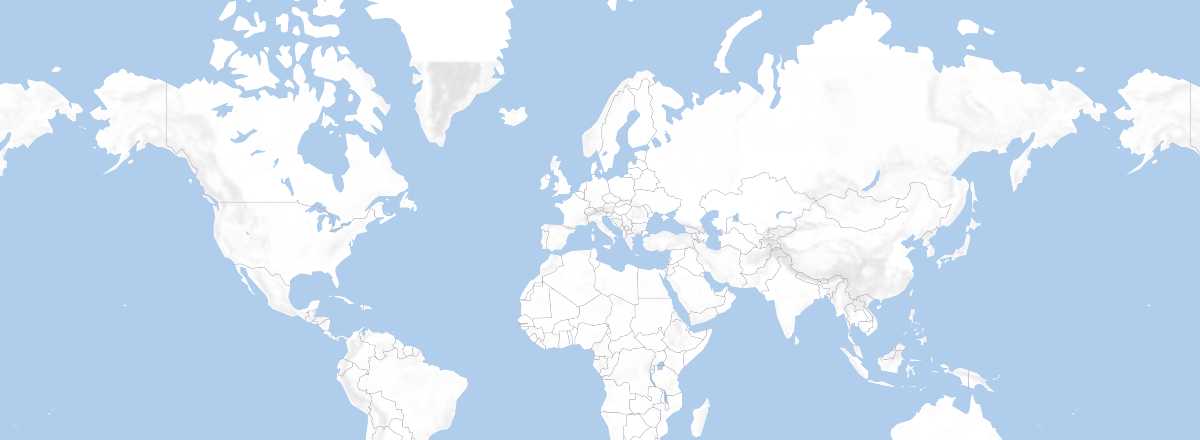 Destinations
Open the interactive map
Destinations
Open the interactive map
Western Europe Networks
Overview
Western Europe has an excellent overall rail network, including two specific trains: the Eurostar (France-England) and the Thalys (France-Belgium/Netherlands).
All countries in this zone are included in the InterRail pass, with each offering "country passes" (Belgium, Luxembourg, and the Netherlands are grouped together).
Germany, Austria, and Switzerland
Germany
Very comfortable trains, among the best in the world, especially for night trains and high-speed services, which sometimes even feature audio and video systems for passengers, like on planes. There are several "tourist" lines to explore along the Rhine Valley (Cologne-Frankfurt) or the Elbe (from Dresden), the Black Forest (Frankfurt-Basel), and routes in Bavaria toward Switzerland and Austria for lakes and Alpine landscapes.
Austria
The network covers the country well, with scenic mountain routes in the Tyrol region, particularly from Innsbruck.
Switzerland
A very dense network with many scenic lines through mountains and lakes, especially from Bern, Geneva, or Lausanne.
Benelux (Belgium, Netherlands, Luxembourg)
A dense network with some lines worth taking to explore the countryside, such as between Brussels and Luxembourg or, in the Netherlands, the tulip fields (March to May).
Spain and Portugal
Spain
Spain has a very good rail network, notably the Talgo. Note that reservations are often mandatory for many lines. For scenic routes, there are plenty of options, including from Barcelona to the Pyrenees, Madrid, or along the coast to Valencia. Mountain panoramas can be enjoyed from León or on the Córdoba-Málaga route through "canyons."
Spain also has two luxury trains: the "Al Andalus" for circuits from Madrid and Seville, and the "Transcantabrico" between San Sebastián and Santiago de Compostela. For history buffs, there’s the "Strawberry Train" between Madrid and Aranjuez and the "Expreso de la Robla" in the north. Finally, the Balearic Islands feature a small scenic line on Majorca, the "Train de Sóller," between Palma and Puerto Sóller.
Portugal
The network has improved in recent years, with a few scenic lines like Porto-Régua along rivers or the short Lisbon-Estoril stretch by the sea.
France
France has one of the most extensive and modern rail networks in the world (the TGV), appreciated by all travelers... despite recurring strikes, which remain a specialty of the SNCF. Meanwhile, you can enjoy beautiful routes across the Alps, the Massif Central, and the Pyrenees. For Mediterranean landscapes, try the Marseille-Nice route or into Italy, or Nice-Digne along the Var Valley.
Italy
Italy’s network has been restructured in recent years, leading to some line closures. However, the country offers many scenic routes for Alpine views from Milan, Bologna, and Turin, or coastal routes that circle Italy from north to south.
United Kingdom (Great Britain, Ireland)
Great Britain
Following privatization in the early 1990s, the British network became one of the worst in Western Europe (much better in Scotland): line closures, frequent delays, poorly maintained tracks and equipment. The government has recently reinvested in rail. Some lines are worth exploring for their landscapes in northern England and the Lake District, but especially in Scotland, where many routes offer stunning coastal, lake, mountain, and countryside views. There are also a few heritage steam lines.
Ireland
A small rail network exists, with scenic lines like Cork-Tralee or Dublin-Galway offering beautiful views of the Irish countryside.
Scandinavian Networks
Overview
Scandinavia has a high-quality rail network, though trains don’t always reach the far north. All countries in this zone are included in the InterRail pass, with each offering "country passes." There are no trains in Iceland.
By Country
Denmark
A small national network with scenic countryside and lakes between Copenhagen and Nærum.
Finland
Finland has a comfortable network, logically developed in the south, with international connections to Sweden and St. Petersburg in Russia. For train travelers, several lines in central Finland between lakes and forests are worth exploring, as is the northern stretch to Rovaniemi and beyond into Finnish Lapland.
Norway
Norway offers some of Europe’s most stunning rail landscapes, though the network is limited. Several scenic routes start from Oslo, with the Oslo-Bergen line being the most beautiful, featuring magnificent views of mountains, lakes, and fjords. Oslo-Stavanger is also worth exploring. Avoid the Flam-Myrdal train, which has become a tourist scam with little interest!
Sweden
Like other Scandinavian countries, Sweden’s trains are very comfortable, with a network primarily developed in the south. The Kiruna-Narvik (Norway) line in the north is the country’s most scenic, with mountain landscapes.
Eastern Europe Networks
Overview
There’s a clear divide: some countries have rail standards nearly comparable to Western Europe (Hungary, Slovakia...), while others—due to various reasons—have networks closer to what you’d find in the Middle East or countries where train travel is less straightforward. However, things are gradually improving.
Note that in Eastern Europe, it’s much more advisable to confirm your routes than in the West. For former USSR countries or Romania, small "gifts" can help smooth interactions with other passengers (and sometimes resolve issues).
Several countries in this part of Europe are included in the InterRail pass, with each offering "country passes."
Bulgaria
Bulgaria’s rail network is fairly developed and economical, with connections to neighboring countries, though trips to Romania or Greece (outside "Express" trains) can be slow and uncomfortable. While some lines are decent (Sofia-Black Sea, international "Express"), Bulgarian trains still have room for improvement.
Tip: Learn the names of stations in Cyrillic (the local alphabet) to avoid missing stops. Always ask fellow passengers to confirm your location.
The line crossing the Rila Mountains (Sofia-Vidin) is Bulgaria’s most spectacular.
Hungary
The local network is dense and of good quality, connected to all neighboring countries, as Hungary has long been a crossroads of Europe. The line from Budapest southwest along Lake Balaton is the most scenic.
Baltic States
Estonia, Latvia, and Lithuania have several rail lines. Trains are generally slow (though "fast" services exist) and cheaper than buses. Beyond domestic networks, Baltic railways primarily serve as a passage between St. Petersburg (Russia) and Western Europe.
Czech Republic, Slovakia
The networks of both countries (formerly Czechoslovakia) are relatively good (especially Slovakia) and continually improving. They are dense (particularly in the Czech Republic), with many connections to neighboring countries, and affordable. As is common in the East, there are local trains stopping at every village and "fast" trains (more or less so in reality in the Czech Republic) primarily for long distances.
The lines crossing the Tatra Mountains in Slovakia are the most scenic. Trains are an excellent way to get around in this country.
Russia
Trains are widely used by travelers for both western Russia and cross-country trips on the Trans-Siberian. This makes sense given the extent of Russia’s rail network. Trains go almost everywhere, are fairly comfortable, punctual, and a great way to meet locals (especially if you speak some Russian). They’re also inexpensive. Downsides: they’re generally slow, and schedules are always shown in Moscow time.
There are "long-distance" and "short-distance" trains (max one day). The former theoretically have fewer stops and are more comfortable (sleeping berths, dining cars). Second class is perfectly fine for travel.
You can buy tickets directly at stations, either at public counters (some Russian helps) or, for a fee, at foreigner-friendly counters in major stations or agencies.
Southeastern Europe Networks
Overview
The rail network in this part of Europe is relatively developed, though not at the level of the rest of Europe. Except for Albania, all countries in this zone are included in the InterRail pass, with some offering "country passes."
Greece
Greece’s network is limited to the Peloponnese and a main line from Athens to Thessaloniki and Istanbul, with branches to Bulgaria and North Macedonia. Train quality has improved in recent years.
Scenic routes: the end of the Athens-Thessaloniki line for views of northeastern valleys and mountains, plus the northern Peloponnese network, which partly follows the coast and crosses gorges.
Turkey
There are a few lines between major cities like Istanbul-Ankara. Overall, trains are slow (though a high-speed line is planned for Istanbul-Ankara) but economical.
Former Yugoslavia (Bosnia, Croatia, North Macedonia, Montenegro, Serbia, Slovenia)
Croatia
Due to its geographic position, Croatia has a good rail network with frequent, comfortable, and affordable trains, though they can sometimes be slow.
Slovenia
A small rail network similar to Italy’s or Austria’s, offering scenic routes in the country’s Alpine north. There’s also a small tourist train along the underground section of the Pivka River near Postojna.