last edited May 5, 2026
Flying to Japan
Location Map of Japan
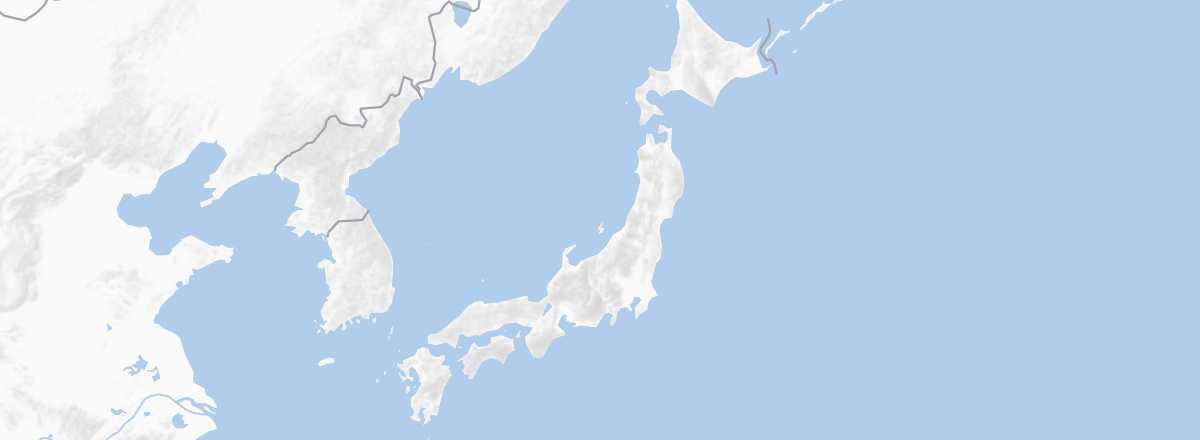 Japan
Open the interactive map
Japan
Open the interactive map
General Information
As one might expect, Japan is extremely well served, both internationally and domestically, when it comes to air travel. With around a hundred commercial airports spread across the country—most of them ultra-modern and highly efficient—flying plays a major role in travel here. In total, over 200 million passengers are recorded each year, with domestic and international traffic almost evenly split.
Logically, the two airports in the capital (Narita and Haneda) handle the most traffic, accounting for around 60% of the country’s passenger volume between them. They are followed by Osaka’s two airports (Kansai and Osaka International) with 45 million passengers, then Fukuoka and Sapporo, each with around 25 million annually. More broadly, Japan also has nearly thirty airports handling over a million passengers per year.
Local Airlines
Japan has around thirty airlines, a third of which operate international flights to varying degrees. As usual, these include full-service carriers, low-cost airlines, and regional or local operators, some serving niche markets.
That said, the market is largely dominated by two aviation giants: Japan Airlines (JAL) and All Nippon Airways (ANA). The former is the historic national carrier, a member of the Oneworld alliance with around a hundred destinations and over 40 million passengers per year, while the latter is Japan’s largest airline, part of the Star Alliance, with nearly as many routes but 10 million more customers. In addition to these two, travellers may also encounter other airlines when visiting Japan, particularly low-cost carriers like Peach (the main one, an ANA subsidiary) or Jetstar Japan, which offer affordable domestic and regional flights.
From France and Europe
Thanks to Japanese airlines JAL and ANA, as well as national carriers from several countries including Air France, Europe is very well connected to Japan by direct flights. Around fifteen cities on the continent, including Paris, have direct routes to Tokyo and Osaka. This means travellers can fly non-stop from France to Japan in thirteen or fourteen hours—but often at a cost exceeding 1,000 €, sometimes nearing 1,500 € during peak periods. In short, it’s a budget to plan for, even if the quality of the airlines involved is widely recognised.
For cheaper options under 1,000 €, connecting flights will be necessary, with plenty of choices to compare. Start by looking at what other European carriers offer from major hubs, but also consider Gulf airlines, which are generally competitive. Don’t overlook major Asian carriers, particularly Indian and Chinese airlines, which offer flights to Tokyo and many other Japanese cities via their hubs. With good planning and advance booking, fares around 800 € are possible.
Beyond just price, consider flight duration (some can be very long), ideal and less ideal travel dates, and the option to mix arrival and departure cities (e.g., flying into Tokyo and out of Osaka) when planning this kind of trip.
From the Rest of Asia-Pacific
Japan is extremely well connected to the rest of its continent, as well as to the Australia/Pacific region. This includes a wide range of airlines, including low-cost carriers, both Japanese and from other countries in the region. Notably, several airports beyond the four or five main ones in the archipelago offer a good selection of destinations.
From Elsewhere
Apart from Latin America, which has no direct flights, other major regions of the world have at least one direct connection via Japanese airlines or carriers from those countries. This is especially true for North America, from Mexico to Canada, with around a dozen cities served, including by the low-cost airline Zip Air Tokyo. Eastern Africa (Ethiopia and Egypt) and nearly all Gulf countries, with their own airlines, are also directly accessible.