last edited Aug 18, 2020
Geography, climate and environment of the Greek islands
Location Map of Greek Islands
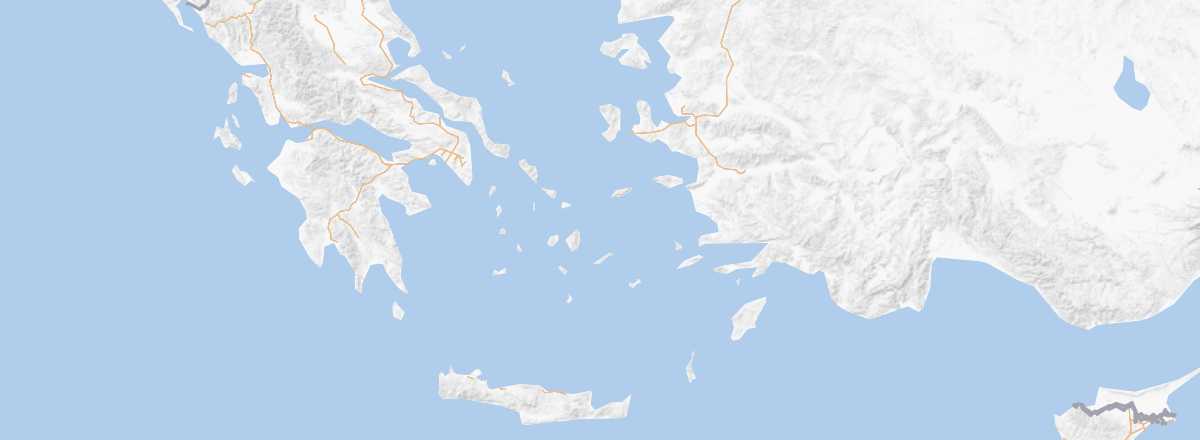 Greek Islands
Open the interactive map
Environment
Physical geography of the region
Wildlife and flora
Natural areas

Climate
Like the rest of the country, the Greek islands have a Mediterranean climate. This is characterised by hot to very hot summers, though tempered by wind on some islands, and relatively mild winters with occasional rain. It is only on the few most mountainous islands (such as Crete) that the climate can be a little harsher.
Best time to visit
Climatically (and even in terms of crowds), the best time to visit the Greek islands is in spring or early autumn, rather than July-August, which can be very hot and particularly crowded in many places.
| Jan. | Feb. | Mar. | Apr. | May | Jun. | Jul. | Aug. | Sep. | Oct. | Nov. | Dec. | |
|---|---|---|---|---|---|---|---|---|---|---|---|---|
| Climate |
: very favourable | : favourable | : moderately favourable | : unfavourable.
Sea temperature throughout the year
| Jan. | Feb. | Mar. | Apr. | May | Jun. | Jul. | Aug. | Sep. | Oct. | Nov. | Dec. | |
|---|---|---|---|---|---|---|---|---|---|---|---|---|
| Cyclades | 16 | 15 | 16 | 17 | 19 | 21 | 24 | 25 | 24 | 23 | 20 | 18 |
Climate and weather by archipelago
Cyclades (Mykonos)
Dodecanese (Rhodes)
Ionian (Corfu)