last edited Aug 14, 2020
Getting Around Alaska
Location Map of Alaska
 Alaska
Open the interactive map
Alaska
Open the interactive map
Road Network, Traffic
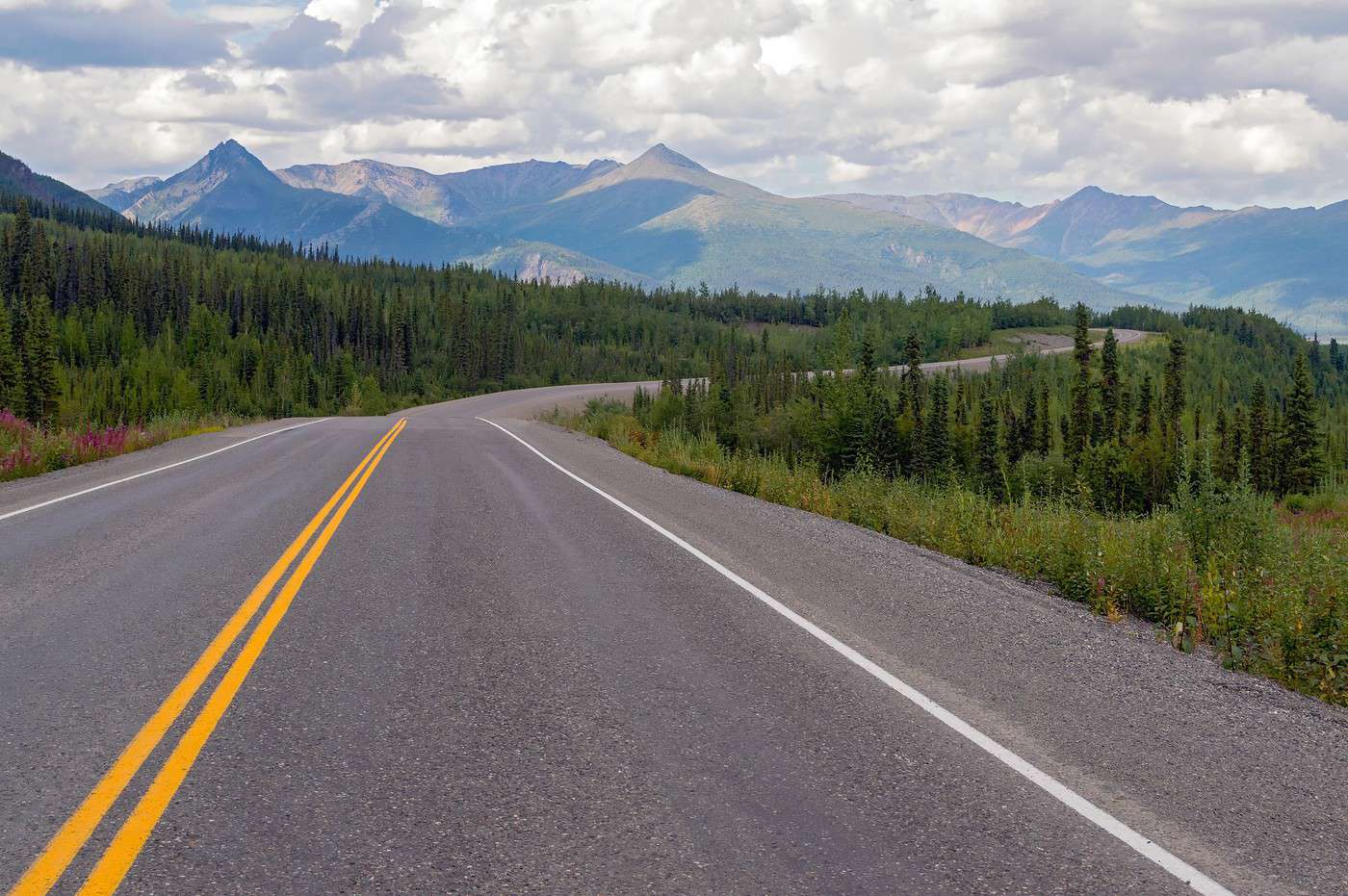
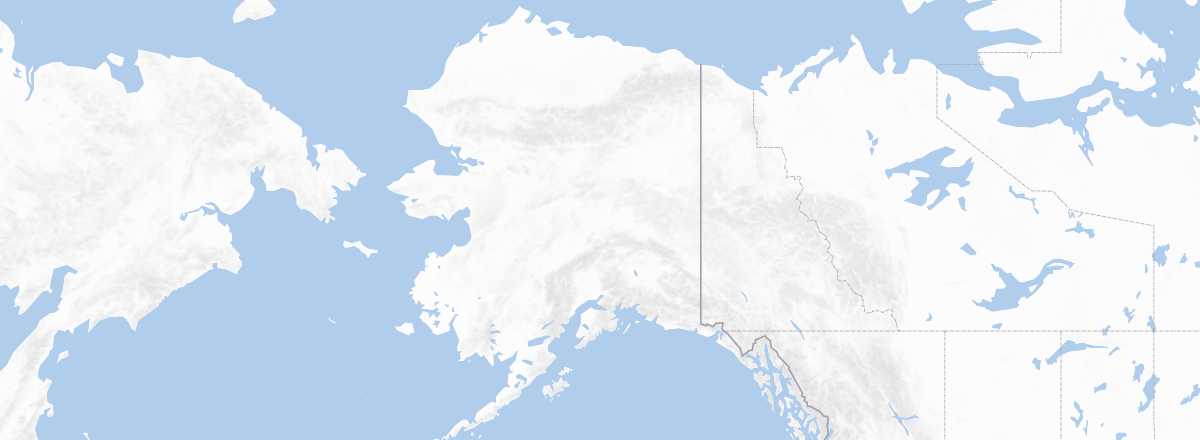
Alaska's road network is very limited, and many places are only accessible by air, river, or sea, such as the entire southern coast, including the capital Juneau, or more broadly, the entire western part of the state. In broad terms, the main roads and highways cover the triangle between Anchorage, Fairbanks, and the Canadian border (the Alaska Highway), with an extension north toward the Arctic and Deadhorse. Note that some secondary roads may not always be easily accessible and/or may be closed in winter.
Car, RV
Rental
Bus
Two Wheels
Motorcycle
Bicycle
Hitchhiking
Trains
Unlike the rest of the United States, trains in Alaska are not operated by Amtrak but by Alaska Railroad. Its network is not connected to the rest of the country and is limited to the Seward (south) - Anchorage - Fairbanks axis, divided into five lines, totaling just under 800 km of track. As with many things, fares remain high, and you should expect to pay at least around $200 one-way between Anchorage and Fairbanks (580 km).
Tourist Line
Another American-Canadian line, 180 km long, connects the port of Skagway to Whitehorse (Yukon) in season. However, the White Pass and Yukon Route, as it is called, is primarily a tourist train running through the stunning landscapes of the region... even though only half of the route is actually doable by train (the rest is by bus) from Skagway. From May to September, the "WYPR" benefits from the presence of cruise passengers and transports around 300,000 people.
Boats and Ferries
Along with air travel, ferries are the complementary mode of transport for coastal regions without roads or for accessing various islands (Aleutians, Kodiak, etc.). In any case, exploring Alaska's coasts this way is a fantastic experience, though you should budget accordingly.
The Alaska Marine Highway System is the state's main ferry operator. It manages an extensive network of over 30 ports (some also accessible by road), covering 8,000 miles, starting from Washington State (Bellingham) and British Columbia (Prince Rupert) before continuing along the southern coast of the peninsula to Dutch Harbor in the Aleutian Islands. Other companies, like Inter-Island Ferry, also operate locally, such as along the southern coast.
In addition to these regular routes, it is also possible to rent or sometimes "take advantage of" private boats to travel short distances along the coastline or on the rivers and streams inland.
Domestic Flights
Given the limited road network, the size of the state, and the sparse population, air travel often replaces ground transport. Nearly every isolated town has its own small airfield for regular flights (sometimes) as well as private flights (often); many residents or communities even own their own small aircraft. In some cases, access by air also involves helicopters or seaplanes, which are very practical and common in the region.
In short, traveling by air is common and "normal" in Alaska. It’s true that flying saves time, is often the only means of access, and offers a fantastic way to discover Alaska from the sky. The only downside for visitors: the fares, which remain quite expensive, whether for regular flights with one of the many small local airlines or for chartered flights. On this topic, while there are around ten local airlines of varying sizes (see the list), the most well-known and closest to a "traditional" airline in terms of fleet and network is Alaska Airlines, which is also in the Top 10 of U.S. carriers.
In Town
Taxis
Other Means
Urban bus:
On foot:
Which Transport to Choose?
Distances Between Cities
Distances (km) between the main cities and sites in Alaska. Note that the capital, Juneau, like the rest of the southern coast, has no road network and is only accessible by boat.
| Anchorage | Deadhorse | Fairbanks | Haines | Homer | |
|---|---|---|---|---|---|
| Anchorage | 1370 | 580 | 1220 | 355 | |
| Deadhorse | 1370 | ||||
| Fairbanks | 580 | ||||
| Haines | 1220 | ||||
| Homer | 355 |
As a reminder, distances in the United States are expressed in miles, with 1 mile = 1.607 km.