last edited Sep 9, 2026
Getting Around Egypt
Location Map of Egypt
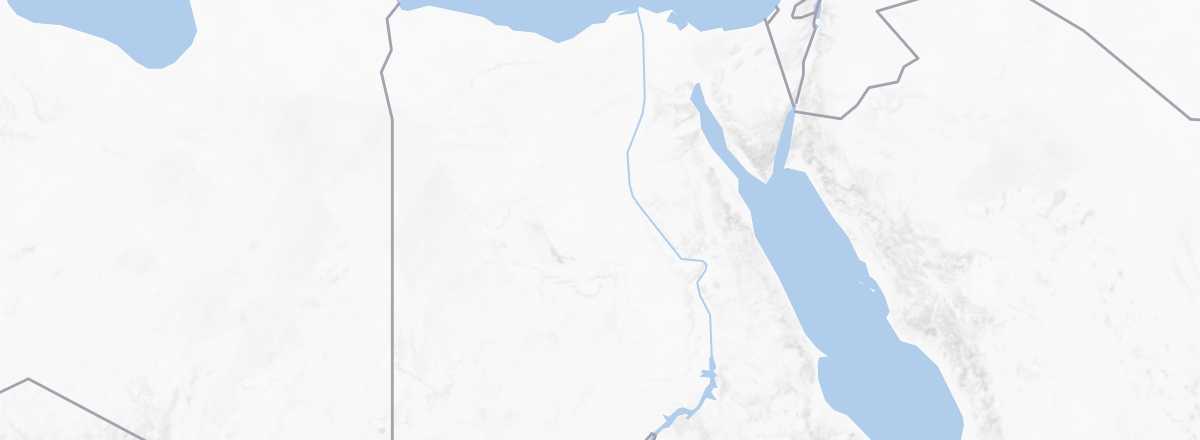 Egypt
Open the interactive map
Egypt
Open the interactive map
Road Network and Traffic
Egypt's road network is fairly good on major routes but often of quite poor quality elsewhere. Additionally, signage remains limited, and the "local norms" of driving mean you should never let your guard down. Egypt is one of the countries with the highest road accident rates in the world. Be cautious of other drivers and everything else on the road—pedestrians, animals, various vehicles—especially in the evening. Driving at night is not recommended.
Of course, when getting around, it’s essential to consider the current security situation depending on where you plan to go and follow the prevailing recommendations. Generally, it’s also advisable to choose the safest transport options with companies accustomed to serving tourists.
Car
As in many countries, when it comes to renting a car in Egypt, you have the choice of driving yourself or opting for a rental with a driver.
Generally, both international and local rental companies are widely available in cities, airports, and tourist areas, especially along the Red Sea coast, often offering both options. While self-driving is the more common choice, it’s important to remember that driving in Egypt requires some precautions and knowing what to expect. In Cairo and Alexandria, traffic is very dense and quite chaotic—if you’re not used to it, it can quickly become stressful. Additionally, depending on the security situation, certain areas may be off-limits, such as the northern Sinai or truly desert regions. This means police and military checkpoints are frequent on the roads. As a tourist, you’ll simply be asked for your rental contract, an ID, and possibly your international driving permit.
In terms of prices, expect to pay 35 €–50/day, insurance included, for a good range of vehicles. Keep in mind that the season and location can affect rates—peak season and beach resorts are obviously the most expensive. For cars with a driver, add 10 €–15 for the same model and duration. That said, for groups, either option remains affordable.
Buses and Shared Vehicles
Buses
Egypt has a good bus network with many fast and luxurious services (Superjet, Pullman, etc.) on major routes or between tourist destinations, as well as slower, more basic companies on secondary routes. Aside from the high-end options, which are worth choosing for long distances at a minimum, vehicles are often quite crowded.
Fares remain very affordable and are roughly similar to second-class train tickets. For example, on the same route, the more comfort and speed you want, the more expensive the ticket will be depending on the company. Expect roughly 2 €–3 per 100 km.
Overall, buses in Egypt are a good way to get around, but primarily for short to medium distances. For very long trips, flying or occasionally taking the train may be more practical.
Shared Taxis
These are minibuses or large cars that run between cities, cramming in 6 or 7 passengers—or up to fifteen in a minibus. Very popular, they cost roughly the same as local buses or second-class trains but are generally faster (and riskier due to driving habits). Their terminals are increasingly being moved away from city centers. Compared to other transport options, they’re far from ideal for tourists, especially since authorities may restrict their use in certain areas for security reasons.
By Bike
Egypt is one of those countries where traveling by bike isn’t necessarily a good idea. Long-distance cycling tours are very difficult, if not outright banned by authorities for security reasons in many regions. At some checkpoints, you won’t be allowed through without an escort. Additionally, aside from the sometimes extreme climate, the dangerous traffic for cyclists on Egyptian roads doesn’t encourage adventure.
That said, some local agencies offer guided and secure cycling tours with support. Alternatively, you can take short rides around Red Sea resorts or along the Nile near Luxor to explore temples on quiet country roads.
Trains
Egypt has an interesting rail network, the Egyptian National Railway, with trains running mainly along the Nile Valley, in the Delta region, and along the coast toward Libya. Overall, the equipment is still somewhat outdated, not always well-maintained, and delays are frequent, though things have improved in recent years on certain lines with the introduction of Talgo trains (Spanish-made) and VIP Express services.
That said, trains remain an economical (cheaper than flying or even driving), picturesque, and practical way to connect the country’s main sites, particularly on the Alexandria–Cairo–Luxor–Aswan route. They’re also a good alternative to buses on these routes, especially with the sleeper service on overnight trains.
As for prices, which are affordable, expect to pay around 30 € for a Cairo–Aswan trip (twelve to thirteen hours) in second class and about 130 €–150 for a sleeper berth with meals included.
Boats
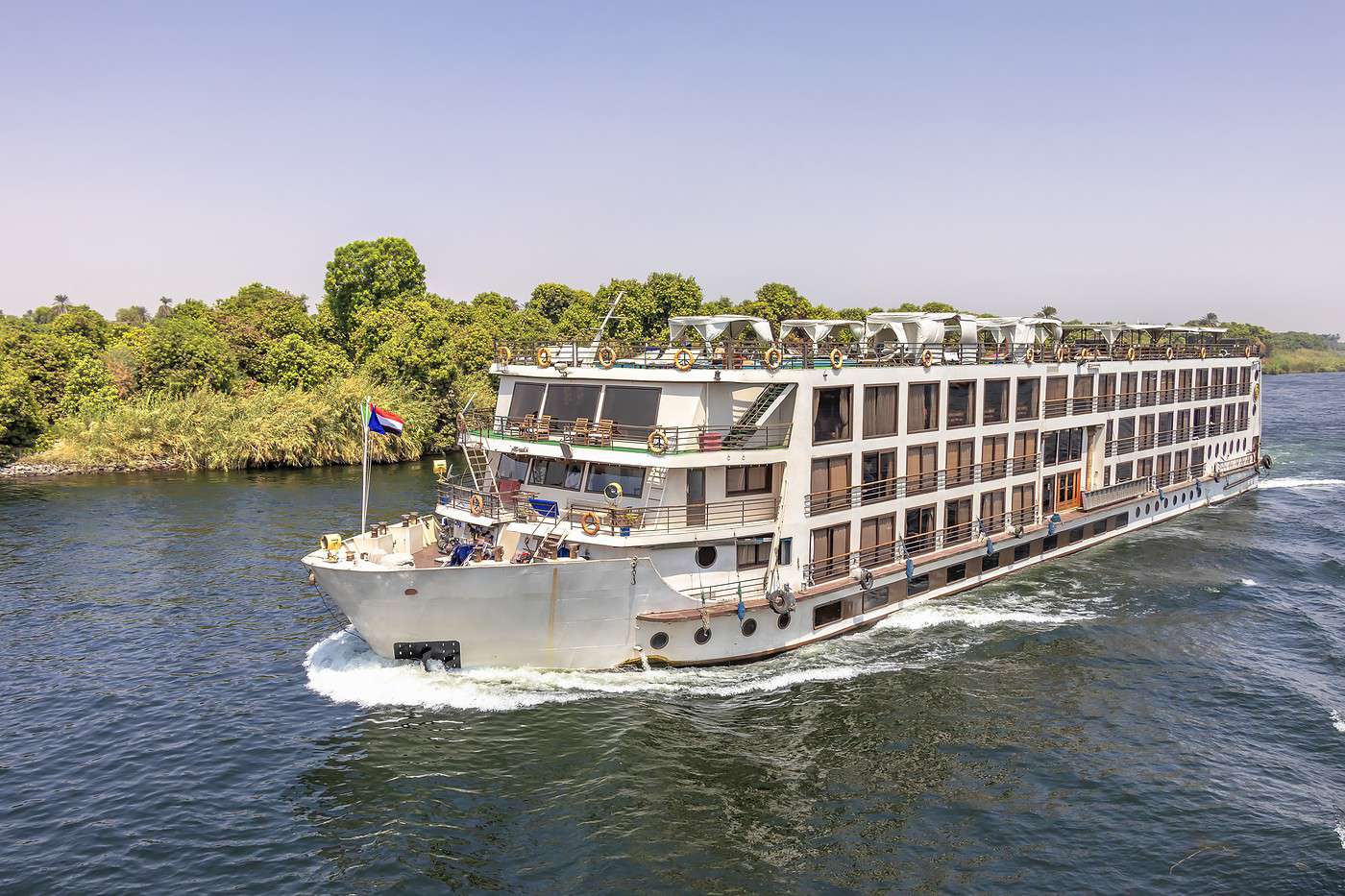
As a tourist, you’ll have two opportunities to travel by water in Egypt: domestic or international ferries and the famous Nile cruise.
Ferries
Aside from the small ferries and boats that cross the Nile at various points or the river shuttles that help avoid traffic jams in Cairo, there are several regular ferry routes. Domestically, there’s the Hurghada–Sharm El-Sheikh route, which connects the two Red Sea resorts by crossing the sea. Useful, but currently closed with hopes it will reopen one day. Otherwise, there’s the very popular Nuweiba (Egypt)–Aqaba (Jordan) route, which runs daily in as little as 3 hours for 60 €–80 per trip, plus the Hurghada (Egypt)–Duba (Saudi Arabia) route, mainly used for transporting pilgrims and goods.
Nile Cruise
This is, of course, the classic highlight of any trip to Egypt, alongside the Pyramids and diving. The Nile, the very heart of Egyptian civilization, is lined with most of the country’s major pharaonic sites.
From short excursions of a few hours to a full multi-day journey (around 200 km between Luxor and Aswan), the options are vast in terms of packages, prices, comfort levels, and types of boats. For all tastes and budgets. There are three main types of services: 1) comfortable cruise ships with capacities of up to 150 people for 80 €–150 per person per day all-inclusive, 2) what are called dahabiehs, charming sailboats carrying around a dozen people—this is the high-end option, costing twice as much as the previous, and 3) feluccas, small traditional wooden sailboats without cabins or engines, offering a spartan but "authentic adventure" experience. These are the cheapest, at less than 50 € per day per person. In any case, October to April is the ideal time, if only because the heat is more bearable.
Also, don’t forget that Lake Nasser, between Aswan and Abu Simbel, offers good cruising options too. Less crowded than the Nile route, these cruises cross the lake at lower prices.
Domestic Flights
While Nile Air and Fly Egypt operate, along with occasional flights between Cairo and Upper Egypt or Red Sea resorts, the EgyptAir group handles most domestic routes. This includes around a dozen cities from the capital. Prices are often attractive—for example, you can find Cairo–Luxor flights for around 50 €–100 depending on the season.
In any case, flying remains an excellent option for covering long distances between regions, even if you often have to connect through the capital. It’s fast, comfortable, and generally affordable for tourists.
In Town
Taxis and Ride-Hailing
These are the most commonly used and recommended options for tourists. Urban taxis, which are plentiful, remain very economical as long as they use their meters. Expect around 2 €–3 for a 5–6 km trip during the day (double at night), plus a 10% tip upon arrival. Alternatively, ride-hailing apps set prices and help with bookings.
Other Transport
Alexandria and Cairo have trams, and the latter also has a fast, economical metro that helps avoid traffic jams. Otherwise, you can also use local buses, microbuses with no fixed stops, and the ever-present tuk-tuks. These are very affordable but require some adaptation.
What to Choose for Getting Around?
Given the distances, affordable transport prices, and the country’s situation, flying is the best choice for long trips, while buses (or trains on certain routes) are ideal for shorter connections.
Distances Between Cities
Distances (km) between the main cities in the country:
| Alex. | Aswan | Hurgh. | Isma. | Cairo | Luxor | Marsa | Nuw. | Port S. | Sharm | Suez | Taba | |
|---|---|---|---|---|---|---|---|---|---|---|---|---|
| Alexandria | 1070 | 670 | 270 | 225 | 895 | 950 | 660 | 360 | 705 | 365 | 625 | |
| Aswan | 1070 | 540 | 1045 | 840 | 225 | 330 | 1280 | 1130 | 1385 | 1045 | 1160 | |
| Hurghada | 670 | 540 | 460 | 460 | 330 | 285 | 730 | 540 | 765 | 370 | 680 | |
| Ismailia | 270 | 1045 | 460 | 130 | 785 | 730 | 410 | 85 | 445 | 90 | 355 | |
| Cairo | 225 | 840 | 460 | 130 | 635 | 740 | 470 | 200 | 505 | 140 | 415 | |
| Luxor | 895 | 225 | 330 | 785 | 635 | 330 | 1070 | 835 | 1090 | 700 | 960 | |
| Marsa Alam | 950 | 330 | 285 | 730 | 740 | 330 | 1000 | 820 | 1040 | 655 | 955 | |
| Nuweiba | 660 | 1280 | 730 | 410 | 470 | 1070 | 1000 | 490 | 150 | 355 | 75 | |
| Port Said | 360 | 1130 | 540 | 85 | 200 | 835 | 820 | 490 | 530 | 170 | 430 | |
| Sharm El Sheikh | 705 | 1385 | 765 | 445 | 505 | 1090 | 1040 | 150 | 530 | 390 | 220 | |
| Suez | 365 | 1045 | 370 | 90 | 140 | 700 | 655 | 355 | 170 | 390 | 300 | |
| Taba | 625 | 1160 | 680 | 355 | 415 | 960 | 955 | 75 | 430 | 220 | 300 |
NB: Distances/durations between Sinai cities (Sharm, Nuweiba, Taba) and southern Egypt can be shorter if you take the ferry between Hurghada and Sharm El Sheikh.