last edited Sep 7, 2026
Getting Around in Vietnam
Location Map of Vietnam
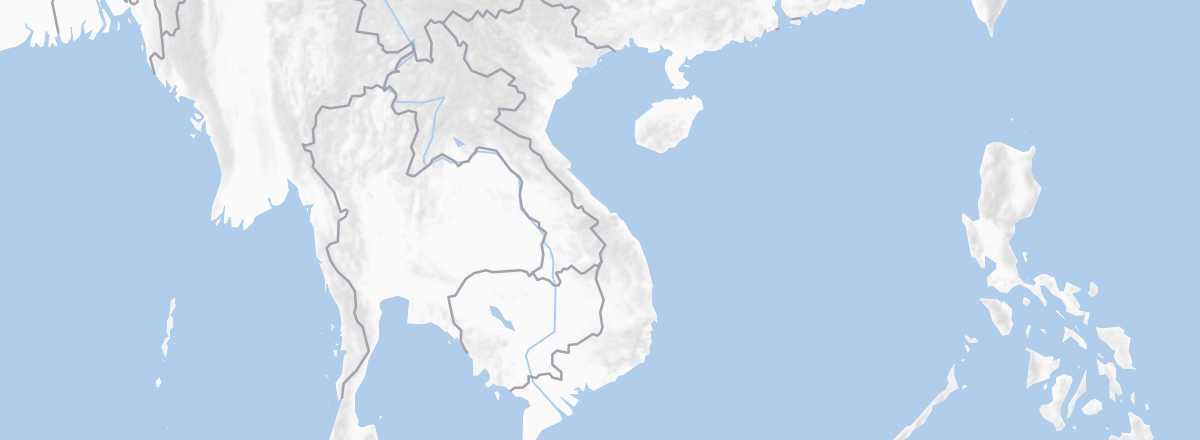 Vietnam
Open the interactive map
Vietnam
Open the interactive map
Road Network and Traffic
If there’s one country where road travel is full of paradoxes, it’s Vietnam! On one hand, the country has rapidly modernised its infrastructure, while on the other, driving habits and road behaviour have barely changed.
This means that the main routes—starting with the one linking Hanoi (in the north) to Ho Chi Minh City (in the south)—are now high-quality, significantly cutting travel times between cities. You’ll even find expressways and electronic toll sections here and there. That said, in rural areas and the northern mountainous regions, roads often remain narrow, winding, or poorly maintained. But even that is improving.
What hasn’t improved—or only very slowly—are the driving rules, where anticipating what other vehicles, pedestrians, or animals might do is more important than following road signs. A few key principles remain: "the bigger vehicle always has right of way," and honking to announce your presence is essential. Best to know that upfront...
Car
Personal Vehicle
It’s theoretically possible to enter Vietnam with your own vehicle, including a motorbike, for a maximum stay of 30 days (extendable by 10 more days). However, the cumbersome procedure and final cost might dampen your enthusiasm...
Only holders of a Vietnamese licence are allowed to drive in the country. While the international licence is now somewhat recognised, it still requires a certified translation by local authorities. On top of that—and most importantly—you must either have an official guide in your vehicle or follow a "support vehicle" from an approved agency. In short, it’s a lot of hassle.
Rental
Things have evolved here in recent years. While the law now allows self-drive rentals under certain conditions, hiring a vehicle with a private driver remains the overwhelming norm for all visitors. This is mainly for ease of rental, safety, and peace of mind.
The range of rental vehicles is now quite broad, from compact cars to minibuses. What’s more, the extra cost of a driver isn’t usually huge (don’t forget the tip at the end of the trip) and makes daily life much easier—not just on the road. Prices remain affordable: around 50 €–60 per day for a small city car, and 80 €–100 for larger vehicles.
Buses and Shared Vehicles
First observation: Vietnam’s bus network is dense, affordable, highly developed, and covers almost everywhere. It’s the preferred transport for locals and most travellers for long distances or inter-regional travel.
As you’d expect, there’s a wide range in comfort and speed, offered by various companies (see details). Night buses ("Sleeper Buses") and long-distance services are generally top-tier, with most offering bunk seats and amenities for extended trips. They’re the opposite of rural buses or minibuses, which focus on village or small-town routes and often leave only when full.
For all categories, fares remain reasonable, as does the value for money. This offsets—along with punctuality—the potential slowness on some secondary routes. Expect around 2 €–3 per 100 km for basic buses, roughly double for premium services, and triple for VIP Luxe buses, which offer private bunk compartments for overnight journeys.
In cities, there are usually bus stations, though some are outside the urban area, requiring a taxi to get there or back.
Private Minibuses
Like in other tourist destinations, comfortable VIP minibuses (around 10 seats) have emerged in recent years, primarily for tourists. You’ll find them on major routes, traditionally picking up passengers directly from their hotels. Their prices are roughly the same as VIP Luxe buses but remain affordable for most travellers.
Two-Wheelers
Motorbikes and Scooters
If there’s one iconic vehicle in Vietnam, it’s the scooter—or those small motorbikes you see everywhere, from cities to countryside, even in unlikely places. There are supposedly 50 million for 100 million inhabitants, serving as the daily transport for 80–90% of Vietnamese. They’re used for everything, though many aren’t in great condition or are quite old. Cities like Hanoi are even considering phasing out older two-wheelers to prioritise electric or less polluting and noisy models.
Scooters are part of Vietnamese life, and as a tourist, you can try them as a moto-taxi in cities or rent one to explore the country. For the latter, you’d better be motivated and ready to ride, though some agencies also offer rentals with a driver. Since most bikes exceed 50cc, a motorbike licence is technically required for rental. That said, it’s rarely checked by rental companies but could cause issues with insurance in case of an accident. Rental prices aren’t excessive: around 5 €–10 per day, or 30 €–40 per week.
Bicycle
For cycling enthusiasts, Vietnam remains a great destination and a fantastic way to explore the country up close, off the beaten path. That said, it requires good preparation and constant vigilance, especially if you plan to take the N1—the main, heavily congested route running from north to south. Similarly, if you head into the northern mountains, good fitness is a must due to the elevation changes. Then there’s the climate—hot and humid—plus the monsoon season, which can complicate things. In short, cycling in Vietnam is a wonderful adventure but not one to improvise.
Meanwhile, you can also rent a bike for short rides or even city trips. The choice is wide, from basic to electric, including mountain bikes or gravel bikes, with very affordable prices: anywhere from 5 € (or less) to 10 € per day.
Trains
Built during the colonial era, Vietnam’s 2,500 km rail network (see details) primarily connects the north (Hanoi) to the south (Ho Chi Minh City) along the coast, with extensions to China and a potential future link to Cambodia. It’s been improving in all aspects—comfort, equipment—with even high-speed line projects in the works. For now, some routes remain slow (though still faster than buses). Touristically, Vietnam boasts one of Asia’s most scenic rail journeys: the Hải Vân Pass line, linking Huế to Da Nang in three hours (for 100 km) through spectacular landscapes, with the train winding along mountainsides above the South China Sea.
Practically (see details), you must book tickets in advance. If you plan to make stops between destinations, you’ll need to book each segment separately rather than a single ticket for your entire journey.
Price-wise, trains are slightly more expensive than buses (their main competitor) but offer a different local transport experience, are safer, and far more comfortable—especially for overnight trips. Expect 3 €–4 per 100 km for a seat, and 7 €–10 for a bunk. Unless you’re a die-hard budget traveller, there’s no reason not to choose the train occasionally for your Vietnam travels.
Boats
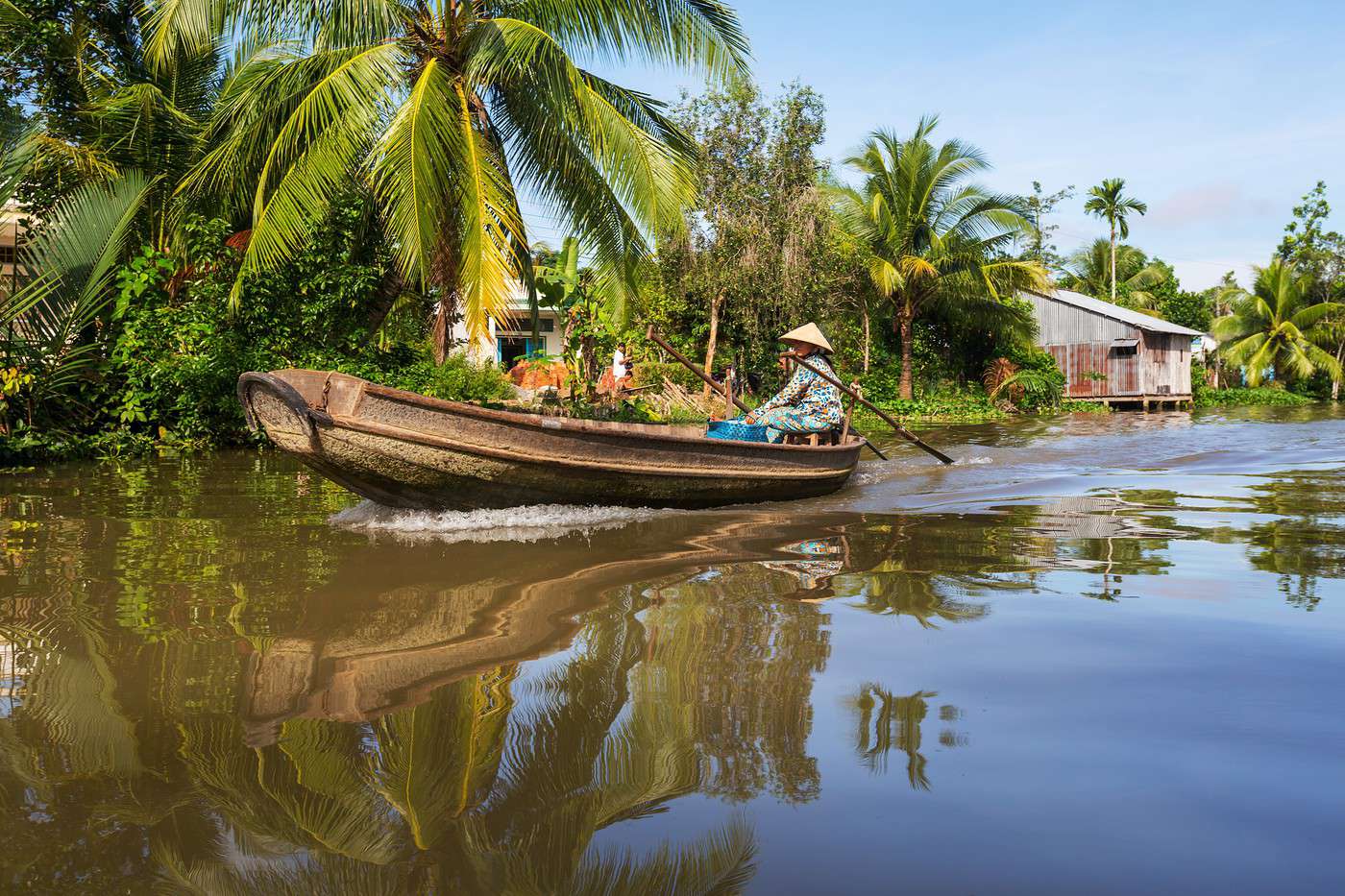
With over 3,000 km of coastline and the Mekong flowing into its southern delta, Vietnam is a destination where water travel is part of the experience. For visitors, this can mean tourist cruises—starting with the famous Ha Long Bay—or using boats as transport to reach islands (Phu Quoc, Cat Ba...), navigate the Mekong’s meanders, or even cross into neighbouring Cambodia.
While tourist cruises can sometimes be pricey, when boats, pirogues, ferries, or barges are used as popular transport, prices remain very affordable. For example, expect around 10 € per hour at sea for ferries.
Domestic Flights
Vietnam’s domestic air network is dense, modern, and particularly affordable, with many flights around 50 € per trip. Flying is the fastest and most efficient way to cover long distances, especially between the north and south.
The domestic market, like the international one, is dominated by the national carrier Vietnam Airlines and its subsidiaries. Others include Bamboo Airlines, Vietravel Airlines, and especially VietJet Air, the main low-cost airline, offering very cheap fares but frequent delays, paid baggage, and many extras. In short, if you want to fly in Vietnam, go for it—especially for the Hanoi–Ho Chi Minh City route, one of the world’s busiest, with departures every 15–30 minutes during the day.
In Cities
In cities, take your time—traffic jams and overwhelming flows of vehicles of all kinds flood the streets.
For comfort, taxis and especially ride-hailing apps (like Grab) are the way to go, with upfront fares to avoid surprises. These are the simplest, safest, and most economical (very cheap) way to get around Vietnamese cities. To bypass traffic, you can also rent scooters or use moto-taxis, some of which operate via apps. A driver picks you up with a helmet and storage box for trips costing just a few euros.
Other options include public buses (sometimes complex networks, very cheap but slow due to traffic), metro in Hanoi and Ho Chi Minh City (modern, fast, air-conditioned, affordable but with limited lines), or—more anecdotally and touristy—rickshaws in city centres.
What to Choose for Getting Around?
As always, if budget allows, exploring Vietnam with a driver is a great option. That said, with the country’s solid bus network, domestic flights, and even trains, there are plenty of easy and affordable ways to get around. So, plenty of choices for your travel style...