last edited Aug 20, 2020
History of Panama
Location Map of Panama
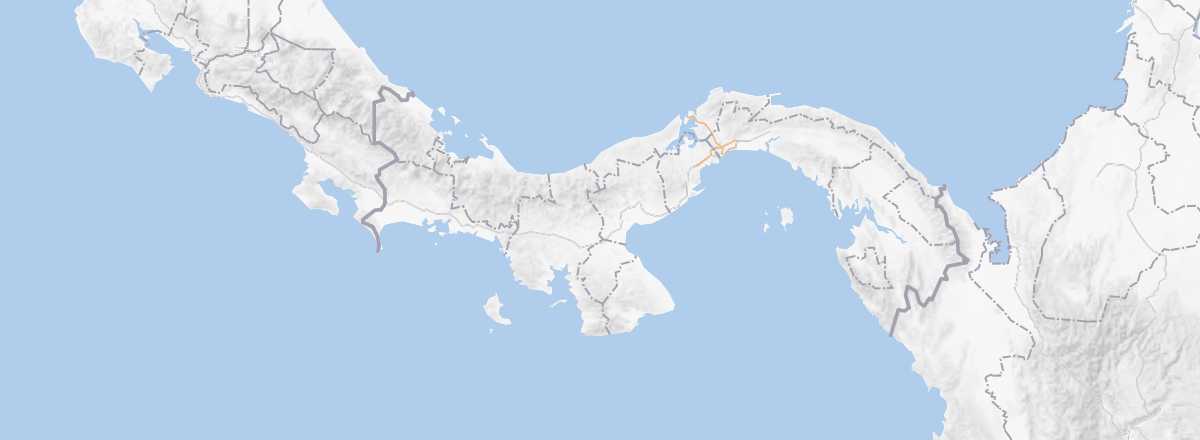 Panama
Open the interactive map
Panama
Open the interactive map
History of Panama
Key Dates
- 1502: The first Europeans (Spaniards), Rodrigo de Bastidas and then Christopher Columbus, explore Panama’s coasts. At the time, the country was home to nearly a million Indigenous people spread across numerous tribes.
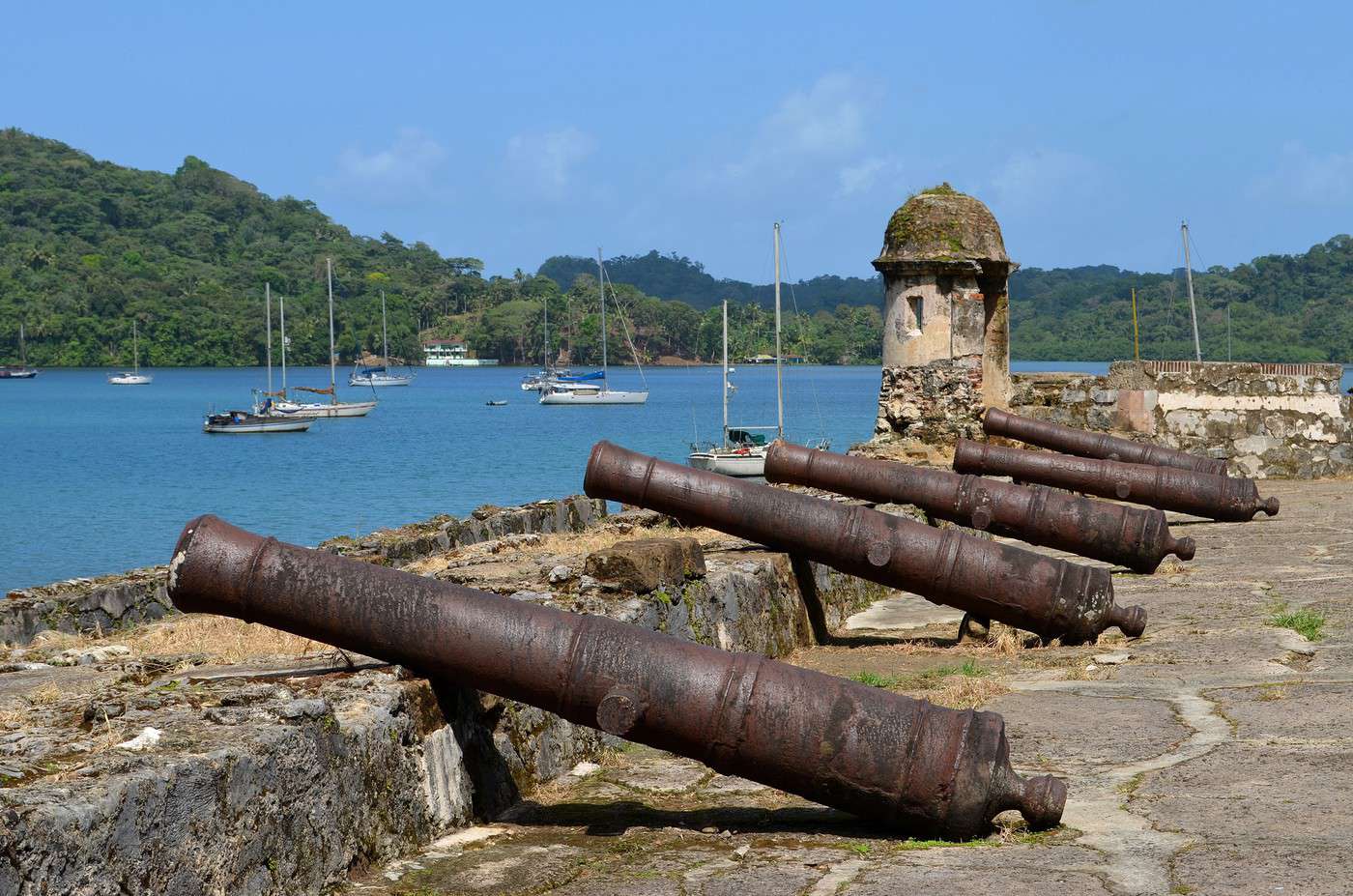
- 1510: Vasco Núñez de Balboa founds Santa María la Antigua del Darién, the first city on the American continent. It was abandoned a few years later in favor of Panama City.
- Mid-16th century: The Spanish use the country as a transit route to Peru and the Pacific coast in general, boosting its development.
- 1614: After various changes in status, Panama is placed under the authority of the Viceroy of Peru by royal decree.
- 17th century: Repeated raids by English pirates and privateers target Spanish strongholds, including Panama, which served as a stopover for gold shipped from Peru.
- 1717: Panama is annexed to the Viceroyalty of New Granada (present-day Colombia).
- 1821: Independence from Spain, anticipated for about a decade, is achieved in the same way as in other territories in the region. However, Panama chooses to join Gran Colombia, which later becomes the Republic of New Granada.
- 1848: The California Gold Rush begins. Over 400,000 prospectors cross Panama to reach California.
- 1855: The Caribbean-Pacific railway is built between the cities of Colón and Panama City. The same year, the country becomes the "Federal State of Panama" (later renamed the "Department of Panama"), still part of Colombia.
- 1880–1914: The Panama Canal is constructed. Initially started by the French (amid the Panama Scandal), the project is taken over by the Americans in 1903 and inaugurated in 1914. The canal remains under U.S. administration until 1999.
- 1903: Following the "Thousand Days' War" (1899–1902), the Department of Panama (still part of Colombia) gains independence to form the Republic of Panama, which quickly comes under U.S. "protection."
- 20th century: For decades, Panama experiences a succession of authoritarian regimes, with an oligarchy gradually facing off against military power.
- 1984–1988: General Noriega, head of the armed forces (and a former CIA agent), is widely seen as the country’s de facto leader, even though he is not president. After becoming too corrupt, he is abandoned by the U.S., which accuses him of drug trafficking and extortion in 1988.
- 1989: After annulling the May presidential elections, Noriega declares himself president and declares a "state of war" against the United States. The U.S. invades Panama on December 20 in Operation "Just Cause".
- 1990: Taken to the U.S., Noriega is convicted and imprisoned for several years before being extradited to France in 2010, then to Panama in 2011, where he remains in prison.
- January 1, 2000: The Panama Canal is officially returned to Panamanian control.
- Early 21st century: Several constitutional changes and reforms are implemented by successive governments to stabilize and develop the country.
- 2015: The expanded Panama Canal is inaugurated, allowing ships twice as large as before to pass through.
- 2016: The "Panama Papers" leak reveals Panama as one of the world’s leading tax havens.