last edited Dec 11, 2019
History of Réunion
Location Map of Réunion
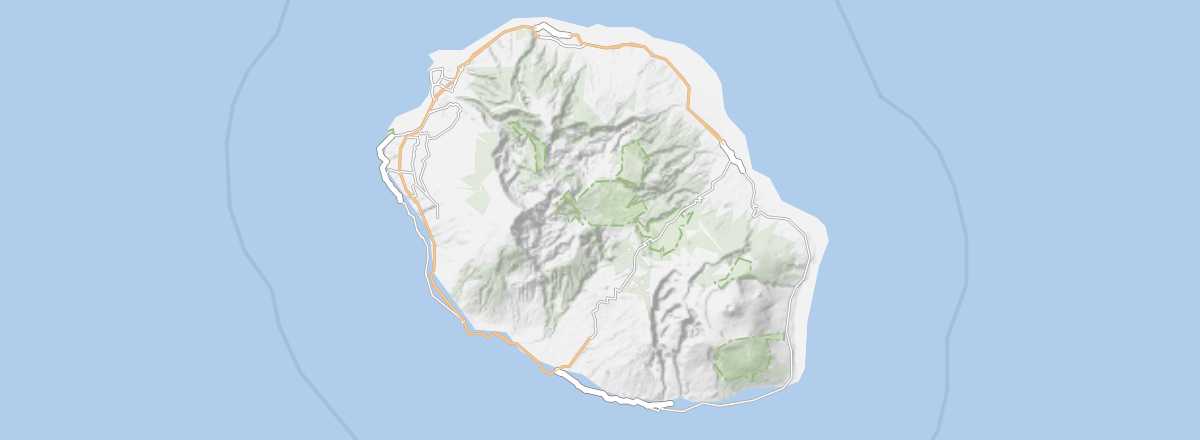 Réunion
Open the interactive map
Réunion
Open the interactive map
History of Réunion
Key Dates
- 1504-1513: The Portuguese are the first Europeans to sail near the then-uninhabited island, though it is not colonised until the following century.
- 1638-1642: The French officially take possession of the site, naming it Île Bourbon.
- 1646: The arrival of the first (12) "forced" settlers, who remain on the island for three years before it becomes uninhabited again for several years.
- 1663: Île Bourbon becomes a full French colony with the arrival of the first "voluntary" settlers.
- 1665-1764: The French East India Company directly administers and structures the island. Gradually, it becomes a stopover on the Route to the Indies for ships.
- 18th century: Coffee and spice cultivation bring prosperity to the island, which welcomes settlers and enslaved people from Madagascar.
- 1764: Louis XV buys the island from the East India Company after its bankruptcy.
- 1793: The island is renamed Île de la Réunion.
- 1807: In addition to a long troubled period, several cyclones end coffee cultivation, soon replaced by sugarcane.
- 1810: For five years, Réunion—renamed Île Bourbon again—is occupied by the British, who officially return it to France under the Treaty of Paris.
- 1848: Slavery is abolished, and the first Indians from India arrive to replace enslaved workers. Île Bourbon becomes Île de la Réunion once more.
- Late 19th century: The island modernises, reaching 175,000 inhabitants by the turn of the century.
- 1946: The colony of Réunion is officially integrated into the French state and becomes an overseas department. Further modernisation and economic growth follow.
- 1963-1982: Several hundred Réunionese "orphans" are relocated to the Creuse department in mainland France to repopulate it. This becomes known as the "Children of Creuse".
- 1976: The French Franc replaces the CFA Franc.
- 1983: Election of a Regional Council.
- 2002: On January 1st, the Euro replaces the French Franc.
- 2005-2006: The island is hit by a Chikungunya epidemic, affecting around 40% of the population.