
Travel guide · Morocco
Morocco
The desert, the Atlas Mountains, a vast heritage, plus Atlantic and Mediterranean coastlines—this country remains one of the world’s top tourist destinations.
Overview of Morocco
Located in North Africa, bordered by the Atlantic Ocean to the west and the Mediterranean to the north, Morocco is separated from Spain and Europe by the Strait of Gibraltar. To the east, it shares borders with Algeria and Mauritania . The country is divided…
History of Morocco
Volubilis, Maroc · © VoyageForum 11th century BCE: Phoenician settlement on the Moroccan coasts. 6th century BCE: establishment of Carthaginian trading posts, the main city of which, Carthage, was destroyed in 146 BCE. 40 CE: annexation by Rome,…
Geography and Environment of Morocco
Morocco is primarily a mountainous country, with reliefs covering nearly two-thirds of its territory. The Rif range, peaking at 2,000–2,500 m, lies to the north along the Mediterranean. Elsewhere, the Atlas Mountains—comprising the Middle, High, and…
Entry Requirements and Visa for Morocco
For tourist travel, a passport valid for at least the duration of the stay is required. No visa is necessary for stays of less than 3 months. It should be noted that, although Morocco is a highly popular destination, particularly for French travelers, a…
Money, Budget, and Shopping in Morocco
Currency : Dirham (100 centimes). Banknotes: 20, 50, 100 and 200 dirhams. Note that 10-dirham banknotes have been out of circulation since 2026, replaced by coins of the same value. Coins: 10, 20 and 50 centimes + 1, 2, 5 and 10 dirhams. Exchange: Since the…
Health and Safety in Morocco
In France, both for individuals and professionals, the "travel advice" from the Ministry of Foreign Affairs regarding precautions for each country has legal value. A similar online travel advice system exists in several countries: Foreign Affairs Belgium…
Flying to Morocco
Morocco has around fifteen airports, with Marrakech and Casablanca being by far the two main ones. Casablanca also serves as the "hub" (main hub) for the national carrier Royal Air Maroc (RAM) and, to a lesser extent, Air Arabia. There are two Moroccan…
Getting to Morocco by Land or Sea
Spain (Ceuta and Melilla; 6 and 10 km), Algeria (1,600 km), plus at the level of Western Sahara the Mauritania (1,560 km). There are roughly 2,000 km from Paris to Morocco ( Tangier ). In two or three days, you can easily reach the country by land (with just…
Getting Around Morocco
Gorges du Dadès, Maroc · © VoyageForum Moroccan roads are generally good on main routes, and the motorway network (toll-based) is expanding rapidly, with nearly 2,000 km. However, there are still many unpaved roads and tracks that aren’t always…
Accommodation in Morocco
Morocco is a highly touristic country, so the range of accommodation is vast, generally offering good value for money and prices significantly lower than those in Europe, even though they logically increase during the season. You’ll find campsites,…
Things to Do in Morocco
Agadir, Maroc · © VoyageForum Unlike other similar countries, Morocco has developed its seaside tourism only minimally—or at least much later. On the Atlantic coast, Agadir remains by far the leading seaside destination (and proudly claims this…
Types of Travel in Morocco
Interests (rated ★★★★ ) : Nature ★★★★ ; Adventure ★★★ ; Culture ★★★ ; Relaxation-holidays ★★★ Morocco offers countless opportunities for nature-adventure travel. The entire Rif and Atlas mountain ranges are rich in parks, open spaces, and all kinds of outdoor…
Living in Morocco
Officially, over 40,000 French nationals (and 30,000 other Europeans), including many retirees, have settled in Morocco. In addition to those registered with consulates, there are thousands more who haven’t completed this step or who spend part of the…
Culture and customs of Morocco
Les musées sont en général ouverts tous les jours (sauf le mardi) de 9h00 à 12h00 et de 14h30 à 18h00. Parmi les principaux musées du pays on notera: Le musée Dar Batha des arts et artisanats de Fès, Les musées de Marrakech, Le musée archéologique de Rabat,…
Moroccan Cuisine
Perhaps it’s the long French presence in the country that has fostered Morocco’s love for good food. But Moroccan gastronomy goes far beyond couscous. As varied as the country itself, the cuisine—whether refined or rustic—will satisfy both gourmets and food…
Other Practical Information for Morocco
From spring to autumn, pack light clothing plus a woollen layer for evenings and higher altitudes. In winter, however, warmer clothes are useful if you’re not staying only on the coast or in the far south. Winter is also the rainy season in the north of the…
What to See in Morocco
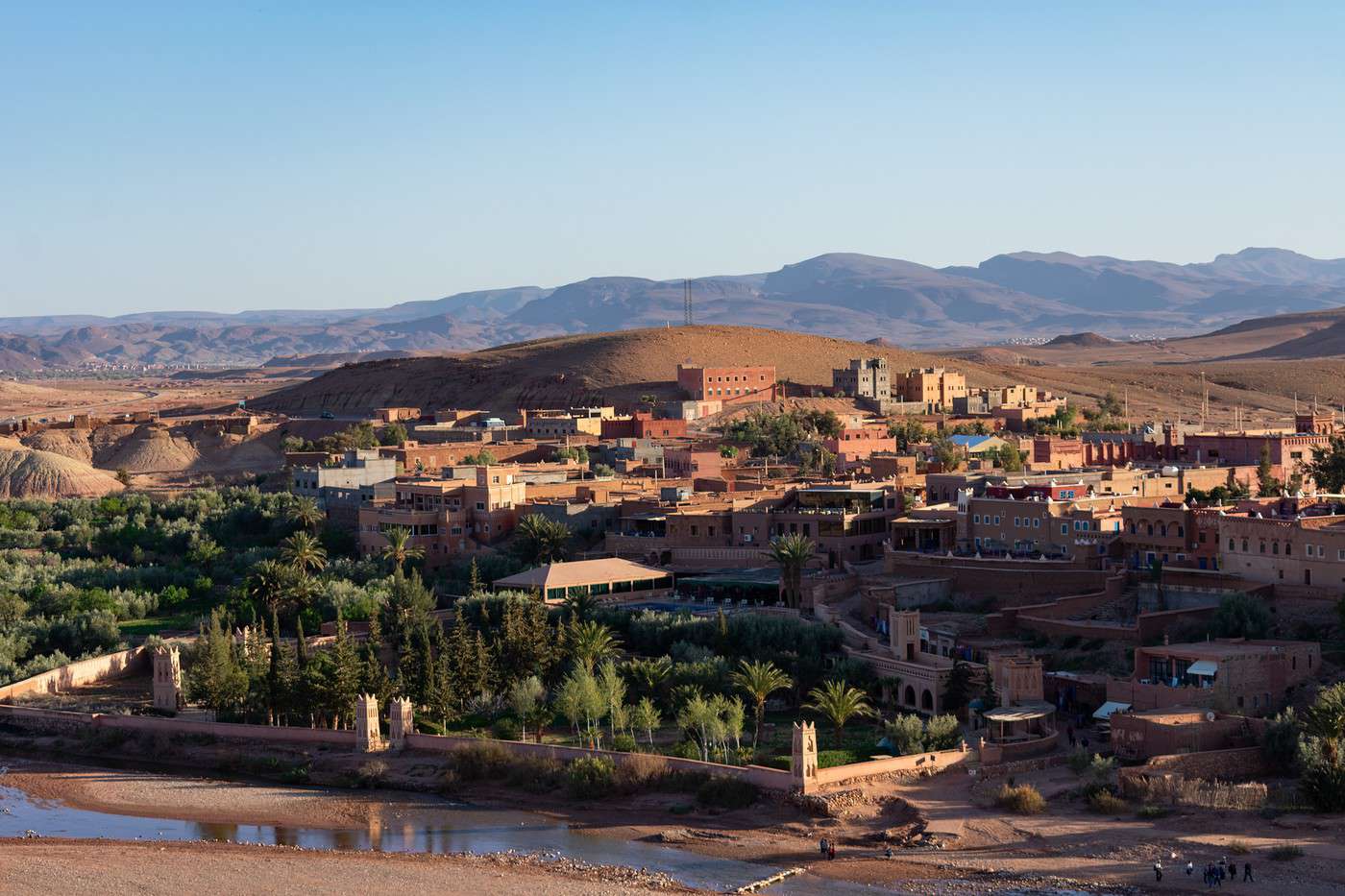
Morocco has 9 sites inscribed on the UNESCO World Heritage list: Aït Ben Haddou ★★★★ (1987) À quelques kilomètres de Ouarzazate, l'ancien village fortifié (ksar) est un site remarquable et unique classé au patrimoine mondial de l'Unesco. Portuguese City of El…
Regions of Morocco
Al Hoceima, Maroc Also known as the Rif, this is Morocco's Mediterranean region. For a long time, this mountainous Berber land was "ignored" by its capital. Perhaps that’s why it’s still not the most visited area, even though new tourism projects have emerged…
Climate and Weather in Morocco
The country's diversity, with terrain ranging from sea level to over 4,000 meters in altitude, results in significant climatic variations. The coastline remains pleasant year-round, with mild summers and agreeable winters (averaging 17 to 26°C depending on…
Moroccan Society
Population
Political Institutions
Economy
Religion

Travel and suggested itineraries in Morocco
Unless you stay for weeks, it's hardly possible to see everything in Morocco in a single trip. This means you'll need to make geographical choices or focus on the essentials. Whatever the length of your stay and/or your arrival city in the country, there will…
When and Where to Go in Morocco
The most favorable times of the year based on climate, crowds, and prices for both travel and stay. July-August are peak tourist months on the coast (unlike the interior), as is the April-May period. Late spring and early autumn are the best times to visit,…
Something wrong or out of date? Report this page