last edited Dec 11, 2019
Other practical information for Mayotte
Location Map of Mayotte
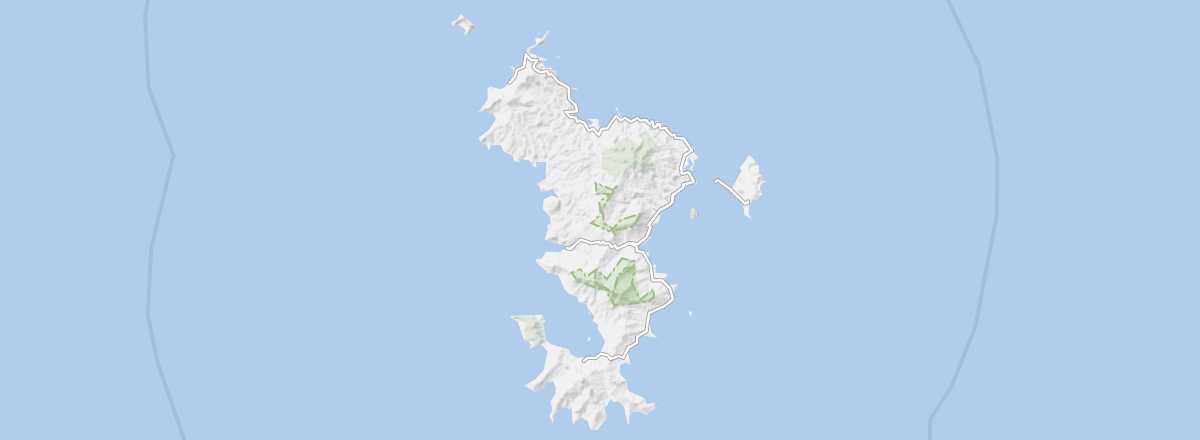 Mayotte
Open the interactive map
Mayotte
Open the interactive map
What to pack and equipment to bring
At any time of year, pack light clothing plus a sweater for evenings or air conditioning. Don’t forget sun protection, but above all, rain gear—rain is common in Mayotte during the southern hemisphere summer. Also, bring good walking shoes for hiking.
Communications
Phone
International dialing code: (00 +) 262. There is also an additional code, 269, for landline numbers.
To call Mayotte from mainland France, you don’t need the international code. Instead, dial 00 269 followed by the 6-digit local number for a landline, or simply the full 10 digits (starting with 06 39) for a mobile. Conversely, calling from Mayotte to mainland France works the same as calling within mainland France.
Internet
Mayotte only gained broadband in 2012, so internet is relatively expensive—much more so than in mainland France. A few cybercafés (notably in Mamoudzou) and local Wi-Fi are available.
There are around fifteen post offices on the island.
Time difference
Local time: .
Mayotte is on UTC+3 and does not observe daylight saving time. This means it is one hour ahead of mainland France in summer and two hours ahead in winter.
Electricity
230 volts (50 Hz) with French-style plugs (officially type E), which will require an adapter for North American plugs.
Business hours
Workdays in Mayotte typically start at 7:00 AM and often end in the mid-afternoon. Banks are usually open weekdays from 7:30 AM to 11:30 AM and from 1:30 PM to 3:30 PM. Note that during Ramadan or on Fridays, island activity may slow down.
Laundromats
Local tourist offices
There is a Departmental Tourism Committee (CDTM) on the island: Front de Mer, BP 1169, 97600 Mamoudzou. Tel: 02 69 61 09 09.
Weights and measures
Mayotte uses the metric system, like mainland France.
French language use
French is the official language of Mayotte and is spoken by most residents, though about 40% have some difficulty with it. Many people also speak Shimaore (a Swahili dialect) and, to a lesser extent, Shibushi (a Malagasy dialect), both of which are widely used on the island.