last edited Dec 11, 2019
Other Practical Information for Northern Mexico
Location Map of Northern Mexico
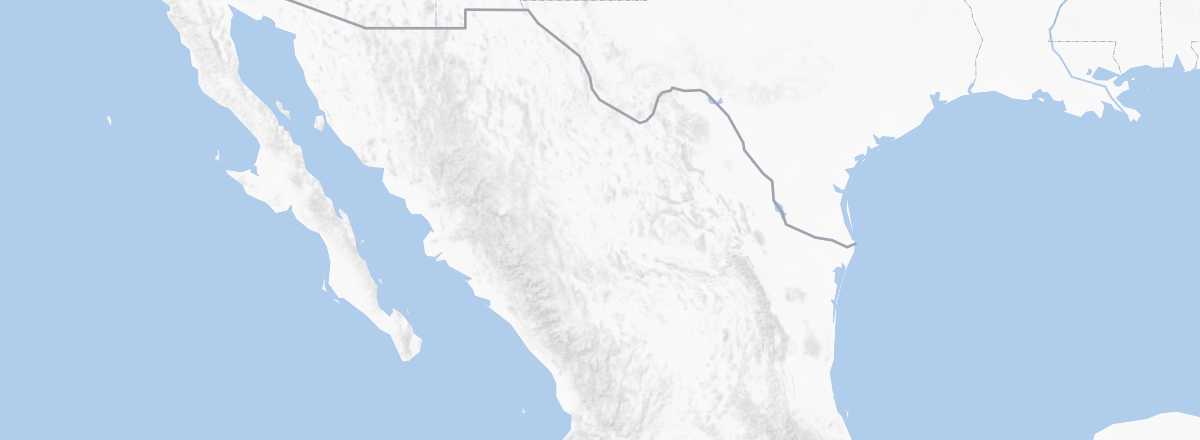 Northern Mexico
Open the interactive map
Northern Mexico
Open the interactive map
Luggage and Equipment to Bring
Plan for lightweight clothing and a sweater for evenings or air conditioning at any time of year. For mountainous areas, warmer clothes are recommended. Also think about sun protection and good hiking shoes if you plan to trek.
Time Difference
Since February 2015, Mexico has had four time zones instead of three, ranging from GMT-5 to GMT-8 from east to west.
In practice, the north of the country is divided into two time zones: the Pacific side (Chihuahua, Sinaloa, and Sonora) follows "Northwest Time," while the Atlantic side (Coahuila, Durango, Nuevo León, and Tamaulipas) follows Mexico City and "Central Time." So, depending on where you are and where you're going, you'll need to account for the time difference.
"Northwest Time"
Local time (Chihuahua): .
Applies to Baja California Sur and the states of Chihuahua, Nayarit, Sinaloa, and Sonora. The main city is Chihuahua, and the time there is GMT-7 with daylight saving time... except in the state of Sonora, which follows neighboring Arizona with a single time zone. In short, except for Sonora, there are 8 hours less than in France, give or take a few days during the changes, throughout the year.
"Central Time"
Local time (Monterrey): .
This is the time for the capital and the majority of the country, as well as the "reference" for the nation with daylight saving time. It is GMT-6, so there are 7 hours less than in France, give or take a few days during the changes, throughout the year.
Opening Hours
Opening hours are quite flexible and not strictly regulated by law for private shops and services. In cities, you'll find a wide range of opening times, including supermarkets open 24/7.
Laundromats
Local Tourist Offices
The Mexican Ministry of Tourism (SECTUR) manages information points in major tourist spots and cities.
French Language Use
While English is widely spoken near the U.S. border and beyond, French is not, and you'll struggle to find people who speak it. It's best to have some basic Spanish—or at least English—to travel independently in the region