last edited Feb 9, 2026
Health and Safety in Mauritius
Location Map of Mauritius
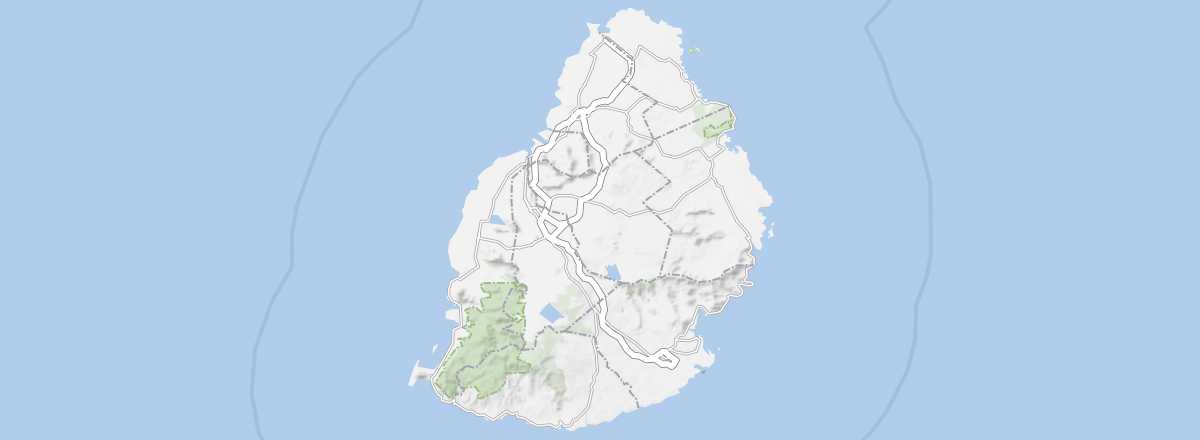 Mauritius
Open the interactive map
Official Recommendations
In France, both for individuals and professionals, the "travel advice" from the Ministry of Foreign Affairs regarding precautions for each country has legal value. A similar online travel advice system exists in several countries:
Health
Diseases
Mauritius is not a destination that poses significant health risks. However, the country still requires some basic precautions and common sense regarding health during your stay. While no vaccinations are mandatory, keeping up to date with routine vaccines is always preferable.
In practice, as in many countries, mosquitoes are the main concern. Bring repellent and wear appropriate clothing, especially in the evening. Although rare, cases of malaria, dengue, or more commonly chikungunya—all transmitted by mosquito bites—are occasionally reported on the island. Beyond that, and the occasional traveler’s diarrhea (turista) if you’re not careful with food and drink, there are no major dangers.
Hygiene
Risks are low here too, though it’s best to avoid drinking tap water and to steer clear of dishes or foods that don’t appear fresh to prevent any intestinal discomfort.
Local Healthcare Facilities
Healthcare facilities in Mauritius are good and are often considered the best in Africa. Public hospitals are efficient but may require some waiting time for certain treatments. They complement a private sector that meets European standards—though at corresponding prices (hence the importance of good insurance).
Safety
Crime and Delinquency
While not severe, crime has been rising in Mauritius in recent years. Risks of burglary, theft, and very rarely personal assaults exist, but with basic precautions, you can stay safe. Avoid flaunting wealth, never leave belongings—visible or not—in your car (locked or not), and steer clear of nighttime walks alone on beaches or other poorly lit areas.
Also worth noting: local laws are very strict regarding drugs, both for trafficking and personal use. Possession of rolling papers or even e-cigarettes is theoretically prohibited.
Beyond that, there’s no scamming or tourist harassment from locals (quite the opposite), and socio-political risks are virtually nonexistent in the country.
Climate and Nature
Apart from some strong currents that may locally prohibit swimming, the only natural risk in Mauritius (and especially Rodrigues) comes from cyclones, whose season runs from late November to early April. Generally, they are far less violent than those in the Caribbean and rarely "destructive." Authorities are well-prepared to inform and protect the population.
Animals
There’s little danger of dangerous encounters. At most, divers should watch out for corals and a few fish that can cause cuts or stings.
Foreign Consulates on Site
If you encounter problems while traveling abroad, your country’s consular services can assist you. Also note that if you’re an EU citizen and your country isn’t represented, you can contact any other EU member state’s representation.
France
- Embassy: 14 Saint-Georges Street, Port Louis. Tel.: +230 20 20 100.
Other Countries
- Belgium: Honorary Consulate, 10 Dr Ferrière Street, PO Box 56, Port Louis. Tel.: +230 208 28 79.
- Canada: Consulate: 18 Jules Koenig Street, Port Louis. Tel.: +230 212 55 00.
- Switzerland: There is no Swiss representation in Mauritius; its interests are managed from South Africa.