last edited Jan 31, 2026
Health and Safety in Egypt
Location Map of Egypt
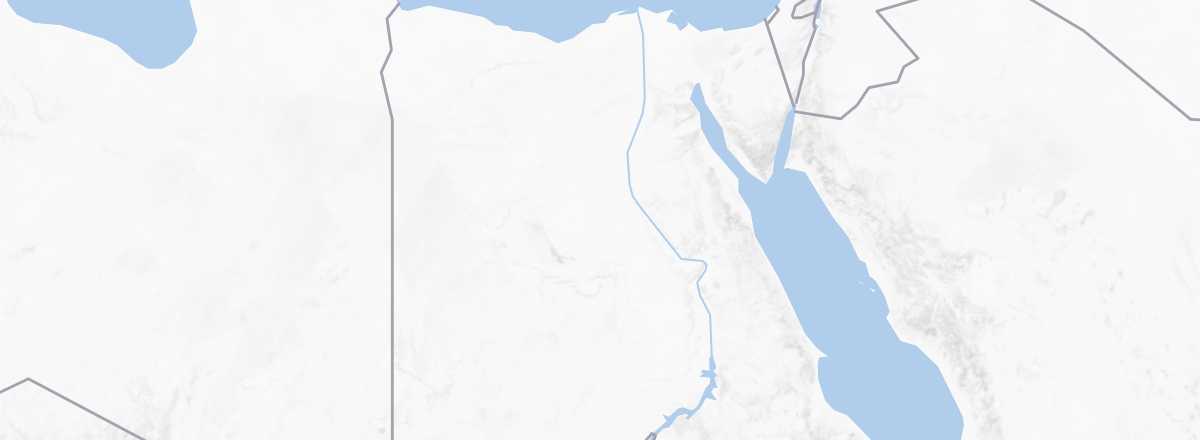 Egypt
Open the interactive map
Official Recommendations
In France, both for individuals and professionals, the "travel advice" from the Ministry of Foreign Affairs regarding precautions for each country has legal value. A similar online travel advice system exists in several countries:
Health
Diseases
The risks of contracting a disease in Egypt are not enormous. However, the country still requires a minimum of precautions and common sense regarding health when staying there. Even if no vaccines are mandatory, being up to date is always preferable.
According to the WHO, there has officially been no malaria in the country since 2024, but locally, other mosquito-borne diseases remain, such as dengue and what is called the West Nile Virus. Cases are very rare as long as you use repellent and wear covering clothing, especially in the evening when mosquitoes are most active.
Beyond that, there are no major risks. The most common issue for travellers is turista, the well-known diarrhoea, and for those with respiratory problems, the intense summer heat and pollution in cities like Cairo.
Hygiene
Good personal and especially food hygiene is still necessary. Therefore, tap water and dishes or foods that do not guarantee freshness should be avoided, at least to prevent turista. Also, remember to stay hydrated and protect yourself from the sun in the hottest regions or seasons.
In any case, do not swim in the Nile or in stagnant waters to avoid contracting bilharzia, a disease transmitted by parasites that penetrate the skin. However, there are no issues with hotel pools or swimming in the sea.
Healthcare Facilities on Site
As in many countries, there is a noticeable difference between the public and private sectors.
While the public sector lacks resources and staff, with often long wait times for patients, private facilities in major cities and resort areas meet European standards with recognised quality of care and short waiting times. Of course, private care comes at a cost, though fees for basic care (to be paid upfront) generally remain affordable for Europeans. That said, always travel with insurance to avoid much higher out-of-pocket expenses in case of hospitalisation or serious issues.
Safety
Crime and Delinquency
Traditional delinquency and crime are relatively low in Egypt, though increasing, and there are no major issues to expect. Just a few risks of theft in tourist areas, crowded markets, and train stations. That said, do not flaunt your wealth and never leave valuables, visible or not, in your car, whether locked or not. Also, avoid nighttime walks alone on beaches or other poorly frequented areas at night.
Note that Egyptian legislation is very strict regarding drugs, both for trafficking and simple consumption.
Scams and "Tourist" Harassment
For decades, as some say, visitors in tourist areas have been seen by many Egyptians as "walking wallets!". Harassment aimed at extracting money from visitors is frequent, especially from shopkeepers and touts, despite a tourist police force meant to assist in case of problems. However, more than tourist harassment, the most distressing issue is the harassment sometimes faced by women travelling alone.
Political Risks and Terrorism
Given the country's history and the geopolitical situation in the region, this is a highly relevant topic. Even if risks vary by location and time, it is important to stay informed about current events.
Nevertheless, large parts of the territory and certain city districts during protests remain completely or strongly discouraged. For the rest—tourist areas—authorities do their utmost in terms of prevention and visitor protection (police, escorts, cameras...).
Completely or Strongly Discouraged
Currently, the Ministry of Foreign Affairs advises against the entire border area with Sudan, and especially the vast region bordering Libya, where many mines remain in certain areas. In the Sinai, the entire northern part bordering Israel and Palestine is also completely off-limits, unlike the south, where several resorts line the Red Sea and the Gulf of Aqaba.
"Permitted" Areas
With a minimum of vigilance, you can enjoy the rest of the territory. This includes all tourist regions with Cairo and northern cities, the Nile and its surroundings, and the entire Red Sea coast.
Climate and Nature
Since Egypt is largely a desert, the main precaution is proper hydration and protection from the sun. Also, note that March-April is the period of the khamsin, a very strong sandstorm that often causes problems. Additionally, the country is located in a seismic activity zone.
Animals
While there are some venomous snakes and scorpions in the desert, the risks are low. The main issue is stray dogs, which may carry rabies. In the sea, watch out for coral that can cause cuts and, occasionally, sharks that may pose a risk to divers.
Foreign Consulates on Site
If you encounter problems while travelling abroad, your country's consular services can assist you. Also, if you are a citizen of the European Union and your country is not represented, you can contact any other EU member state's representation.
France
Consulate General: 7 Abi Shammar Street, Giza PO Box 1774, Cairo. Tel.: (20) 235 67 33 50.
Other Consulates
Consulate of Alexandria: 2 Ahmed Orabi Square, PO Box 474 Mancheya, Alexandria. Tel.: (20) 034 84 79 50.
There is also a small network of French honorary consuls based in Luxor, Hurghada, and Sharm El Sheikh. They all report to the French Consulate General in Cairo.
Other Countries
Belgium
Consulate General: 20 Kamel El Shennawi Street, Garden City, 11511 Cairo. Tel.: (20) 227 94 74 96.
There are other Belgian honorary representations in Alexandria, Hurghada, and Sharm El Sheikh, all under the Consulate General.
Canada
Embassy: 26 Kamel El Shenawy Street, Garden City, Cairo. Tel.: (20) 227 91 87 00.
Switzerland
Embassy: 10 Abdel Khalek Sarwat Street, 11511 Cairo. Tel.: (20) 225 75 82 84.