last edited Jun 15, 2020
What to see in Ajaccio
Contributionsversion #3created Jun 15, 2020Report this pageLatest contributions in this guideContributors to this guide
Location Map of Ajaccio
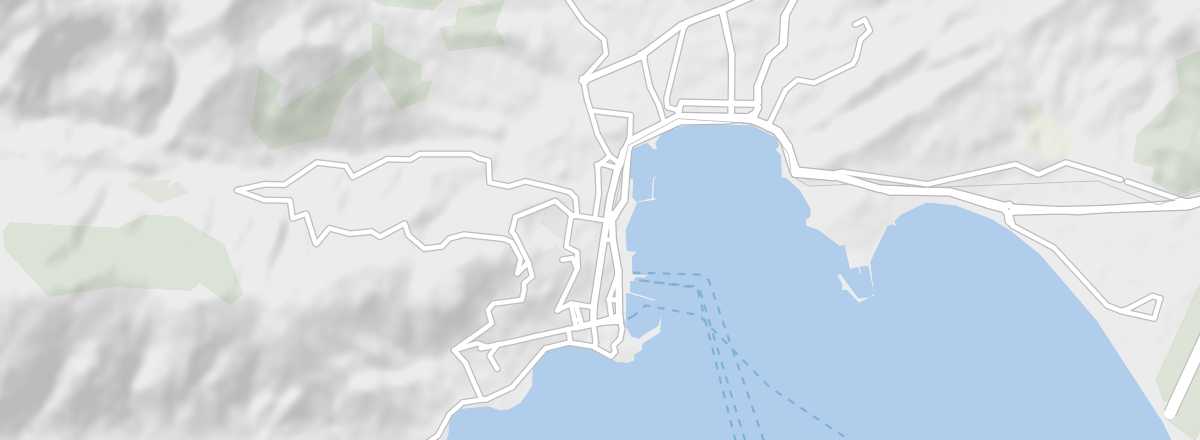 Ajaccio
Open the interactive map
Overview
Sites, monuments and architectural ensembles
Cathedral of Our Lady of the Assumption
This is a Baroque construction dating from the late 16th century. It is where the future Napoleon I was baptised in 1771.
This is a Baroque construction dating from the late 16th century. It is where the future Napoleon I was baptised in 1771.
Napoleon I Memorial Monument
On Place d'Austerlitz, this is the full-length statue of Napoleon I standing on a grand stele commemorating his victories.
On Place d'Austerlitz, this is the full-length statue of Napoleon I standing on a grand stele commemorating his victories.
Genoese Towers
These are a series of towers built by the Genoese in the 16th–17th centuries to protect the area from Barbary invasions. While the Parata tower is the most famous, others like those at Capo Di Muro, Isolella, and Capitello are also worth visiting.
These are a series of towers built by the Genoese in the 16th–17th centuries to protect the area from Barbary invasions. While the Parata tower is the most famous, others like those at Capo Di Muro, Isolella, and Capitello are also worth visiting.
Old Town
The historic district of the city, partly dating back to the Genoese era, with its lively atmosphere and narrow Mediterranean streets.
The historic district of the city, partly dating back to the Genoese era, with its lively atmosphere and narrow Mediterranean streets.
Museums
Museum of Fine Arts
Housed in the Palais Fesch, it holds a very significant collection of Italian Renaissance paintings, along with various works by French, Flemish, and Dutch artists from the same period.
Housed in the Palais Fesch, it holds a very significant collection of Italian Renaissance paintings, along with various works by French, Flemish, and Dutch artists from the same period.
Napoleon's House Museum
The house where the Emperor was born is now a dedicated museum. Other tributes to Napoleon (or his reign) can be found in the city, such as street and square names, the Imperial Chapel, or the Napoleon I commemorative monument.
The house where the Emperor was born is now a dedicated museum. Other tributes to Napoleon (or his reign) can be found in the city, such as street and square names, the Imperial Chapel, or the Napoleon I commemorative monument.
Parks, gardens and natural spaces
Parata Point
This is where the Route des Sanguinaires ends. This rocky promontory faces the namesake archipelago and is topped by the Parata Tower, built by the Genoese in 1608.
This is where the Route des Sanguinaires ends. This rocky promontory faces the namesake archipelago and is topped by the Parata Tower, built by the Genoese in 1608.
Sanguinaires Road
This scenic coastal road, lined with beautiful villas, coves, and beaches (and a seaside cemetery housing the tomb of Tino Rossi), runs west along the sea. Parallel to it, the Crest Trail offers a hiking route with equally stunning views of the coast and gulf.
This scenic coastal road, lined with beautiful villas, coves, and beaches (and a seaside cemetery housing the tomb of Tino Rossi), runs west along the sea. Parallel to it, the Crest Trail offers a hiking route with equally stunning views of the coast and gulf.
Nearby
Some interesting places near Ajaccio:

Sanguinaires Archipelago
A small archipelago at the entrance to the Gulf of Ajaccio, serving as a natural reserve for both flora and the birds it shelters.
A small archipelago at the entrance to the Gulf of Ajaccio, serving as a natural reserve for both flora and the birds it shelters.
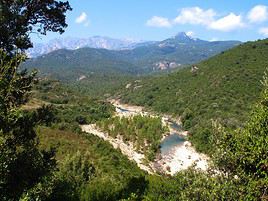
Corsica Regional Nature Park
Spanning both departments, this park covers nearly half the island. Heavily visited, it is home to many Corsican natural and cultural sites. It is also where the famous GR20 was created, allowing hikers to cross the island in about fifteen days over 200 km from Calenzana to Conca.
Spanning both departments, this park covers nearly half the island. Heavily visited, it is home to many Corsican natural and cultural sites. It is also where the famous GR20 was created, allowing hikers to cross the island in about fifteen days over 200 km from Calenzana to Conca.
Additional information
Must-see & highly recommended
Corsica Regional Nature Park
★★★★ Spanning both departments, this park covers nearly half the island. Heavily visited, it is home to many Corsican natural and cultural…
Recommended
Sanguinaires Road
★★★ This scenic coastal road, lined with beautiful villas, coves, and beaches (and a seaside cemetery housing the tomb of Tino Rossi), runs…
Worth a look / Other
Sanguinaires Archipelago
★★ A small archipelago at the entrance to the Gulf of Ajaccio, serving as a natural reserve for both flora and the birds it shelters.
Napoleon's House Museum
★★ The house where the Emperor was born is now a dedicated museum. Other tributes to Napoleon (or his reign) can be found in the city, such as…
Fine Arts Museum (Ajaccio)
★★ Housed in the Palais Fesch, it holds a very significant collection of Italian Renaissance paintings, along with various works by French…
Parata Point
★★ This is where the Route des Sanguinaires ends. This rocky promontory faces the namesake archipelago and is topped by the Parata Tower…
Genoese Towers
★★ These are a series of towers built by the Genoese in the 16th–17th centuries to protect the area from Barbary invasions. While the…
Old Town (Ajaccio)
★★ The historic district of the city, partly dating back to the Genoese era, with its lively atmosphere and narrow Mediterranean streets.
Notre-Dame de l'Assomption Cathedral (Ajaccio)
★ This is a Baroque construction dating from the late 16th century. It is where the future Napoleon I was baptised in 1771.
Napoleon I Memorial Monument
★ On Place d'Austerlitz, this is the full-length statue of Napoleon I standing on a grand stele commemorating his victories.