
Overview
Neighborhoods and Tourist Areas
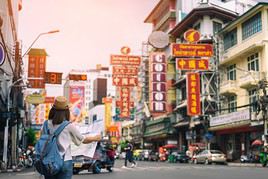
Chinatown
Like all Chinatowns around the world, Bangkok's is lively, full of shops, and best discovered at nightfall.
Like all Chinatowns around the world, Bangkok's is lively, full of shops, and best discovered at nightfall.
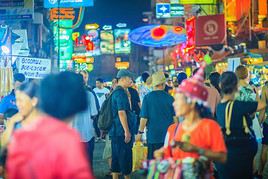
Khao San Road
Traditionally known to backpackers for its accommodations, traveler services, and lively atmosphere, the Khao San area has gradually become a tourist attraction... one that can sometimes leave visitors puzzled.
Traditionally known to backpackers for its accommodations, traveler services, and lively atmosphere, the Khao San area has gradually become a tourist attraction... one that can sometimes leave visitors puzzled.
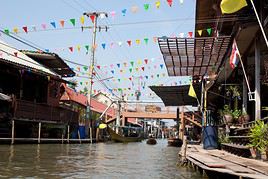
Bangkok Khlongs
These are the many canals ("khlongs") located around the Chao Phraya River. They can be explored by boat, offer a different perspective of the city, and allow visitors to discover floating markets, among other things.
These are the many canals ("khlongs") located around the Chao Phraya River. They can be explored by boat, offer a different perspective of the city, and allow visitors to discover floating markets, among other things.
Patpong
This is Bangkok’s "red-light district," at least as far as foreign tourists and expats are concerned. The area (actually two streets) is also home to a night market.
This is Bangkok’s "red-light district," at least as far as foreign tourists and expats are concerned. The area (actually two streets) is also home to a night market.
Sukhumvit
This is a lively district in the capital where commerce, markets, restaurants, hotels, and nightlife venues mix.
This is a lively district in the capital where commerce, markets, restaurants, hotels, and nightlife venues mix.
Bangkok Markets
The city is home to numerous markets, including some floating ones that are very popular with visitors. Among the most frequented:
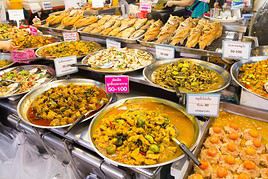
Chatuchak Weekend Market
This is the largest market in the country and a near-must-see in Bangkok. It’s located in the Chatuchak Park complex, north of the city.
This is the largest market in the country and a near-must-see in Bangkok. It’s located in the Chatuchak Park complex, north of the city.
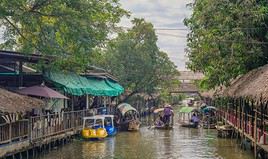
Khlong Lat Mayom Floating Market
This floating market (not the only one in the city) is one of Bangkok’s attractions. Visitors generally appreciate it for its "atmosphere" and originality.
This floating market (not the only one in the city) is one of Bangkok’s attractions. Visitors generally appreciate it for its "atmosphere" and originality.
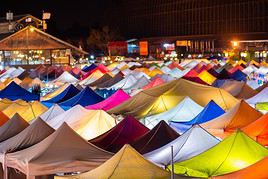
Ratchada Night Bazaar
A night market for locals and tourists, with plenty of bars and restaurants. The whole place is very lively.
A night market for locals and tourists, with plenty of bars and restaurants. The whole place is very lively.
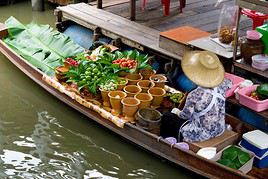
Taling Chan Floating Market
A small, lesser-known and non-touristy floating market. Authentic and charming...
A small, lesser-known and non-touristy floating market. Authentic and charming...
Monuments and Architectural Landmarks
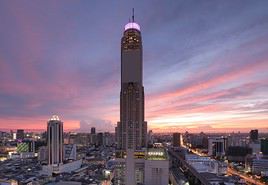
Baiyoke Tower II
Once Bangkok’s tallest building (309 m), this tower offers a stunning panorama from its summit, as is typical for such structures.
Once Bangkok’s tallest building (309 m), this tower offers a stunning panorama from its summit, as is typical for such structures.

Royal Palace
This vast complex, dating from the late 18th century, is only partially open to the public. In addition to its gardens and beautiful buildings, it is home to the famous Wat Phra Kaeo, or "Temple of the Emerald Buddha.".
This vast complex, dating from the late 18th century, is only partially open to the public. In addition to its gardens and beautiful buildings, it is home to the famous Wat Phra Kaeo, or "Temple of the Emerald Buddha.".
Religious Buildings
Among the hundreds of Buddhist temples ("wat") in the city, only a few are of "interest" to visitors.
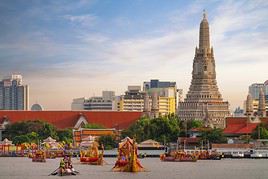
Wat Arun
It’s a beautiful riverside complex whose central stupa rises over 80 metres high, making it instantly recognisable.
It’s a beautiful riverside complex whose central stupa rises over 80 metres high, making it instantly recognisable.
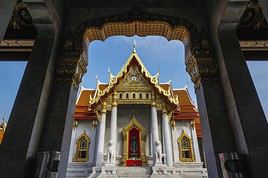
Wat Benchamabophit
Also known as the "Marble Temple," it is one of the capital's tourist attractions. The site features beautiful gardens and a "cloister-museum" displaying numerous Buddha statues in various styles and poses.
Also known as the "Marble Temple," it is one of the capital's tourist attractions. The site features beautiful gardens and a "cloister-museum" displaying numerous Buddha statues in various styles and poses.

Wat Pho
Located not far from the Royal Palace, this is one of the largest and oldest Buddhist temples in Bangkok. The complex houses a giant reclining Buddha over 40 metres long.
Located not far from the Royal Palace, this is one of the largest and oldest Buddhist temples in Bangkok. The complex houses a giant reclining Buddha over 40 metres long.
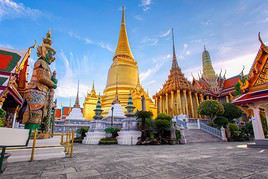
Wat Phra Kaeo
Located within the grounds of the Grand Palace, this Buddhist temple is one of the most sacred in Thailand. It is also known as the Temple of the Emerald Buddha (a small jade statue visible on site).
Located within the grounds of the Grand Palace, this Buddhist temple is one of the most sacred in Thailand. It is also known as the Temple of the Emerald Buddha (a small jade statue visible on site).
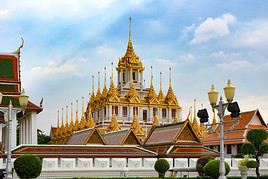
Wat Ratchanatdaram
A charming temple that’s quite peaceful and less visited than others in the city.
A charming temple that’s quite peaceful and less visited than others in the city.
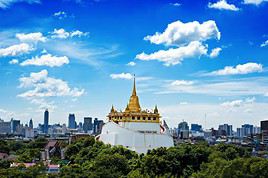
Wat Saket
The structure is built on an artificial hill 75 metres high, earning it the nickname "Golden Mount Temple". Not very touristy, it nonetheless offers a fine view over the city.
The structure is built on an artificial hill 75 metres high, earning it the nickname "Golden Mount Temple". Not very touristy, it nonetheless offers a fine view over the city.
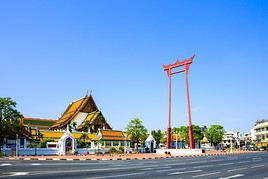
Wat Suthat
One of Thailand's six royal temples. Construction began in the early 19th century. Directly opposite is the "Giant Swing", a religious structure where ceremonies take place.
One of Thailand's six royal temples. Construction began in the early 19th century. Directly opposite is the "Giant Swing", a religious structure where ceremonies take place.
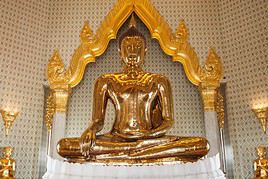
Wat Traimit
This temple is home to the "Golden Buddha," the world's largest gold statue, weighing 5.5 tonnes and standing 3 metres tall.
This temple is home to the "Golden Buddha," the world's largest gold statue, weighing 5.5 tonnes and standing 3 metres tall.
Non-Buddhist
Museums
Bangkok is home to over fifty museums of all sizes and themes, ranging from very mainstream to niche, catering to foreign visitors or primarily serving a local audience. Among the main ones:
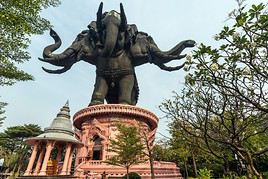
Erawan Museum
In a garden decorated with mythical animals, this museum is unique for being inside a giant three-headed elephant statue. Its aim is to preserve the traditions of Thai art and craftsmanship.
In a garden decorated with mythical animals, this museum is unique for being inside a giant three-headed elephant statue. Its aim is to preserve the traditions of Thai art and craftsmanship.
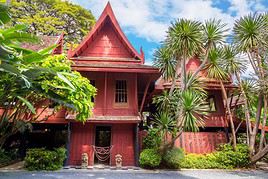
Jim Thompson House
Set in lush gardens, this is a beautiful ensemble of traditional Thai houses reconstructed in the 1950s by American adventurer Jim Thompson. A tourist attraction, the site is now a museum housing numerous art objects.
Set in lush gardens, this is a beautiful ensemble of traditional Thai houses reconstructed in the 1950s by American adventurer Jim Thompson. A tourist attraction, the site is now a museum housing numerous art objects.
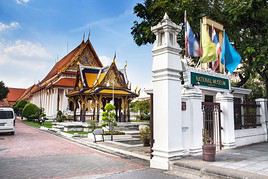
National Museum of Bangkok
The largest museum in Southeast Asia specializes in Thai and broader Asian art. A remarkable place, it’s a great introduction to understanding the country’s temples and monuments.
The largest museum in Southeast Asia specializes in Thai and broader Asian art. A remarkable place, it’s a great introduction to understanding the country’s temples and monuments.
Museum Siam
Opened in 2007, this educational space aims to showcase national identity, the history of the Thai people, and their relationships with neighboring cultures.
Opened in 2007, this educational space aims to showcase national identity, the history of the Thai people, and their relationships with neighboring cultures.
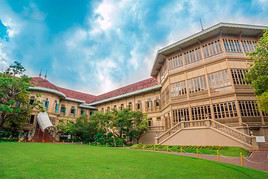
Vimanmek Mansion
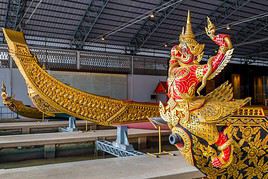
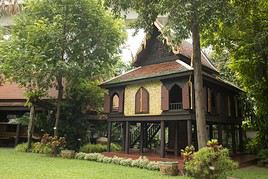
A former royal palace worth visiting (and the world's largest teak building), housing various exhibitions of Thai art. It is located within the Dusit Royal Grounds.
A former royal palace worth visiting (and the world's largest teak building), housing various exhibitions of Thai art. It is located within the Dusit Royal Grounds.
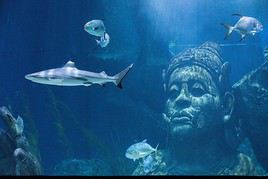
Sea Life Bangkok Ocean World
With 10,000 m² located in the basement of Siam Paragon Shopping Centre, one of the country's top malls, this is the largest aquarium in Southeast Asia. It is home to hundreds of species.
With 10,000 m² located in the basement of Siam Paragon Shopping Centre, one of the country's top malls, this is the largest aquarium in Southeast Asia. It is home to hundreds of species.
Parks and Gardens
Chatuchak Park Complex
North of Bangkok, this is a group of three connected urban parks (Chatuchak, Queen Sirikit, and Wachirabenchathat) featuring small lakes, an insectarium, and several markets, including the almost unavoidable Chatuchak Weekend Market, the largest in the country.
North of Bangkok, this is a group of three connected urban parks (Chatuchak, Queen Sirikit, and Wachirabenchathat) featuring small lakes, an insectarium, and several markets, including the almost unavoidable Chatuchak Weekend Market, the largest in the country.
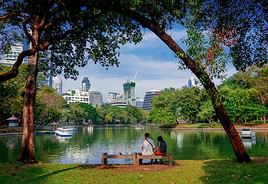
Lumphini Park
In the heart of the business district, this urban park is valued as a green oasis where you can enjoy a variety of activities.
In the heart of the business district, this urban park is valued as a green oasis where you can enjoy a variety of activities.
Dusit Zoo
Thailand’s oldest zoo. Mostly popular with locals, especially on weekends, it welcomes over two million visitors each year.
Thailand’s oldest zoo. Mostly popular with locals, especially on weekends, it welcomes over two million visitors each year.