
UNESCO World Heritage Sites
Cameroon has 2 sites inscribed on the UNESCO World Heritage list:
Lobéké National Park (2012)
This site, bordering Congo and the Central African Republic, forms the "Sangha Trinational" together with its counterparts across the border. This network of forest parks is a UNESCO World Heritage Site and offers a rich variety of wildlife, including gorillas and forest elephants.
This site, bordering Congo and the Central African Republic, forms the "Sangha Trinational" together with its counterparts across the border. This network of forest parks is a UNESCO World Heritage Site and offers a rich variety of wildlife, including gorillas and forest elephants.
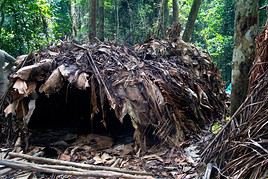
Dja Reserve (1987)
This humid forest in the south of the country, a traditional habitat of Pygmy populations, is a UNESCO World Heritage site for its biodiversity and wildlife, particularly its gorillas. You can hike here in a beautiful setting.
This humid forest in the south of the country, a traditional habitat of Pygmy populations, is a UNESCO World Heritage site for its biodiversity and wildlife, particularly its gorillas. You can hike here in a beautiful setting.
The Coast
Buea
The town, at 1,000 m above sea level, was once the seat of German Cameroon. It still has a few colonial buildings from that era, including the governor’s palace. It’s also a base for exploring the surrounding area on treks or for climbing Mount Cameroon.
The town, at 1,000 m above sea level, was once the seat of German Cameroon. It still has a few colonial buildings from that era, including the governor’s palace. It’s also a base for exploring the surrounding area on treks or for climbing Mount Cameroon.
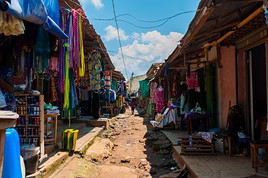
Douala
This port city is the country's largest and its economic hub. However, it is not particularly touristy.
This port city is the country's largest and its economic hub. However, it is not particularly touristy.
Kribi
Kribi is Cameroon’s main seaside resort, known for its port and especially its beautiful white-sand beaches. The Lobé Falls are nearby, as are several Pygmy villages where culture and traditions remain very much alive.
Kribi is Cameroon’s main seaside resort, known for its port and especially its beautiful white-sand beaches. The Lobé Falls are nearby, as are several Pygmy villages where culture and traditions remain very much alive.
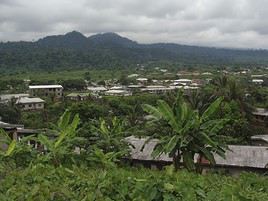
Limbe
A major seaside resort about 80 kilometres west of Douala. You can hike in the surrounding area, particularly towards Mount Cameroon nearby.
A major seaside resort about 80 kilometres west of Douala. You can hike in the surrounding area, particularly towards Mount Cameroon nearby.
Nkongsamba
The appeal of this large city in the northwest lies in its surroundings, with beautiful landscapes, the Ekom Falls and Mount Manengouba for hiking.
The appeal of this large city in the northwest lies in its surroundings, with beautiful landscapes, the Ekom Falls and Mount Manengouba for hiking.
Natural Heritage
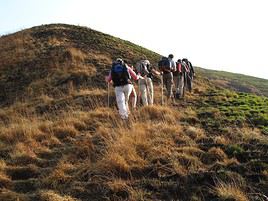
Mount Cameroon
Located near Buea, this mountain is the highest peak in this part of Africa at 4,040 m. You can climb it or trek through beautiful landscapes.
Located near Buea, this mountain is the highest peak in this part of Africa at 4,040 m. You can climb it or trek through beautiful landscapes.
Mount Manengouba
This is a volcanic massif in the coffee region, where you can enjoy short hikes. Nearby, Mount Kupe offers similar features.
This is a volcanic massif in the coffee region, where you can enjoy short hikes. Nearby, Mount Kupe offers similar features.
Campo-Ma'an National Park
This forest park, near the Gulf of Guinea, is one of the last habitats for gorillas and forest elephants in this part of Africa.
This forest park, near the Gulf of Guinea, is one of the last habitats for gorillas and forest elephants in this part of Africa.
Korup National Park
This park, bordering Nigeria, is one of Africa's most beautiful tropical forests. Beyond its stunning landscapes, the site offers diverse flora and fauna, including numerous bird species, monkeys, and a few elephants and buffaloes. Hiking is possible here.
This park, bordering Nigeria, is one of Africa's most beautiful tropical forests. Beyond its stunning landscapes, the site offers diverse flora and fauna, including numerous bird species, monkeys, and a few elephants and buffaloes. Hiking is possible here.
The Interior
Warning: The entire northern part of the country, as well as the borders with Nigeria, Chad, and the Central African Republic, are strongly or completely advised against for security reasons by the French Ministry of Foreign Affairs.
Bafoussam
It is the main city in the west. Its tourist appeal lies primarily in the Bamiléké culture and traditions, which are still very much alive in the surrounding villages.
It is the main city in the west. Its tourist appeal lies primarily in the Bamiléké culture and traditions, which are still very much alive in the surrounding villages.
Dschang
A high-altitude resort at 1,500 m, known for its "climatic center." You can also explore several markets or craft centers, traditional villages, small lakes, and waterfalls in the surrounding area, all set in beautiful landscapes.
A high-altitude resort at 1,500 m, known for its "climatic center." You can also explore several markets or craft centers, traditional villages, small lakes, and waterfalls in the surrounding area, all set in beautiful landscapes.
Foumban
This town in northwestern Cameroon has a strong cultural and artistic reputation. Visitors can explore the Museum of Traditional Arts and the Royal Palace.
This town in northwestern Cameroon has a strong cultural and artistic reputation. Visitors can explore the Museum of Traditional Arts and the Royal Palace.
Garoua
It is the third-largest city in the country, located in its northern part. It primarily serves as a base or stopover for the various nearby parks (Waza, Bénoué, Boubandjida, Faro).
It is the third-largest city in the country, located in its northern part. It primarily serves as a base or stopover for the various nearby parks (Waza, Bénoué, Boubandjida, Faro).
Kumbo
A large city in the Northwest Province with a museum, a cathedral, and the "Palace of the Fon." Kumbo is also known for its horse races.
A large city in the Northwest Province with a museum, a cathedral, and the "Palace of the Fon." Kumbo is also known for its horse races.
Maroua
A large city in the north with markets and a strong artisanal tradition. It's also a base for Waza Park.
A large city in the north with markets and a strong artisanal tradition. It's also a base for Waza Park.
Ngaoundéré
A major city in central Cameroon that can serve as a base or stopover for the nearby national parks (Bénoué, Boubandjida, Faro).
A major city in central Cameroon that can serve as a base or stopover for the nearby national parks (Bénoué, Boubandjida, Faro).
Yaoundé
Cameroon’s capital offers a few museums, several markets, and its zoo-botanical park for visitors to explore.
Cameroon’s capital offers a few museums, several markets, and its zoo-botanical park for visitors to explore.
Natural Heritage
Lake Chad
This large lake, which serves as a border (and water reservoir) between three countries, locally hosts large populations of birds, hippopotamuses, and crocodiles.
This large lake, which serves as a border (and water reservoir) between three countries, locally hosts large populations of birds, hippopotamuses, and crocodiles.
Mandara Mountains
A mountainous range between Cameroon and Nigeria, featuring stunning landscapes, traditional villages, and vibrant local cultures. The village of Rhumsiki is the main attraction in the region, thanks to the breathtaking scenery surrounding the town.
A mountainous range between Cameroon and Nigeria, featuring stunning landscapes, traditional villages, and vibrant local cultures. The village of Rhumsiki is the main attraction in the region, thanks to the breathtaking scenery surrounding the town.
Bénoué National Park
This vast park, easily accessible on the northern road, is home to a substantial wildlife population, including a few lions, elephants, buffalo, antelopes, birds, and especially numerous hippos and crocodiles in the Bénoué River or its surroundings.
This vast park, easily accessible on the northern road, is home to a substantial wildlife population, including a few lions, elephants, buffalo, antelopes, birds, and especially numerous hippos and crocodiles in the Bénoué River or its surroundings.
Boubandjida National Park
One of the major parks in northern Cameroon. Quite remote, it isn't visited much despite its very rich wildlife, including lions, elephants, giraffes, buffalo, hippos, birds...
One of the major parks in northern Cameroon. Quite remote, it isn't visited much despite its very rich wildlife, including lions, elephants, giraffes, buffalo, hippos, birds...
Boumba Bek National Park
This vast park (linked to the adjacent Nki park) in the far south-east of the country is close to Lobéké and Dja. Like them, it has a substantial wildlife population (birds, monkeys, elephants, crocodiles, etc.).
This vast park (linked to the adjacent Nki park) in the far south-east of the country is close to Lobéké and Dja. Like them, it has a substantial wildlife population (birds, monkeys, elephants, crocodiles, etc.).
Faro National Park
This is a park on the Nigerian border, home mainly to hippopotamuses, cheetahs, rhinoceroses, and elephants...
This is a park on the Nigerian border, home mainly to hippopotamuses, cheetahs, rhinoceroses, and elephants...
Lobéké National Park
This site, bordering Congo and the Central African Republic, forms the "Sangha Trinational" together with its counterparts across the border. This network of forest parks is a UNESCO World Heritage Site and offers a rich variety of wildlife, including gorillas and forest elephants.
This site, bordering Congo and the Central African Republic, forms the "Sangha Trinational" together with its counterparts across the border. This network of forest parks is a UNESCO World Heritage Site and offers a rich variety of wildlife, including gorillas and forest elephants.
Mbam and Djerem National Park
This park of equatorial forests and savannas lies at the heart of Cameroon. It is home to a significant variety of birds, monkeys, elephants, and hippos.
This park of equatorial forests and savannas lies at the heart of Cameroon. It is home to a significant variety of birds, monkeys, elephants, and hippos.
Waza National Park
A savanna national park in the far north, home to lions, giraffes, elephants, gazelles, and a variety of birds.
A savanna national park in the far north, home to lions, giraffes, elephants, gazelles, and a variety of birds.
Dja Reserve
This humid forest in the south of the country, a traditional habitat of Pygmy populations, is a UNESCO World Heritage site for its biodiversity and wildlife, particularly its gorillas. You can hike here in a beautiful setting.
This humid forest in the south of the country, a traditional habitat of Pygmy populations, is a UNESCO World Heritage site for its biodiversity and wildlife, particularly its gorillas. You can hike here in a beautiful setting.