last edited Dec 11, 2019
What to See in Iceland
Contributionsversion #1created Dec 11, 2019Report this pageLatest contributions in this guideContributors to this guide
Location Map of Iceland
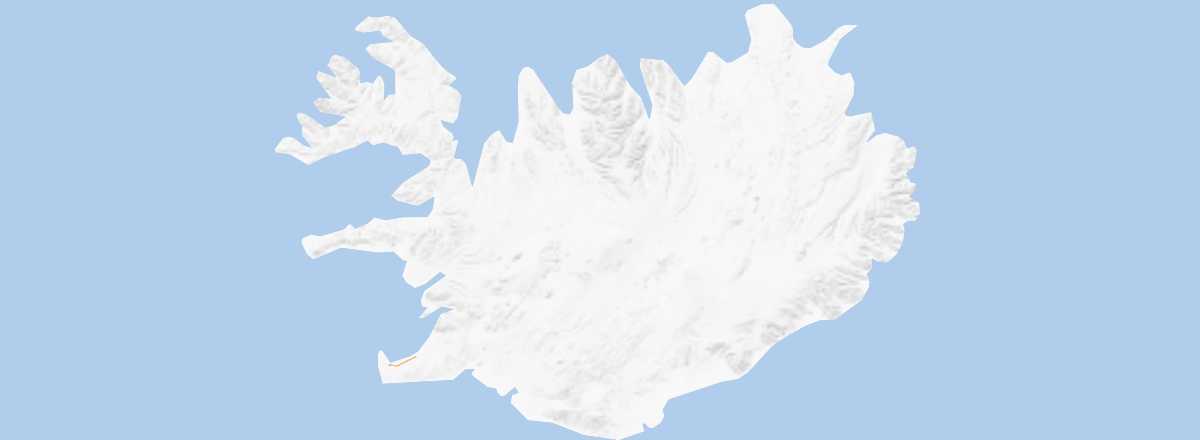 Iceland
Open the interactive map
UNESCO World Heritage Sites
Iceland has three sites inscribed on the UNESCO World Heritage list:
- Surtsey Island (2008): This island, born from a volcanic eruption in the 1960s, is a UNESCO site. Still studied by scientists, public access is not permitted.

Thingvellir National Park (2004)
This UNESCO-listed site is one of Iceland’s most visited. It combines natural beauty (landscapes) and historical significance ("the world’s oldest parliament"). You can also dive into various natural springs in the surrounding area.
This UNESCO-listed site is one of Iceland’s most visited. It combines natural beauty (landscapes) and historical significance ("the world’s oldest parliament"). You can also dive into various natural springs in the surrounding area.

Vatnajökull National Park (2019)
Listed as a UNESCO World Heritage Site in 2019, this is the largest park in the country and home to one of Europe's largest and most remarkable glaciers. It covers a large part of southeastern Iceland. Hiking is possible here.
Listed as a UNESCO World Heritage Site in 2019, this is the largest park in the country and home to one of Europe's largest and most remarkable glaciers. It covers a large part of southeastern Iceland. Hiking is possible here.
Cities and Cultural Heritage

Akureyri
Located on the edge of a fjord, this is the "big" city of Iceland's northern coast. A few churches and museums are worth visiting.
Located on the edge of a fjord, this is the "big" city of Iceland's northern coast. A few churches and museums are worth visiting.
Egilsstaðir
Even with just a few thousand inhabitants, it's the largest "settlement" on the east coast of Iceland.
Even with just a few thousand inhabitants, it's the largest "settlement" on the east coast of Iceland.

Eyrarbakki
A small village on Iceland’s southwest coast with several historic 18th- and 19th-century buildings.
A small village on Iceland’s southwest coast with several historic 18th- and 19th-century buildings.

Höfn
A small town (with several museums) on Iceland’s south coast that can serve as a base for exploring the nearby glaciers.
A small town (with several museums) on Iceland’s south coast that can serve as a base for exploring the nearby glaciers.

Húsavík
On Iceland’s northern coast, this small town is renowned for whale watching during the summer months.
On Iceland’s northern coast, this small town is renowned for whale watching during the summer months.

Keflavik
Home to Reykjavik’s international airport, located about 50 km southwest of the capital. You can also go whale watching from Keflavik’s port.
Home to Reykjavik’s international airport, located about 50 km southwest of the capital. You can also go whale watching from Keflavik’s port.

Reykjavik
Iceland’s capital is also the country’s largest urban area. It features eclectic architecture, several museums, and a lively nightlife.
Iceland’s capital is also the country’s largest urban area. It features eclectic architecture, several museums, and a lively nightlife.
Selfoss
Unlike the waterfall of the same name located in the northeast of the country, Selfoss is the main town in the southwest of Iceland, with all the transport links and services that come with its regional importance.
Unlike the waterfall of the same name located in the northeast of the country, Selfoss is the main town in the southwest of Iceland, with all the transport links and services that come with its regional importance.

Seyðisfjörður
This village on the east coast, surrounded by mountains, serves as the terminal for ferries to/from the Faroe Islands and Denmark.
This village on the east coast, surrounded by mountains, serves as the terminal for ferries to/from the Faroe Islands and Denmark.

Vik
This village in southern Iceland is known for its black sand beaches, basalt formations, and its puffin population.
This village in southern Iceland is known for its black sand beaches, basalt formations, and its puffin population.
Natural Heritage

Askja
In the heart of the country, this volcano is a popular tourist destination for those who venture into this part of Iceland.
In the heart of the country, this volcano is a popular tourist destination for those who venture into this part of Iceland.

Blue Lagoon
Close to the capital, this thermal spa with its artificial lake amid lava fields is one of the country’s most visited sites.
Close to the capital, this thermal spa with its artificial lake amid lava fields is one of the country’s most visited sites.

Geysir
This is a geyser near Gulfoss, and a major Icelandic tourist attraction. It is the one that gave its name to all other geysers in the world.
This is a geyser near Gulfoss, and a major Icelandic tourist attraction. It is the one that gave its name to all other geysers in the world.


Godafoss
This is a spectacular—and one of the best-known—waterfalls in Iceland. It is located near Akureyri.
This is a spectacular—and one of the best-known—waterfalls in Iceland. It is located near Akureyri.

Gullfoss
This is a large and beautiful waterfall in southwestern Iceland. The falls are located near the Geysir site, and their name comes from the rainbow that can often be seen above them.
This is a large and beautiful waterfall in southwestern Iceland. The falls are located near the Geysir site, and their name comes from the rainbow that can often be seen above them.

Hekla
One of Iceland's most famous volcanoes. It offers stunning landscapes and you can hike to its summit.
One of Iceland's most famous volcanoes. It offers stunning landscapes and you can hike to its summit.

Jökulsárlón
A stunning lake located between the Vatnajökull glacier and Skaftafell Park, now part of Vatnajökull National Park. You can take a boat tour among its icebergs.
A stunning lake located between the Vatnajökull glacier and Skaftafell Park, now part of Vatnajökull National Park. You can take a boat tour among its icebergs.

Kerlingarfjöll
This is a beautiful mountainous area in the country's center, with numerous hot springs and opportunities for trekking and, incidentally, skiing.
This is a beautiful mountainous area in the country's center, with numerous hot springs and opportunities for trekking and, incidentally, skiing.

Lakagigar
Over a thirty-kilometre track, Lakagigar (or Laki) is a chain of over a hundred small volcanic craters in a desolate landscape. You can explore them on a trek.
Over a thirty-kilometre track, Lakagigar (or Laki) is a chain of over a hundred small volcanic craters in a desolate landscape. You can explore them on a trek.

Landmannalaugar
In south-central Iceland, this is the country's wildest and most spectacular region. A paradise for nature lovers, adventurers, and hikers—whether on foot or horseback.
In south-central Iceland, this is the country's wildest and most spectacular region. A paradise for nature lovers, adventurers, and hikers—whether on foot or horseback.

Latrabjarg Cliff
This impressive and towering cliff (440 m high and nearly 14 km wide) in the far northwest of the country is known for hosting one of the world's highest concentrations of birds, particularly puffins.
This impressive and towering cliff (440 m high and nearly 14 km wide) in the far northwest of the country is known for hosting one of the world's highest concentrations of birds, particularly puffins.

Mjoifjordur
A narrow, rather pretty fjord in eastern Iceland, located in the small municipality of the same name.
A narrow, rather pretty fjord in eastern Iceland, located in the small municipality of the same name.


Thingvellir National Park
This UNESCO-listed site is one of Iceland’s most visited. It combines natural beauty (landscapes) and historical significance ("the world’s oldest parliament"). You can also dive into various natural springs in the surrounding area.
This UNESCO-listed site is one of Iceland’s most visited. It combines natural beauty (landscapes) and historical significance ("the world’s oldest parliament"). You can also dive into various natural springs in the surrounding area.
Vatnajökull National Park
Listed as a UNESCO World Heritage Site in 2019, this is the largest park in the country and home to one of Europe's largest and most remarkable glaciers. It covers a large part of southeastern Iceland. Hiking is possible here.
Listed as a UNESCO World Heritage Site in 2019, this is the largest park in the country and home to one of Europe's largest and most remarkable glaciers. It covers a large part of southeastern Iceland. Hiking is possible here.

Snaefellsnes Peninsula
A large peninsula north of Reykjavik with beautiful mountain, volcano, and glacier landscapes where a few villages are nestled. You can hike in Snaefellsjökull National Park, which is located here.
A large peninsula north of Reykjavik with beautiful mountain, volcano, and glacier landscapes where a few villages are nestled. You can hike in Snaefellsjökull National Park, which is located here.

Selfoss and Dettifoss
Two impressive adjacent waterfalls in the northern part of the country. Dettifoss is Europe's most powerful waterfall and thus the more spectacular of the two.
Two impressive adjacent waterfalls in the northern part of the country. Dettifoss is Europe's most powerful waterfall and thus the more spectacular of the two.
Skagafjörður
Several rivers around this wide fjord on Iceland’s northern coast are ideal for rafting.
Several rivers around this wide fjord on Iceland’s northern coast are ideal for rafting.

Skogafoss
One of the country's largest waterfalls. It is located on the Skoga River in the small village of Skogar in southern Iceland.
One of the country's largest waterfalls. It is located on the Skoga River in the small village of Skogar in southern Iceland.

Thorsmork
Not easily accessible, located in the south of the island between two glaciers, this glacial valley and its surroundings are highly prized by hikers and lovers of breathtaking landscapes.
Not easily accessible, located in the south of the island between two glaciers, this glacial valley and its surroundings are highly prized by hikers and lovers of breathtaking landscapes.

Vestmann Islands
The Vestmann Islands are a beautiful volcanic archipelago southwest of Iceland, home to many seabirds (including puffins). The uninhabited island of Surtsey, a UNESCO World Heritage site, is also located here.
The Vestmann Islands are a beautiful volcanic archipelago southwest of Iceland, home to many seabirds (including puffins). The uninhabited island of Surtsey, a UNESCO World Heritage site, is also located here.
Must-see & highly recommended
Jökulsárlón
★★★★ A stunning lake located between the Vatnajökull glacier and Skaftafell Park, now part of Vatnajökull National Park. You can take a boat…
Landmannalaugar
★★★★ In south-central Iceland, this is the country's wildest and most spectacular region. A paradise for nature lovers, adventurers, and…
Vatnajökull National Park
★★★★ Listed as a UNESCO World Heritage Site in 2019, this is the largest park in the country and home to one of Europe's largest and most…
Recommended
Blue Lagoon
★★★ Close to the capital, this thermal spa with its artificial lake amid lava fields is one of the country’s most visited sites.
Godafoss
★★★ This is a spectacular—and one of the best-known—waterfalls in Iceland. It is located near Akureyri.
Gullfoss
★★★ This is a large and beautiful waterfall in southwestern Iceland. The falls are located near the Geysir site, and their name comes from the…
Snaefellsnes Peninsula
★★★ A large peninsula north of Reykjavik with beautiful mountain, volcano, and glacier landscapes where a few villages are nestled. You can…
Selfoss and Dettifoss
★★★ Two impressive adjacent waterfalls in the northern part of the country. Dettifoss is Europe's most powerful waterfall and thus the more…
Thorsmork
★★★ Not easily accessible, located in the south of the island between two glaciers, this glacial valley and its surroundings are highly prized…
Worth a look / Other
Askja
★★ In the heart of the country, this volcano is a popular tourist destination for those who venture into this part of Iceland.
Latrabjarg Cliff
★★ This impressive and towering cliff (440 m high and nearly 14 km wide) in the far northwest of the country is known for hosting one of the…
Geysir
★★ This is a geyser near Gulfoss, and a major Icelandic tourist attraction. It is the one that gave its name to all other geysers in the world.
Glymur
★★ At 198 m tall, Glymur is the second-highest waterfall in Iceland.
Hekla
★★ One of Iceland's most famous volcanoes. It offers stunning landscapes and you can hike to its summit.
Vestmann Islands
★★ The Vestmann Islands are a beautiful volcanic archipelago southwest of Iceland, home to many seabirds (including puffins). The uninhabited…
Kerlingarfjöll
★★ This is a beautiful mountainous area in the country's center, with numerous hot springs and opportunities for trekking and, incidentally…
Kverkfjöll
★★ These are strange volcanic caves beneath the ice of the Vatnajökull glacier.
Lakagigar
★★ Over a thirty-kilometre track, Lakagigar (or Laki) is a chain of over a hundred small volcanic craters in a desolate landscape. You can…
Mýrdalsjökull
★★ A large glacier in southern Iceland, near the village of Vík.
Myvatn
★★ A large lake in the north, home to many birds in a volcanic environment.
Thingvellir National Park
★★ This UNESCO-listed site is one of Iceland’s most visited. It combines natural beauty (landscapes) and historical significance ("the…
Reykjavik
★★ Iceland’s capital is also the country’s largest urban area. It features eclectic architecture, several museums, and a lively…
Skogafoss
★★ One of the country's largest waterfalls. It is located on the Skoga River in the small village of Skogar in southern Iceland.
Vik
★★ This village in southern Iceland is known for its black sand beaches, basalt formations, and its puffin population.
Akureyri
★ Located on the edge of a fjord, this is the "big" city of Iceland's northern coast. A few churches and museums are worth visiting.
Dalvík
★ A ski resort village known in the north of the island, not far from Akureyri.
Egilsstaðir
★ Even with just a few thousand inhabitants, it's the largest "settlement" on the east coast of Iceland.
Eyrarbakki
★ A small village on Iceland’s southwest coast with several historic 18th- and 19th-century buildings.
Húsavík
★ On Iceland’s northern coast, this small town is renowned for whale watching during the summer months.
Höfn
★ A small town (with several museums) on Iceland’s south coast that can serve as a base for exploring the nearby glaciers.
Ísafjörður
★ The largest town in northwestern Iceland, in the fjords region.
Keflavik
★ Home to Reykjavik’s international airport, located about 50 km southwest of the capital. You can also go whale watching from…
Mjoifjordur
★ A narrow, rather pretty fjord in eastern Iceland, located in the small municipality of the same name.
Selfoss
★ Unlike the waterfall of the same name located in the northeast of the country, Selfoss is the main town in the southwest of Iceland, with…
Seyðisfjörður
★ This village on the east coast, surrounded by mountains, serves as the terminal for ferries to/from the Faroe Islands and Denmark.
Skagafjörður
★ Several rivers around this wide fjord on Iceland’s northern coast are ideal for rafting.
- Reykjavik
- Akureyri
- Dalvík
- Egilsstaðir
- Eyrarbakki
- Höfn
- Húsavík
- Ísafjörður
- Keflavik
- Selfoss
- Seyðisfjörður
- Vik
- Askja
- Blue Lagoon
- Geysir
- Glymur
- Godafoss
- Gullfoss
- Hekla
- Jökulsárlón
- Kerlingarfjöll
- Kverkfjöll
- Landmannalaugar
- Mýrdalsjökull
- Myvatn
- Thingvellir National Park
- Vatnajökull National Park
- Snaefellsnes Peninsula
- Selfoss and Dettifoss
- Skagafjörður
- Skogafoss
- Thorsmork
- Vestmann Islands
- Lakagigar
- Mjoifjordur
- Latrabjarg Cliff