last edited Dec 11, 2019
What to See in Lithuania
Contributionsversion #1created Dec 11, 2019Report this pageLatest contributions in this guideContributors to this guide
Location Map of Lithuania
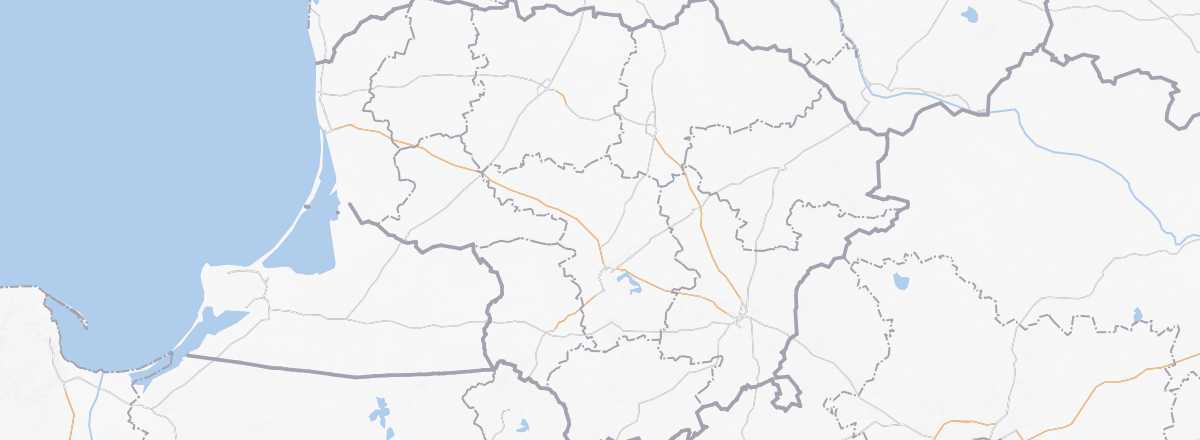 Lithuania
Open the interactive map
Lithuania
Open the interactive map
UNESCO World Heritage Sites
In addition to the Struve Geodetic Arc, Lithuania has three sites inscribed on the UNESCO World Heritage list:
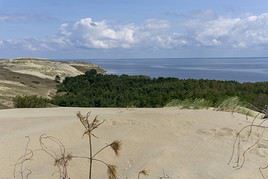
Curonian Spit (2000)
A narrow 100-kilometre-long coastal spit along the Baltic Sea, straddling Lithuania and the Russian exclave of Kaliningrad. A UNESCO-listed site, it is a major tourist destination for its stunning dune landscapes and birdwatching.
A narrow 100-kilometre-long coastal spit along the Baltic Sea, straddling Lithuania and the Russian exclave of Kaliningrad. A UNESCO-listed site, it is a major tourist destination for its stunning dune landscapes and birdwatching.
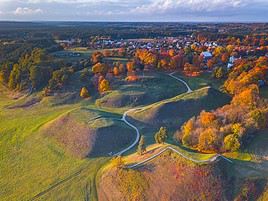
Kernavė (2004)
A UNESCO-listed site, Kernavė is a major archaeological area featuring traces of what was Lithuania’s first capital in the late Middle Ages.
A UNESCO-listed site, Kernavė is a major archaeological area featuring traces of what was Lithuania’s first capital in the late Middle Ages.
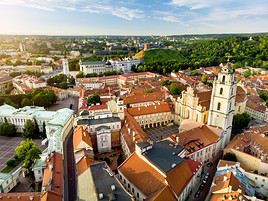
Historic Centre of Vilnius (1994)
One of the most significant examples of medieval cities in Northern Europe, with over 1,500 period buildings or those from subsequent centuries. This is why the district is a UNESCO World Heritage site.
One of the most significant examples of medieval cities in Northern Europe, with over 1,500 period buildings or those from subsequent centuries. This is why the district is a UNESCO World Heritage site.
The Coast
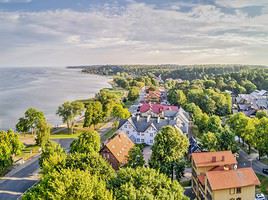
Juodkrantė
A small seaside resort in the northern part of the Curonian Spit. Besides beaches and birds, the village is home to a wood-carving museum called the "Hill of Witches.".
A small seaside resort in the northern part of the Curonian Spit. Besides beaches and birds, the village is home to a wood-carving museum called the "Hill of Witches.".
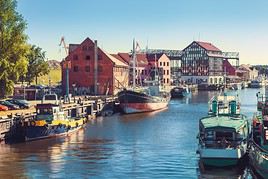
Klaipeda
It's the largest urban area on the coast and one of the main ports of the Baltic Sea. The city has a few old buildings and the remains of a Teutonic fortress.
It's the largest urban area on the coast and one of the main ports of the Baltic Sea. The city has a few old buildings and the remains of a Teutonic fortress.
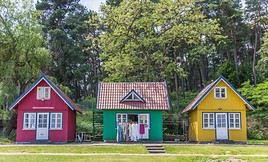
Neringa
This is the collective name for the four villages (including Nida and Juodkrantė) built on the Curonian Spit.
This is the collective name for the four villages (including Nida and Juodkrantė) built on the Curonian Spit.
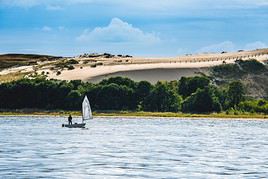
Nida
A seaside resort in the northern part of the Curonian Spit attached to the municipality of Neringa. The area is known for the Parnidis Dune, the second-highest in Europe after the Dune of Pilat in France.
A seaside resort in the northern part of the Curonian Spit attached to the municipality of Neringa. The area is known for the Parnidis Dune, the second-highest in Europe after the Dune of Pilat in France.
Natural Heritage
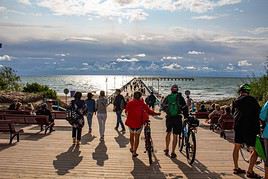
Curonian Spit
A narrow 100-kilometre-long coastal spit along the Baltic Sea, straddling Lithuania and the Russian exclave of Kaliningrad. A UNESCO-listed site, it is a major tourist destination for its stunning dune landscapes and birdwatching.
A narrow 100-kilometre-long coastal spit along the Baltic Sea, straddling Lithuania and the Russian exclave of Kaliningrad. A UNESCO-listed site, it is a major tourist destination for its stunning dune landscapes and birdwatching.
The Interior
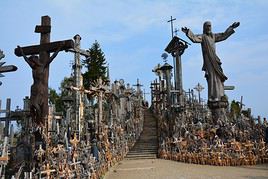
Hill of Crosses
North of Šiauliai, this rather unique pilgrimage site, where over 100,000 crosses have been planted, symbolises the peaceful struggle of Lithuanians for their independence.
North of Šiauliai, this rather unique pilgrimage site, where over 100,000 crosses have been planted, symbolises the peaceful struggle of Lithuanians for their independence.
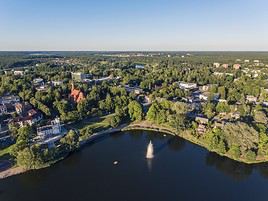
Druskininkai
This spa town in the far south of the country has several museums, including the rather surprising Grūtas Park, which displays statues and other emblematic objects from the Soviet era.
This spa town in the far south of the country has several museums, including the rather surprising Grūtas Park, which displays statues and other emblematic objects from the Soviet era.
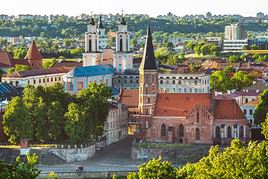
Kaunas
It is the second-largest city in Lithuania. It has an old urban centre with many churches, as well as quite a few museums.
It is the second-largest city in Lithuania. It has an old urban centre with many churches, as well as quite a few museums.
Kernavė
A UNESCO-listed site, Kernavė is a major archaeological area featuring traces of what was Lithuania’s first capital in the late Middle Ages.
A UNESCO-listed site, Kernavė is a major archaeological area featuring traces of what was Lithuania’s first capital in the late Middle Ages.
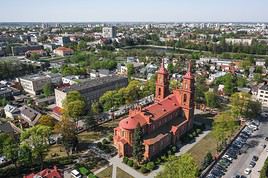
Europe Park
This park, also known as Europos Parkas, is an open-air modern art museum located 20 km north of Vilnius. It owes its existence to the fact that this spot is the geographical centre of Europe, as defined by the IGN in 1989.
This park, also known as Europos Parkas, is an open-air modern art museum located 20 km north of Vilnius. It owes its existence to the fact that this spot is the geographical centre of Europe, as defined by the IGN in 1989.
Šiauliai
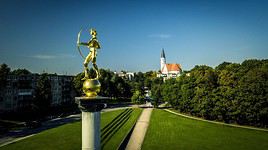
It is one of the oldest cities in the country. It is primarily known as a pilgrimage site for its nearby "Hill of Crosses," where over 50,000 crosses are planted.
It is one of the oldest cities in the country. It is primarily known as a pilgrimage site for its nearby "Hill of Crosses," where over 50,000 crosses are planted.
Trakai
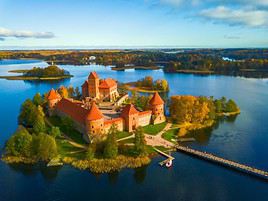
The medieval capital of Lithuania is located in a lake region west of the capital. It is known for its two castles.
The medieval capital of Lithuania is located in a lake region west of the capital. It is known for its two castles.
Vilnius
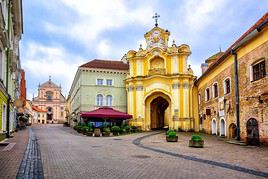
Lithuania’s stunning capital boasts a UNESCO-listed Old Town, along with beautiful churches and the remains of a 15th-century castle.
Lithuania’s stunning capital boasts a UNESCO-listed Old Town, along with beautiful churches and the remains of a 15th-century castle.
Natural Heritage
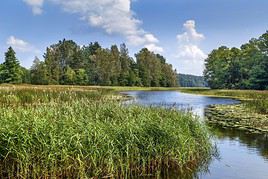
Aukštaitija National Park
East of the country, this is an area of lakes, hills, and forests where you can hike and canoe. The park also features several villages with traditional architecture and a few archaeological sites.
East of the country, this is an area of lakes, hills, and forests where you can hike and canoe. The park also features several villages with traditional architecture and a few archaeological sites.
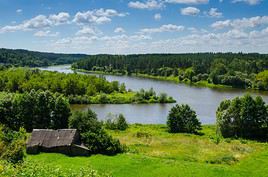
Dzukija National Park
In the far south of Lithuania, near the border with Belarus. It's an area of forests and marshes where a few old villages remain.
In the far south of Lithuania, near the border with Belarus. It's an area of forests and marshes where a few old villages remain.
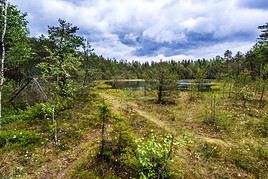
Žemaitija National Park
In the northwest of the country, not far from the sea, this park offers numerous lakes to visitors who can also hike there.
In the northwest of the country, not far from the sea, this park offers numerous lakes to visitors who can also hike there.
Must-see & highly recommended
Vilnius
★★★★ Lithuania’s stunning capital boasts a UNESCO-listed Old Town, along with beautiful churches and the remains of a 15th-century castle.
Recommended
Historic Centre of Vilnius
★★★ One of the most significant examples of medieval cities in Northern Europe, with over 1,500 period buildings or those from subsequent…
Curonian Spit
★★★ A narrow 100-kilometre-long coastal spit along the Baltic Sea, straddling Lithuania and the Russian exclave of Kaliningrad. A UNESCO-listed…
Trakai
★★★ The medieval capital of Lithuania is located in a lake region west of the capital. It is known for its two castles.
Worth a look / Other
Hill of Crosses
★★ North of Šiauliai, this rather unique pilgrimage site, where over 100,000 crosses have been planted, symbolises the peaceful struggle…
Druskininkai
★★ This spa town in the far south of the country has several museums, including the rather surprising Grūtas Park, which displays statues…
Juodkrantė
★★ A small seaside resort in the northern part of the Curonian Spit. Besides beaches and birds, the village is home to a wood-carving museum…
Kaunas
★★ It is the second-largest city in Lithuania. It has an old urban centre with many churches, as well as quite a few museums.
Neringa
★★ This is the collective name for the four villages (including Nida and Juodkrantė) built on the Curonian Spit.
Nida
★★ A seaside resort in the northern part of the Curonian Spit attached to the municipality of Neringa. The area is known for the Parnidis…
Aukštaitija National Park
★★ East of the country, this is an area of lakes, hills, and forests where you can hike and canoe. The park also features several villages…
Šiauliai
★★ It is one of the oldest cities in the country. It is primarily known as a pilgrimage site for its nearby "Hill of Crosses," where over…
Kėdainiai
★ This central city is one of Lithuania’s oldest, with a historic old quarter.
Kernavė
★ A UNESCO-listed site, Kernavė is a major archaeological area featuring traces of what was Lithuania’s first capital in the late…
Klaipeda
★ It's the largest urban area on the coast and one of the main ports of the Baltic Sea. The city has a few old buildings and the remains of a…
Palanga
★ It's Lithuania's "big" seaside resort. It's also a spa town.
Panevėžys
★ It's a "cultural" city in north-central Lithuania.
Europe Park
★ This park, also known as Europos Parkas, is an open-air modern art museum located 20 km north of Vilnius. It owes its existence to the fact…
Dzukija National Park
★ In the far south of Lithuania, near the border with Belarus. It's an area of forests and marshes where a few old villages remain.
Žemaitija National Park
★ In the northwest of the country, not far from the sea, this park offers numerous lakes to visitors who can also hike there.