last edited Jun 19, 2020
What to See in Metz
Contributionsversion #5created Jun 19, 2020Report this pageLatest contributions in this guideContributors to this guide
Location Map of Metz
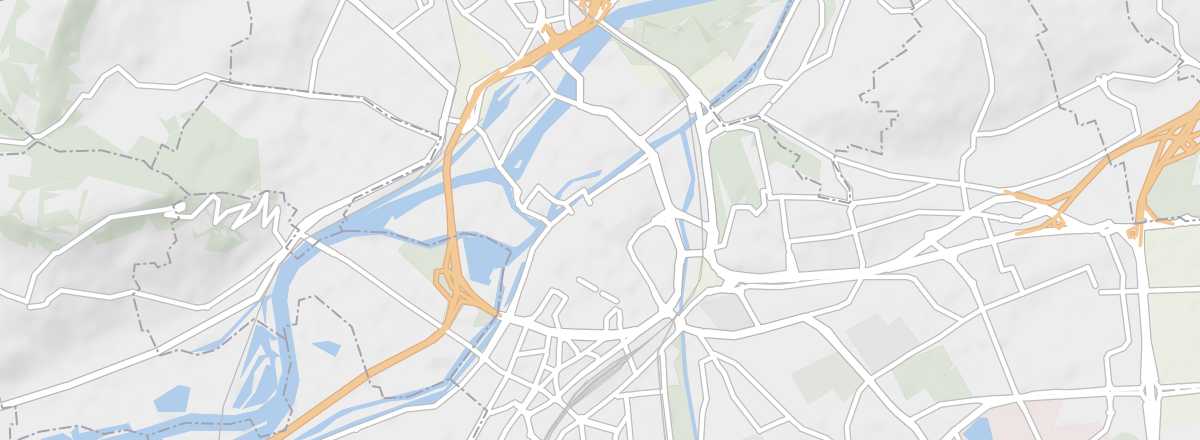 Metz
Open the interactive map
Overview
Sites, Monuments, and Architectural Ensembles
Metz-Ville Station
Opened in 1908, it dates from the city's German period. It is an imposing stone building (which in some ways resembles a church) dominated by its clock tower, around forty metres high.
Opened in 1908, it dates from the city's German period. It is an imposing stone building (which in some ways resembles a church) dominated by its clock tower, around forty metres high.
German Gate
This is the last remaining vestige of the city's medieval ramparts. This imposing structure, with its towers, takes its name from the Teutonic Knights and is now an exhibition venue.
This is the last remaining vestige of the city's medieval ramparts. This imposing structure, with its towers, takes its name from the Teutonic Knights and is now an exhibition venue.
Place Saint-Louis
Created in the 14th century, it is triangular in shape with arcaded houses. Several cafés and restaurants make it a popular spot.
Created in the 14th century, it is triangular in shape with arcaded houses. Several cafés and restaurants make it a popular spot.
Imperial Quarter
This is a historic district designed by the German authorities during the annexation of Alsace-Lorraine. It features a wide variety of architectural styles. You can still see beautiful period villas and townhouses (especially on Avenue Foch), as well as the train station.
This is a historic district designed by the German authorities during the annexation of Alsace-Lorraine. It features a wide variety of architectural styles. You can still see beautiful period villas and townhouses (especially on Avenue Foch), as well as the train station.
Religious Buildings
Saint-Étienne Cathedral
This magnificent Gothic edifice in yellow stone boasts one of the tallest naves in France and, above all, a stained-glass window area of 6,500 m² that has made it famous.
This magnificent Gothic edifice in yellow stone boasts one of the tallest naves in France and, above all, a stained-glass window area of 6,500 m² that has made it famous.
Templars' Chapel
This is the last remnant of a Templar commandery founded in the 12th century. It stands out for its octagonal shape.
This is the last remnant of a Templar commandery founded in the 12th century. It stands out for its octagonal shape.
Saint-Pierre-aux-Nonnains Church
It is the oldest church in France (and one of the oldest in the world), dating back to the 4th century. After serving as a military depot for five centuries, it is now a venue for concerts and exhibitions.
It is the oldest church in France (and one of the oldest in the world), dating back to the 4th century. After serving as a military depot for five centuries, it is now a venue for concerts and exhibitions.
Temple Neuf
This Protestant temple, with its medieval appearance (though built in the early 20th century), features architecture inspired by the old Rhenish cathedrals. It reflects the Germanisation policy of the Alsace-Lorraine region through architecture when it was part of Germany.
This Protestant temple, with its medieval appearance (though built in the early 20th century), features architecture inspired by the old Rhenish cathedrals. It reflects the Germanisation policy of the Alsace-Lorraine region through architecture when it was part of Germany.
Museums
Centre Pompidou-Metz
An annex of the Centre Georges Pompidou in Paris, the venue, which opened in 2010, may surprise visitors with its distinctive architecture. It’s fairly well attended and hosts permanent and temporary exhibitions of modern and contemporary art, some of which come from the Paris collection.
An annex of the Centre Georges Pompidou in Paris, the venue, which opened in 2010, may surprise visitors with its distinctive architecture. It’s fairly well attended and hosts permanent and temporary exhibitions of modern and contemporary art, some of which come from the Paris collection.
Paul Verlaine House
Opposite the courthouse, Verlaine’s birthplace was turned into a dedicated museum in 2011. The life and journey of the man are retraced in a setting identical to the one in which he lived.
Opposite the courthouse, Verlaine’s birthplace was turned into a dedicated museum in 2011. The life and journey of the man are retraced in a setting identical to the one in which he lived.
Cour d'Or Museum
This former 17th-century convent showcases the history of Metz and its region from the Gallo-Roman period to the last century. Archaeology, architecture, military history, and fine arts are the main themes covered.
This former 17th-century convent showcases the history of Metz and its region from the Gallo-Roman period to the last century. Archaeology, architecture, military history, and fine arts are the main themes covered.
49 North 6 East
Also known as the Lorraine Regional Contemporary Art Fund. The venue is dedicated to exhibiting and promoting public contemporary art collections, as well as hosting temporary exhibitions and artistic performances.
Also known as the Lorraine Regional Contemporary Art Fund. The venue is dedicated to exhibiting and promoting public contemporary art collections, as well as hosting temporary exhibitions and artistic performances.
Parks and Gardens
The Esplanade
This is a 19th-century "French-style" garden created on the site of the former citadel. It’s a pleasant promenade area with a rather pretty viewpoint over the surroundings.
This is a 19th-century "French-style" garden created on the site of the former citadel. It’s a pleasant promenade area with a rather pretty viewpoint over the surroundings.
In the Surrounding Area
Among the interesting sites to see around Metz:

Briey
This large town in the northern part of the department offers several attractions with its remains (ramparts, fortifications), its small châteaux, a few old houses, and above all the Cité radieuse by Le Corbusier, well-known among architecture enthusiasts.
This large town in the northern part of the department offers several attractions with its remains (ramparts, fortifications), its small châteaux, a few old houses, and above all the Cité radieuse by Le Corbusier, well-known among architecture enthusiasts.


Lake Madine
This is a small artificial lake spanning departments 54 and 55, dedicated to boating and swimming.
This is a small artificial lake spanning departments 54 and 55, dedicated to boating and swimming.

Maginot Line
From this series of fortifications dating from the Second World War, the department has retained a number of structures, some of which can be visited, such as in Aumetz, Cattenom, Simserhof, and Veckring.
From this series of fortifications dating from the Second World War, the department has retained a number of structures, some of which can be visited, such as in Aumetz, Cattenom, Simserhof, and Veckring.

Nancy
While not one of the most tourist-heavy destinations, the capital of the 54 department is a pleasant city with beautiful architecture in its historic centre, particularly its squares—three of which (Place Stanislas, Place de la Carrière, and Place d'Alliance) are UNESCO-listed.
While not one of the most tourist-heavy destinations, the capital of the 54 department is a pleasant city with beautiful architecture in its historic centre, particularly its squares—three of which (Place Stanislas, Place de la Carrière, and Place d'Alliance) are UNESCO-listed.

Lorraine Regional Nature Park
This vast park covers over 10% of Lorraine. It’s a rolling landscape of forests and ponds, home to many bird species.
This vast park covers over 10% of Lorraine. It’s a rolling landscape of forests and ponds, home to many bird species.

Verdun
One of the symbolic cities of World War I due to the battle that took place here in 1916. "Memory tourism" is very much present in both the city and its immediate surroundings: the underground citadel of Verdun, military cemeteries, the Fleury Memorial, Forts Vaux and Troyon, the Douaumont Ossuary, and Fort Douaumont.
One of the symbolic cities of World War I due to the battle that took place here in 1916. "Memory tourism" is very much present in both the city and its immediate surroundings: the underground citadel of Verdun, military cemeteries, the Fleury Memorial, Forts Vaux and Troyon, the Douaumont Ossuary, and Fort Douaumont.
Additional Information
Recommended
Metz Cathedral (Saint-Étienne)
★★★ This magnificent Gothic edifice in yellow stone boasts one of the tallest naves in France and, above all, a stained-glass window area of…
Nancy
★★★ While not one of the most tourist-heavy destinations, the capital of the 54 department is a pleasant city with beautiful architecture in…
Verdun
★★★ One of the symbolic cities of World War I due to the battle that took place here in 1916. "Memory tourism" is very much present in both the…
Worth a look / Other
Briey
★★ This large town in the northern part of the department offers several attractions with its remains (ramparts, fortifications), its small…
Centre Pompidou-Metz
★★ An annex of the Centre Georges Pompidou in Paris, the venue, which opened in 2010, may surprise visitors with its distinctive architecture…
Malbrouck Castle
★★ Located in the commune of Manderen, this is a fine 15th-century hilltop structure.
Maginot Line
★★ From this series of fortifications dating from the Second World War, the department has retained a number of structures, some of which can…
Cour d'Or Museum
★★ This former 17th-century convent showcases the history of Metz and its region from the Gallo-Roman period to the last century. Archaeology…
Lorraine Regional Nature Park
★★ This vast park covers over 10% of Lorraine. It’s a rolling landscape of forests and ponds, home to many bird species.
Place Saint-Louis (Metz)
★★ Created in the 14th century, it is triangular in shape with arcaded houses. Several cafés and restaurants make it a popular spot.
German Gate
★★ This is the last remaining vestige of the city's medieval ramparts. This imposing structure, with its towers, takes its name from the…
Imperial Quarter (Metz)
★★ This is a historic district designed by the German authorities during the annexation of Alsace-Lorraine. It features a wide variety of…
49 North 6 East
★ Also known as the Lorraine Regional Contemporary Art Fund. The venue is dedicated to exhibiting and promoting public contemporary art…
Templars' Chapel (Metz)
★ This is the last remnant of a Templar commandery founded in the 12th century. It stands out for its octagonal shape.
Saint-Pierre-aux-Nonnains Church
★ It is the oldest church in France (and one of the oldest in the world), dating back to the 4th century. After serving as a military depot…
Metz-Ville Station
★ Opened in 1908, it dates from the city's German period. It is an imposing stone building (which in some ways resembles a church) dominated…
The Esplanade (Metz)
★ This is a 19th-century "French-style" garden created on the site of the former citadel. It’s a pleasant promenade area with a rather…
Lake Madine
★ This is a small artificial lake spanning departments 54 and 55, dedicated to boating and swimming.
Paul Verlaine House
★ Opposite the courthouse, Verlaine’s birthplace was turned into a dedicated museum in 2011. The life and journey of the man are…
Temple Neuf
★ This Protestant temple, with its medieval appearance (though built in the early 20th century), features architecture inspired by the old…