
Overview
UNESCO World Heritage Sites
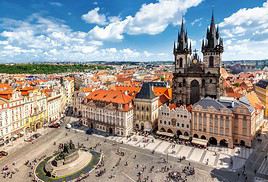
Staré Město
This is the part of the city built between the 11th and 18th centuries. Remarkable for its architecture, the area is a UNESCO World Heritage site and has made the city famous.
This is the part of the city built between the 11th and 18th centuries. Remarkable for its architecture, the area is a UNESCO World Heritage site and has made the city famous.
Neighborhoods and Tourist Areas
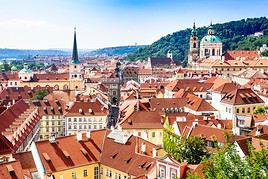
Mala Strana
One of Prague’s historic districts, facing the UNESCO-listed old centre and connected to it by the Charles Bridge. Besides Prague Castle right next door, you can discover numerous Renaissance and Baroque palaces, as well as several beautiful churches.
One of Prague’s historic districts, facing the UNESCO-listed old centre and connected to it by the Charles Bridge. Besides Prague Castle right next door, you can discover numerous Renaissance and Baroque palaces, as well as several beautiful churches.
New Town
Also called "New Town" (even though it was founded in the 14th century), this is Prague’s lively district with its bars, clubs, shops, and restaurants. It’s also where the grand Wenceslas Square is located.
Also called "New Town" (even though it was founded in the 14th century), this is Prague’s lively district with its bars, clubs, shops, and restaurants. It’s also where the grand Wenceslas Square is located.
Staré Město
This is the part of the city built between the 11th and 18th centuries. Remarkable for its architecture, the area is a UNESCO World Heritage site and has made the city famous.
This is the part of the city built between the 11th and 18th centuries. Remarkable for its architecture, the area is a UNESCO World Heritage site and has made the city famous.
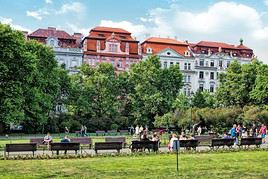
Vinohrady
A bourgeois district of the capital with its parks, apartment buildings, and public buildings featuring beautiful Art Nouveau facades, as well as numerous period villas.
A bourgeois district of the capital with its parks, apartment buildings, and public buildings featuring beautiful Art Nouveau facades, as well as numerous period villas.
Monuments and Architectural Ensembles
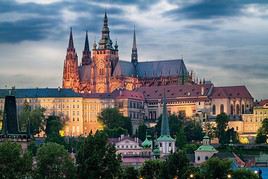
Prague Castle
A long-standing symbol of power, this vast castle complex, dating back to the 9th century, is a collection of buildings, courtyards, and alleyways. It includes several palaces (such as the former Royal Palace), St. Vitus Cathedral, St. George’s Basilica, and an annex of the remarkable National Gallery.
A long-standing symbol of power, this vast castle complex, dating back to the 9th century, is a collection of buildings, courtyards, and alleyways. It includes several palaces (such as the former Royal Palace), St. Vitus Cathedral, St. George’s Basilica, and an annex of the remarkable National Gallery.
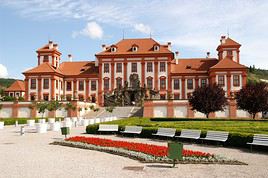
Troja Castle
This Baroque castle in the suburbs of Prague, next to the city zoo, is an annex of the National Gallery with its collections of 19th-century Czech art. Visitors come to see its richly decorated interior and, above all, its beautiful French-style garden.
This Baroque castle in the suburbs of Prague, next to the city zoo, is an annex of the National Gallery with its collections of 19th-century Czech art. Visitors come to see its richly decorated interior and, above all, its beautiful French-style garden.
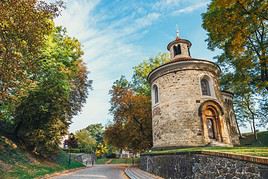
Vyšehrad Castle
This 10th-century castle perched on its rocky spur overlooks the Vltava River, offering a lovely panorama of the city. Visitors can explore its ramparts, towers, church and rotunda, the Vyšehrad Cemetery where many notable figures rest, and its landscaped gardens.
This 10th-century castle perched on its rocky spur overlooks the Vltava River, offering a lovely panorama of the city. Visitors can explore its ramparts, towers, church and rotunda, the Vyšehrad Cemetery where many notable figures rest, and its landscaped gardens.
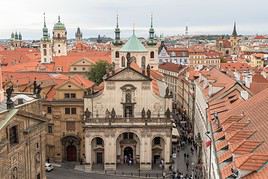
Clementinum
This is a vast architectural complex spanning two hectares, built by the Jesuits over more than a century. The site houses several religious buildings, an astronomical tower, a library, and other Baroque-style structures. Some areas are open to visitors.
This is a vast architectural complex spanning two hectares, built by the Jesuits over more than a century. The site houses several religious buildings, an astronomical tower, a library, and other Baroque-style structures. Some areas are open to visitors.
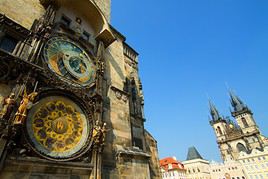
Astronomical Clock
It is on one of the facades of the Town Hall, in Old Town Square. Dating from the medieval period (1410), its mechanism features an hourly animation depicting Christ and the Apostles, making it a popular attraction for visitors.
It is on one of the facades of the Town Hall, in Old Town Square. Dating from the medieval period (1410), its mechanism features an hourly animation depicting Christ and the Apostles, making it a popular attraction for visitors.
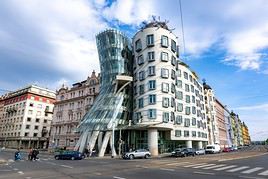
Dancing House
This building, constructed from glass and concrete at the turn of the 1990s, is a striking example of deconstructivist architecture. It’s this design that gives it that sense of "movement", especially at night. Its "rooftop" offers a great view of the city.
This building, constructed from glass and concrete at the turn of the 1990s, is a striking example of deconstructivist architecture. It’s this design that gives it that sense of "movement", especially at night. Its "rooftop" offers a great view of the city.
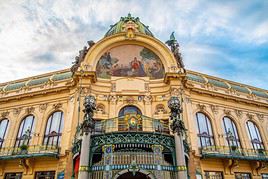
Municipal House
This is a stunning Art Nouveau building from the early 20th century. It houses a concert hall, exhibition spaces, and a café-restaurant, all decorated in the purest Art Nouveau style.
This is a stunning Art Nouveau building from the early 20th century. It houses a concert hall, exhibition spaces, and a café-restaurant, all decorated in the purest Art Nouveau style.
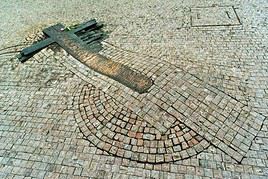
Jan Palach Memorial
At the top of Wenceslas Square, a small memorial to Jan Palach, who self-immolated in 1969 to protest against the occupation by Warsaw Pact troops.
At the top of Wenceslas Square, a small memorial to Jan Palach, who self-immolated in 1969 to protest against the occupation by Warsaw Pact troops.
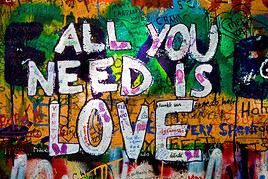
Lennon Wall
It’s an informal memorial dedicated to John Lennon. It’s a long stretch of wall covered in graffiti and other murals dedicated to the singer or the Beatles.
It’s an informal memorial dedicated to John Lennon. It’s a long stretch of wall covered in graffiti and other murals dedicated to the singer or the Beatles.
Hradčany Square
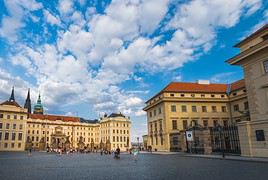
This picturesque square, surrounded by beautiful Baroque buildings and palaces, is right next to the castle. From here, you can watch the changing of the guard, which takes place every hour in front of it.
This picturesque square, surrounded by beautiful Baroque buildings and palaces, is right next to the castle. From here, you can watch the changing of the guard, which takes place every hour in front of it.
Wenceslas Square
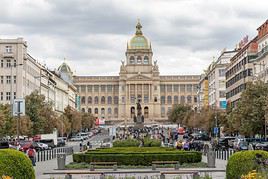
Located in the New Town, this spot is considered the equivalent of the Champs-Élysées. It’s a very wide avenue (originally a square) lined with beautiful buildings, packed with shops, hotels, restaurants, clubs, and bars, making it a lively place.
Located in the New Town, this spot is considered the equivalent of the Champs-Élysées. It’s a very wide avenue (originally a square) lined with beautiful buildings, packed with shops, hotels, restaurants, clubs, and bars, making it a lively place.
Old Town Square
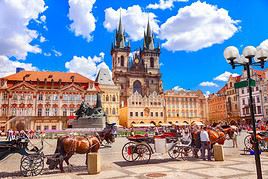
This is the heart of the city and one of its liveliest spots. Quite spacious, it is surrounded by remarkable and colourful historic buildings, as well as the stunning Church of Our Lady before Týn and the Old Town Hall tower.
This is the heart of the city and one of its liveliest spots. Quite spacious, it is surrounded by remarkable and colourful historic buildings, as well as the stunning Church of Our Lady before Týn and the Old Town Hall tower.
Charles Bridge
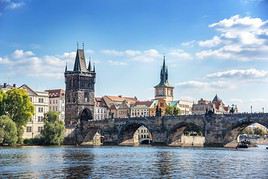
This magnificent pedestrian bridge, with its entrance tower and adorned with religious statues, was built in the medieval era. It connects the Old Town to the Castle District. Lively and heavily photographed, it is Prague’s most famous landmark.
This magnificent pedestrian bridge, with its entrance tower and adorned with religious statues, was built in the medieval era. It connects the Old Town to the Castle District. Lively and heavily photographed, it is Prague’s most famous landmark.
Petřín Tower
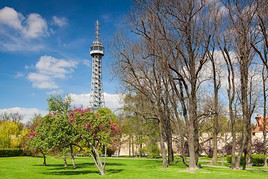
This 60-metre steel replica of the Eiffel Tower overlooks the city of Prague and offers a lovely panorama.
This 60-metre steel replica of the Eiffel Tower overlooks the city of Prague and offers a lovely panorama.
Powder Tower
This last remnant of the city’s medieval fortifications stands at the boundary between the Old and New Towns. It is a large, richly sculpted square tower whose interior can be visited.
This last remnant of the city’s medieval fortifications stands at the boundary between the Old and New Towns. It is a large, richly sculpted square tower whose interior can be visited.
Žižkov Television Tower
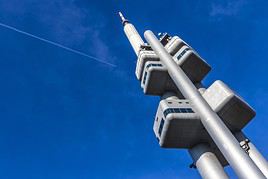
A tall (216-metre) telecommunications and observation tower built during the Czechoslovak era. Beyond its distinctive architecture (and its "crawling babies" sculptures), the site is notable for the viewpoint from its summit.
A tall (216-metre) telecommunications and observation tower built during the Czechoslovak era. Beyond its distinctive architecture (and its "crawling babies" sculptures), the site is notable for the viewpoint from its summit.
Religious Buildings
Saint George's Basilica
Like the cathedral, it was built inside the castle. It is a beautiful example of Romanesque architecture, quite plain and austere on the inside.
Like the cathedral, it was built inside the castle. It is a beautiful example of Romanesque architecture, quite plain and austere on the inside.
St. Vitus Cathedral
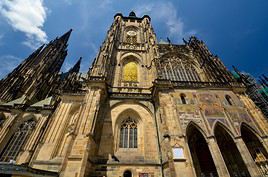
It was built in the 14th century in the Gothic style within the castle. It is the country's largest religious building.
It was built in the 14th century in the Gothic style within the castle. It is the country's largest religious building.
Jewish Cemetery of Prague
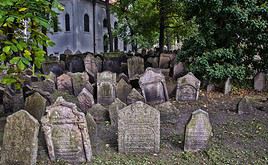
Located in the Old Town, this is one of the oldest Jewish cemeteries in Europe (15th century). It contains around 12,000 gravestones and is administered by the Jewish Museum of Prague.
Located in the Old Town, this is one of the oldest Jewish cemeteries in Europe (15th century). It contains around 12,000 gravestones and is administered by the Jewish Museum of Prague.
St. Agnes Convent
Beyond its religious significance, this convent is also an annex of the National Gallery. It houses collections of ancient art, particularly sculptures and paintings representative of Gothic art from Bohemia and Central Europe during the Middle Ages.
Beyond its religious significance, this convent is also an annex of the National Gallery. It houses collections of ancient art, particularly sculptures and paintings representative of Gothic art from Bohemia and Central Europe during the Middle Ages.
Church of Our Lady before Týn
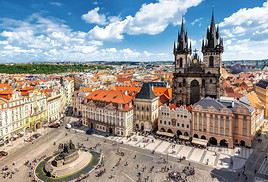
This is the church that dominates Old Town Square with its two 80-metre towers. It was built in the 14th century in the Gothic style.
This is the church that dominates Old Town Square with its two 80-metre towers. It was built in the 14th century in the Gothic style.
Church of St. Francis of Assisi
This is one of the charming Baroque churches in Prague, dating from the 17th century. It features a stunning interior.
This is one of the charming Baroque churches in Prague, dating from the 17th century. It features a stunning interior.
Church of St. Nicholas
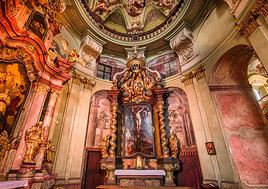
In the heart of the Mala Strana district, this 17th-century Catholic building is considered a masterpiece of Baroque art. Its interior is equally remarkable. There’s a fine view of the district from its bell tower.
In the heart of the Mala Strana district, this 17th-century Catholic building is considered a masterpiece of Baroque art. Its interior is equally remarkable. There’s a fine view of the district from its bell tower.
Strahov Monastery
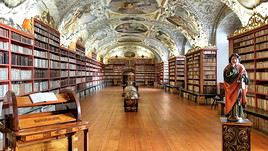
Perched on the heights of the city (with the panoramic view to match), this 12th-century site is renowned for its libraries, cabinet of curiosities, and museum of medieval painting.
Perched on the heights of the city (with the panoramic view to match), this 12th-century site is renowned for its libraries, cabinet of curiosities, and museum of medieval painting.
Loreto Sanctuary
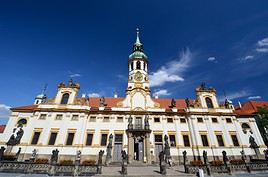
With its church, cloister, and bell tower featuring a famous carillon, this 17th-century sanctuary is a pilgrimage site.
With its church, cloister, and bell tower featuring a famous carillon, this 17th-century sanctuary is a pilgrimage site.
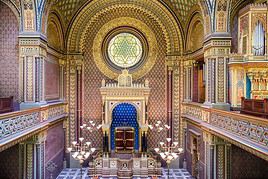
Spanish Synagogue
This synagogue, built in 1867, features an original Moorish-style architecture along with a remarkable interior decoration. A permanent exhibition on the history of Jews in Bohemia and Moravia can be seen here.
This synagogue, built in 1867, features an original Moorish-style architecture along with a remarkable interior decoration. A permanent exhibition on the history of Jews in Bohemia and Moravia can be seen here.
Museums
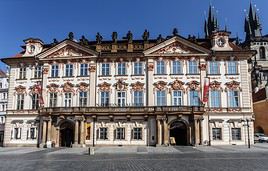
National Gallery of Prague
This museum houses the national art collections, spanning from antiquity to the present day. Depending on the themes, it is actually spread across several locations in the city (including the beautiful Convent of St. Agnes for medieval art).
This museum houses the national art collections, spanning from antiquity to the present day. Depending on the themes, it is actually spread across several locations in the city (including the beautiful Convent of St. Agnes for medieval art).
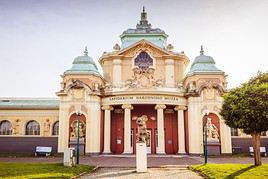
Lapidarium
The Lapidarium in Prague is a space dedicated to stone sculptures created in the country between the 11th and 20th centuries. It is housed in a charming period building from the 1891 exhibition park.
The Lapidarium in Prague is a space dedicated to stone sculptures created in the country between the 11th and 20th centuries. It is housed in a charming period building from the 1891 exhibition park.
Apple Museum
A private initiative showcasing the history of the brand and its founder, featuring several hundred objects and Apple products from the early days to the present.
A private initiative showcasing the history of the brand and its founder, featuring several hundred objects and Apple products from the early days to the present.
Museum of Decorative Arts
A comprehensive museum of its kind, the Museum of Decorative Arts showcases collections of art and craftsmanship (glass, ceramics, wood, textiles, etc.) from the country and elsewhere in Europe, spanning nearly two millennia.
A comprehensive museum of its kind, the Museum of Decorative Arts showcases collections of art and craftsmanship (glass, ceramics, wood, textiles, etc.) from the country and elsewhere in Europe, spanning nearly two millennia.
Museum of Communism
The site covers the period of communist dictatorship experienced by the country from the end of World War II until the fall of the Berlin Wall. Beyond history, it also presents the socio-economic system and the daily life of the population.
The site covers the period of communist dictatorship experienced by the country from the end of World War II until the fall of the Berlin Wall. Beyond history, it also presents the socio-economic system and the daily life of the population.
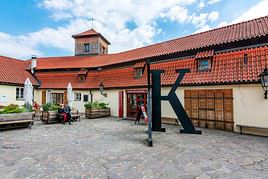
Franz Kafka Museum
This place is dedicated to the famous author, featuring exhibitions of various original documents and drawings by the Prague-born writer.
This place is dedicated to the famous author, featuring exhibitions of various original documents and drawings by the Prague-born writer.
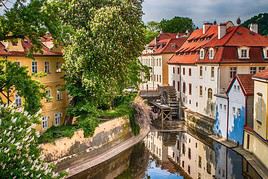
Kampa Museum
On the (rather pretty) island of the same name, Kampa is housed in a former water mill. It is dedicated to modern art from Central Europe, including works by artists who were banned from exhibiting during the communist era.
On the (rather pretty) island of the same name, Kampa is housed in a former water mill. It is dedicated to modern art from Central Europe, including works by artists who were banned from exhibiting during the communist era.
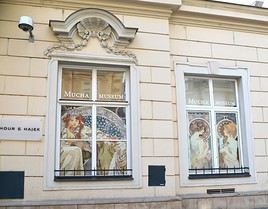
Mucha Museum
This Baroque palace in the Old Town is dedicated to Alfons Mucha, the Czech painter-illustrator and undisputed master of the Art Nouveau style in the early 20th century. His works are world-renowned.
This Baroque palace in the Old Town is dedicated to Alfons Mucha, the Czech painter-illustrator and undisputed master of the Art Nouveau style in the early 20th century. His works are world-renowned.
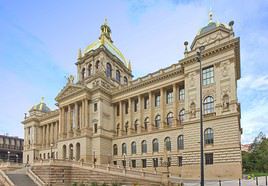
National Museum of Prague
It is one of the main museums in the capital, located on Wenceslas Square. Its themes are diverse, covering nature, Czech music, the country's history, and social sciences.
It is one of the main museums in the capital, located on Wenceslas Square. Its themes are diverse, covering nature, Czech music, the country's history, and social sciences.
National Technical Museum
This museum is dedicated to the development of the many technologies that have improved or revolutionized history over the past centuries. Several themes are presented, including transportation, architecture, photography, astronomy, time, and more.
This museum is dedicated to the development of the many technologies that have improved or revolutionized history over the past centuries. Several themes are presented, including transportation, architecture, photography, astronomy, time, and more.
Prague City Museum
This museum lets you discover how the city of Prague came into being, from its distant origins to its Baroque period at the end of the 18th century.
This museum lets you discover how the city of Prague came into being, from its distant origins to its Baroque period at the end of the 18th century.
Parks, Gardens, and Natural Spaces
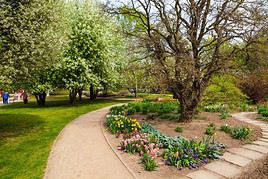
Botanical Garden
This is a 52-hectare site laid out on the heights of the Troja hills. You can see all kinds of plants, greenhouses, a vineyard, and a Japanese garden.
This is a 52-hectare site laid out on the heights of the Troja hills. You can see all kinds of plants, greenhouses, a vineyard, and a Japanese garden.
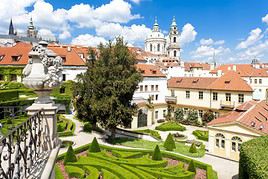
Gardens Below the Castle
This is what the network of small terraced gardens connected at the foot of Prague Castle is called. Each is adorned with beautiful staircases, statues, pavilions, and small monuments, making it a pleasant spot.
This is what the network of small terraced gardens connected at the foot of Prague Castle is called. Each is adorned with beautiful staircases, statues, pavilions, and small monuments, making it a pleasant spot.
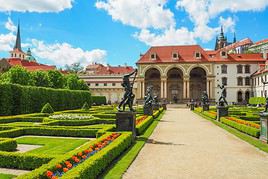
Wallenstein Palace Gardens
These are the Italian-style gardens of the Senate. They are open to the public and well-loved.
These are the Italian-style gardens of the Senate. They are open to the public and well-loved.
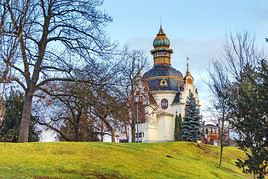
Letná Park
This is a large park overlooking the Old Town and the Vltava River. It’s especially popular with walkers and joggers. You can see Europe’s oldest carousel here (1892).
This is a large park overlooking the Old Town and the Vltava River. It’s especially popular with walkers and joggers. You can see Europe’s oldest carousel here (1892).
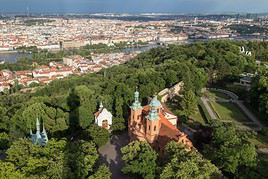
Petřín
This hill in central Prague is home to several parks and gardens, as well as the eponymous tower, the city observatory, and a monument dedicated to the victims of communism. You can reach it by funicular.
This hill in central Prague is home to several parks and gardens, as well as the eponymous tower, the city observatory, and a monument dedicated to the victims of communism. You can reach it by funicular.
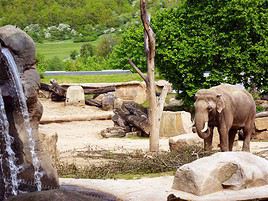
Prague Zoo
45 hectares in the suburbs of Prague with around 5,000 animals, including the famous Przewalski's horses.
45 hectares in the suburbs of Prague with around 5,000 animals, including the famous Przewalski's horses.