
UNESCO World Heritage Sites
Slovakia has 7 sites inscribed on the UNESCO World Heritage list:
Banská Štiavnica (1993)
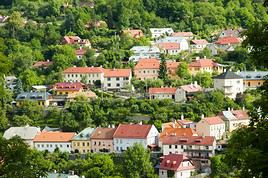
This is a beautiful medieval mining town located in the south of the country. It is a UNESCO World Heritage site for its historical value and the mining monuments in its surroundings.
This is a beautiful medieval mining town located in the south of the country. It is a UNESCO World Heritage site for its historical value and the mining monuments in its surroundings.
Bardejov (2000)
A stunning fortified medieval town in northeastern Slovakia, near Poland. It is also a UNESCO World Heritage site.
A stunning fortified medieval town in northeastern Slovakia, near Poland. It is also a UNESCO World Heritage site.
Wooden Churches of the Carpathians (2008)
These traditional churches from the 15th–18th centuries are UNESCO-listed. There are eight of them in the villages of Bodruzal, Hervartov, Hronsek, Kežmarok, Ladomirová, Leštiny, Ruská Bystrá, and Tvrdošín.
These traditional churches from the 15th–18th centuries are UNESCO-listed. There are eight of them in the villages of Bodruzal, Hervartov, Hronsek, Kežmarok, Ladomirová, Leštiny, Ruská Bystrá, and Tvrdošín.
Aggtelek Karst and Slovak Karst Caves (1995)
A UNESCO-listed complex of six caves in southern/southeastern Slovakia.
A UNESCO-listed complex of six caves in southern/southeastern Slovakia.
- Levoča, Spišský Hrad and the Associated Monuments ** (1993): This is a collection of UNESCO-listed sites located in the east. It includes the former monastery of Spišská Kapitula and its urban surroundings, the church in the village of Žehra, the old houses in the town of Spišské Podhradie, and above all, Spišský Hrad Castle and the fortified medieval town of Levoča.
Poloniny National Park (2007)
On the borders with Poland and Ukraine, the area is known for its UNESCO-listed primeval beech forests and a rich wildlife including bears, lynx, and European bison. Hiking and skiing are popular activities here.
On the borders with Poland and Ukraine, the area is known for its UNESCO-listed primeval beech forests and a rich wildlife including bears, lynx, and European bison. Hiking and skiing are popular activities here.
Vlkolínec (1993)
A stunning traditional wooden village founded in the 14th century. One of the most typical and best-preserved in Central Europe, it is a UNESCO World Heritage site.
A stunning traditional wooden village founded in the 14th century. One of the most typical and best-preserved in Central Europe, it is a UNESCO World Heritage site.
Cities and Cultural Heritage
Banska Bystrica
The former mining town in the centre of the country is a fairly pleasant city with its castle, monuments, and churches. But it is also, and above all, a base for exploring the surrounding mountains and parks.
The former mining town in the centre of the country is a fairly pleasant city with its castle, monuments, and churches. But it is also, and above all, a base for exploring the surrounding mountains and parks.
Banská Štiavnica
This is a beautiful medieval mining town located in the south of the country. It is a UNESCO World Heritage site for its historical value and the mining monuments in its surroundings.
This is a beautiful medieval mining town located in the south of the country. It is a UNESCO World Heritage site for its historical value and the mining monuments in its surroundings.
Bardejov
A stunning fortified medieval town in northeastern Slovakia, near Poland. It is also a UNESCO World Heritage site.
A stunning fortified medieval town in northeastern Slovakia, near Poland. It is also a UNESCO World Heritage site.
Bratislava
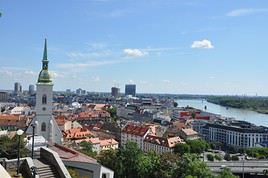
Slovakia’s capital sits on the Austrian border. Lively and charming, it boasts a stunning old centre blending Gothic, Baroque and Renaissance styles. Bratislava is also a stop for Danube cruises, especially between Vienna and Budapest.
Slovakia’s capital sits on the Austrian border. Lively and charming, it boasts a stunning old centre blending Gothic, Baroque and Renaissance styles. Bratislava is also a stop for Danube cruises, especially between Vienna and Budapest.
Bojnice Castle
A charming structure originally dating from the 12th century in the spa town of the same name.
A charming structure originally dating from the 12th century in the spa town of the same name.
Cachtice Castle
A somewhat ruined medieval castle perched in the west of the country. It once served as a prison.
A somewhat ruined medieval castle perched in the west of the country. It once served as a prison.
Devin Castle
These are the remains of an old fortress perched above the Danube, facing Austria, just a few kilometres from the capital.
These are the remains of an old fortress perched above the Danube, facing Austria, just a few kilometres from the capital.
Levice Castle
The remains of a medieval fortress turned into a regional museum in the eponymous town.
The remains of a medieval fortress turned into a regional museum in the eponymous town.
Orava Castle
This is a charming 13th-century castle overlooking the Orava River in northern Slovakia.
This is a charming 13th-century castle overlooking the Orava River in northern Slovakia.
Spissky Hrad Castle
This imposing ruined fortress is a UNESCO World Heritage Site as part of a collection of military, political, and religious buildings from the 13th and 14th centuries in Central Europe.
This imposing ruined fortress is a UNESCO World Heritage Site as part of a collection of military, political, and religious buildings from the 13th and 14th centuries in Central Europe.
Čičmany
A village with traditional wooden architecture near Žilina. Hiking is possible in the surrounding forests.
A village with traditional wooden architecture near Žilina. Hiking is possible in the surrounding forests.
Wooden Churches of the Carpathians
These traditional churches from the 15th–18th centuries are UNESCO-listed. There are eight of them in the villages of Bodruzal, Hervartov, Hronsek, Kežmarok, Ladomirová, Leštiny, Ruská Bystrá, and Tvrdošín.
These traditional churches from the 15th–18th centuries are UNESCO-listed. There are eight of them in the villages of Bodruzal, Hervartov, Hronsek, Kežmarok, Ladomirová, Leštiny, Ruská Bystrá, and Tvrdošín.
Kezmarok
Once home to a large German minority, this sizeable town boasts a castle, a beautiful wooden church (a UNESCO World Heritage site), and a historic centre.
Once home to a large German minority, this sizeable town boasts a castle, a beautiful wooden church (a UNESCO World Heritage site), and a historic centre.
Košice
Sometimes called Cassovia, this is Slovakia’s second-largest city, with an old centre and an impressive cathedral.
Sometimes called Cassovia, this is Slovakia’s second-largest city, with an old centre and an impressive cathedral.
Levoča
A large fortified medieval town extending from Spiš Castle. It is the most interesting site in a UNESCO-listed ensemble.
A large fortified medieval town extending from Spiš Castle. It is the most interesting site in a UNESCO-listed ensemble.
Liptovský Mikuláš
The town is a tourist hub thanks to its proximity to the Tatras (and its caves) and the country’s main winter sports resort (Jasná).
The town is a tourist hub thanks to its proximity to the Tatras (and its caves) and the country’s main winter sports resort (Jasná).
Nitra
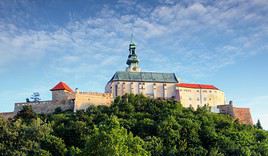
One of Slovakia’s oldest cities, among the most beautiful, with its castle and historic centre.
One of Slovakia’s oldest cities, among the most beautiful, with its castle and historic centre.
Poprad
This northern town is known for its historic city centre and as a gateway to the nearby Tatra region.
This northern town is known for its historic city centre and as a gateway to the nearby Tatra region.
Prešov
This large city in the east offers a striking blend of Baroque, Gothic, and Renaissance architecture.
This large city in the east offers a striking blend of Baroque, Gothic, and Renaissance architecture.
Trenčín
One of Slovakia’s most beautiful cities, with its castle overlooking the old town and the Váh River.
One of Slovakia’s most beautiful cities, with its castle overlooking the old town and the Váh River.
Vlkolínec
A stunning traditional wooden village founded in the 14th century. One of the most typical and best-preserved in Central Europe, it is a UNESCO World Heritage site.
A stunning traditional wooden village founded in the 14th century. One of the most typical and best-preserved in Central Europe, it is a UNESCO World Heritage site.
Žilina
It's a large urban area in the north of the country with a fairly pretty restored old centre.
It's a large urban area in the north of the country with a fairly pretty restored old centre.
Natural Heritage
Dunajec Gorge
Shared by Slovakia and Poland, this gorge where the Dunajec River flows attracts local tourism for its canoeing or rafting opportunities and the landscapes of the Pieniny Mountains.
Shared by Slovakia and Poland, this gorge where the Dunajec River flows attracts local tourism for its canoeing or rafting opportunities and the landscapes of the Pieniny Mountains.
Dobsina Ice Cave
This is the country's largest ice-filled cave. It is a UNESCO World Heritage Site as part of the "Caves of Aggtelek Karst".
This is the country's largest ice-filled cave. It is a UNESCO World Heritage Site as part of the "Caves of Aggtelek Karst".
Aggtelek Karst and Slovak Karst Caves
A UNESCO-listed complex of six caves in southern/southeastern Slovakia.
A UNESCO-listed complex of six caves in southern/southeastern Slovakia.
Beskidy Mountains
This is a mountainous region of the Carpathians spanning several countries between the Czech Republic and Ukraine. On the Polish side, you’ll find beautiful traditional wooden churches and plenty of outdoor activities like skiing (especially in Zakopane) and hiking.
This is a mountainous region of the Carpathians spanning several countries between the Czech Republic and Ukraine. On the Polish side, you’ll find beautiful traditional wooden churches and plenty of outdoor activities like skiing (especially in Zakopane) and hiking.
Slovak Karst National Park
This park on the border with Hungary is home to countless caves, the entire complex being a UNESCO World Heritage site. You can hike here and, above all, go caving.
This park on the border with Hungary is home to countless caves, the entire complex being a UNESCO World Heritage site. You can hike here and, above all, go caving.
Mala Fatra National Park
A mountainous area in the northwest where you can hike through beautiful landscapes. You can also ski here, such as at the Vratna Dolina resort.
A mountainous area in the northwest where you can hike through beautiful landscapes. You can also ski here, such as at the Vratna Dolina resort.
Slovak Paradise National Park
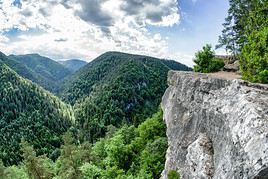
This mountainous park in the heart of the country is renowned for its hiking and mountain biking trails, climbing opportunities, and hundreds of caves, including the UNESCO-listed Dobsina Ice Cave.
This mountainous park in the heart of the country is renowned for its hiking and mountain biking trails, climbing opportunities, and hundreds of caves, including the UNESCO-listed Dobsina Ice Cave.
Poloniny National Park
On the borders with Poland and Ukraine, the area is known for its UNESCO-listed primeval beech forests and a rich wildlife including bears, lynx, and European bison. Hiking and skiing are popular activities here.
On the borders with Poland and Ukraine, the area is known for its UNESCO-listed primeval beech forests and a rich wildlife including bears, lynx, and European bison. Hiking and skiing are popular activities here.
Tatra National Park
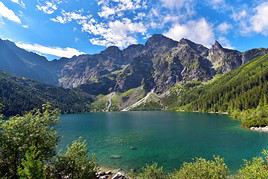
This stunning cross-border park between Slovakia and Poland covers a large part of the Tatra mountain range. It is an area of mountains and lakes with rich flora and fauna (bears, wolves, lynx, etc.). A major tourist destination, it attracts visitors for hiking, cycling, fishing, mountaineering, skiing, and rafting or canoeing on the Bela River. You can also reach one of its highest peaks (Lomnický) by cable car.
This stunning cross-border park between Slovakia and Poland covers a large part of the Tatra mountain range. It is an area of mountains and lakes with rich flora and fauna (bears, wolves, lynx, etc.). A major tourist destination, it attracts visitors for hiking, cycling, fishing, mountaineering, skiing, and rafting or canoeing on the Bela River. You can also reach one of its highest peaks (Lomnický) by cable car.
Little Carpathians
This is a mountain range in Slovakia (and its neighbors) that’s quite popular with tourists, especially residents of the capital, for its outdoor activities (hiking, cycling, skiing, etc.). It’s also a wine region with several "wine trails.".
This is a mountain range in Slovakia (and its neighbors) that’s quite popular with tourists, especially residents of the capital, for its outdoor activities (hiking, cycling, skiing, etc.). It’s also a wine region with several "wine trails.".
Demänovská Valley
This Tatra valley is home to two fairly touristy caves: the Cave of Freedom and the Demänovská Ice Cave.
This Tatra valley is home to two fairly touristy caves: the Cave of Freedom and the Demänovská Ice Cave.