
Travel guide · Hungary
Hungary
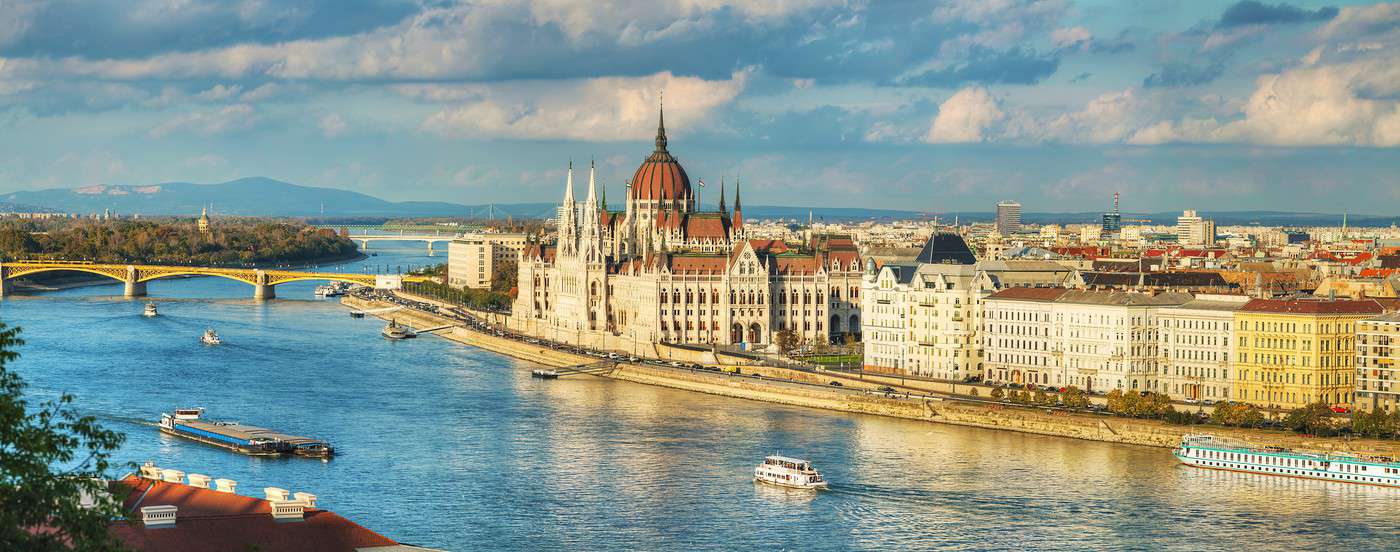
While its landscapes—dominated by the vast grassy plain of the Puszta—may not be spectacular, Hungary boasts two major tourist draws: the expansive Lake Balaton and, above all, its beautiful capital, Budapest, a UNESCO World Heritage site.
Introduction to Hungary
At the heart of Europe, Hungary is a flat country. Although there are a few "mountain peaks," only 2% of its territory exceeds 300 m in altitude. Type of place: country. Location: in central Europe, between Austria and Romania . Latitude/longitude: 47.00' N,…
Geography and Environment of Hungary
Country Overview
Natural Regions
Wildlife and Flora
Hungary: Climate and Weather
Climate Overview
Hungary has a moderate continental climate, shielded from severe Siberian cold by the Carpathian Mountains to the north and east. Nevertheless, the country still experiences quite cold and long winters with snow on the low northern hills as well as across the eastern plains. From late April to early May, temperatures become pleasant again, though spring (and October) often brings heavy rain, lasting until the end of September. Summers can sometimes be very hot, especially in the east.
Best Time to Visit Hungary
Climatically, the period from late June (after the rains) to September is ideal for exploring the country, even if summers can get a bit hot.
| Jan. | Feb. | Mar. | Apr. | May | Jun. | Jul. | Aug. | Sep. | Oct. | Nov. | Dec. | |
|---|---|---|---|---|---|---|---|---|---|---|---|---|
| Climate | / |
: very favourable | : favourable | : moderately favourable | : unfavourable.
Climate and Weather in Budapest
Additional Information
History of Hungary
History of Hungary

Key Dates
Hungarian Society
Population
Political Institutions
Economy
Religion
Like a number of Central or Eastern European countries, Hungary is not a very religious country. One in five Hungarians declares themselves atheist, and more than one in four is "not really concerned" by religion or its beliefs. In the end, the country has just 39% Catholics, 14% Protestants, and 2% followers of various other religions.
Culture and Customs of Hungary
Arts, Crafts, and Architecture
Arts
Crafts
Architecture
Museums
Customs and Traditions
Local Traditions
Etiquette
Dress and Behavior
Sensitive or Taboo Topics
Languages
Hungarian is the official language spoken by almost the entire population. In terms of foreign languages, English logically dominates (especially among younger people), with 16% of Hungarians able to speak it, followed by German (11%), Russian or Romanian (1.5% each), and then French (1.2% of speakers).
Glossary
A few useful local words and expressions to know when traveling:
Festivals and Celebrations
Major Events and Public Holidays
Books, Films, and Music
What to See in Hungary
Hungary has 8 sites inscribed on the UNESCO World Heritage list: Benedictine Abbey of Pannonhalma ★★ (1996) This beautiful edifice, founded in the 10th century near Győr, is a UNESCO World Heritage site. Historic Centre of Budapest ★★★★ (1987) In the urban…
Things to Do in Hungary
Hiking
Hiking on Foot
Much like the country’s relatively flat and uniform terrain, Hungary is primarily a destination for "countryside walks in the plains." While the country boasts over 10,000 km of marked trails—and the most determined can tackle the 1,100 km "Blue Hike" that crosses the entire country—hiking here is far less spectacular and sought-after by tourists than in many other European countries. At best, the areas around Lake Balaton and, to a lesser extent, Lake Neusiedl remain the most interesting.
Cycling
There are quite a few cycling paths in the country, with options to ride along the Danube or Lake Balaton, for example. Additionally, elevation changes are generally minimal.
Horseback Riding
Hungary is a great destination for horseback riding or equestrian treks. Across the country, you’ll find equestrian centers and farms offering various programs for all skill levels.
Thalasso, Wellness, and Medical Tourism
Outdoor and Nature Sports

Swimming and Water Activities
Even without access to the sea, Hungary has developed a small beach culture around Lake Balaton. Every summer, it attracts a large local—and even some international (many Germans)—crowd who come to enjoy its "beaches," water activities (kitesurfing, fishing, sailing, short cruises), and lakeside resorts like Balatonfüred and, especially, Siofok, known for its lively atmosphere.
Further north, near the Austrian border, Lake Neusiedl is home to numerous bird species and is popular for water-based activities, including ice sailing in winter, as well as hiking. It’s part of the Austro-Hungarian Ferto-Hansag National Park.
Other activities include diving in former mining lakes and river descents or canoe trips on lakes.
Golf
Hunting and Fishing
Skiing
Other Activities
Whitewater:
Climbing and mountaineering:
Paragliding and aerial sports:
Caving:
Other Activities
Cultural Life and Activities
Nightlife and Going Out
Types of Travel in Hungary
Interests (out of ★★★★ ) : Nature ★ ; Adventure ★ ; Culture ★★★★ ; Relaxation-holidays ★★ . Covering much of its territory with its vast plain (the famous "Puszta" ), which is quite monotonous, Hungary isn’t particularly spectacular in terms of landscapes or…
When and Where to Go in Hungary
Best Times to Visit Hungary
Finding the best time to visit means balancing climate conditions with crowd levels and the most attractive prices for travel and on-site expenses.
Climatically, the period from late June (after the rains) to September is ideal for exploring the country, even though summers can be quite hot and popular spots like the capital or Lake Balaton may be crowded. In short, while late August to September is the perfect time, the (relatively) good visiting season can start as early as May, despite the possibility of heavy rains during that month.
| Jan. | Feb. | Mar. | Apr. | May | Jun. | Jul. | Aug. | Sep. | Oct. | Nov. | Dec. | |
|---|---|---|---|---|---|---|---|---|---|---|---|---|
| Climate | / | |||||||||||
| Avoid crowds | ||||||||||||
| Low prices |
: very favorable | : favorable | : moderately favorable | : unfavorable.
Where to Go Based on Travel Type and Interest
Flying to Hungary
Of the few airports in the country, only three have significant traffic and an international role. By far the busiest is Budapest Ferenc Liszt Airport, handling just over 9 million passengers annually (9.156 million in 2014) for scheduled flights or (for…
Getting Around Hungary
As is often the case in Europe, having your own vehicle is a good option for exploring the country once you’ve decided not to limit yourself solely to Budapest . Moreover, given its central location, Hungary is never too far from most other European…
Accommodation in Hungary
Overview of the Offer
As in most European countries, the range of accommodation is quite rich and varied, catering to different budgets. You’ll find the full spectrum of hotels, youth hostels, guesthouses, campsites, house or apartment rentals, and even university or school residences open to the public during the summer holidays. In short, there’s something for every taste and budget—though booking ahead is almost essential in Budapest and, to a lesser extent, around Lake Balaton if you want to find a good deal, especially during peak season or on weekends.
Hotels
Youth Hostels and "Hostels"
Whether traditional youth hostels (A.J.) or small guesthouses, this type of accommodation is widespread across the country, starting with the major cities. It generally offers the most budget-friendly option or the best value for money for travellers (though service and comfort can vary from one place to another), with dorm beds costing around 10 €–12 per person or private rooms averaging 20 €–30. As usual, booking ahead is wise during peak season and in the capital.
Camping
Homestays
Other Options
Farm Stays
Student Residences
As in other Eastern European countries, university or school residences are open to tourists from late June to September. Options are usually available in all major cities at prices roughly similar to those of youth hostels and hostels.
Apartments and Villas
Choosing Your Accommodation
Homestays, small guesthouses, and—if you have a vehicle—camping are generally the best choices, offering the best value for money overall.
Entry Requirements and Visa for Hungary
For tourist travel purposes. A valid passport or national identity card is sufficient. That said, Hungary is part of the Schengen Area and is therefore theoretically border-control-free when arriving from another member country. This applies to neighboring…
Money, budget and shopping for Hungary
Devise: Forint (100 fillér) Billets: 500, 1 000, 2 000, 5 000, 10 000 et 20 000 Ft. Pièces: 5, 10, 20, 50, 100 et 200 Ft. Change: Le forint est la monnaie nationale depuis l'après guerre. Depuis 1999, les centimes ( fillér ) n'ont plus cours et les prix sont…
Health and Safety in Hungary
In France, both for individuals and professionals, the "travel advice" from the Ministry of Foreign Affairs regarding precautions for each country has legal value. A similar online travel advice system exists in several countries: Foreign Affairs Belgium…
Other Practical Information for Hungary
Luggage and Equipment to Bring
In summer, pack light clothing plus a warm layer for evenings, which can be chilly, and in winter, very warm clothing. In between seasons, mid-season clothes will do. Don’t forget rain gear, whatever the time of year.
Communications
Phone
International dialing code: (00 +) 36.
Internet
Internet is widely available in the country, and many accommodations, bars, restaurants, etc., offer connections. Free Wi-Fi is also common in many places.
Post
Hungarian post offices are open weekdays from 8:00 AM to 6:00 PM. Some larger branches, especially those near Budapest train stations, are also open on Saturdays and even Sundays with reduced hours.
Time Difference
Local time: .
Hungary is on UTC+1, like France and its neighbors (except Romania and Ukraine, which are on UTC+2). There is no time difference with them.
Electricity
230 V (50 Hz) with "French" plugs (officially type F), which will require an adapter for North American plugs.
Opening Hours
Opening hours vary by type of business. Grocery stores are open from 6:00 AM to 7:00 PM, shopping malls from 10:00 AM to 9:00 PM (including Sundays), and city shops from 10:00 AM to 6:00 PM, as well as until 1:00 PM on Saturdays (and sometimes Sundays in tourist areas).
Laundromats
Local Tourist Offices
Weights and Measures
The country uses the metric system, like France.
French Language Use
For foreign languages, English is the most common (especially among younger people), with 16% of Hungarians able to speak it, followed by German (11%), Russian or Romanian (1.5% each), and French (1.2% speakers). In short, it’s best to have some English or German basics, since Hungarian is not an easy language for Latin speakers.
Press and Media
Getting to Hungary by Land or River
By Land
Borders
Austria (321 km), Croatia (348 km), Romania (424 km), Serbia (164 km), Slovakia (627 km), Slovenia (94 km) and Ukraine (128 km).
Hungary shares borders with seven countries, some of which, like itself, are members of the European Union. While there are no border checks in principle with Austria, Slovakia, and Slovenia—all part of the Schengen Area—this is not the case with the others, particularly since the "European migrant crisis" of mid-2015.
From France and Other Countries
Car
Budapest is less than 1,500 km from Paris (and around 1,000 km if you're in eastern France). So, unless you're only planning to stay in the capital, why not consider a road trip with your own vehicle if you have some time to spare?
Bus
Another possible option is the bus, particularly with the company Eurolines, whose pass also covers Hungary. Expect to pay roughly 100 €–150 round trip (which is often comparable to the cheapest flight prices) for around twenty hours of travel between, for example, Paris and Budapest.
Train
Hungary has over 8,000 km of railway tracks and is well connected to its neighbors. However, from France, train travel remains expensive compared to other modes of transport, unless you opt for the Interrail pass.
By River
Between May and the end of September, fast boats connect Budapest to Bratislava (Slovakia) and Vienna (Austria) via the Danube. The full Hungary-Austria route takes six hours, costs roughly 125 € round trip, and runs three times a week. The line is operated by the company Mahart.
Something wrong or out of date? Report this page