


Re: Iceland, a week in April on the island of ice and fire
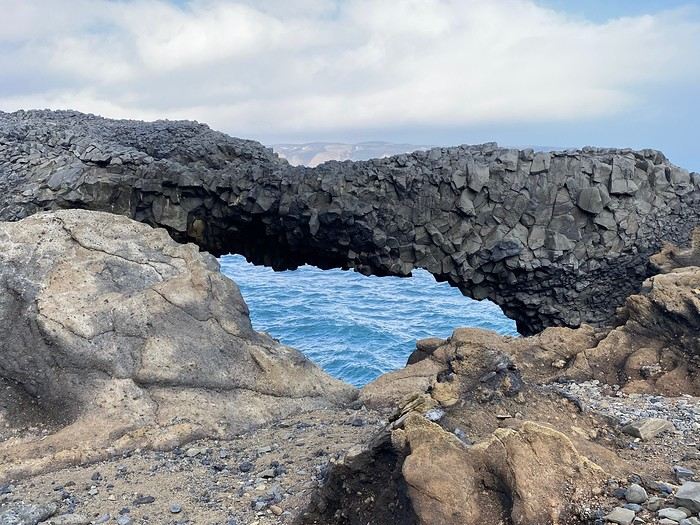
Dyrhólaey has two viewpoints. On the right, you climb up to a promontory that rises 120 meters above the ocean, and if I can give you one piece of advice, it’s to hold onto your car door tightly when you open it and not to open both opposite doors at the same time—otherwise, you risk seeing all your belongings and papers fly away! The wind is really strong up there! The invigorating walk around the lighthouse offers breathtaking views of the cliffs, a beautiful arch, and a beach. Lots of birds circle around us and dive into the sea.
Black sand beaches are iconic in volcanic regions. Iceland has many of them, bordered by blue water that washes over the sand, leaving a strip of foam. From above, the scene is incredibly striking.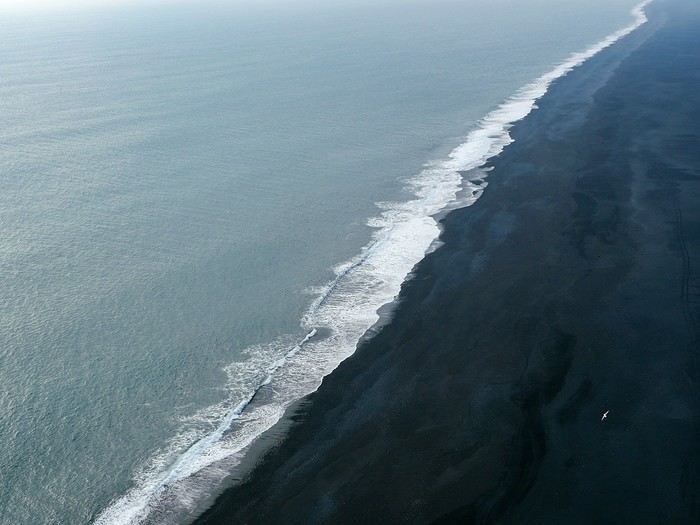
From the other viewpoint at Dyrhólaey Cape—by going straight when arriving from Route 1—you get a sweeping view of Reynisfjara Beach. You can spot a few puffins in flight, but not many; in the afternoon, they’re out at sea fishing, and it’s only the start of the breeding season, so not all of them have arrived yet. We console ourselves by watching the seagulls against the backdrop of volcanic cliffs and the panoramic view. The rocky stacks you see offshore from Reynisfjara are the Reynisdrangar. Icelandic legends say these are trolls that turned to stone at sea, trapped by the rising sun.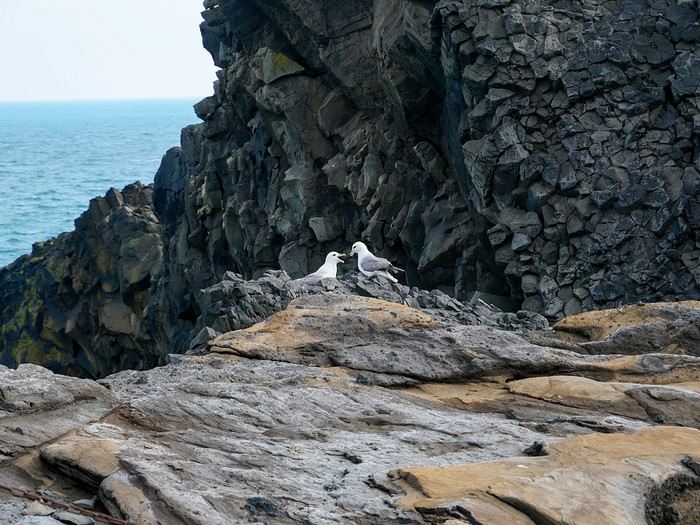
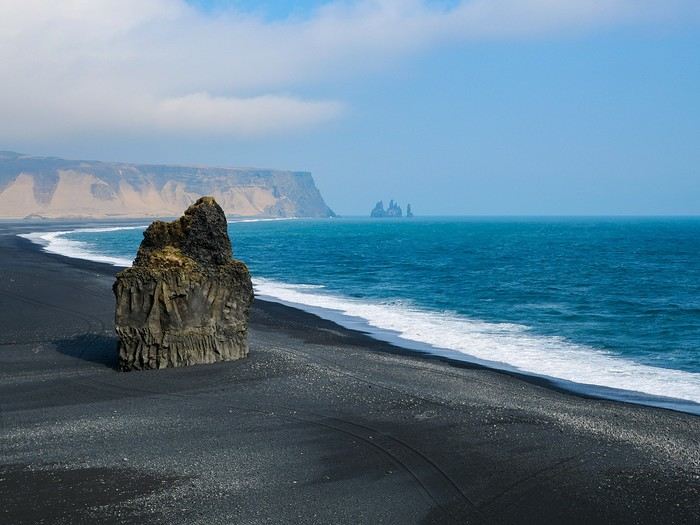
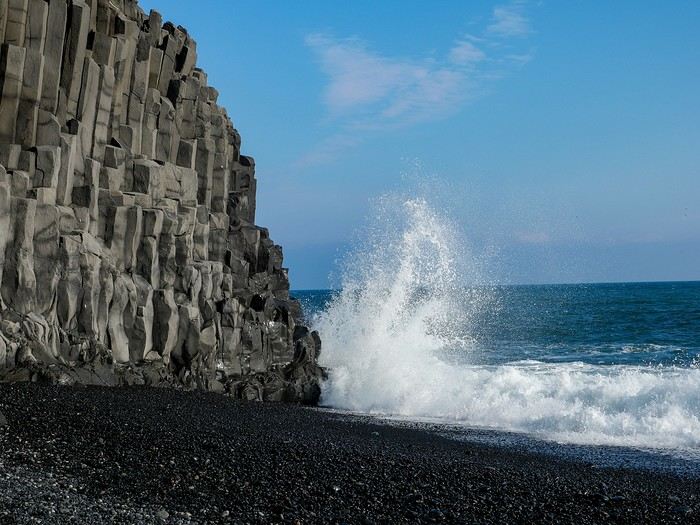
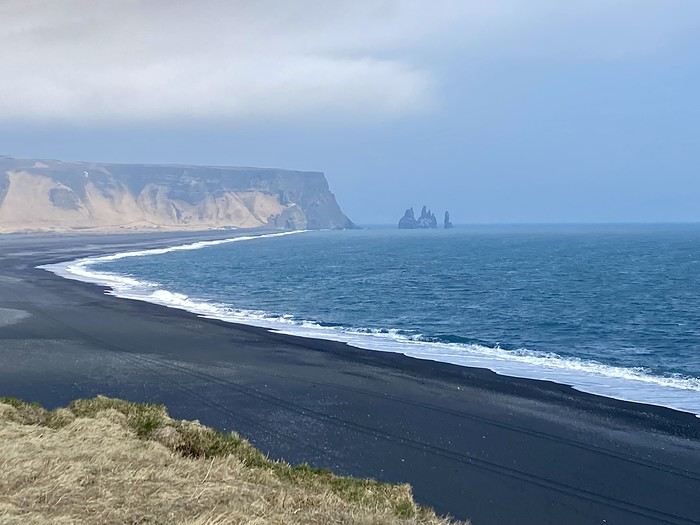 Even though it’s right at the foot of Dyrhólaey’s cliffs, you have to take Route 1 and drive 17 km to reach Reynisfjara Beach, considered the most beautiful in Iceland and one of the top 10 in the world—no small feat! Here, you truly feel the power of the ocean as it crashes against the basalt columns at the end of the beach and the Reynisdrangar. The roar matches the intensity of the currents. Some waves are much stronger than others and can surprise you by surging high up the beach. It’s best not to get swept away—some people have lost their lives here!
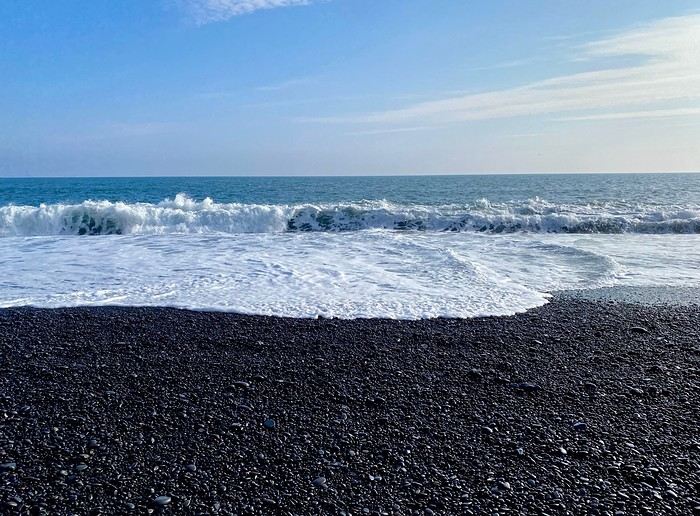
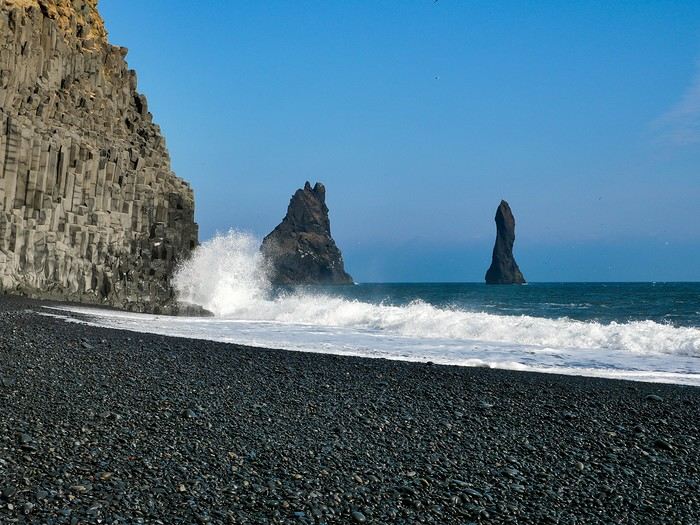
 We approach the small cave formed by erosion in the basalt columns on the left side of the beach, but there are too many people crowded there. The Instagram "stars" have all gathered here! They spend hours striking poses in outfits that are super adapted to the Icelandic climate (spaghetti-strap dresses, high heels, crop tops...). It’s both hilarious and unbearable (FYI, they’re the same ones you’ll see in front of every waterfall!).
While chatting with some Spaniards at the hotel restaurant that evening, the woman shows me her photos taken at the end of the day at Dyrhólaey. I’m disappointed—she saw several puffins near their nests on the cliff. We weren’t there at the right time :(
Black sand beaches are iconic in volcanic regions. Iceland has many of them, bordered by blue water that washes over the sand, leaving a strip of foam. From above, the scene is incredibly striking.
From the other viewpoint at Dyrhólaey Cape—by going straight when arriving from Route 1—you get a sweeping view of Reynisfjara Beach. You can spot a few puffins in flight, but not many; in the afternoon, they’re out at sea fishing, and it’s only the start of the breeding season, so not all of them have arrived yet. We console ourselves by watching the seagulls against the backdrop of volcanic cliffs and the panoramic view. The rocky stacks you see offshore from Reynisfjara are the Reynisdrangar. Icelandic legends say these are trolls that turned to stone at sea, trapped by the rising sun.
While chatting with some Spaniards at the hotel restaurant that evening, the woman shows me her photos taken at the end of the day at Dyrhólaey. I’m disappointed—she saw several puffins near their nests on the cliff. We weren’t there at the right time :(
