

Re: Southern Shikoku: Between Land and Sea, to the Blue Waters of Miyakojima and Ending in the Megacity T
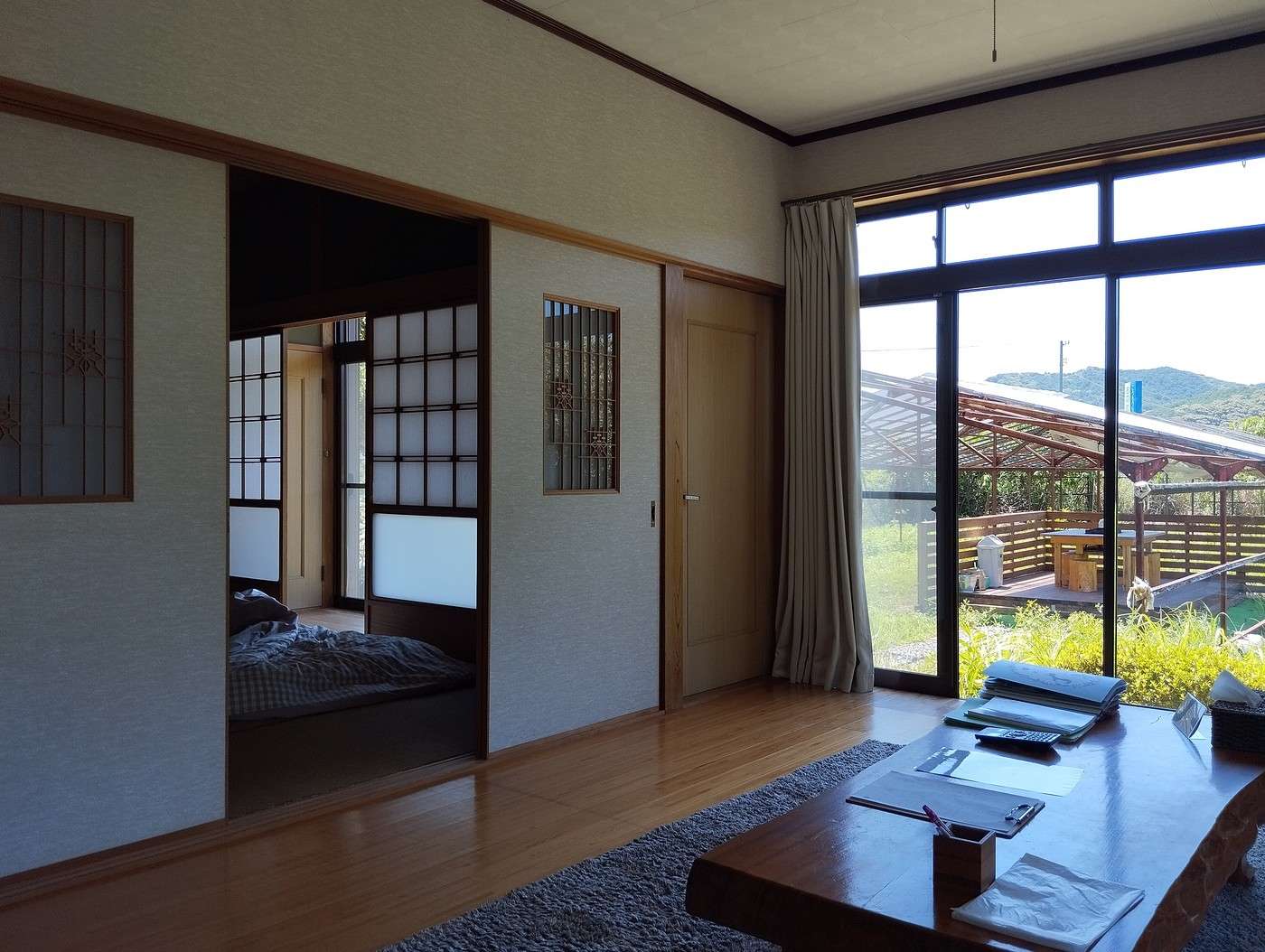
Since I’m sick and pretty exhausted, I rested this morning by sleeping in to recharge. When we finally got up, we slid open the rice-paper panels on the garden side, letting us enjoy the view of the garden through the glass doors. The sun flooded the room. Everything was quiet. Lying on our futons, we savored this simple moment of pleasure in this really charming house.
We enjoyed our breakfast quietly, cozily settled under the pergola in the garden, where we could see the house from a different angle. We also spotted an elderly couple dressed head-to-toe to protect themselves from the sun. They were gardening.
Heading out in the early afternoon, we discovered the “village” under the sun.
We made our way to Shimanto Station, where the tourist office is also nearby. We picked up some info and, most importantly, I asked about the possibility of a traditional boat excursion on the Shimanto River. Lucky day—a boatman was offering the classic tour but in the evening since it was combined with a firefly “hunt.” Without hesitation, we went for that option. Meet-up at 7 PM tonight.
The Shimanto River is considered one of Japan’s wildest because it has no dams. It flows directly from dense forests without interruption. It passes through very little urban area, so it’s seen as a natural, clear river—one of, if not the last of its kind in Japan.
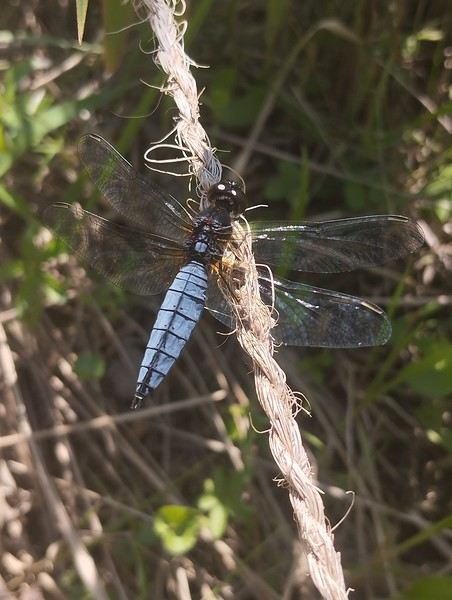
After that, we got back in the car to visit the dragonfly park not far away. It’s a free-access park. There were quite a few iris flowers still in bloom, and then we went dragonfly spotting. We saw a bunch—some were almost invisible, blending in with natural elements like a blade of grass. We counted 10 different types of dragonflies.
Next, we stopped by a local products store. We saw things like ginger oil and rice miso. You shouldn’t skip these shops because many products are only found in their regions. You might think, I’ll check it out later, but often you only stay a few days, and if you put it off, you’ll regret it because you won’t find those products again. It’s also a great way to learn more about Japanese cuisine.
We continued our little “shopping spree” by heading to a store that was closed last night, right next to the Sunny Mart—the equivalent of our garden/DIY store. We planned to have a barbecue but needed lighter fluid. Trying to make ourselves understood caused a bit of panic for the staff at first, but it always ended in laughter.
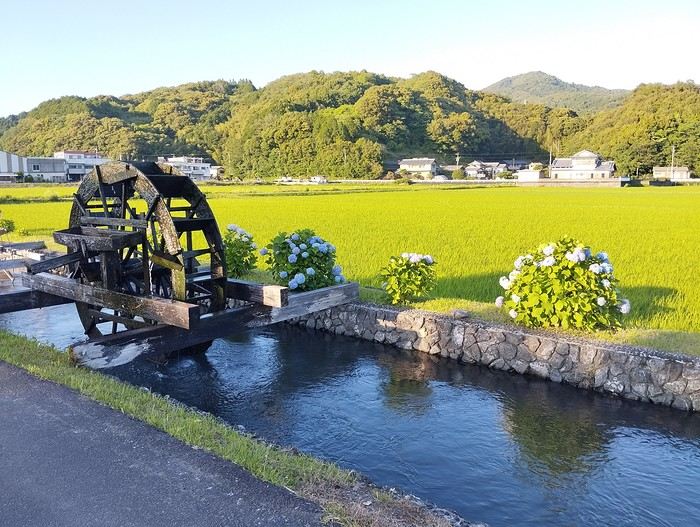
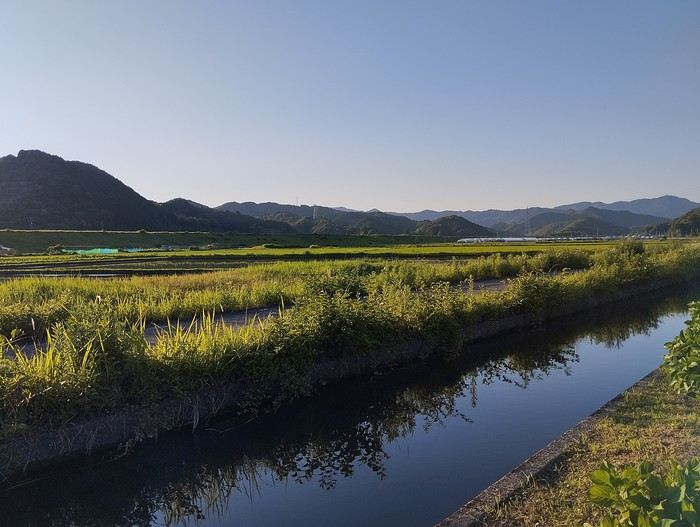
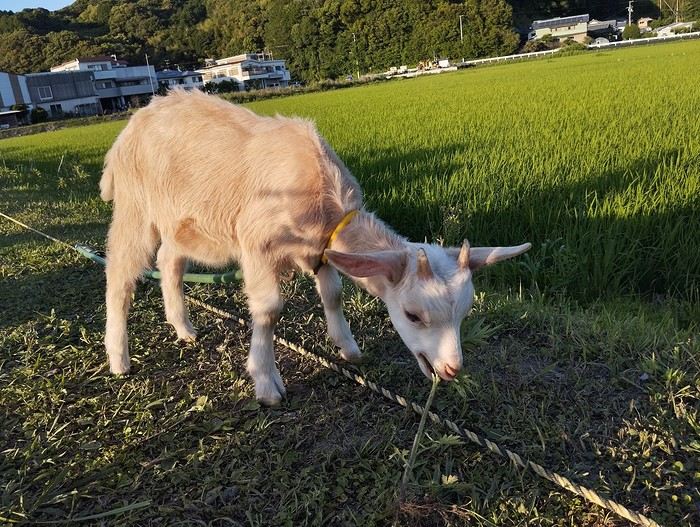
We still had some time before the boat ride but not enough for a big outing, so we stopped by the Shikamura Canal. It was built to divert water from the Aso River, a tributary of the Shimanto River, via a dam to irrigate four villages. Waterwheels were installed to pump water to the rice fields. Today, only a few of these wheels are still in use—the rest were set up for tourism and are maintained by the villagers. The site is in a rural, pastoral setting. It’s nicely arranged, and with the rice fields and the sun, the view is lovely. A few goats also live here for the enjoyment of passersby.
 It was time for the traditional boat ride. We arrived a little early, so they asked us to wait. We took the opportunity to snack on treats we’d bought at the konbini in previous days, including pieces of octopus. The taste was strongly briny with a slight “off” flavor, and the texture was rubbery. We can say we tried it, but we won’t be doing that again. But we also tried spicy squid appetizer crackers, and those we liked.

We enjoyed our breakfast quietly, cozily settled under the pergola in the garden, where we could see the house from a different angle. We also spotted an elderly couple dressed head-to-toe to protect themselves from the sun. They were gardening.
Heading out in the early afternoon, we discovered the “village” under the sun.
We made our way to Shimanto Station, where the tourist office is also nearby. We picked up some info and, most importantly, I asked about the possibility of a traditional boat excursion on the Shimanto River. Lucky day—a boatman was offering the classic tour but in the evening since it was combined with a firefly “hunt.” Without hesitation, we went for that option. Meet-up at 7 PM tonight.
The Shimanto River is considered one of Japan’s wildest because it has no dams. It flows directly from dense forests without interruption. It passes through very little urban area, so it’s seen as a natural, clear river—one of, if not the last of its kind in Japan.
After that, we got back in the car to visit the dragonfly park not far away. It’s a free-access park. There were quite a few iris flowers still in bloom, and then we went dragonfly spotting. We saw a bunch—some were almost invisible, blending in with natural elements like a blade of grass. We counted 10 different types of dragonflies.
Next, we stopped by a local products store. We saw things like ginger oil and rice miso. You shouldn’t skip these shops because many products are only found in their regions. You might think, I’ll check it out later, but often you only stay a few days, and if you put it off, you’ll regret it because you won’t find those products again. It’s also a great way to learn more about Japanese cuisine.
We continued our little “shopping spree” by heading to a store that was closed last night, right next to the Sunny Mart—the equivalent of our garden/DIY store. We planned to have a barbecue but needed lighter fluid. Trying to make ourselves understood caused a bit of panic for the staff at first, but it always ended in laughter.
We still had some time before the boat ride but not enough for a big outing, so we stopped by the Shikamura Canal. It was built to divert water from the Aso River, a tributary of the Shimanto River, via a dam to irrigate four villages. Waterwheels were installed to pump water to the rice fields. Today, only a few of these wheels are still in use—the rest were set up for tourism and are maintained by the villagers. The site is in a rural, pastoral setting. It’s nicely arranged, and with the rice fields and the sun, the view is lovely. A few goats also live here for the enjoyment of passersby.