

Day 6, Sunday, August 2: Valle Gran Rey/La Calera, El Guro-Las Granadas (Los Reyes gardens trail), Valle Gran Rey/La Calera
After yesterday’s hike, we’re taking it easy this morning. We kick things off with my Gomeran specialty for breakfast—this kind of gofio porridge with milk, palm honey, and banana. Super energizing! With another beautiful sunny day ahead, we head for our usual swim at La Calera beach, where the ocean is always perfect. Then it’s laundry and a quick shop at the Spar. For lunch, I spice up my garbanzos with some smoked pimentón and pair them with another local specialty: sweet potatoes and palm honey in foil. A winning combo! And then… siesta...
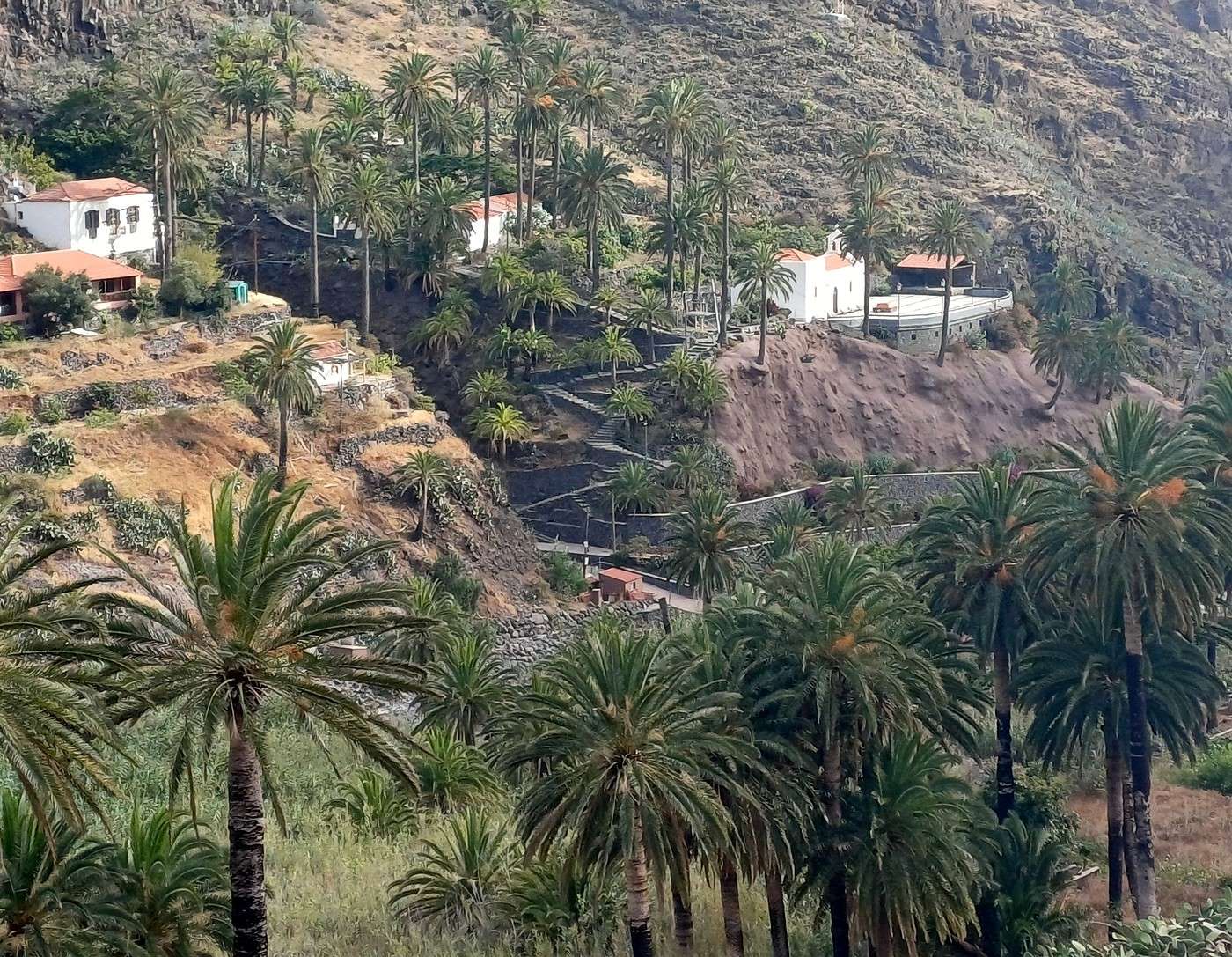
Later in the afternoon, Magali—who’s really taken a liking to the nearby village of El Guro—suggests a short hike of just over 2 kilometers. At 5:30 PM, it’s still scorching hot, and the sun is beating down. It’s not the awful heatwave hitting France right now, but the Canary Islands’ reputation for eternal spring takes a little hit—this weather is definitely summer vibes. We park in the same spot as before, on the side of the road in El Guro, where a trail supposedly leads up to the next village, Los Granados (or Las Granadas in Canarian dialect). First, we cross the valley floor, lined with little houses and plantations, to reach the cute white church of Los Reyes, perched on a volcanic rock outcrop at the end of a zigzag path through the palm trees.
Gardens? The sanctuary of Los Reyes? Oh, of course—we realize this is the famous Los Reyes gardens trail we’d been looking for without success on our first visit to El Guro! What threw us off is that it’s not a hiking trail but more of a stroll through the bancos (terraces) of fruit and vegetable crops that define the island’s visual identity: banana trees, palm trees, aloe vera, vines, sweet potatoes...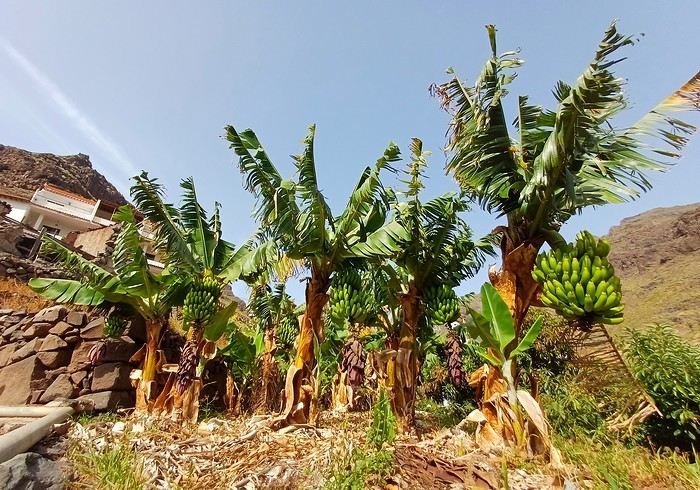
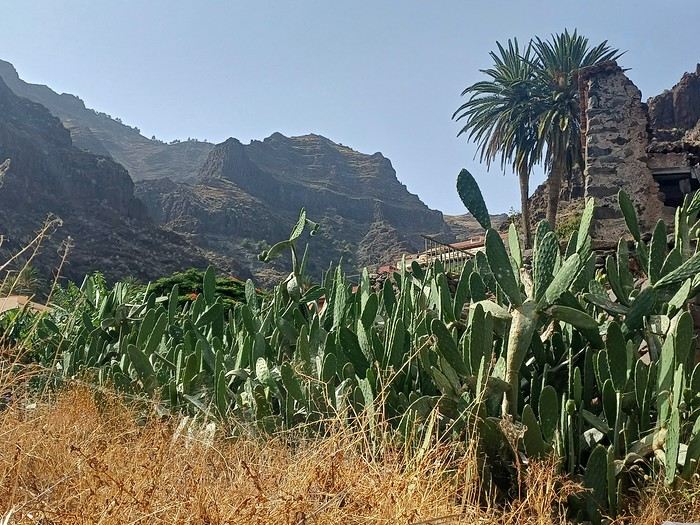 We descend one of the stone staircases leading to the gardens and weave our way through the colorful little houses of the farmers, past flowering trees with exquisite scents, terraces, enclosures, and even some abandoned small farms.
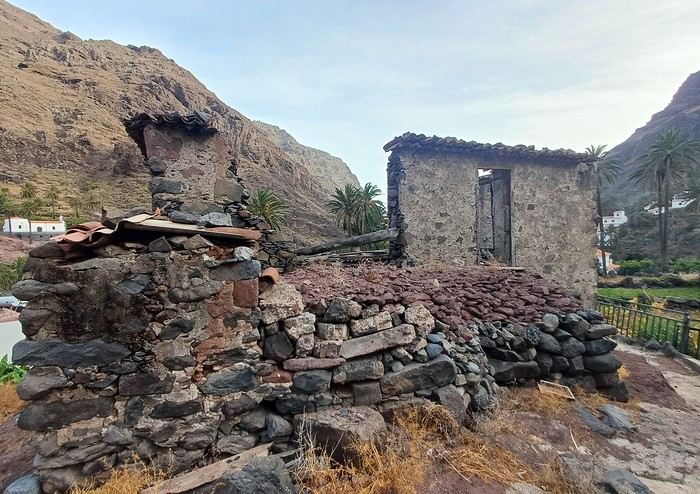
A few farmers are working, and elderly women sit in their doorways. We feel a bit like we’re intruding on the locals’ properties, but the “¡hola!” greetings show that no one seems to mind. Besides, as usual, we’re the only walkers around, and it’s a stunning, privileged spot to explore and learn. These gently sloping gardens stretch along the valley floor, apparently following the bed of a stream that dries up in summer. We’re right at the front row to observe the irrigation system seen all over La Gomera—though it might seem a bit old-school, it’s ingeniously adapted to the island’s geological quirks. Small channels drain water from springs and ravines into reservoir-like basins (which we’d mistaken for open-air wastewater tanks in the first few days), connected to networks of pipes that distribute water to the different crops.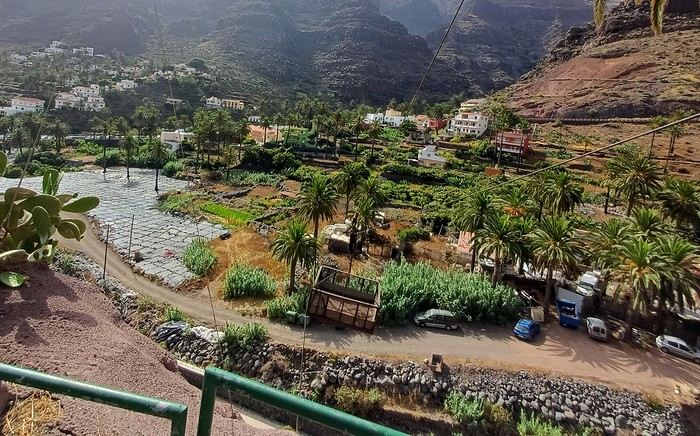
The walk through the gardens is short, but it’s not our main goal. We climb the winding paths up to the church (which isn’t anything special inside), and behind it, we find our trail, overlooking the gardens as it follows the slopes of the rugged Teguerguenche and Adivino.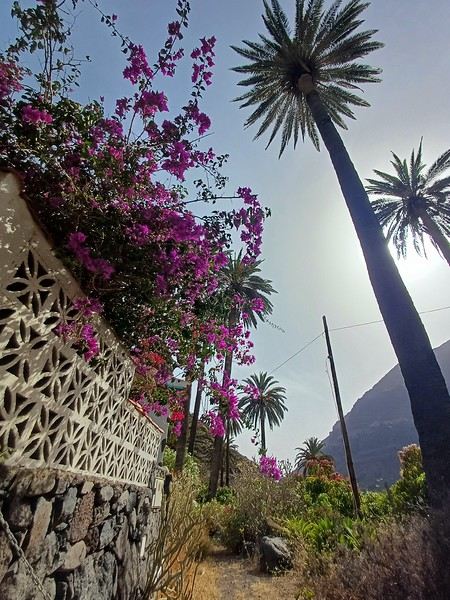
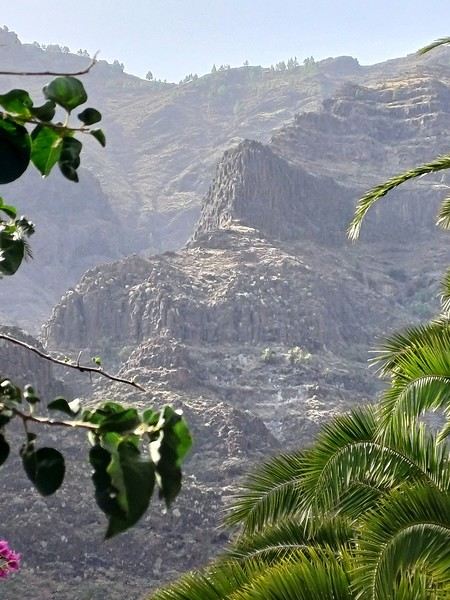 The rocky trail starts with a steep climb, then passes by houses, including one that’s absolutely fascinating—built in the shade of a volcanic cavity carved into the black rock.
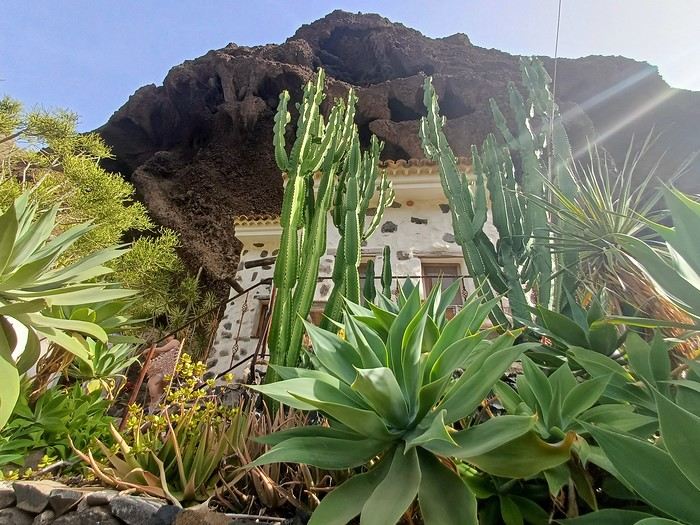
This house marks the entrance to the charming hamlet of Chele, nestled next to Las Granadas. The hike isn’t long, but the slope, the still-intense late-afternoon sun, and a not-so-energetic Théo make it a bit of a challenge. Instead of retracing our steps, we cross through El Guro in search of the only grocery store—unfortunately closed. Instead of taking the same trail back, we decide to loop around by descending the GM-1, the main road that winds down to Valle Gran Rey, one of La Gomera’s three major routes.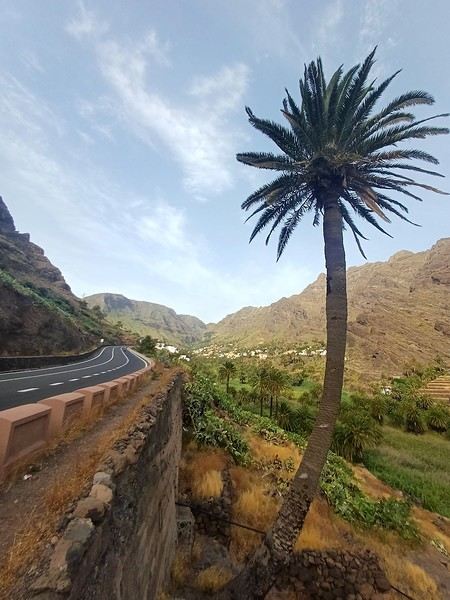
It turns out to be a great idea because, from one side of the valley to the other, we get a bird’s-eye view of the Los Reyes gardens from a different perspective than the narrow trail we’d walked earlier, visible in parallel on the other side of the crops. The road is also a quicker way back to the car.
After dinner, we take a little evening stroll along La Calera beach. It’s lively but not too crowded—the restaurants are full, but there aren’t many people on the coastal path where you can sit and watch the waves crash against the rocks.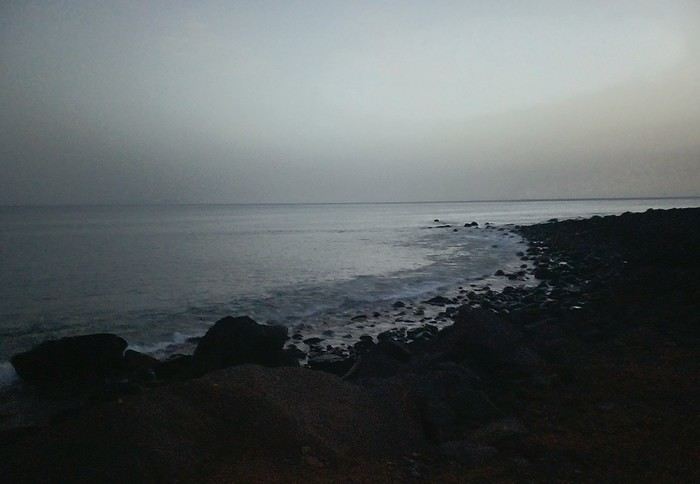
The kids can’t resist getting ice cream. On the way to Playa del Inglés, we hear the shearwaters, but much less than on other nights, which seems to confirm my theory about their activity depending on the moon. Théo tries to act tough, saying he’s not scared of them anymore with some over-the-top heroic gestures… but he still runs back to us, yelling for us to wait when we playfully try to lose him! We walk along the beach, where some brave souls are swimming in the middle of the night. We think we see the lights of El Hierro in the distance through the nighttime haze, but it might just be boats. Before heading back to Buena Vista, we sit on a low wall facing the beach. The hippie with the stranded-Hawaiian look is there, same spot as always, calmly settling in between the two trash containers that serve as his bed. Good night!
After yesterday’s hike, we’re taking it easy this morning. We kick things off with my Gomeran specialty for breakfast—this kind of gofio porridge with milk, palm honey, and banana. Super energizing! With another beautiful sunny day ahead, we head for our usual swim at La Calera beach, where the ocean is always perfect. Then it’s laundry and a quick shop at the Spar. For lunch, I spice up my garbanzos with some smoked pimentón and pair them with another local specialty: sweet potatoes and palm honey in foil. A winning combo! And then… siesta...
Later in the afternoon, Magali—who’s really taken a liking to the nearby village of El Guro—suggests a short hike of just over 2 kilometers. At 5:30 PM, it’s still scorching hot, and the sun is beating down. It’s not the awful heatwave hitting France right now, but the Canary Islands’ reputation for eternal spring takes a little hit—this weather is definitely summer vibes. We park in the same spot as before, on the side of the road in El Guro, where a trail supposedly leads up to the next village, Los Granados (or Las Granadas in Canarian dialect). First, we cross the valley floor, lined with little houses and plantations, to reach the cute white church of Los Reyes, perched on a volcanic rock outcrop at the end of a zigzag path through the palm trees.
Gardens? The sanctuary of Los Reyes? Oh, of course—we realize this is the famous Los Reyes gardens trail we’d been looking for without success on our first visit to El Guro! What threw us off is that it’s not a hiking trail but more of a stroll through the bancos (terraces) of fruit and vegetable crops that define the island’s visual identity: banana trees, palm trees, aloe vera, vines, sweet potatoes...
A few farmers are working, and elderly women sit in their doorways. We feel a bit like we’re intruding on the locals’ properties, but the “¡hola!” greetings show that no one seems to mind. Besides, as usual, we’re the only walkers around, and it’s a stunning, privileged spot to explore and learn. These gently sloping gardens stretch along the valley floor, apparently following the bed of a stream that dries up in summer. We’re right at the front row to observe the irrigation system seen all over La Gomera—though it might seem a bit old-school, it’s ingeniously adapted to the island’s geological quirks. Small channels drain water from springs and ravines into reservoir-like basins (which we’d mistaken for open-air wastewater tanks in the first few days), connected to networks of pipes that distribute water to the different crops.
The walk through the gardens is short, but it’s not our main goal. We climb the winding paths up to the church (which isn’t anything special inside), and behind it, we find our trail, overlooking the gardens as it follows the slopes of the rugged Teguerguenche and Adivino.
This house marks the entrance to the charming hamlet of Chele, nestled next to Las Granadas. The hike isn’t long, but the slope, the still-intense late-afternoon sun, and a not-so-energetic Théo make it a bit of a challenge. Instead of retracing our steps, we cross through El Guro in search of the only grocery store—unfortunately closed. Instead of taking the same trail back, we decide to loop around by descending the GM-1, the main road that winds down to Valle Gran Rey, one of La Gomera’s three major routes.
It turns out to be a great idea because, from one side of the valley to the other, we get a bird’s-eye view of the Los Reyes gardens from a different perspective than the narrow trail we’d walked earlier, visible in parallel on the other side of the crops. The road is also a quicker way back to the car.
After dinner, we take a little evening stroll along La Calera beach. It’s lively but not too crowded—the restaurants are full, but there aren’t many people on the coastal path where you can sit and watch the waves crash against the rocks.
The kids can’t resist getting ice cream. On the way to Playa del Inglés, we hear the shearwaters, but much less than on other nights, which seems to confirm my theory about their activity depending on the moon. Théo tries to act tough, saying he’s not scared of them anymore with some over-the-top heroic gestures… but he still runs back to us, yelling for us to wait when we playfully try to lose him! We walk along the beach, where some brave souls are swimming in the middle of the night. We think we see the lights of El Hierro in the distance through the nighttime haze, but it might just be boats. Before heading back to Buena Vista, we sit on a low wall facing the beach. The hippie with the stranded-Hawaiian look is there, same spot as always, calmly settling in between the two trash containers that serve as his bed. Good night!
