

Re: Tuscany: Arezzo province and the area around Siena
I start by heading to Bibbiena (the largest town in the Casentino) to pick up some tourist information and take a quick tour of the town, strolling through the streets of the historic center, lined with numerous "palazzi".
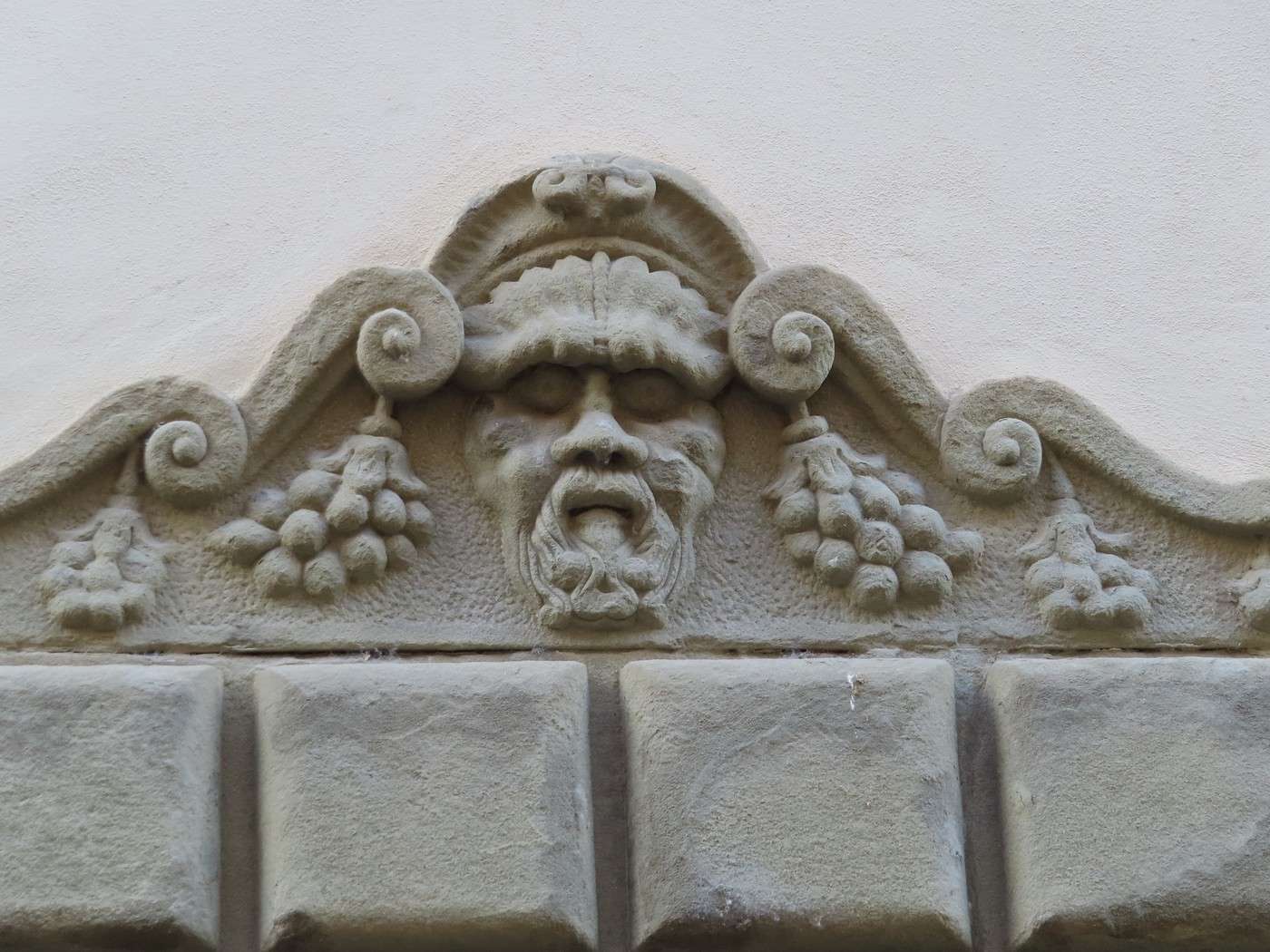
Palazzo Marcucci-Mazzoleni: decoration above the windows (Seicento).
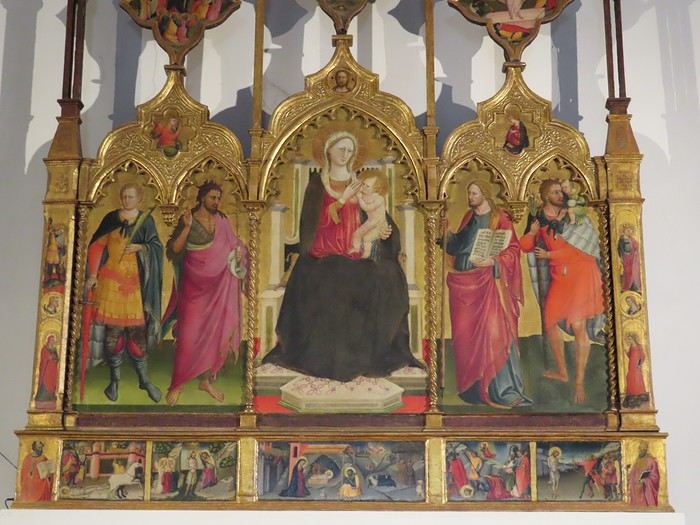
I enter the "Propositura dei Santi Ippolito e Donato" (a church with special privileges ) with a beautiful interior that houses several works of art, including a triptych by Bicci di Lorenzo (1435).
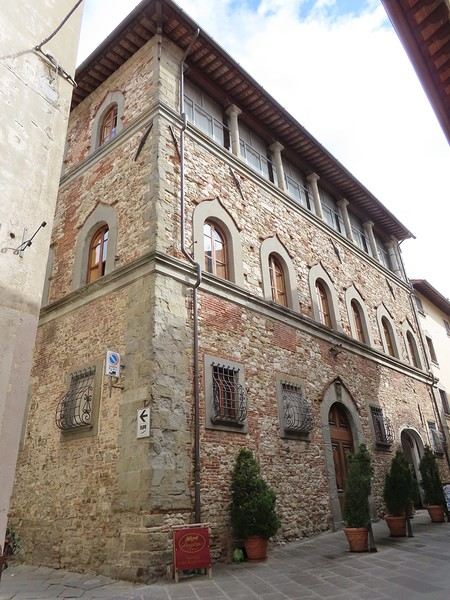
The main street in Bibbiena is named (via Dovizi) after the eponymous cardinal who lived during the Renaissance and had the building constructed: Palazzo Dovizi, early Cinquecento.
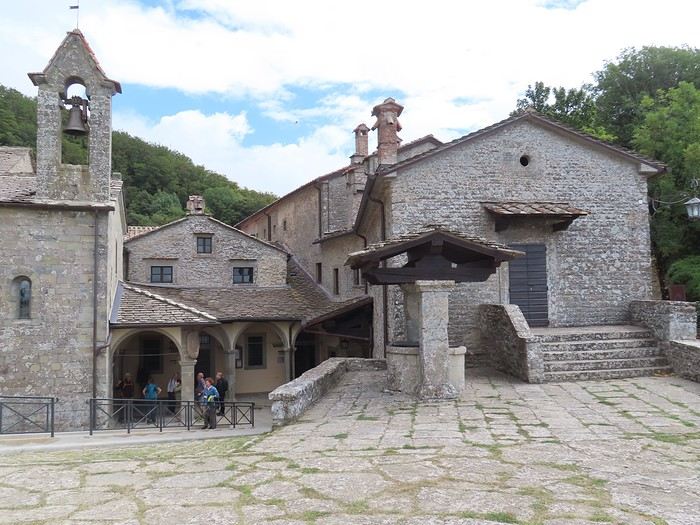
I then take the road to Chiusi della Verna, passing through it to climb up to the Sanctuary of La Verna (Santuario della Verna), a place linked to Saint Francis of Assisi. We’re in the mountains, at over 1,100 meters above sea level, in the "Parco Nazionale delle Foreste Casentinesi" (at the southern edge of the national park). Among the many hikes you can do, you can go to Monte Penna, but I stay within the sanctuary. From the square (called "Il Quadrante"), you can see the porch and the bell tower of the small church "Santa Maria degli Angeli" as well as the buildings of the old part of the monastery. Construction of this church began during the lifetime of Saint Francis of Assisi, or so it’s said.
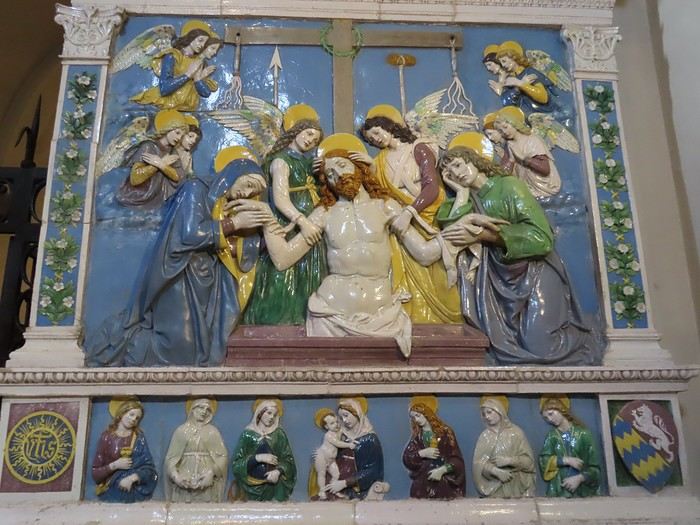
It contains an enameled terracotta by Andrea della Robbia (before 1493): Cristo in Pietà. This one is polychrome, but the della Robbias made many in blue and white. The "della Robbia" family is a family of Florentine sculptors specializing in enameled or glazed terracotta. The family workshop produced many pieces found throughout Tuscany, especially in churches.
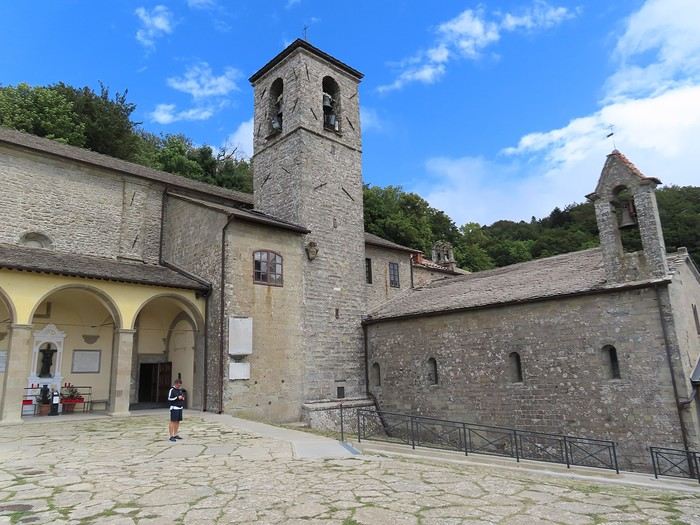
From the square (Il Quadrante) in front of the large church, the view of the surroundings (Alpe di Catinaia) is expansive. This large church (basilica) was built later, at the end of Santa Maria degli Angeli (visible on the right); you can see the bell tower and the start of the portico.
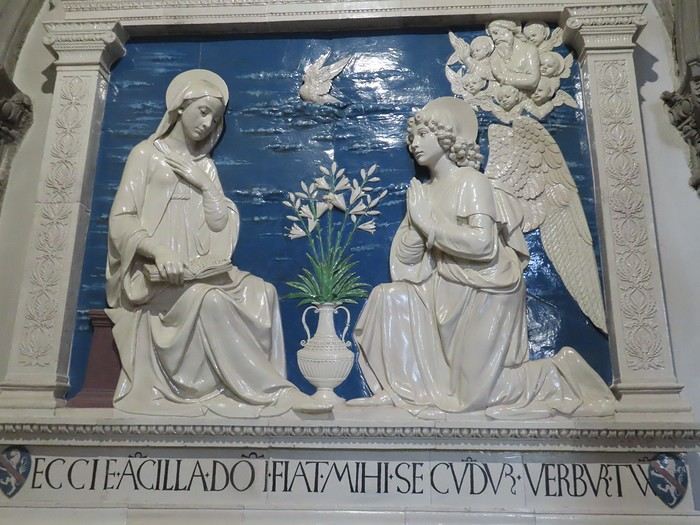
The ceramicists of the "della Robbia" family also received commissions for the large church and other places in the sanctuary. This "Annunciation" is one of the masterpieces by Andrea della Robbia.
The portico adjoining the large church extends into a corridor called the Corridor of the Stigmata, at the end of which is the spot where Saint Francis of Assisi received the stigmata in 1224 (the miracle of the stigmata). At the entrance to the corridor, there’s another enameled terracotta, a Pietà by Santi Buglioni (1532-1535). Santi Buglioni was a ceramicist who lived after the della Robbias, in the Cinquecento.
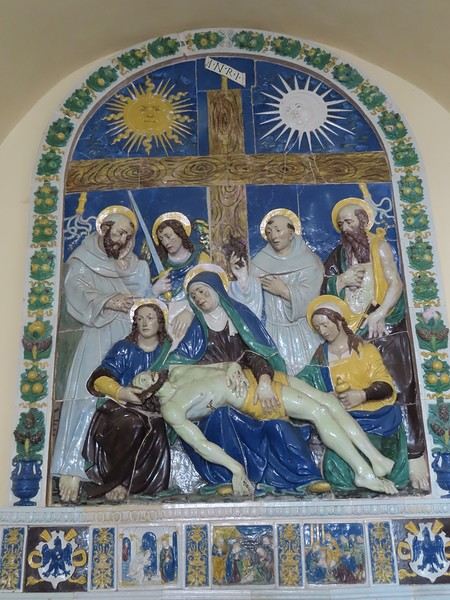
Finally, at the end of the Corridor of the Stigmata, a chapel was built that houses another enameled terracotta by Andrea della Robbia: Crucifixion (around 1481). Its dimensions (6m x 4.20m) are such that I wonder how it was made and/or transported, then installed in situ. To be continued in the next post.
I enter the "Propositura dei Santi Ippolito e Donato" (a church with special privileges ) with a beautiful interior that houses several works of art, including a triptych by Bicci di Lorenzo (1435).
The main street in Bibbiena is named (via Dovizi) after the eponymous cardinal who lived during the Renaissance and had the building constructed: Palazzo Dovizi, early Cinquecento.
I then take the road to Chiusi della Verna, passing through it to climb up to the Sanctuary of La Verna (Santuario della Verna), a place linked to Saint Francis of Assisi. We’re in the mountains, at over 1,100 meters above sea level, in the "Parco Nazionale delle Foreste Casentinesi" (at the southern edge of the national park). Among the many hikes you can do, you can go to Monte Penna, but I stay within the sanctuary. From the square (called "Il Quadrante"), you can see the porch and the bell tower of the small church "Santa Maria degli Angeli" as well as the buildings of the old part of the monastery. Construction of this church began during the lifetime of Saint Francis of Assisi, or so it’s said.
It contains an enameled terracotta by Andrea della Robbia (before 1493): Cristo in Pietà. This one is polychrome, but the della Robbias made many in blue and white. The "della Robbia" family is a family of Florentine sculptors specializing in enameled or glazed terracotta. The family workshop produced many pieces found throughout Tuscany, especially in churches.
From the square (Il Quadrante) in front of the large church, the view of the surroundings (Alpe di Catinaia) is expansive. This large church (basilica) was built later, at the end of Santa Maria degli Angeli (visible on the right); you can see the bell tower and the start of the portico.
The ceramicists of the "della Robbia" family also received commissions for the large church and other places in the sanctuary. This "Annunciation" is one of the masterpieces by Andrea della Robbia.
The portico adjoining the large church extends into a corridor called the Corridor of the Stigmata, at the end of which is the spot where Saint Francis of Assisi received the stigmata in 1224 (the miracle of the stigmata). At the entrance to the corridor, there’s another enameled terracotta, a Pietà by Santi Buglioni (1532-1535). Santi Buglioni was a ceramicist who lived after the della Robbias, in the Cinquecento.
Finally, at the end of the Corridor of the Stigmata, a chapel was built that houses another enameled terracotta by Andrea della Robbia: Crucifixion (around 1481). Its dimensions (6m x 4.20m) are such that I wonder how it was made and/or transported, then installed in situ. To be continued in the next post.