

Re: Southern Shikoku: Between Land and Sea, the Blue Waters of Miyakojima, and Ending in the Megacity T
The sun has set, but it’s not quite night yet.
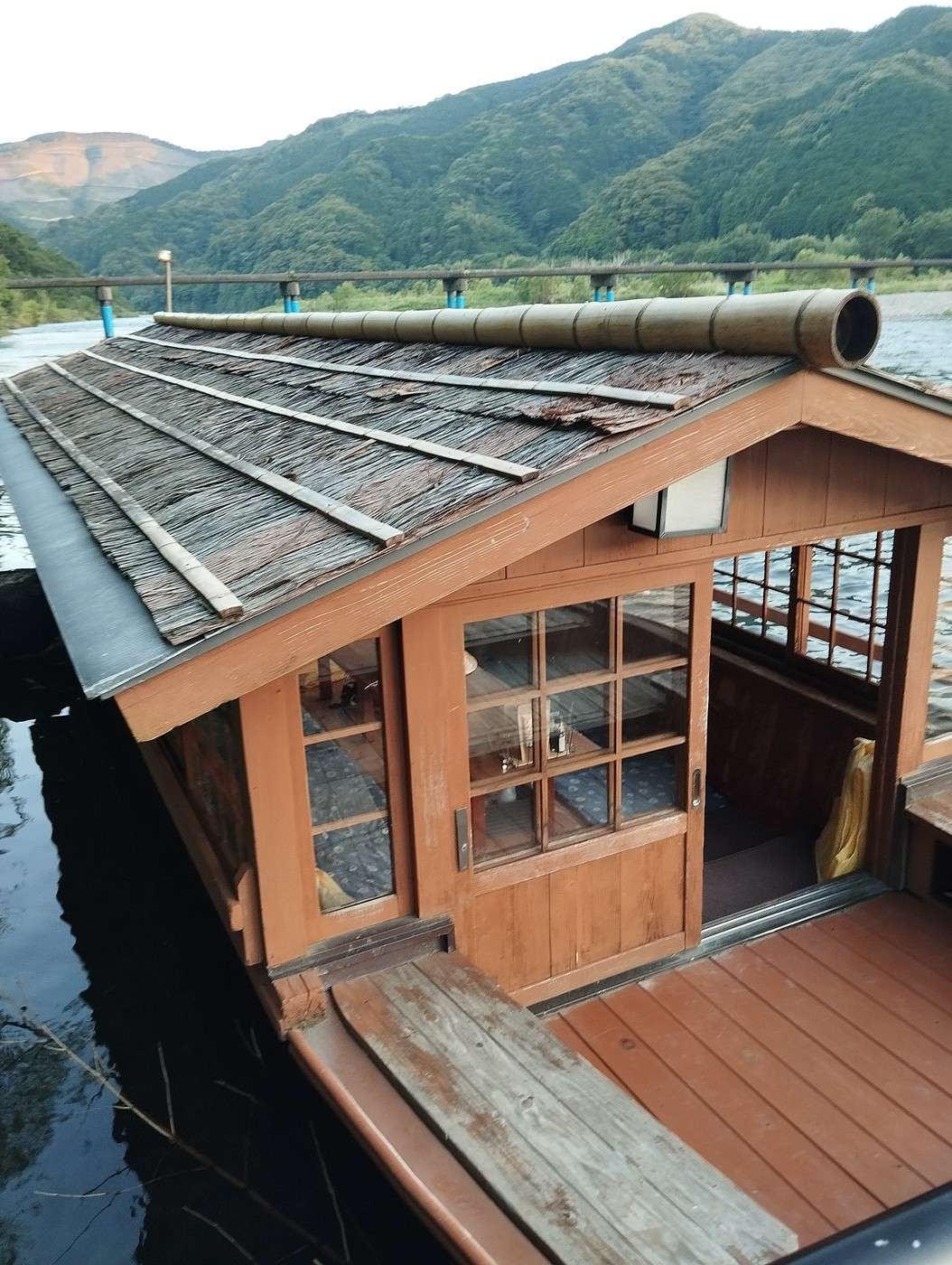
We board the beautiful traditional boat called a Yakatabune. Here too, we have to take off our shoes. Inside, a long low table divides the space into two parts. The boatman arranges the passengers by size and weight to balance the boat. Once everyone is settled, we start sailing. The boat has windows that can be slid open to feel the air and see outside.
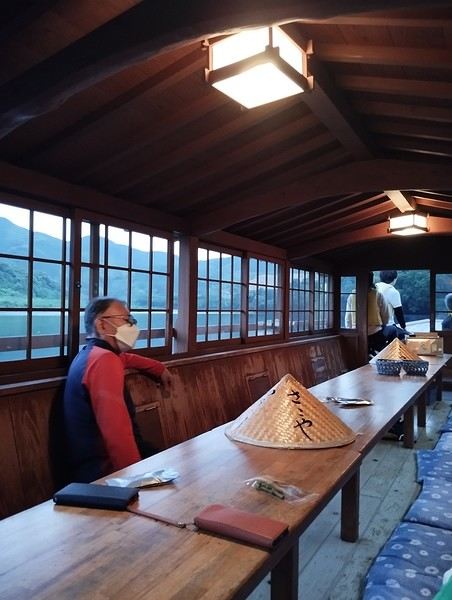
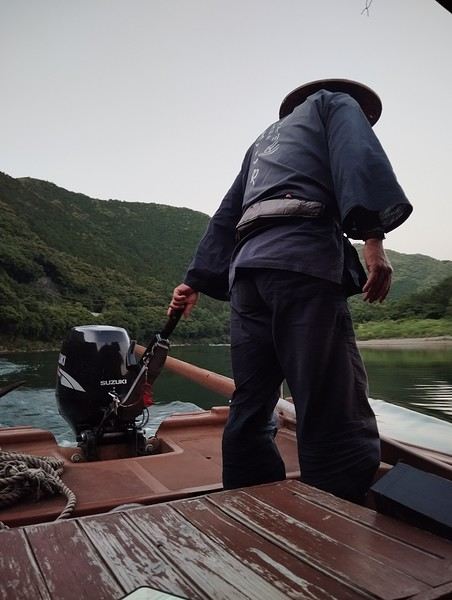
The boatman is really friendly. He explains a lot, even for us two—the only foreigners in the group—thanks mainly to the voice translator. The boatman used to be a fisherman, so he knows the river very well. We can see some photos of him in a small photo album he leaves available on the boat. He offers us some small Japanese appetizer treats. He tells us the river is 3 meters wide and the longest on Shikoku. You can fish for shrimp and eel here, among other things. We also learn that plastic bottles with trash are used to mark where fishermen’s nets are. He says some Japanese tourists think they’re just litter. I joke that maybe they want to pick them up. At that, the boatman bursts into laughter—a mix of shock at the idea and sheer amusement. He quickly tells me that could never happen because those plastic bottles are private property, and picking them up would be a crime.
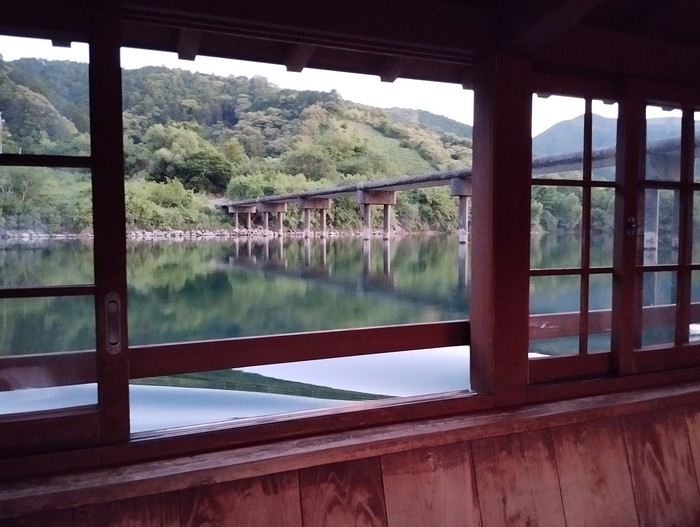
We pass under one of the region’s submersible bridges. They’re called Chinkabashi. These are bridges without railings, and they’re quite low. They were designed this way to reduce the risk of being washed away by floods.
We enjoy the tranquility of the river, being the only ones out for a ride. The boatman also tells us that the colder the water, the clearer it is. However, the color of the water—sometimes emerald, sometimes blue—seems to depend on the season.
Once night falls, we can see fireflies in different spots, glowing in groups. They shine with a bright light. It’s a natural spectacle best enjoyed in silence, punctuated by a few “kirei” (beautiful/pretty) and “kawaii” (cute) from the older Japanese woman sitting next to me, who marvels with the innocence of an 8-year-old. And it’s true—watching fireflies feels magical. You’re in the dark, waiting carefully, and when the night lights up with tiny glowing dots, it’s pure joy. Apparently, here in Shimanto, you can start seeing them as early as April, depending on the year. The boatman asks if we have this kind of activity in France. For the firefly-watching part, the boatman uses an oar to guide the boat closer to the shore once the motor is turned off. The word for firefly is hotaru.
The excursion lasted 2 hours. At the dock, a young man waits to help us back ashore.
We had planned to eat at the barbecue house, but given the time, we change our plans and decide to go to the izakaya recommended by our host. But it’s now 10 PM, and eating late in Japan is an adventure. When we arrive, the woman who greets us starts by saying no, then hesitates, thinks about it, goes to ask the chef, and finally tells us okay to eat—but we have to leave in 45 minutes. We say yes because we know we won’t find anywhere else easily—or maybe at all.
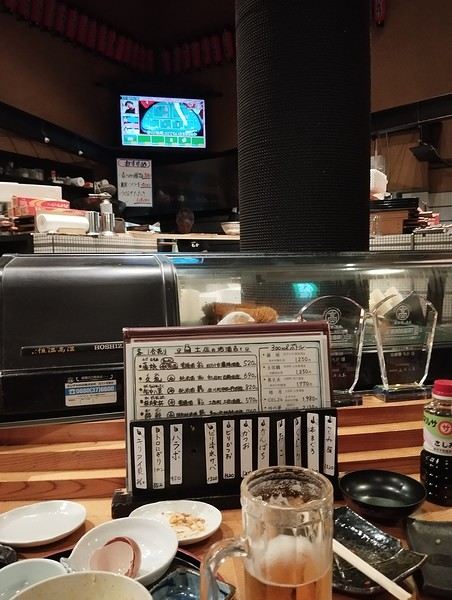
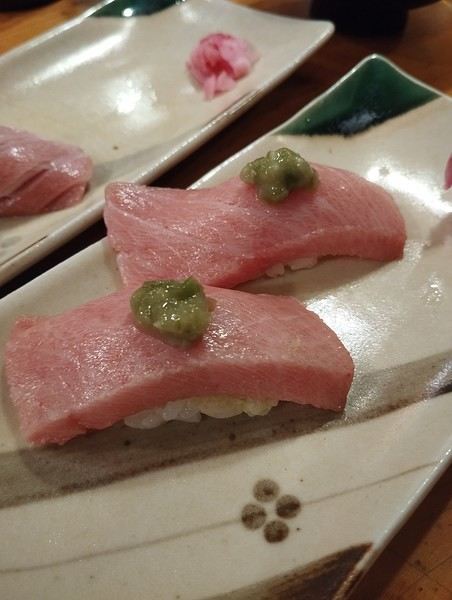
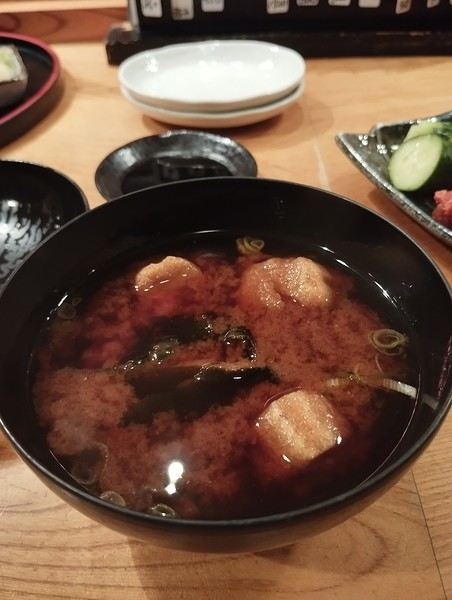
The vibe at this izakaya is really nice. We sit in a circle at the bar, with the TV in the background, customers chatting, and lots of chefs busy cooking, cleaning, and tidying up. We order quickly, so we don’t have much time to look at the menu, but we end up loving it: the miso broth is excellent, the fried chicken karaage is amazing, the fatty tuna sushi is delicious, and the grilled rice onigiri—plus the cucumber—are all great. We chat a bit with the servers, especially one energetic grandma who notices I’m learning Japanese and announces it to the chefs, sparking some conversation. In short, it was short but sweet. We head back home afterward. Time to sleep.
The boatman is really friendly. He explains a lot, even for us two—the only foreigners in the group—thanks mainly to the voice translator. The boatman used to be a fisherman, so he knows the river very well. We can see some photos of him in a small photo album he leaves available on the boat. He offers us some small Japanese appetizer treats. He tells us the river is 3 meters wide and the longest on Shikoku. You can fish for shrimp and eel here, among other things. We also learn that plastic bottles with trash are used to mark where fishermen’s nets are. He says some Japanese tourists think they’re just litter. I joke that maybe they want to pick them up. At that, the boatman bursts into laughter—a mix of shock at the idea and sheer amusement. He quickly tells me that could never happen because those plastic bottles are private property, and picking them up would be a crime.
We pass under one of the region’s submersible bridges. They’re called Chinkabashi. These are bridges without railings, and they’re quite low. They were designed this way to reduce the risk of being washed away by floods.
We enjoy the tranquility of the river, being the only ones out for a ride. The boatman also tells us that the colder the water, the clearer it is. However, the color of the water—sometimes emerald, sometimes blue—seems to depend on the season.
Once night falls, we can see fireflies in different spots, glowing in groups. They shine with a bright light. It’s a natural spectacle best enjoyed in silence, punctuated by a few “kirei” (beautiful/pretty) and “kawaii” (cute) from the older Japanese woman sitting next to me, who marvels with the innocence of an 8-year-old. And it’s true—watching fireflies feels magical. You’re in the dark, waiting carefully, and when the night lights up with tiny glowing dots, it’s pure joy. Apparently, here in Shimanto, you can start seeing them as early as April, depending on the year. The boatman asks if we have this kind of activity in France. For the firefly-watching part, the boatman uses an oar to guide the boat closer to the shore once the motor is turned off. The word for firefly is hotaru.
The excursion lasted 2 hours. At the dock, a young man waits to help us back ashore.
We had planned to eat at the barbecue house, but given the time, we change our plans and decide to go to the izakaya recommended by our host. But it’s now 10 PM, and eating late in Japan is an adventure. When we arrive, the woman who greets us starts by saying no, then hesitates, thinks about it, goes to ask the chef, and finally tells us okay to eat—but we have to leave in 45 minutes. We say yes because we know we won’t find anywhere else easily—or maybe at all.
The vibe at this izakaya is really nice. We sit in a circle at the bar, with the TV in the background, customers chatting, and lots of chefs busy cooking, cleaning, and tidying up. We order quickly, so we don’t have much time to look at the menu, but we end up loving it: the miso broth is excellent, the fried chicken karaage is amazing, the fatty tuna sushi is delicious, and the grilled rice onigiri—plus the cucumber—are all great. We chat a bit with the servers, especially one energetic grandma who notices I’m learning Japanese and announces it to the chefs, sparking some conversation. In short, it was short but sweet. We head back home afterward. Time to sleep.