
Re: Tuscany: Arezzo province and the area around Siena
After lunch in Chiusi della Verna, I head to Caprese Michelangelo (formerly Caprese), the birthplace of Michelangelo Buonarroti.
Caprese had placed itself under the protection of Florence; the Republic appointed podestàs (citizens of Florence), who took turns every six months to administer, dispense justice, and so on. Michelangelo’s father was podestà in Caprese at the time of his son’s birth (March 6, 1475).
On the castle grounds stands the Michelangelo Birthplace Museum, where he was born in the podesteria (the podestà’s residence), a rather beautiful building.
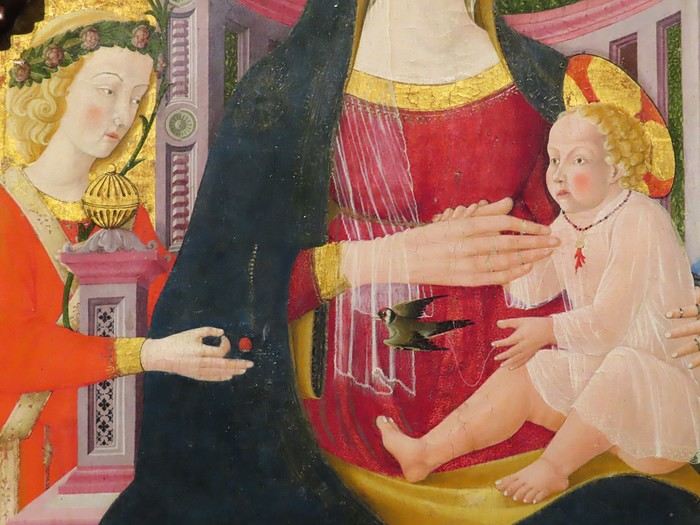
The podestà carried out his duties on the ground floor; he lived on the first floor, where Michelangelo’s birth room is located. The museum displays a triptych by Giuliano Amidei (Madonna col Bambino; around 1480) from an abbey in the area. The painter included a rare detail in this "Virgin and Child": a cardinal flies from the child’s hands toward a cherry offered by a figure.
The museum also features documents about Michelangelo’s birth and plaster casts of some of his famous sculptures.
Now, let’s move to the Sistine Chapel in the Vatican. Michelangelo painted a scene on the ceiling depicting the creation of Adam.
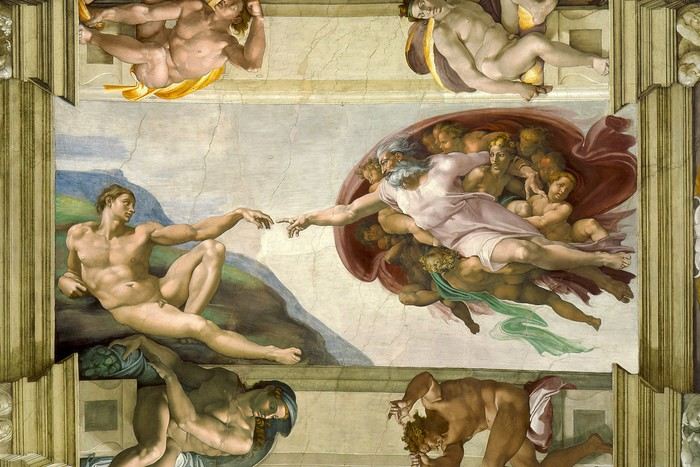
Adam is leaning against a sloping rock with a mountain in the background. As with many works of the Italian Renaissance, art historians have studied the landscape depicted here. Some theories suggest it may be inspired by Chiusi della Verna;
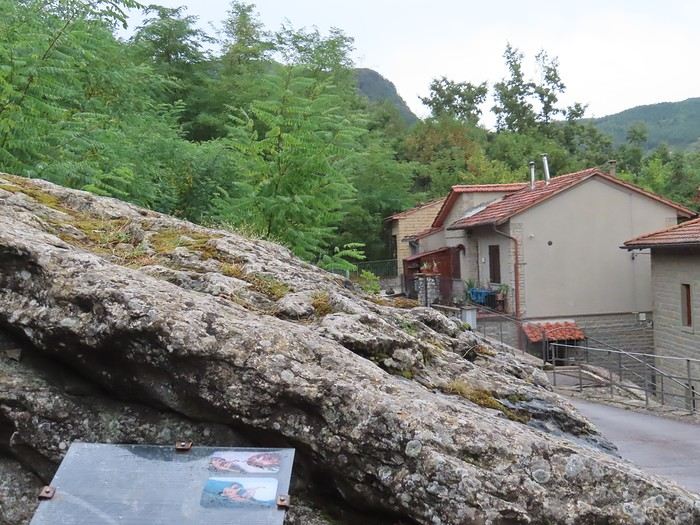
This rock is just a few meters from the podesteria in Chiusi della Verna, with Monte Penna—near the sanctuary—and its distinctive shape in the background. Michelangelo may have drawn inspiration from a landscape in the Casentino region he knew well to paint the creation of Adam. You have to ignore the houses and vegetation around it; the resemblance is striking, and some experts wonder whether Michelangelo worked from memory or from sketches. In Chiusi della Verna, this site is called the Rock of Adam.
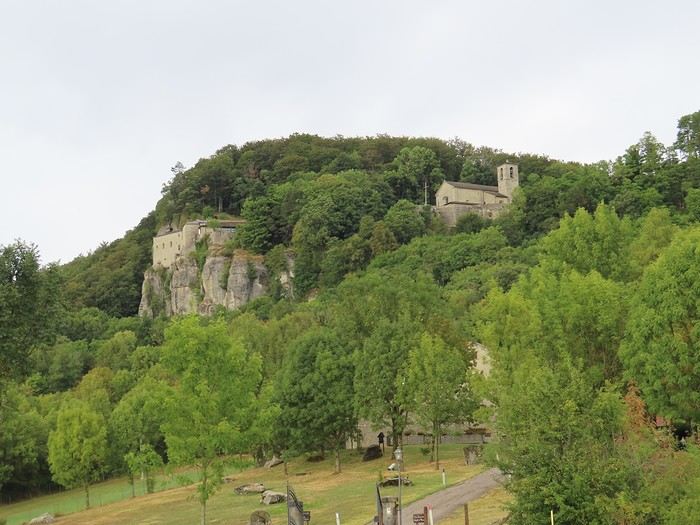
Just after leaving Chiusi della Verna, the road to Bibbiena passes at the foot of the sanctuary. Having been there this morning, I can identify the large church on the right and the building housing the Chapel of the Stigmata on the left.
The podestà carried out his duties on the ground floor; he lived on the first floor, where Michelangelo’s birth room is located. The museum displays a triptych by Giuliano Amidei (Madonna col Bambino; around 1480) from an abbey in the area. The painter included a rare detail in this "Virgin and Child": a cardinal flies from the child’s hands toward a cherry offered by a figure.
The museum also features documents about Michelangelo’s birth and plaster casts of some of his famous sculptures.
Now, let’s move to the Sistine Chapel in the Vatican. Michelangelo painted a scene on the ceiling depicting the creation of Adam.
Adam is leaning against a sloping rock with a mountain in the background. As with many works of the Italian Renaissance, art historians have studied the landscape depicted here. Some theories suggest it may be inspired by Chiusi della Verna;
This rock is just a few meters from the podesteria in Chiusi della Verna, with Monte Penna—near the sanctuary—and its distinctive shape in the background. Michelangelo may have drawn inspiration from a landscape in the Casentino region he knew well to paint the creation of Adam. You have to ignore the houses and vegetation around it; the resemblance is striking, and some experts wonder whether Michelangelo worked from memory or from sketches. In Chiusi della Verna, this site is called the Rock of Adam.
Just after leaving Chiusi della Verna, the road to Bibbiena passes at the foot of the sanctuary. Having been there this morning, I can identify the large church on the right and the building housing the Chapel of the Stigmata on the left.