

Re: Southern Shikoku: Between Land and Sea, the Blue Waters of Miyakojima, and Finally the Megacity T
This morning again, we enjoy the house and garden while having breakfast. We hit the road leisurely in the early afternoon. Today, we're heading all the way south toward the tip called Cape Ashizuri.
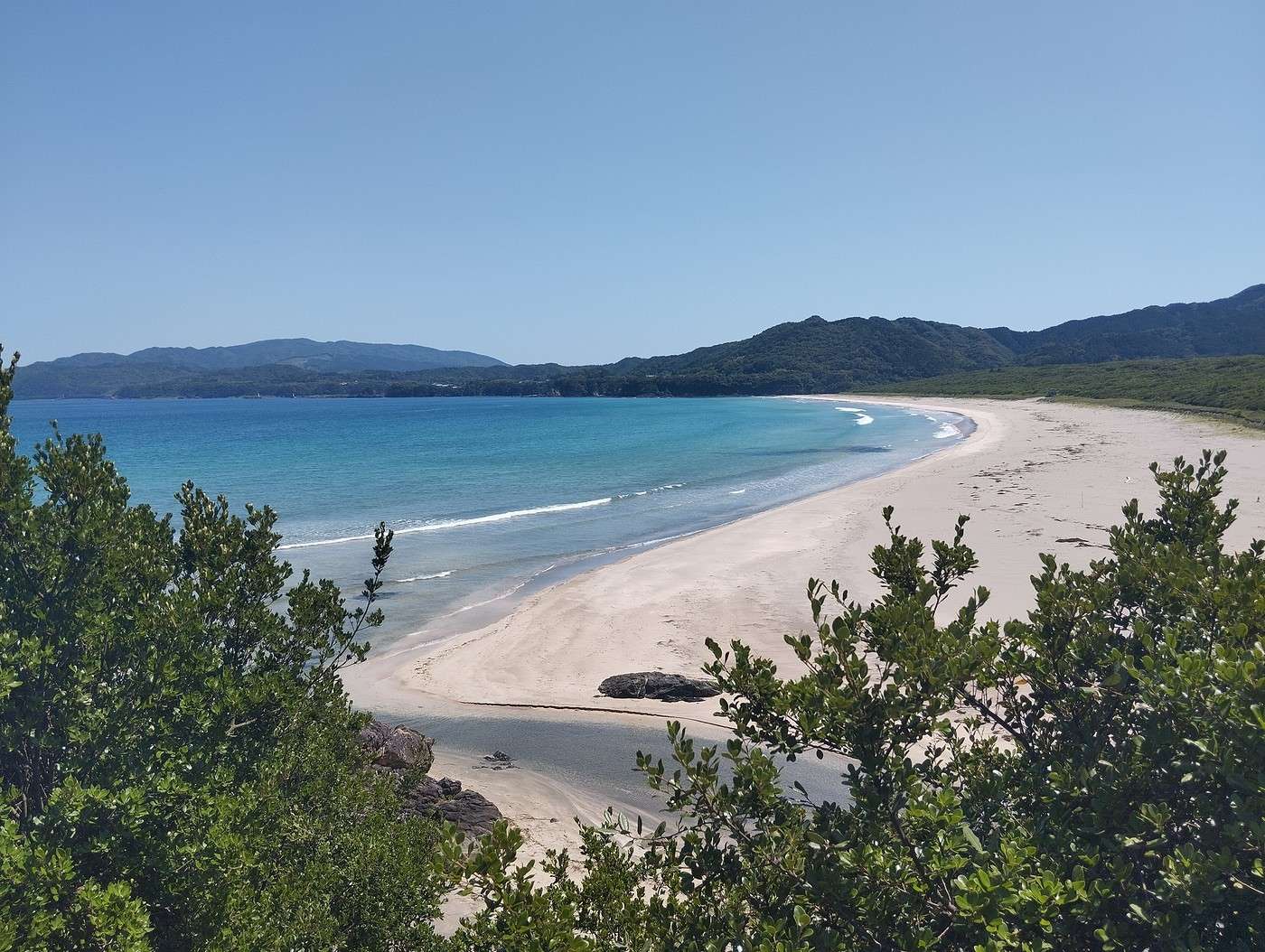
On Route 321, while I'm driving, a stunning beach suddenly appears on the left. As is often the case in Japan, where there's a spot, there's a well-placed parking lot right in front of it. I decide to stop and take a closer look. But I wasn't prepared for what I saw—a magnificent, immaculate beach nearly 2 kilometers long, lined with rows of pine trees.
This is Oki no Hama beach. The scenery hypnotizes me and calls out to me. We decide to stop there. Since we're up high, we get back in the car and turn left five minutes later to descend to the beach level. In the parking lot, there are only 5-6 vans with Japanese surfers camping. They're napping, and their clothes are drying in the sun. Absolute tranquility reigns here.
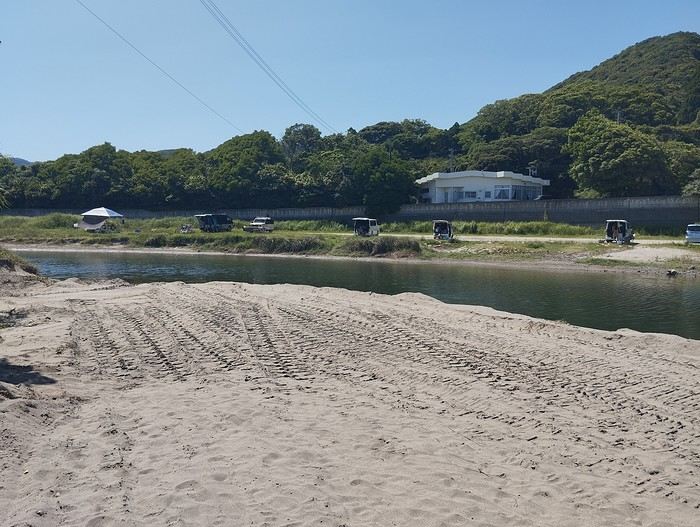
A sign warns to watch out for bahin.
We walk along the beach, lulled by the sound of the sea ebbing and flowing, the waves gentle. It's hot, and a breeze brings a bit of coolness. The heat combined with the beauty of the place makes me want to take a dip. I had planned to do it later in the afternoon at Kashiwajima, but I decide to enjoy this spot right away. I swim and see quite a few fish with the naked eye. I think the place must be great for snorkeling. The lush natural setting makes this swim really enjoyable, especially since there's no one around. Only a pilgrim walker comes by for a few minutes. Meanwhile, my partner takes the opportunity to walk around the area while I swim. Total relaxation... I even dozed off for a mini nap while drying off, listening to the waves. But it's time for us to get back on the road. We head to the car, rehydrate, and an eagle flies overhead. We enjoy this wildlife spectacle, which has been a frequent occurrence during our stay in Shikoku.
Back on the road toward Cape Ashizuri, a totally surprising scene unfolds before us. Pruning work is underway, and as usual, there are many workers, but what really strikes us is that two workers are holding a screen to prevent debris from landing on the road where drivers pass. Another example of the pragmatism of daily life in Japan.
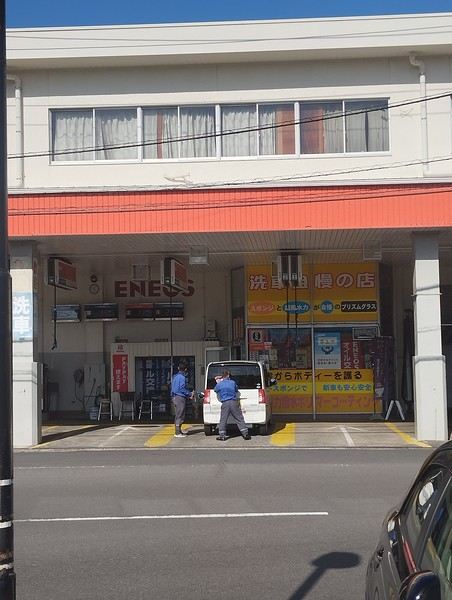
Further on, we stop at a gas station. As soon as the two employees see we intend to stop, they rush to guide us into a parking spot, then quickly ask what type of fuel and how much we want. You don’t even need to get out of the car—just roll down the window. While one fills up the tank, the other has already grabbed supplies to clean your windshield, both inside and out. It’s so fast that you barely have time to process what’s happening. And just like that, five minutes later, you're back on the road with a clean car and a full tank, having been guided out of the gas station as well.
We cross the road to go to the Sunny Mart supermarket to grab some snacks. As soon as we enter the store, staff greet us warmly. Here, you don’t go unnoticed. We find a tray of tuna sushi and sashimi, as well as some yellow watermelon. And in this rural area, we see for the first time a sign indicating gender-neutral restrooms.
After shopping, we hit the road again and finally arrive at our destination.
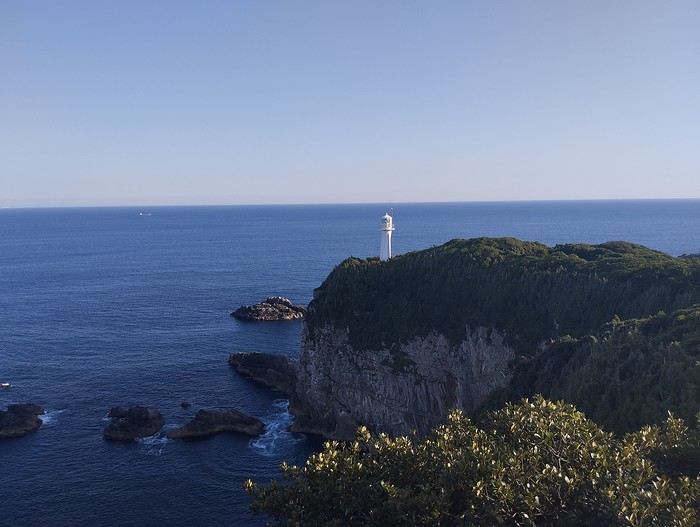
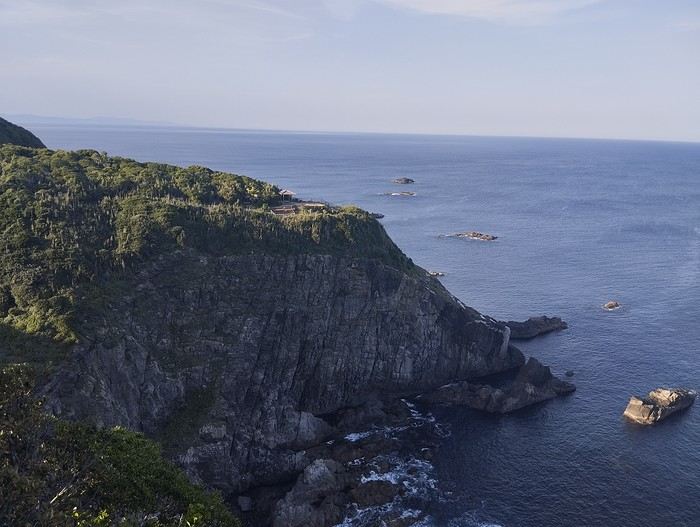
The cape is accessible on foot via hiking trails surrounded by tropical plants. There are different paths, so you don’t have to take a linear route. At the observatory, we have a clear view of the white lighthouse perched in the distance on a promontory. The Pacific Ocean stretches out before us as far as the eye can see. The site is quiet at this hour; we only cross paths with a few Japanese and Spanish tourists—about four in total.
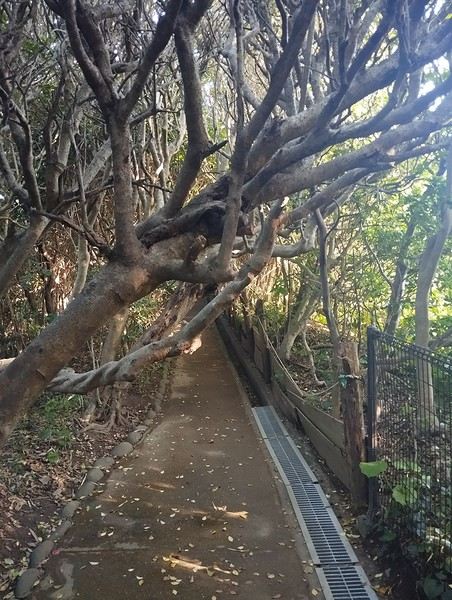
 From the observatory, we take the trail along the coast, which leads us through a tunnel of trees.
On Route 321, while I'm driving, a stunning beach suddenly appears on the left. As is often the case in Japan, where there's a spot, there's a well-placed parking lot right in front of it. I decide to stop and take a closer look. But I wasn't prepared for what I saw—a magnificent, immaculate beach nearly 2 kilometers long, lined with rows of pine trees.
This is Oki no Hama beach. The scenery hypnotizes me and calls out to me. We decide to stop there. Since we're up high, we get back in the car and turn left five minutes later to descend to the beach level. In the parking lot, there are only 5-6 vans with Japanese surfers camping. They're napping, and their clothes are drying in the sun. Absolute tranquility reigns here.
A sign warns to watch out for bahin.
We walk along the beach, lulled by the sound of the sea ebbing and flowing, the waves gentle. It's hot, and a breeze brings a bit of coolness. The heat combined with the beauty of the place makes me want to take a dip. I had planned to do it later in the afternoon at Kashiwajima, but I decide to enjoy this spot right away. I swim and see quite a few fish with the naked eye. I think the place must be great for snorkeling. The lush natural setting makes this swim really enjoyable, especially since there's no one around. Only a pilgrim walker comes by for a few minutes. Meanwhile, my partner takes the opportunity to walk around the area while I swim. Total relaxation... I even dozed off for a mini nap while drying off, listening to the waves. But it's time for us to get back on the road. We head to the car, rehydrate, and an eagle flies overhead. We enjoy this wildlife spectacle, which has been a frequent occurrence during our stay in Shikoku.
Back on the road toward Cape Ashizuri, a totally surprising scene unfolds before us. Pruning work is underway, and as usual, there are many workers, but what really strikes us is that two workers are holding a screen to prevent debris from landing on the road where drivers pass. Another example of the pragmatism of daily life in Japan.
Further on, we stop at a gas station. As soon as the two employees see we intend to stop, they rush to guide us into a parking spot, then quickly ask what type of fuel and how much we want. You don’t even need to get out of the car—just roll down the window. While one fills up the tank, the other has already grabbed supplies to clean your windshield, both inside and out. It’s so fast that you barely have time to process what’s happening. And just like that, five minutes later, you're back on the road with a clean car and a full tank, having been guided out of the gas station as well.
We cross the road to go to the Sunny Mart supermarket to grab some snacks. As soon as we enter the store, staff greet us warmly. Here, you don’t go unnoticed. We find a tray of tuna sushi and sashimi, as well as some yellow watermelon. And in this rural area, we see for the first time a sign indicating gender-neutral restrooms.
After shopping, we hit the road again and finally arrive at our destination.
The cape is accessible on foot via hiking trails surrounded by tropical plants. There are different paths, so you don’t have to take a linear route. At the observatory, we have a clear view of the white lighthouse perched in the distance on a promontory. The Pacific Ocean stretches out before us as far as the eye can see. The site is quiet at this hour; we only cross paths with a few Japanese and Spanish tourists—about four in total.