



Re: Mexico: The Magic of Yucatán
Okay, let me clarify right away—when I talk about sleeping in the jungle, I’m not talking about a Mike Horn-style expedition! It’s simply spending a night in a tent at a small, isolated campsite on the edge of the Calakmul jungle. It’s way better than a basic hotel, and for travelers like us, it’s more than enough to experience something unforgettable and totally out of the ordinary.
This campsite is a bit closer to the Mayan city (52 km) than other accommodations in the area (60 km). Calakmul is so remote that if you get up early and cover that distance, you’ll arrive at the site when it’s... deserted! Having a Mayan ruin in the middle of the jungle all to yourself—pretty cool, right?
To get to Calakmul, you have to pass through the small village of Conhuas, located on Route 186. Seven kilometers to the south is Campamento Yaax’ Che, in the jungle—that’s where we slept.
The entrance to Campamento Yaax’ Che
As soon as we arrived, we had what’s apparently a rare experience, but it immediately set the jungle mood. After walking just twenty meters or so—right past the welcome signs in the photo above—we came face-to-face with... a deadly coral snake! The scene was set.
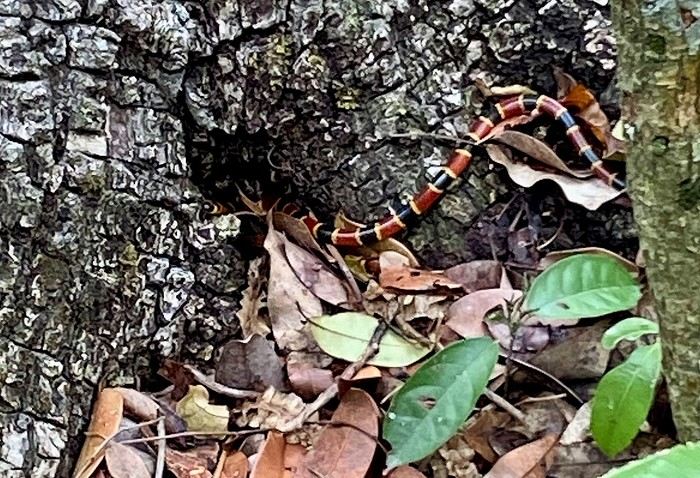
This little reptile is as pretty as it is dangerous—its venom is among the most potent of any snake. So don’t let its modest size (only about fifty centimeters) fool you.
Anyway, we quickly realized we’d have to watch our step, especially once night fell and we’d be walking around by headlamp.
We left our legless friend behind, only to be greeted twenty meters later by two four-legged ones: two spider monkeys playing in the trees above our heads.
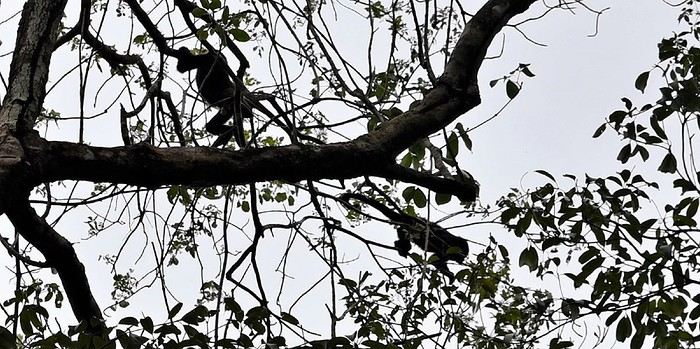
In just a few minutes, our first encounter with the locals of this jungle—where we’d be sleeping—exceeded all our expectations.
The third animal to make its presence known wasn’t as cute as the monkeys or as dangerous as the snake: mosquitoes! There weren’t swarms of them, but enough to make us slather on bug spray right away.
Among the other jungle residents, there’s the nephila. What’s that, you ask? It’s a beautiful spider, about ten centimeters long, graceful and colorful, that weaves the largest web in the arachnid world.
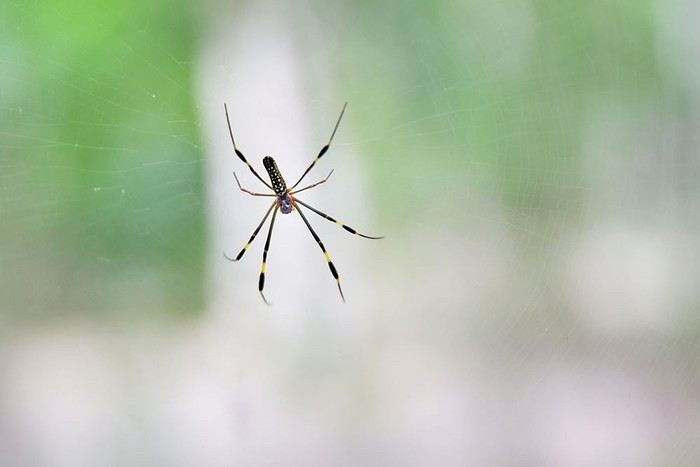
But what’s really impressive is how strong and sticky its web is—even hummingbirds get trapped in it. So strong, in fact, that it’s being studied to improve... bulletproof vests!
Plenty of other animals live in the jungle. Some big cats, like the area’s stars—the jaguar and the puma—roam here, but they’re rare in such a vast space, so spotting them is unlikely. We didn’t see any.
Back to the campsite: it has only nine tents, spaced far enough apart and all sheltered by tin roofs to protect against the heavy seasonal rains.
When we were there, it wasn’t crowded—only two other tents were occupied besides ours, which made our sense of isolation even stronger. Even the managers don’t sleep there.
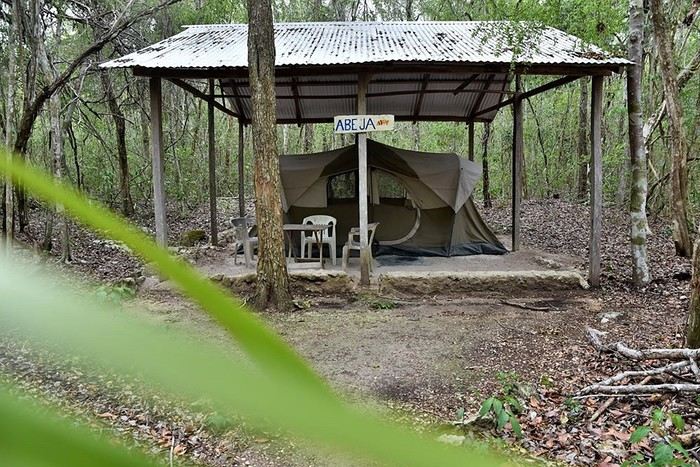
The comfort is basic, of course, but we knew that before arriving. Inside the tents, there are just mattresses.
In such a setting, the campsite is naturally very eco-friendly: compost toilets, recycling, water collectors—everything is done to protect the environment, which is exceptional here.
There’s obviously no running water or electricity in the area. In each shower, a bucket of water had been prepared for washing, but the murky brown color and opacity quickly put us off the idea of showering—even though we’d been dreaming of it all day.
It’s a bit of a shame, especially since the high humidity made us sweat, but when you’re roughing it, you don’t expect a four-star experience. Still, we savored the chance to spend the night in such an incredible place.
Once settled, we headed back down the same path we’d arrived on. About a kilometer from the campsite is the restaurant Oxte’ Tun, which is also very basic: a tin roof, a few wooden pillars, and no walls. Its simplicity blends perfectly with the surrounding jungle, and like the campsite, it’s exactly the kind of place we came here for.
It’s run by locals—Manuel, Laeticia, and Fernando.
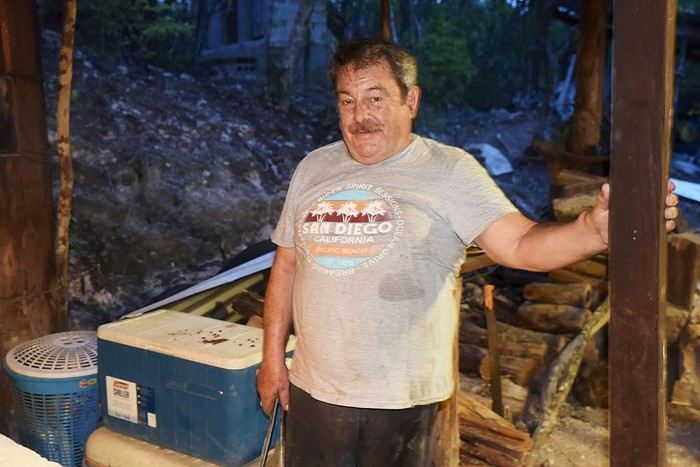 Fernando
Our first interaction with them wasn’t very warm, so we were a little disappointed. But when we saw Laeticia bustling around her stove, we couldn’t help bombarding her with questions about Mexican cuisine. That broke the ice, and they quickly became friendlier and more welcoming.
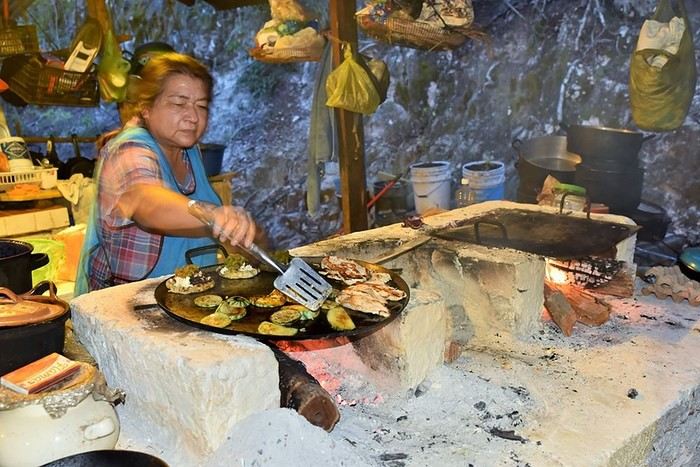 Laeticia
Fun fact: Laeticia is a master of Mexican cooking. With the few ingredients she has here, she still managed to treat us to an amazing meal. So if you’re passing through, don’t hesitate to stop at this little roadside gem: Oxte’ Tun.
The sun sets early here, so we did too!
For us, sleeping in the jungle had two big advantages. Practically speaking, we weren’t too far from the Mayan ruins, so we could get there right when they opened the next morning to avoid crowds.
But for travelers like us—who don’t need much to be amazed (and that’s a good thing!)—the real draw was sleeping in such an unusual setting, surrounded by the sounds of the jungle at night.
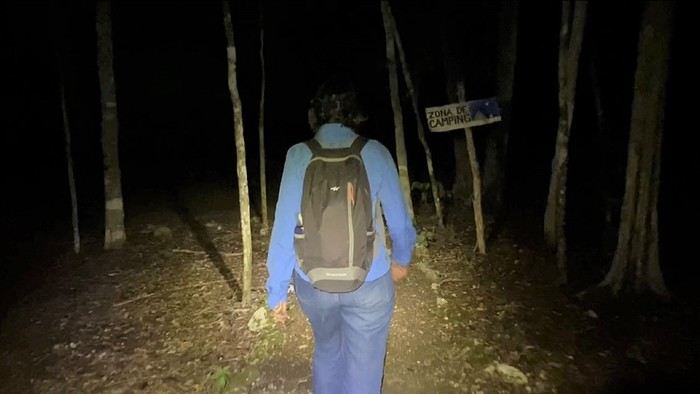
In the end, we didn’t hear that many animals at night, but the ones we did hear made enough noise that you couldn’t miss them!
First, the background music was provided by cicadas—they never stopped. Even though they were loud, it was a pretty effective lullaby.
Then, every now and then, we’d hear monkeys communicating with each other through short, deep growls. They’d call back and forth, even when far apart, so the sounds seemed to come from all around the tent.
Occasionally, we’d hear unidentified cries.
And finally, just before dawn, we’d wake up to the melodic songs of different birds.
Spending a night in such a natural, isolated place has a magical quality—especially when you’re used to the noises and smells of the city.
This campsite is a bit closer to the Mayan city (52 km) than other accommodations in the area (60 km). Calakmul is so remote that if you get up early and cover that distance, you’ll arrive at the site when it’s... deserted! Having a Mayan ruin in the middle of the jungle all to yourself—pretty cool, right?
To get to Calakmul, you have to pass through the small village of Conhuas, located on Route 186. Seven kilometers to the south is Campamento Yaax’ Che, in the jungle—that’s where we slept.
The entrance to Campamento Yaax’ Che
As soon as we arrived, we had what’s apparently a rare experience, but it immediately set the jungle mood. After walking just twenty meters or so—right past the welcome signs in the photo above—we came face-to-face with... a deadly coral snake! The scene was set.
This little reptile is as pretty as it is dangerous—its venom is among the most potent of any snake. So don’t let its modest size (only about fifty centimeters) fool you.
Anyway, we quickly realized we’d have to watch our step, especially once night fell and we’d be walking around by headlamp.
We left our legless friend behind, only to be greeted twenty meters later by two four-legged ones: two spider monkeys playing in the trees above our heads.
In just a few minutes, our first encounter with the locals of this jungle—where we’d be sleeping—exceeded all our expectations.
The third animal to make its presence known wasn’t as cute as the monkeys or as dangerous as the snake: mosquitoes! There weren’t swarms of them, but enough to make us slather on bug spray right away.
Among the other jungle residents, there’s the nephila. What’s that, you ask? It’s a beautiful spider, about ten centimeters long, graceful and colorful, that weaves the largest web in the arachnid world.
But what’s really impressive is how strong and sticky its web is—even hummingbirds get trapped in it. So strong, in fact, that it’s being studied to improve... bulletproof vests!
Plenty of other animals live in the jungle. Some big cats, like the area’s stars—the jaguar and the puma—roam here, but they’re rare in such a vast space, so spotting them is unlikely. We didn’t see any.
Back to the campsite: it has only nine tents, spaced far enough apart and all sheltered by tin roofs to protect against the heavy seasonal rains.
When we were there, it wasn’t crowded—only two other tents were occupied besides ours, which made our sense of isolation even stronger. Even the managers don’t sleep there.
The comfort is basic, of course, but we knew that before arriving. Inside the tents, there are just mattresses.
In such a setting, the campsite is naturally very eco-friendly: compost toilets, recycling, water collectors—everything is done to protect the environment, which is exceptional here.
There’s obviously no running water or electricity in the area. In each shower, a bucket of water had been prepared for washing, but the murky brown color and opacity quickly put us off the idea of showering—even though we’d been dreaming of it all day.
It’s a bit of a shame, especially since the high humidity made us sweat, but when you’re roughing it, you don’t expect a four-star experience. Still, we savored the chance to spend the night in such an incredible place.
Once settled, we headed back down the same path we’d arrived on. About a kilometer from the campsite is the restaurant Oxte’ Tun, which is also very basic: a tin roof, a few wooden pillars, and no walls. Its simplicity blends perfectly with the surrounding jungle, and like the campsite, it’s exactly the kind of place we came here for.
It’s run by locals—Manuel, Laeticia, and Fernando.
FernandoOur first interaction with them wasn’t very warm, so we were a little disappointed. But when we saw Laeticia bustling around her stove, we couldn’t help bombarding her with questions about Mexican cuisine. That broke the ice, and they quickly became friendlier and more welcoming.
LaeticiaFun fact: Laeticia is a master of Mexican cooking. With the few ingredients she has here, she still managed to treat us to an amazing meal. So if you’re passing through, don’t hesitate to stop at this little roadside gem: Oxte’ Tun.
The sun sets early here, so we did too!
For us, sleeping in the jungle had two big advantages. Practically speaking, we weren’t too far from the Mayan ruins, so we could get there right when they opened the next morning to avoid crowds.
But for travelers like us—who don’t need much to be amazed (and that’s a good thing!)—the real draw was sleeping in such an unusual setting, surrounded by the sounds of the jungle at night.
In the end, we didn’t hear that many animals at night, but the ones we did hear made enough noise that you couldn’t miss them!
First, the background music was provided by cicadas—they never stopped. Even though they were loud, it was a pretty effective lullaby.
Then, every now and then, we’d hear monkeys communicating with each other through short, deep growls. They’d call back and forth, even when far apart, so the sounds seemed to come from all around the tent.
Occasionally, we’d hear unidentified cries.
And finally, just before dawn, we’d wake up to the melodic songs of different birds.
Spending a night in such a natural, isolated place has a magical quality—especially when you’re used to the noises and smells of the city.