

Re: From Southern Shikoku, between land and sea, to the blue waters of Miyakojima and finally the megacity T
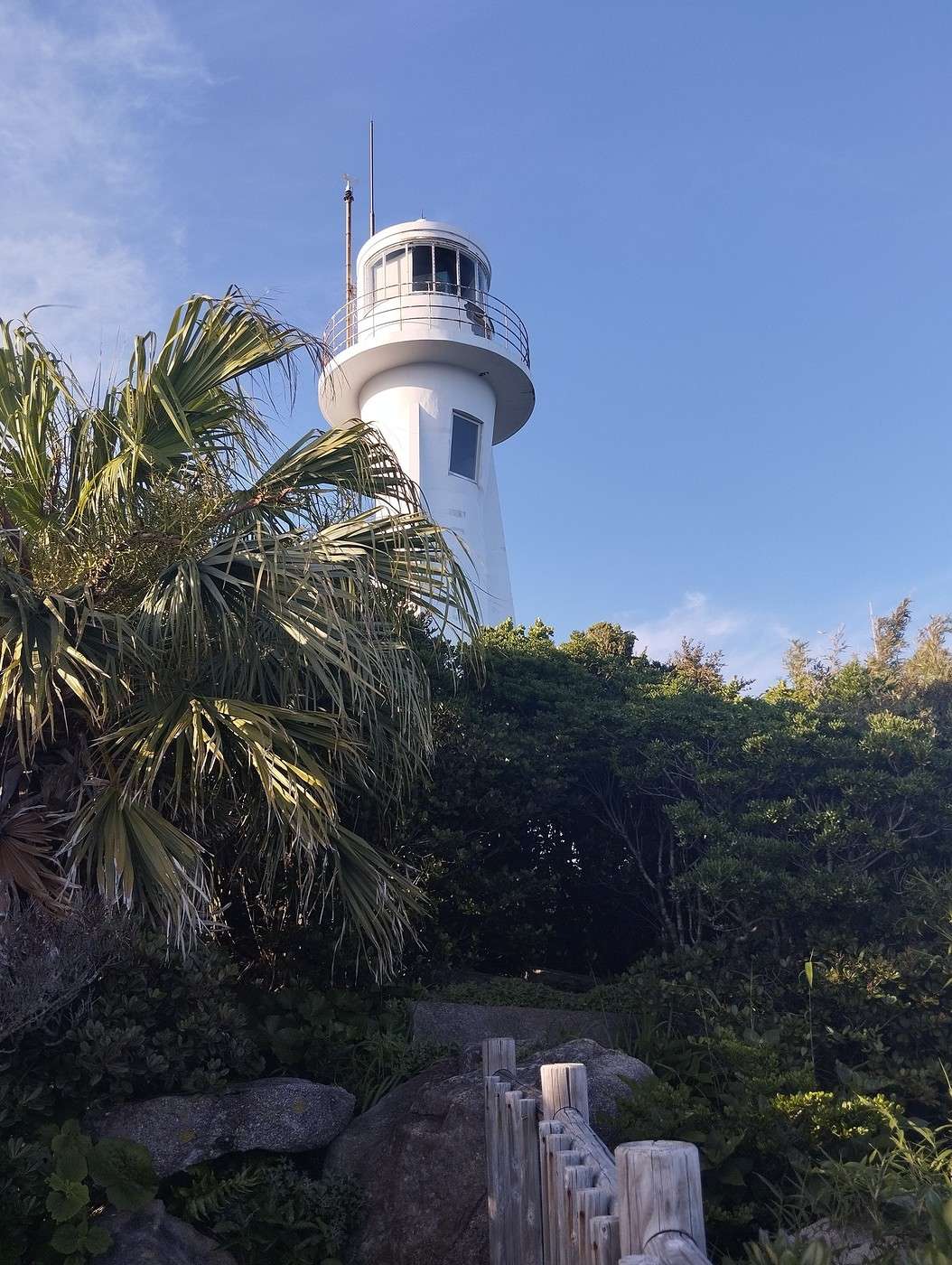
This contrast between the sea and the forest is really interesting. Then the lighthouse appears, towering over the steep cliff. It’s all white and dates back to the early 20th century. It’s surrounded by palm trees—there’s a tropical vibe here.
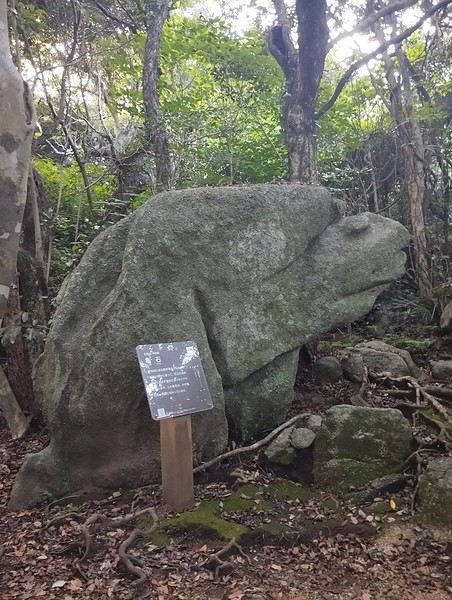
Next, we pass a turtle sculpture (kameoshi) and decide to continue along the coast first.
Wooden signs point out several different points of interest. The one we chose is supposedly only 600 meters away. However, the path, which had been flat until now, turns into a mix of uneven stone and dirt staircases, some steep. It’s pretty tough going. With the muggy heat, this little walk suddenly becomes much more of a workout, but we keep going even though the 600 meters feel way off.
Finally, after a climb, we reach a fork: one path is a steep descent toward the sea, and the other leads who-knows-where since there are no more signs. We take the staircase plunging toward the sea, and the view opens up, giving us a breath of fresh air. Coming up the other way, a young Japanese man appears. My partner, who’s faster than me, is already chatting with him when I catch up. He seems eager to talk, and we get to know each other a bit. This young man lives in Miyako, in the Tohoku region. He works on large fishing ferries. He explains that working on ferries is tough because he works a lot—starting at 6 PM and finishing at noon the next day. He’s currently on a two-week break. He’s visited Matsuyama and Uwajima. When we tell him we’re here for a month-long vacation, he’s shocked. He also teaches us the Japanese word for butterfly.
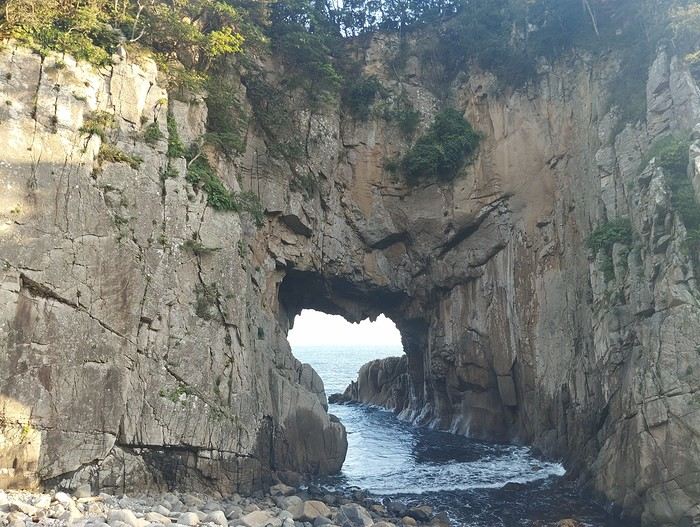
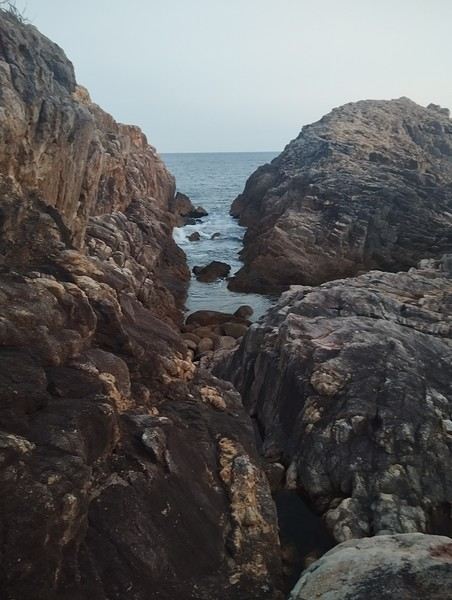
After this chat, we finish the descent and finally reach Hakusan Cave, carved out by the sea. It forms a heart shape. The cave is said to be 16 meters high and 17 meters wide. The waves crash in, sending us a burst of that salty sea energy. As you’d expect in Japan, benches have been set up so you can enjoy the view—we do, all alone since there’s no one else around.
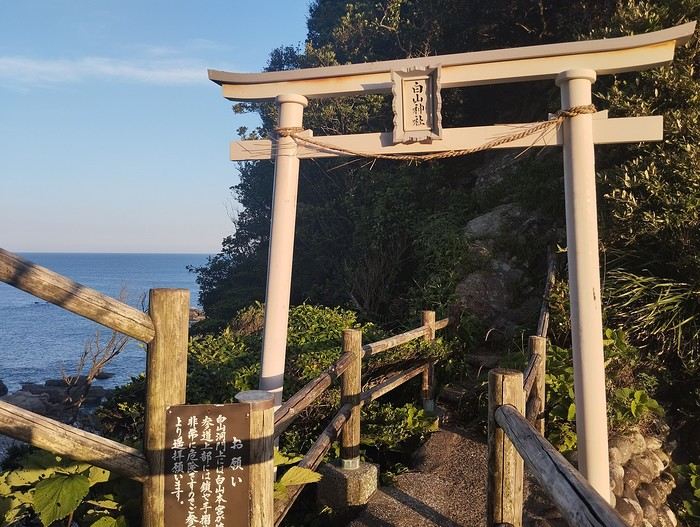 We then retrace our steps, passing under the torii again—the spiritual gate of the place—which, at this time of day, is bathed in the soft late-afternoon sun.
Despite the lack of clear signs, we easily find another path, partly along the main road that runs alongside the park, to get back to the car—without running into any wild boars.
Just before that, there’s a sort of quarry with Buddhist statues. Nearby is Temple No. 38, I think—maybe there’s a connection.
Anyway, we hit the road again to visit Ryugu Shrine. It’s only a 15-20 minute drive, but part of the route is through a mountainous area with narrow roads.
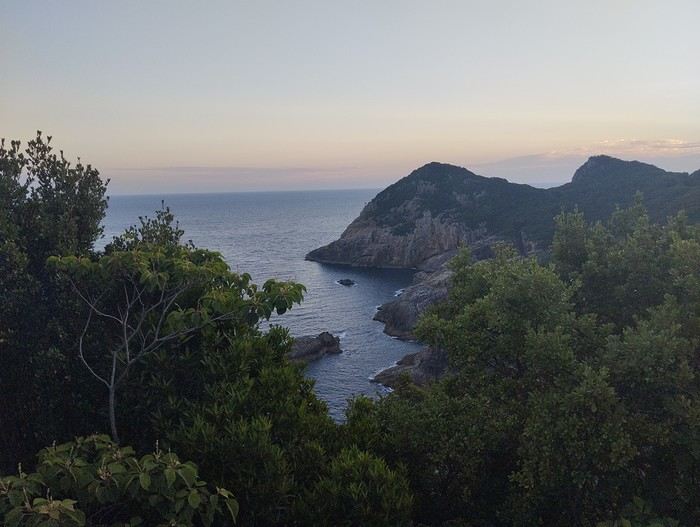
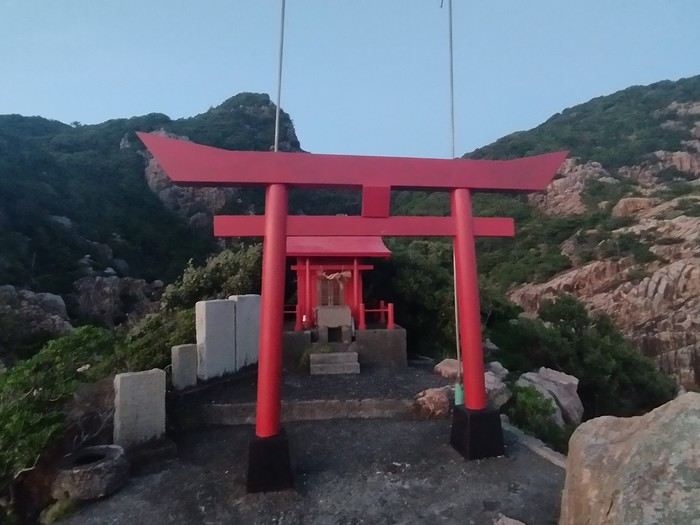
The entrance to the shrine is very discreet. Again, it’s a forest path, and the shrine isn’t far, but you have to reach the sea. To do that, we walk through a tunnel of trees, descending a stone staircase. The descent is tough, but at the end of the tunnel, we emerge from the shade—or even the darkness—cast by the trees, and the view that greets us is spectacular. The ocean, cliffs, a lighthouse, pink rocks—it’s a stunning panorama, and once again, there’s absolutely no one around. That said, we still have to walk a bit more to reach the shrine, which is tiny but right by the water.
The shrine is said to be dedicated to a sea goddess. Legend has it that women from the area would come here after their men had gone out to sea to fish. They’d dance, their kimonos open, revealing themselves to the sea, hoping their god would grant them a pleasant surprise.
 When we finally decide to leave, the sun has already set. In the tunnel, we have to turn on our phone flashlights—we didn’t bring our headlamps since we hadn’t planned on needing them. We run into a small group of Japanese fishermen heading down to the shrine, all equipped with their headlamps.
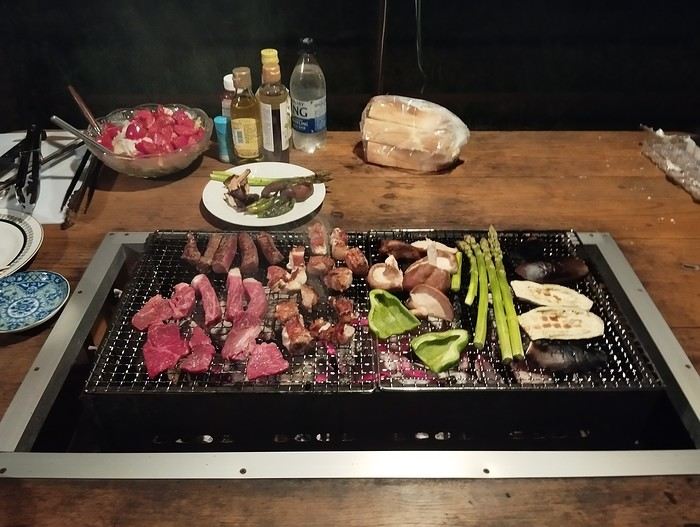
After this beautiful day in nature, we head back home. It’s our last night at the house, and we end on a high note with a barbecue. We bought some local wagyu, veggies to grill, and ingredients for a salad. The barbecue rental is 500 yen per use. It works on trust—the payment goes into a piggy bank in the kitchen. That same piggy bank is also used to pay for drinks and a few dry goods available for sale in the kitchen. We didn’t have to buy charcoal since the previous guest had left some, so the manager told us to use it.
We enjoy this last evening under the starry sky, our taste buds delighted, though a little sad to leave this house and the area we’ve grown to love—there’s still so much left to explore. The tranquility of Shimanto and its surroundings, the natural landscapes between mountains, sea, and rivers, offer one of the most pleasant sides of Japan.
Next, we pass a turtle sculpture (kameoshi) and decide to continue along the coast first.
Wooden signs point out several different points of interest. The one we chose is supposedly only 600 meters away. However, the path, which had been flat until now, turns into a mix of uneven stone and dirt staircases, some steep. It’s pretty tough going. With the muggy heat, this little walk suddenly becomes much more of a workout, but we keep going even though the 600 meters feel way off.
Finally, after a climb, we reach a fork: one path is a steep descent toward the sea, and the other leads who-knows-where since there are no more signs. We take the staircase plunging toward the sea, and the view opens up, giving us a breath of fresh air. Coming up the other way, a young Japanese man appears. My partner, who’s faster than me, is already chatting with him when I catch up. He seems eager to talk, and we get to know each other a bit. This young man lives in Miyako, in the Tohoku region. He works on large fishing ferries. He explains that working on ferries is tough because he works a lot—starting at 6 PM and finishing at noon the next day. He’s currently on a two-week break. He’s visited Matsuyama and Uwajima. When we tell him we’re here for a month-long vacation, he’s shocked. He also teaches us the Japanese word for butterfly.
After this chat, we finish the descent and finally reach Hakusan Cave, carved out by the sea. It forms a heart shape. The cave is said to be 16 meters high and 17 meters wide. The waves crash in, sending us a burst of that salty sea energy. As you’d expect in Japan, benches have been set up so you can enjoy the view—we do, all alone since there’s no one else around.
Anyway, we hit the road again to visit Ryugu Shrine. It’s only a 15-20 minute drive, but part of the route is through a mountainous area with narrow roads.
The entrance to the shrine is very discreet. Again, it’s a forest path, and the shrine isn’t far, but you have to reach the sea. To do that, we walk through a tunnel of trees, descending a stone staircase. The descent is tough, but at the end of the tunnel, we emerge from the shade—or even the darkness—cast by the trees, and the view that greets us is spectacular. The ocean, cliffs, a lighthouse, pink rocks—it’s a stunning panorama, and once again, there’s absolutely no one around. That said, we still have to walk a bit more to reach the shrine, which is tiny but right by the water.
The shrine is said to be dedicated to a sea goddess. Legend has it that women from the area would come here after their men had gone out to sea to fish. They’d dance, their kimonos open, revealing themselves to the sea, hoping their god would grant them a pleasant surprise.
After this beautiful day in nature, we head back home. It’s our last night at the house, and we end on a high note with a barbecue. We bought some local wagyu, veggies to grill, and ingredients for a salad. The barbecue rental is 500 yen per use. It works on trust—the payment goes into a piggy bank in the kitchen. That same piggy bank is also used to pay for drinks and a few dry goods available for sale in the kitchen. We didn’t have to buy charcoal since the previous guest had left some, so the manager told us to use it.
We enjoy this last evening under the starry sky, our taste buds delighted, though a little sad to leave this house and the area we’ve grown to love—there’s still so much left to explore. The tranquility of Shimanto and its surroundings, the natural landscapes between mountains, sea, and rivers, offer one of the most pleasant sides of Japan.