


Re: Autumn road trip from Puglia to Naples via Basilicata...
Hello again!
In the early afternoon, we take the fastest route and arrive, according to the road signs, in the city of Matera: to our great surprise, the avenues are wide, lined with multi-story buildings and homes.
The GPS did its job well: we arrive at the garage without any detours, where we’ll leave the car for two nights.
Our hotel reserved this parking spot (20 € per night); an employee will pick up our luggage and take it to the hotel, a 10-minute walk away: it’s the 'In Pietra' hotel (see the end of the travel journal).
They even give us a little personalized map... and off we go!
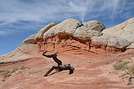
A photo to whet your appetite... and a few words about this city with a very long history. For more historical details, just ask!
To keep it short, here’s a summary of the key milestones in Matera’s history! *** It’s important to know that cave dwellings carved into the soft limestone appeared in the region 250,000 years ago, as early as the Paleolithic era. *** The city has many rock-hewn churches beautifully decorated with Byzantine frescoes: hidden places of prayer for immigrants, particularly from Turkey, Armenia, or Asia Minor. *** In the 14th and 15th centuries, the city was enriched with numerous churches and monuments within the fortified walls surrounding the center... *** Unfortunately, in the last century (the 20th century!), living conditions—both sanitary and economic—became increasingly precarious for the growing population, which reached 16,000 inhabitants after World War II.
In 1950, following a visit by A. Gasperi, a prominent minister at the time, La Gazzetta del Mezzogiorno published a front-page article on Matera with the bold headline: "NATIONAL SHAME". In 1945, Carlo Levi’s autobiographical book, ‘Christ Stopped at Eboli,’ was published, which I’ll talk about later: it describes the miserable living conditions of the peasant world under fascist Italy. Politicians, having researched and been shocked by the reality in the book, sought a solution to the problem. They decided to build public housing (HLM) around the Sassi to relocate the peasants who lived there: these are the buildings we saw upon arrival. In 1952, forced transfers of the inhabitants began, and a law mandated the complete isolation of the Sassi: the districts were left in total ruin, caves were walled up, and access was blocked. Once again, it was Carlo Levi who advocated for preserving and enhancing the historical and social treasure we can see today.
In 1993, the Sassi were recognized as a UNESCO World Heritage Site, and in 2014, Matera was named the European Capital of Culture for 2019. From then on, the Sassi became symbols of the development and valorization of an Italian territory, in the eyes of the whole world!
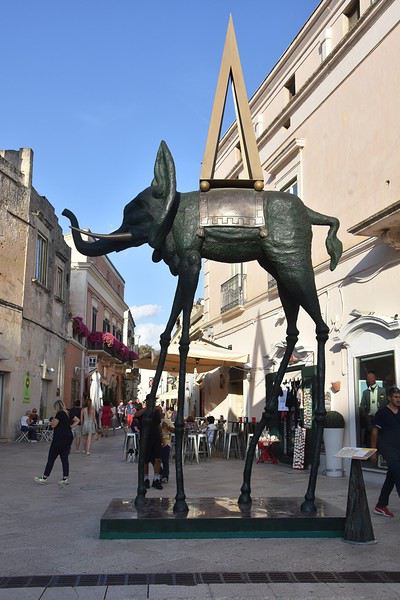
If you’re still with me, we were on our way to the hotel, and the luggage would follow: it almost arrived before we did! Even without the GPS, we managed to get lost and go in circles several times, and once night fell, it was even worse... Here are a few views of the Sassi Barisano, taken from the steep path leading to the 'In Pietra': -- the fork near Piazza Veneto, adorned with a beautiful sculpture by Salvador Dalí.
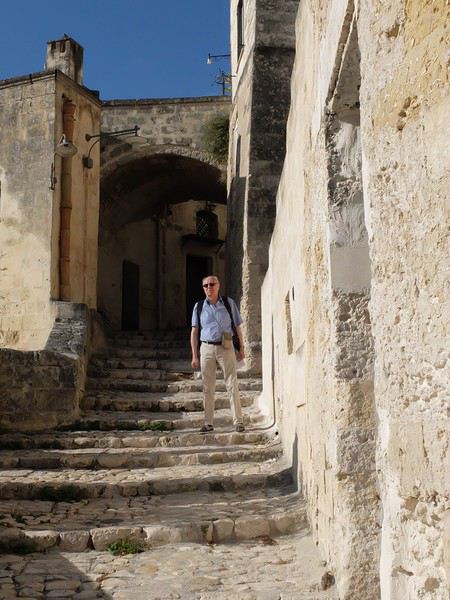
Then, the path...
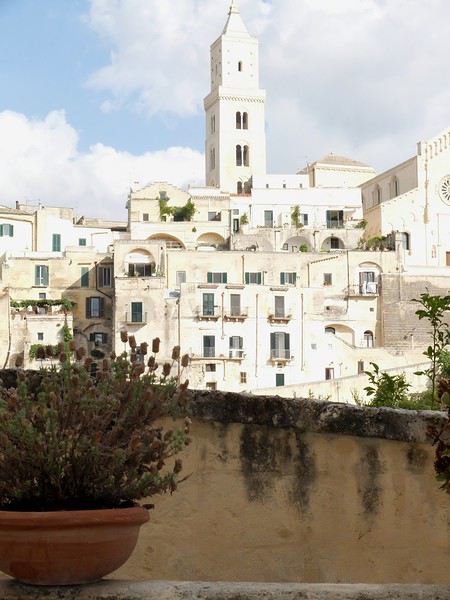
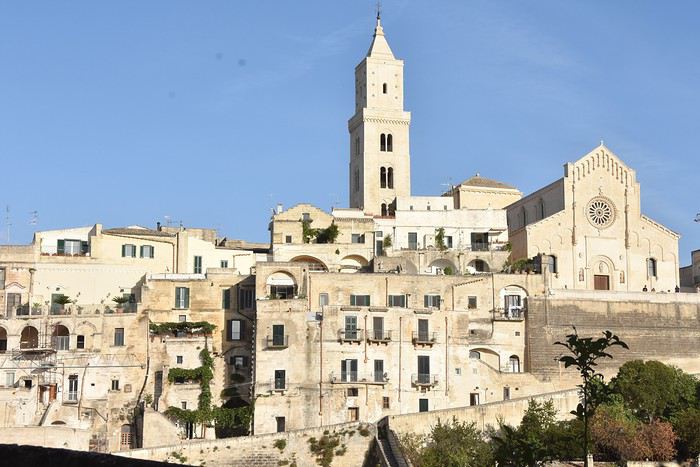
-- in front of the hotel, a view of the Sassi and the Duomo...
... and a general view:
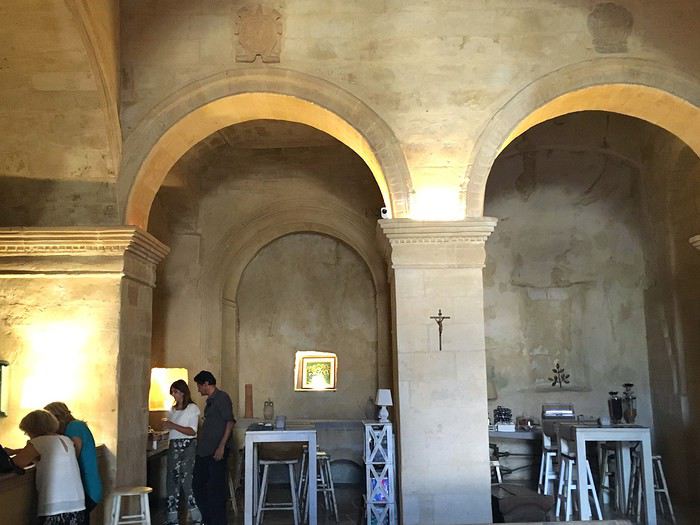
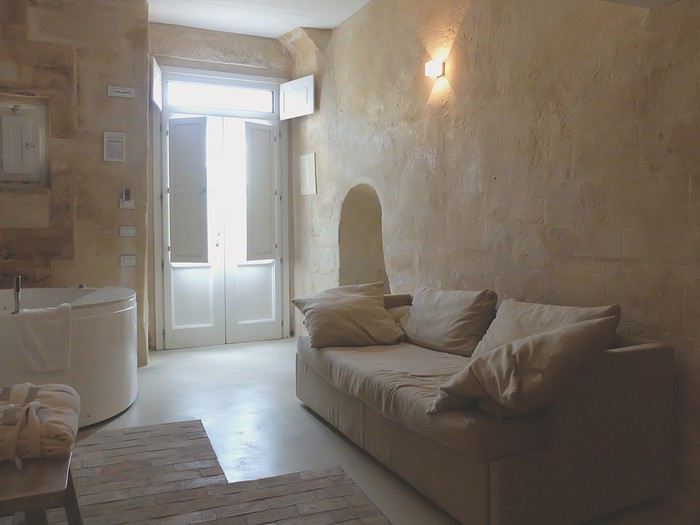
-- finally, the hotel itself, which is a former disused church. Tufa walls, beautiful colors, and perfect tranquility in a sumptuous setting!
 See you tomorrow for an evening stroll through the Sassi, wandering the alleys!
A photo to whet your appetite... and a few words about this city with a very long history. For more historical details, just ask!
To keep it short, here’s a summary of the key milestones in Matera’s history! *** It’s important to know that cave dwellings carved into the soft limestone appeared in the region 250,000 years ago, as early as the Paleolithic era. *** The city has many rock-hewn churches beautifully decorated with Byzantine frescoes: hidden places of prayer for immigrants, particularly from Turkey, Armenia, or Asia Minor. *** In the 14th and 15th centuries, the city was enriched with numerous churches and monuments within the fortified walls surrounding the center... *** Unfortunately, in the last century (the 20th century!), living conditions—both sanitary and economic—became increasingly precarious for the growing population, which reached 16,000 inhabitants after World War II.
In 1950, following a visit by A. Gasperi, a prominent minister at the time, La Gazzetta del Mezzogiorno published a front-page article on Matera with the bold headline: "NATIONAL SHAME". In 1945, Carlo Levi’s autobiographical book, ‘Christ Stopped at Eboli,’ was published, which I’ll talk about later: it describes the miserable living conditions of the peasant world under fascist Italy. Politicians, having researched and been shocked by the reality in the book, sought a solution to the problem. They decided to build public housing (HLM) around the Sassi to relocate the peasants who lived there: these are the buildings we saw upon arrival. In 1952, forced transfers of the inhabitants began, and a law mandated the complete isolation of the Sassi: the districts were left in total ruin, caves were walled up, and access was blocked. Once again, it was Carlo Levi who advocated for preserving and enhancing the historical and social treasure we can see today.
In 1993, the Sassi were recognized as a UNESCO World Heritage Site, and in 2014, Matera was named the European Capital of Culture for 2019. From then on, the Sassi became symbols of the development and valorization of an Italian territory, in the eyes of the whole world!
If you’re still with me, we were on our way to the hotel, and the luggage would follow: it almost arrived before we did! Even without the GPS, we managed to get lost and go in circles several times, and once night fell, it was even worse... Here are a few views of the Sassi Barisano, taken from the steep path leading to the 'In Pietra': -- the fork near Piazza Veneto, adorned with a beautiful sculpture by Salvador Dalí.
Then, the path...
-- in front of the hotel, a view of the Sassi and the Duomo...
... and a general view:
-- finally, the hotel itself, which is a former disused church. Tufa walls, beautiful colors, and perfect tranquility in a sumptuous setting!