

Re: From Southern Shikoku, between land and sea, to the blue waters of Miyakojima and finally the megalopolis T
The time has come. We have to leave this house that welcomed us for 3 nights. That’s probably why we’re a bit behind schedule. Japanese punctuality, on the other hand, never changes. The housekeeper is here. She smiles and stays calm despite what I imagine is an inconvenience in her schedule. To avoid losing too much time, she starts by taking care of the garden while we rush to finish packing and load our things into the car. Despite everything, aside from taking out the garden trash, she doesn’t have much to do, so she’s just waiting. So there I am, chatting to keep her patient, feeling a bit guilty inside for making her wait. But she shows no sign of irritation—she seems completely zen. Oh well, all the better. Once everything is in the car, we give her the green light for the house, repeating gomenasai (sorry, sorry) over and over. We say goodbye, and she doesn’t waste any time getting to work.
As for us, we finish loading the car before hitting the road under a magnificent, blazing sun. The plan for the day is mainly to reach the city of Uwajima. We have about 2 to 3 hours of driving ahead. To break up the trip, I looked for a place to stop for lunch roughly halfway. The road is pleasant, winding through the countryside. It’s always a joy to drive through the villages. Thanks to Google Maps, we can spot addresses, but most importantly, the comments and photos from other travelers give us extra tips—without which, in some cases, we might never have found the places, especially in a country where we can’t read the language and the alphabet is completely unfamiliar. For instance, today at this restaurant, a small sign in one of the photos helped me spot the place without any trouble.
We park nearby, following other cars’ lead. The restaurant is on a lane bordered by houses, with mountains across the way and rice fields at their base. We decided to eat early today because the Google reviews advised it, mentioning that you often have to queue.
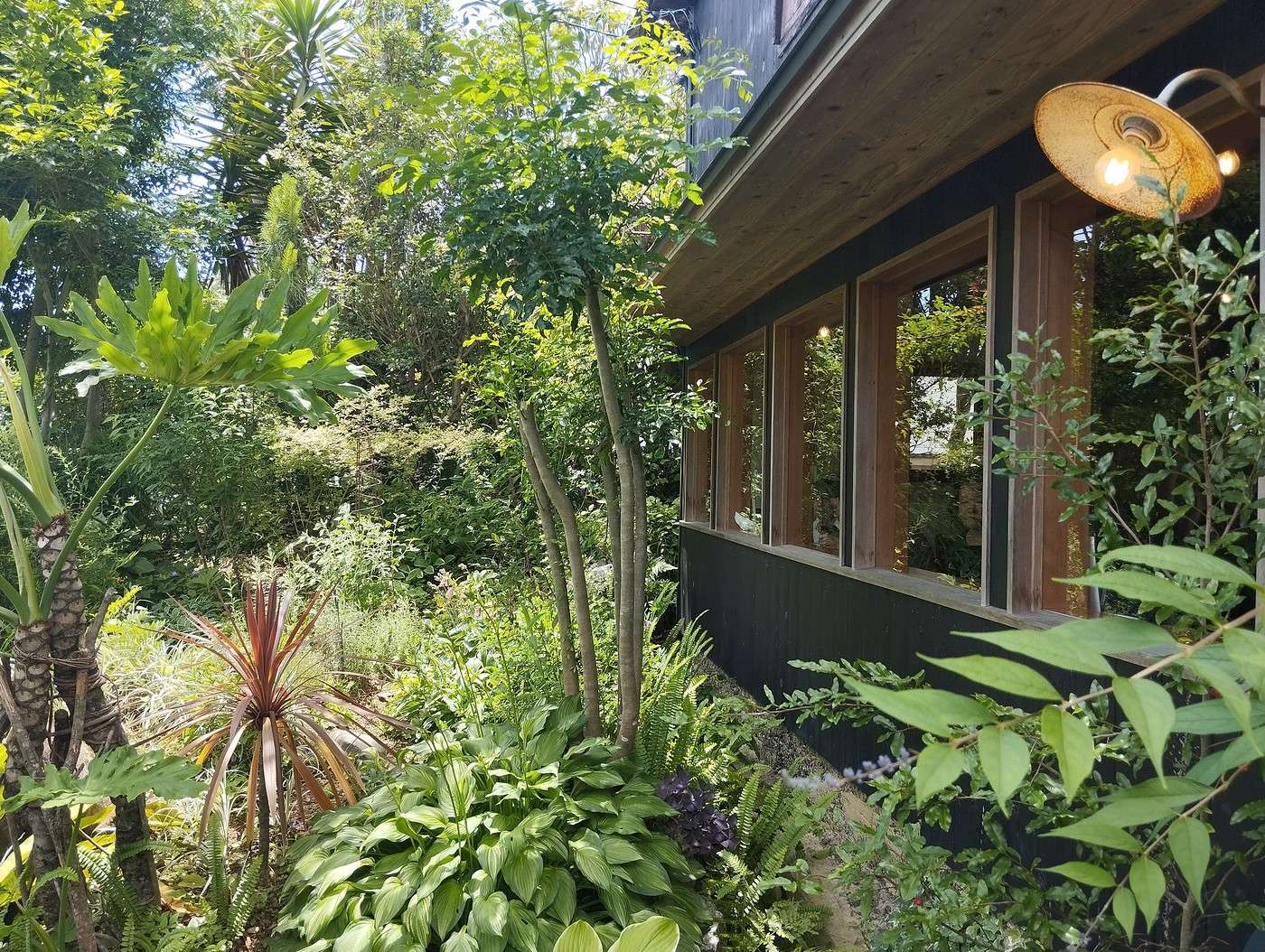
We arrive shortly after the restaurant opens, around 11:15 AM. The sign for the restaurant is at the foot of a staircase. At the bottom, we discover a lush, exotic garden. The higher we climb the steps, the more we uncover an intimate space—a small terrace to wait for a table and a cozy seating area surrounded by plants. Someone is already waiting. A woman comes out of the restaurant and gestures for us to write down our names and wait. How long? No idea, but we comply. We take the opportunity to get a closer look at the outdoor area, which isn’t visible from the road at all. Two young men arrive and add their names to the waiting list. Then a woman shows up, soon joined by a friend, who doesn’t hesitate to call out to us from her bench. She speaks to us in English, asking where we’re from and how we found this place. She quickly wishes us a great trip. Finally, it’s our turn. We’re invited inside. The restaurant isn’t big, as is often the case. There are two tables for two, four seats at the bar, and six by the window with a view of the exotic garden, the rice fields, and the mountains in the distance. And guess what? We’re lucky enough to be seated at the bar by the garden! So cool. The setting is amazing!
There’s no internet here, and the waitress doesn’t speak English, so we’re left with a menu in kanji. Okay, we’ll improvise. Our table neighbors—the woman who spoke to us and her friend—are here too.
We ask the waitress a few questions, but it’s clear it’ll be tough to get explanations about the menu. So, to keep it simple, I use a screenshot of a ramen dish from the restaurant that I saved when I first spotted it on Google Maps to place our order. As for my partner, he chose at random.
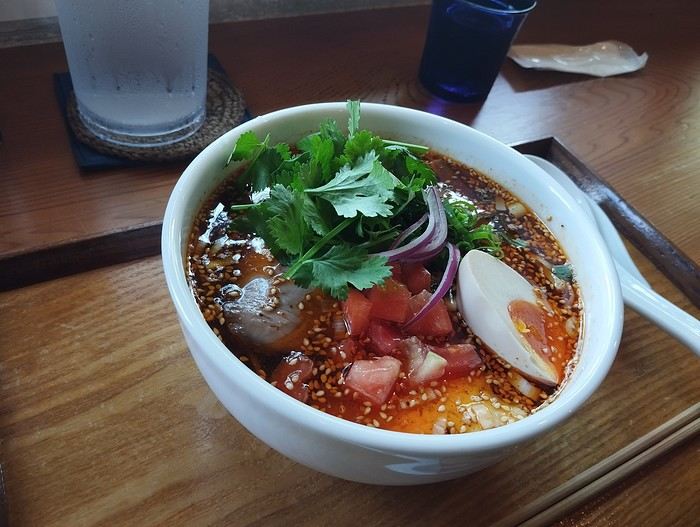
Even though they arrived after us, the two women ordered before us, and their dishes look deliciously gourmet. The online reviews suggested this was a top spot, and the first impressions are very positive. The only downside? There are no drinks except water. So much for the ice-cold beer we were dreaming of to go with our ramen. While we wait, we enjoy the lush green landscape stretching out before us. And then our dishes arrive. They look appetizing, and we can already tell we’re in for a treat. The aroma is making our mouths water. Then comes the moment of truth. And wow—what a culinary punch! This is gourmet ramen. The broths are perfectly crafted—flavorful, delicate, and far from your typical ramen. These dishes have bold, distinct identities. One of our neighbors ordered a miso and tomato ramen, which also looks amazing. During the meal, the woman chats with us some more. We talk a bit more. She’s Japanese but lives in Miami, Florida. She’s back in Japan to take advantage of the more favorable Japanese healthcare system compared to the American one. We also discuss our trip and our plans for visiting the area. Then everyone finishes their meal in peace.
I can tell you this ramen restaurant is more than excellent, and even though it’s in the middle of nowhere, if the opportunity arises, I’d happily drive three hours just for the chance to taste their other ramen dishes. In the kitchen, there’s a grandmother whose smile brings you joy, and a young man—maybe it’s a family-run place.
We drive on to the small village of Sotodomari Ishigaki no Sato (the stone-wall village) in the town of Ainan, Ehime Prefecture. The village is located on the Sakai Peninsula. It was built between the late Edo period and the early Meiji era. At the time, the population of the neighboring village of Nakadomari grew rapidly. Lacking space to accommodate everyone, the village chief proposed that the second (or youngest) son of each family move there. That’s how the village was created.
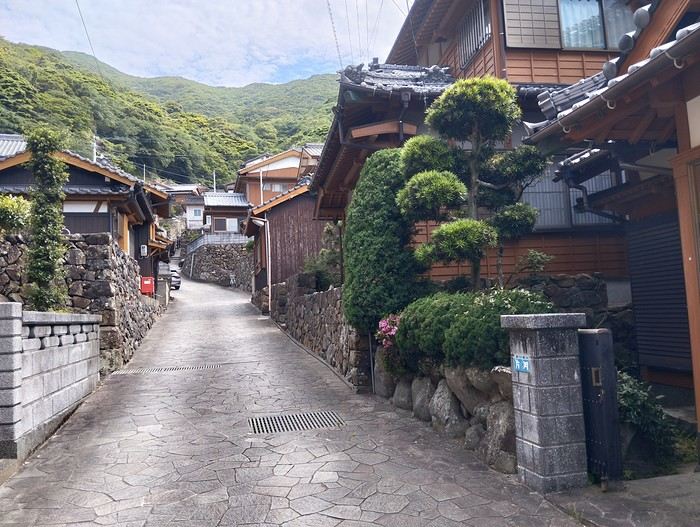
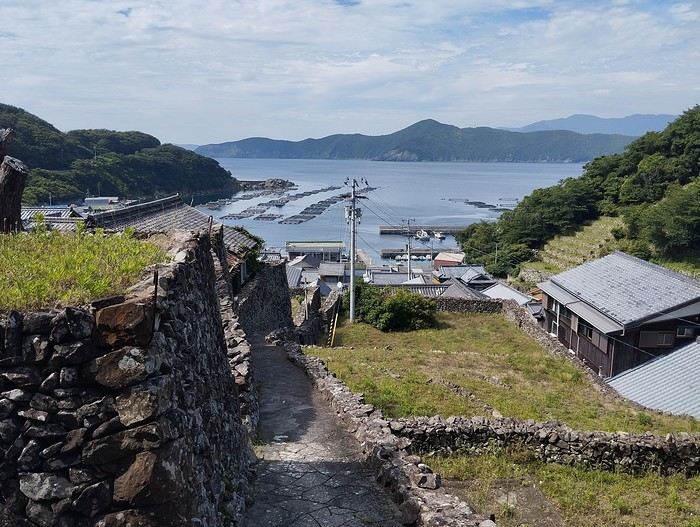
The village is perched on a steep slope overlooking the Uchiumi Sea. The houses, stretching up the mountainside, are adorned with carefully stacked stone walls that rise up to the eaves to protect the homes and their inhabitants from typhoons and seasonal winds.
This village, with its unique row of houses, was selected as one of the “Most Beautiful Villages in Japan” by the Ministry of Agriculture, Forestry and Fisheries and is also listed among the “100 Most Beautiful Historical and Cultural Fishing Villages to Preserve for the Future.” In 2007, it was also chosen as one of the “100 Most Beautiful Historical Landscapes of Japan” by the Foundation for the Preservation of Ancient Capitals, making it a major picturesque site of stone-wall culture, a symbol of Japan.
We didn’t know any of this when we visited. We stumbled upon it by chance while searching on a GPS map, so it was an unexpected discovery.
The place is small and remote, so tourism isn’t very developed here.
We’re greeted by a curious cat. Then we run into a group of four Japanese visitors. They’re here to participate in a marathon nearby the next day and are taking the opportunity to explore.
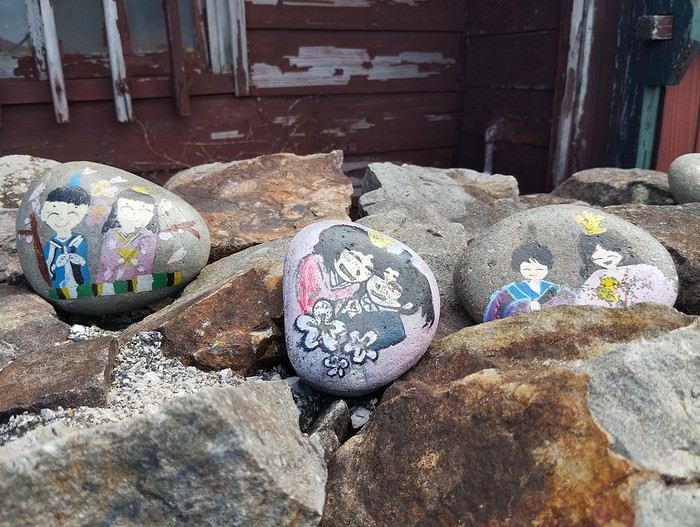
Though small, the village is charming to discover as you wander its steep alleys. Some houses are well-maintained, while others are less so. The village still seems partially inhabited, though we didn’t see any locals. Painted pebbles scattered throughout the village add a playful artistic touch. Probably on weekends, the gallery is open, but not today.
The higher you climb, the more the slope offers a stunning, unobstructed view of the village and the sea surrounded by mountains. You can even spot pearl farms, as the region is famous for them. The sun lights up the landscape, making it incredibly peaceful.
We pass by the renovated oven where women used to cook while waiting for the men of the village, who mainly lived off fishing at the time.
On the way down, we walk past the well-kept cemetery. A Japanese woman is there, paying her respects at her father’s grave.
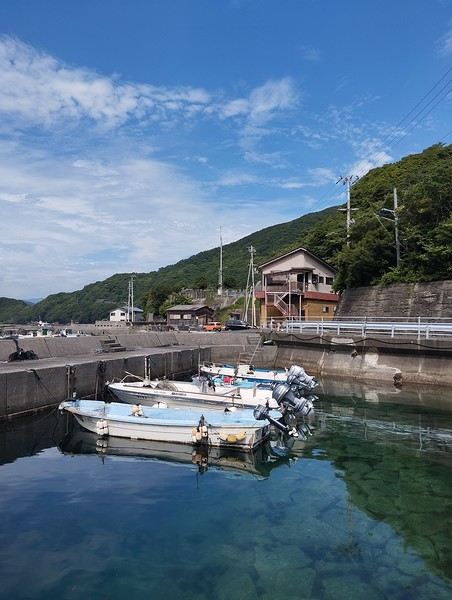
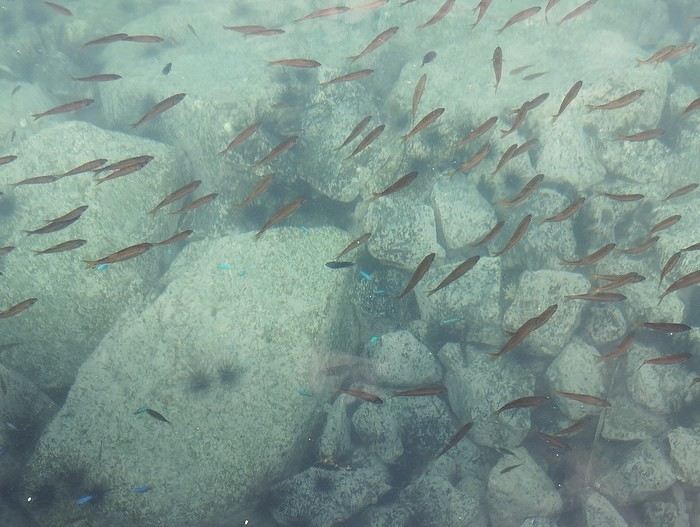
At the port, all is calm, but the crystal-clear water reveals plenty of fish, some with bright electric-blue hues.
This village is so peaceful and gave us yet another glimpse of Japan and Shikoku.
 The next part of our adventure takes us down a very narrow, winding road through a tunnel of trees, where we spot and hear monkeys jumping from branch to branch. We also see what looks like a nutria. The seaside road is wild, and nature thrives here—flora and fauna in full freedom. Branches and rocks litter the road. We drive carefully.
At the top, we park at the scenic Cap Koumo parking lot. Only one other car is there.
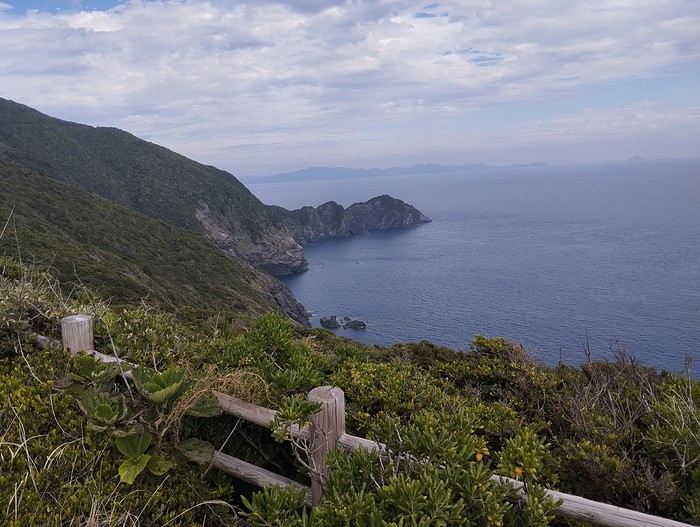
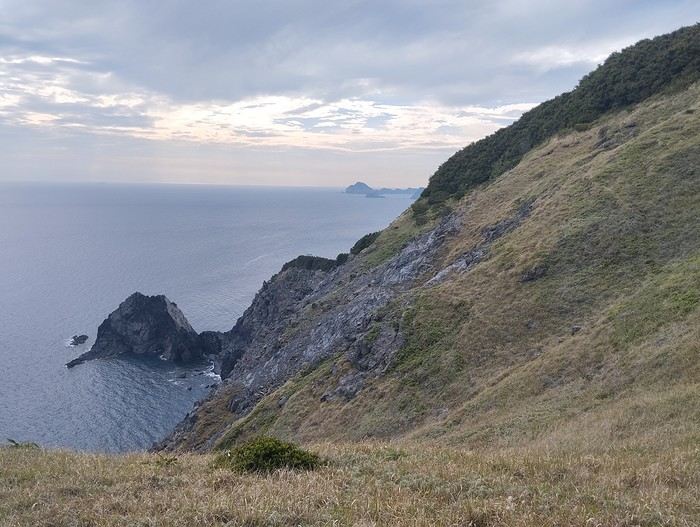
As soon as we step out, we breathe in the fresh air and feel a sense of freedom. Cap Koumo is located in the heart of Ashizuri-Uwakai National Park. We take the walking path, which gradually descends to offer a breathtaking view of the 80- to 100-meter-high cliffs, shaped by the ocean and wind. Nature is grand here. We cross paths with a Japanese grandmother and her grandson, who are leaving. We have the place to ourselves. And apparently, so do the snakes. On the way back up, my partner freezes when he spots a very long, thick snake that also freezes before slithering away. We also enjoy the sight of eagles soaring over the cape. A refreshing nature break.
As for us, we finish loading the car before hitting the road under a magnificent, blazing sun. The plan for the day is mainly to reach the city of Uwajima. We have about 2 to 3 hours of driving ahead. To break up the trip, I looked for a place to stop for lunch roughly halfway. The road is pleasant, winding through the countryside. It’s always a joy to drive through the villages. Thanks to Google Maps, we can spot addresses, but most importantly, the comments and photos from other travelers give us extra tips—without which, in some cases, we might never have found the places, especially in a country where we can’t read the language and the alphabet is completely unfamiliar. For instance, today at this restaurant, a small sign in one of the photos helped me spot the place without any trouble.
We park nearby, following other cars’ lead. The restaurant is on a lane bordered by houses, with mountains across the way and rice fields at their base. We decided to eat early today because the Google reviews advised it, mentioning that you often have to queue.
We arrive shortly after the restaurant opens, around 11:15 AM. The sign for the restaurant is at the foot of a staircase. At the bottom, we discover a lush, exotic garden. The higher we climb the steps, the more we uncover an intimate space—a small terrace to wait for a table and a cozy seating area surrounded by plants. Someone is already waiting. A woman comes out of the restaurant and gestures for us to write down our names and wait. How long? No idea, but we comply. We take the opportunity to get a closer look at the outdoor area, which isn’t visible from the road at all. Two young men arrive and add their names to the waiting list. Then a woman shows up, soon joined by a friend, who doesn’t hesitate to call out to us from her bench. She speaks to us in English, asking where we’re from and how we found this place. She quickly wishes us a great trip. Finally, it’s our turn. We’re invited inside. The restaurant isn’t big, as is often the case. There are two tables for two, four seats at the bar, and six by the window with a view of the exotic garden, the rice fields, and the mountains in the distance. And guess what? We’re lucky enough to be seated at the bar by the garden! So cool. The setting is amazing!
There’s no internet here, and the waitress doesn’t speak English, so we’re left with a menu in kanji. Okay, we’ll improvise. Our table neighbors—the woman who spoke to us and her friend—are here too.
We ask the waitress a few questions, but it’s clear it’ll be tough to get explanations about the menu. So, to keep it simple, I use a screenshot of a ramen dish from the restaurant that I saved when I first spotted it on Google Maps to place our order. As for my partner, he chose at random.
Even though they arrived after us, the two women ordered before us, and their dishes look deliciously gourmet. The online reviews suggested this was a top spot, and the first impressions are very positive. The only downside? There are no drinks except water. So much for the ice-cold beer we were dreaming of to go with our ramen. While we wait, we enjoy the lush green landscape stretching out before us. And then our dishes arrive. They look appetizing, and we can already tell we’re in for a treat. The aroma is making our mouths water. Then comes the moment of truth. And wow—what a culinary punch! This is gourmet ramen. The broths are perfectly crafted—flavorful, delicate, and far from your typical ramen. These dishes have bold, distinct identities. One of our neighbors ordered a miso and tomato ramen, which also looks amazing. During the meal, the woman chats with us some more. We talk a bit more. She’s Japanese but lives in Miami, Florida. She’s back in Japan to take advantage of the more favorable Japanese healthcare system compared to the American one. We also discuss our trip and our plans for visiting the area. Then everyone finishes their meal in peace.
I can tell you this ramen restaurant is more than excellent, and even though it’s in the middle of nowhere, if the opportunity arises, I’d happily drive three hours just for the chance to taste their other ramen dishes. In the kitchen, there’s a grandmother whose smile brings you joy, and a young man—maybe it’s a family-run place.
We drive on to the small village of Sotodomari Ishigaki no Sato (the stone-wall village) in the town of Ainan, Ehime Prefecture. The village is located on the Sakai Peninsula. It was built between the late Edo period and the early Meiji era. At the time, the population of the neighboring village of Nakadomari grew rapidly. Lacking space to accommodate everyone, the village chief proposed that the second (or youngest) son of each family move there. That’s how the village was created.
The village is perched on a steep slope overlooking the Uchiumi Sea. The houses, stretching up the mountainside, are adorned with carefully stacked stone walls that rise up to the eaves to protect the homes and their inhabitants from typhoons and seasonal winds.
This village, with its unique row of houses, was selected as one of the “Most Beautiful Villages in Japan” by the Ministry of Agriculture, Forestry and Fisheries and is also listed among the “100 Most Beautiful Historical and Cultural Fishing Villages to Preserve for the Future.” In 2007, it was also chosen as one of the “100 Most Beautiful Historical Landscapes of Japan” by the Foundation for the Preservation of Ancient Capitals, making it a major picturesque site of stone-wall culture, a symbol of Japan.
We didn’t know any of this when we visited. We stumbled upon it by chance while searching on a GPS map, so it was an unexpected discovery.
The place is small and remote, so tourism isn’t very developed here.
We’re greeted by a curious cat. Then we run into a group of four Japanese visitors. They’re here to participate in a marathon nearby the next day and are taking the opportunity to explore.
Though small, the village is charming to discover as you wander its steep alleys. Some houses are well-maintained, while others are less so. The village still seems partially inhabited, though we didn’t see any locals. Painted pebbles scattered throughout the village add a playful artistic touch. Probably on weekends, the gallery is open, but not today.
The higher you climb, the more the slope offers a stunning, unobstructed view of the village and the sea surrounded by mountains. You can even spot pearl farms, as the region is famous for them. The sun lights up the landscape, making it incredibly peaceful.
We pass by the renovated oven where women used to cook while waiting for the men of the village, who mainly lived off fishing at the time.
On the way down, we walk past the well-kept cemetery. A Japanese woman is there, paying her respects at her father’s grave.
At the port, all is calm, but the crystal-clear water reveals plenty of fish, some with bright electric-blue hues.
This village is so peaceful and gave us yet another glimpse of Japan and Shikoku.
At the top, we park at the scenic Cap Koumo parking lot. Only one other car is there.
As soon as we step out, we breathe in the fresh air and feel a sense of freedom. Cap Koumo is located in the heart of Ashizuri-Uwakai National Park. We take the walking path, which gradually descends to offer a breathtaking view of the 80- to 100-meter-high cliffs, shaped by the ocean and wind. Nature is grand here. We cross paths with a Japanese grandmother and her grandson, who are leaving. We have the place to ourselves. And apparently, so do the snakes. On the way back up, my partner freezes when he spots a very long, thick snake that also freezes before slithering away. We also enjoy the sight of eagles soaring over the cape. A refreshing nature break.