

Re: Autumn journey from Puglia to Naples via Basilicata...
As soon as our luggage arrived and we picked it up in the common room of the small hotel, we took a quick tour of the place: it has 8 rooms, each different in size, location, and layout because they followed the church’s architecture without altering it. Some have 2 floors with the bathroom accessible by a ladder, while others, like ours, have an opening that leads directly to the path...
The staff member managing the hotel offers us a large, detailed map and points out (even highlighting them!) all the places we should see: viewpoints with scenic overlooks, rock-hewn churches outside the walls, the Duomo, and that’s just the beginning. We decide to head there as soon as possible...
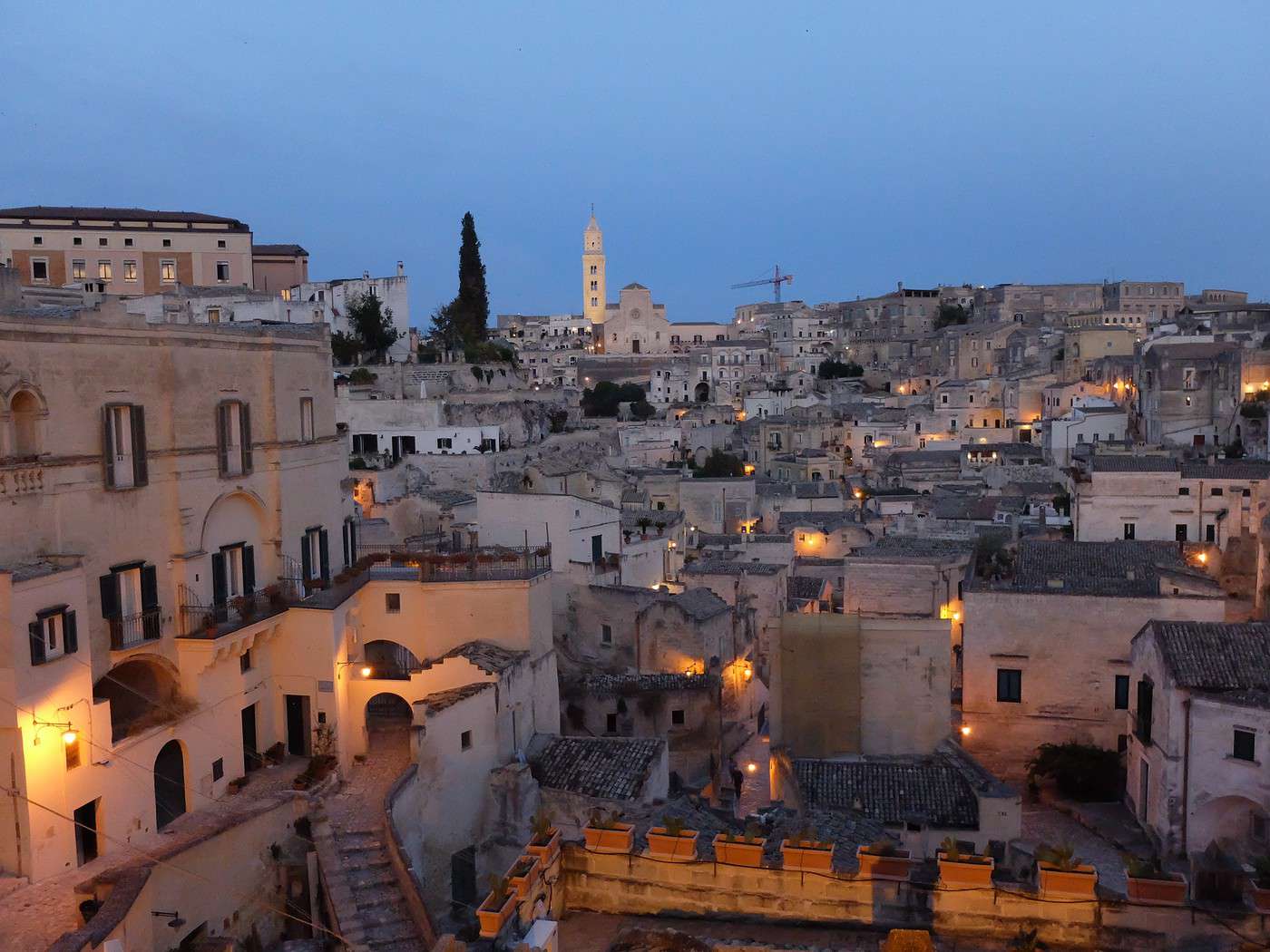
We return to Piazza Veneto by a different route than the one we took to get there—completely unintentionally! Our first general view of the sassi; in the center of the square, the Palumbaro Lugo, a colossal cistern dug starting in the 16th century to meet the city’s water needs.
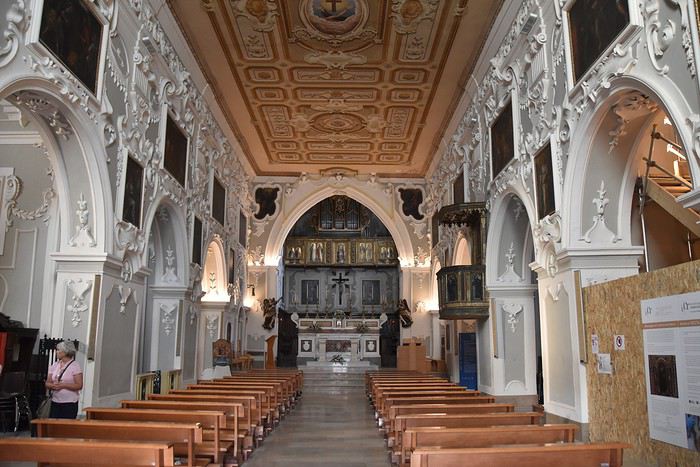
We take the main street: Via Domenico Ridola. At first, there are upscale shops, a few discreet bars and restaurants, and soon, churches start lining the street: First, Saint Francis of Assisi Church, with its 18th-century façade.
Its interior is in late Baroque style.
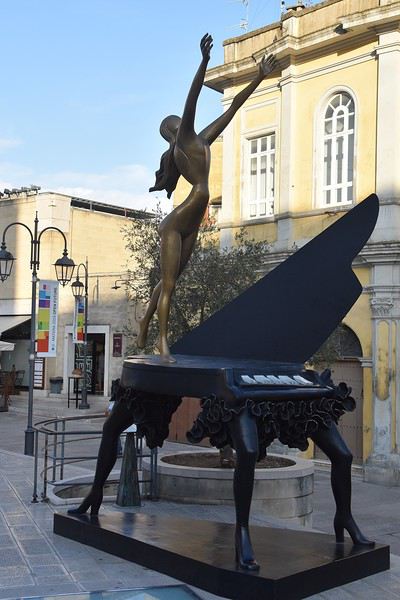
On Piazza San Francesco, a sculpture by Dalí, whose works are temporarily exhibited in town as part of a temporary exhibition in one of the palaces:
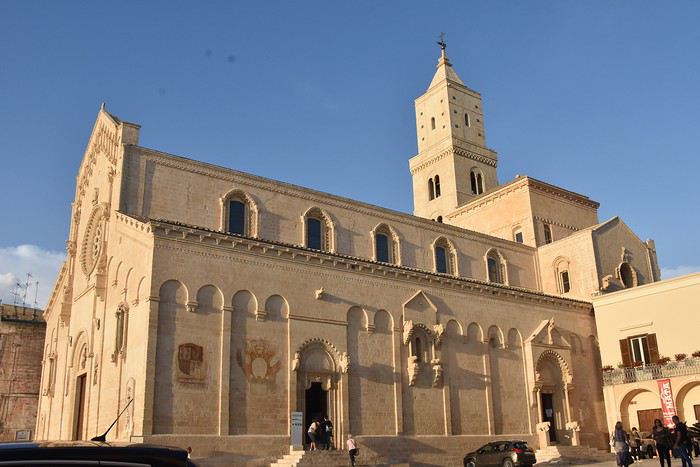
We continue toward the Duomo, our last goal for the evening. Lit by the setting sun, it basks in golden light. It occupies the highest point in the city, dates back to the 13th century, and features a very pure Romanesque style.
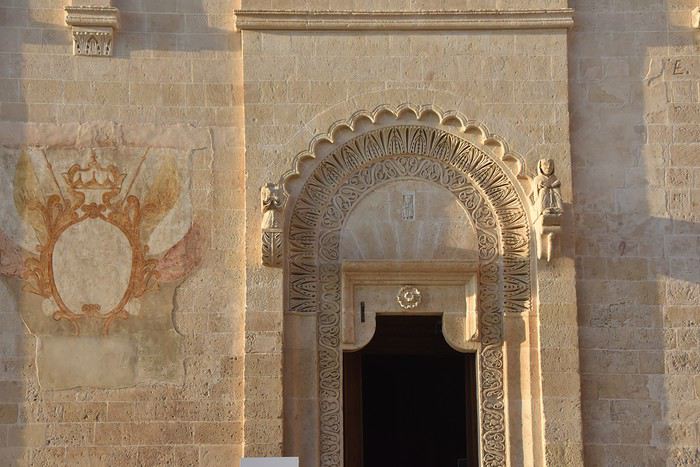
Details of the side:
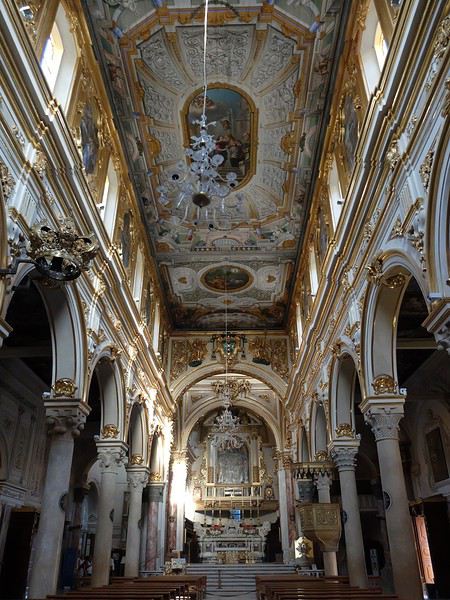
And the interior, which dates back 4 to 5 centuries after its construction: only the columns and a fresco are from that era. The rest is Baroque...
As we leave, we’re in the front row to enjoy the changing light over the city: from twilight...
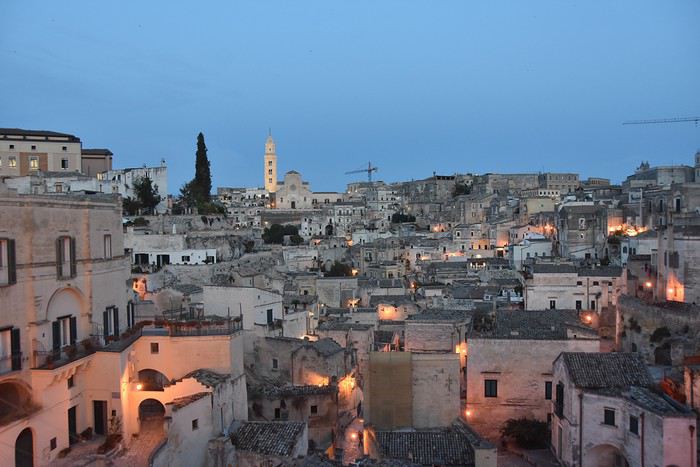
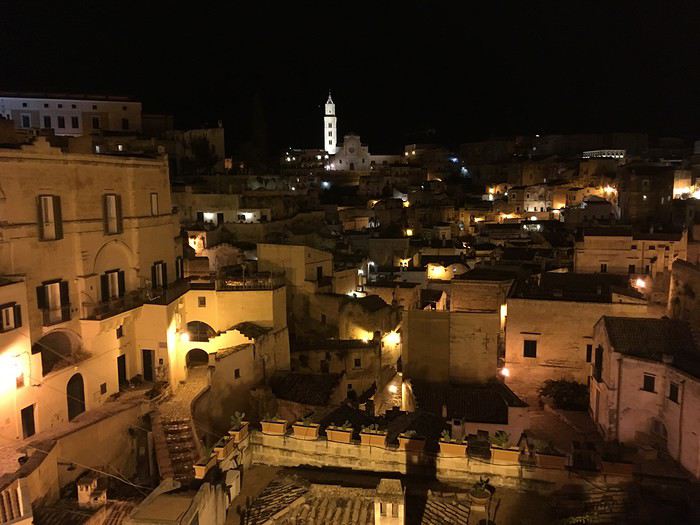 To nightfall!
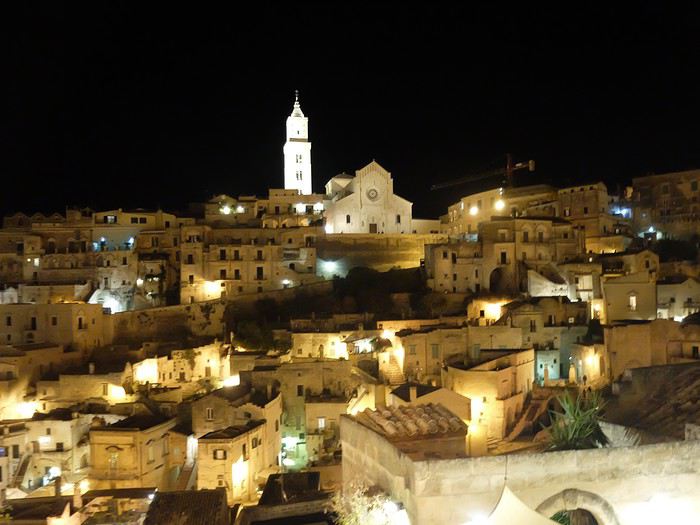
We head back down to the hotel (big mistake: a round trip for nothing!!!) to freshen up a bit, and then we’re off to the heart of the Sassi for what promises to be a great dinner!
The staff member managing the hotel offers us a large, detailed map and points out (even highlighting them!) all the places we should see: viewpoints with scenic overlooks, rock-hewn churches outside the walls, the Duomo, and that’s just the beginning. We decide to head there as soon as possible...
We return to Piazza Veneto by a different route than the one we took to get there—completely unintentionally! Our first general view of the sassi; in the center of the square, the Palumbaro Lugo, a colossal cistern dug starting in the 16th century to meet the city’s water needs.
We take the main street: Via Domenico Ridola. At first, there are upscale shops, a few discreet bars and restaurants, and soon, churches start lining the street: First, Saint Francis of Assisi Church, with its 18th-century façade.
Its interior is in late Baroque style.
On Piazza San Francesco, a sculpture by Dalí, whose works are temporarily exhibited in town as part of a temporary exhibition in one of the palaces:
We continue toward the Duomo, our last goal for the evening. Lit by the setting sun, it basks in golden light. It occupies the highest point in the city, dates back to the 13th century, and features a very pure Romanesque style.
Details of the side:
And the interior, which dates back 4 to 5 centuries after its construction: only the columns and a fresco are from that era. The rest is Baroque...
As we leave, we’re in the front row to enjoy the changing light over the city: from twilight...
We head back down to the hotel (big mistake: a round trip for nothing!!!) to freshen up a bit, and then we’re off to the heart of the Sassi for what promises to be a great dinner!