

Re: Tuscany: Arezzo province and the area around Siena
I started my sightseeing day in Bibbiena by visiting the archaeological museum. It's a local museum showcasing artifacts found in the Casentino (the upper Arno Valley), and I mainly focused on the Etruscan period.
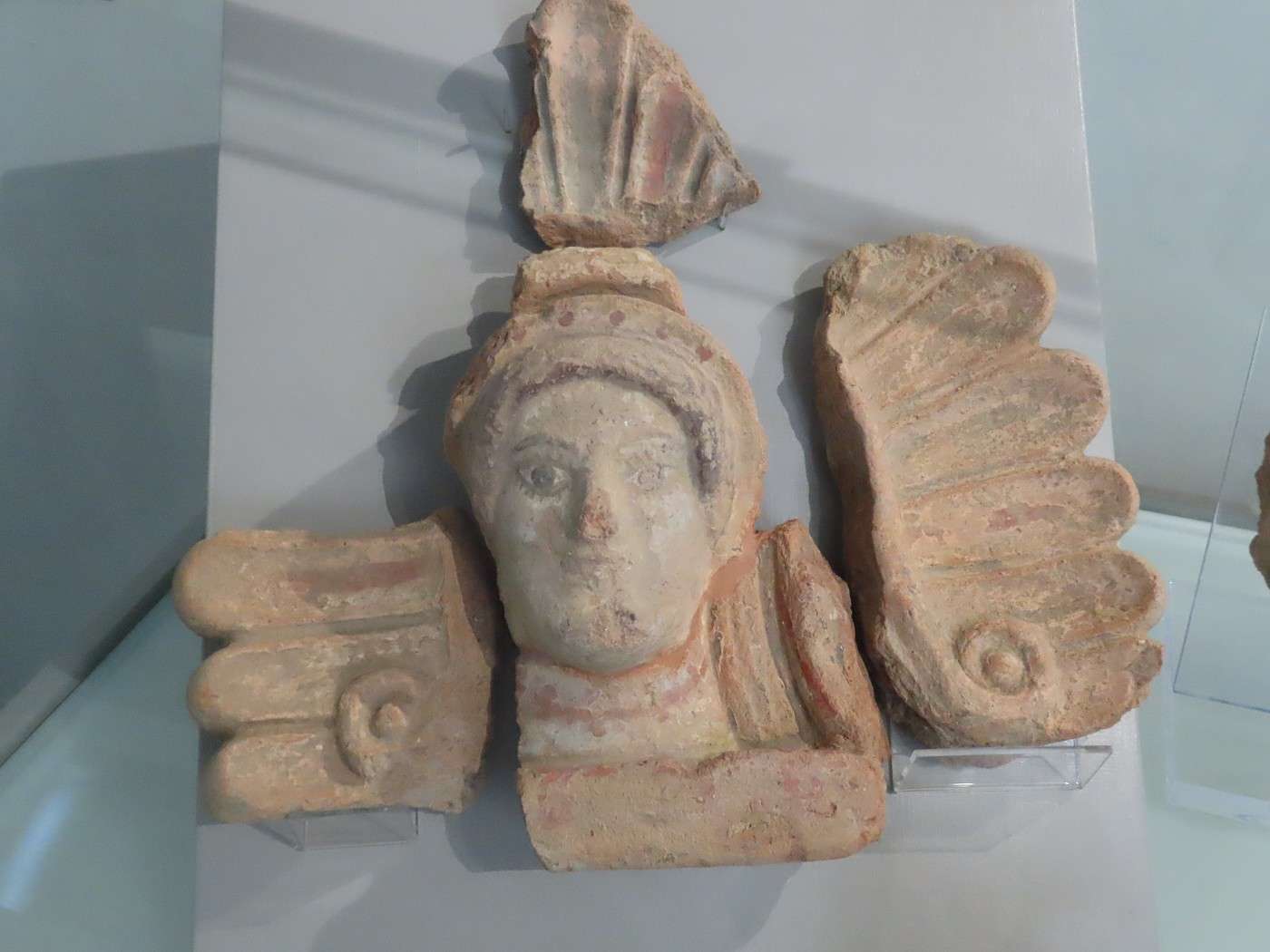
Some terracotta antefixes from a temple are on display, including one with a woman's head.
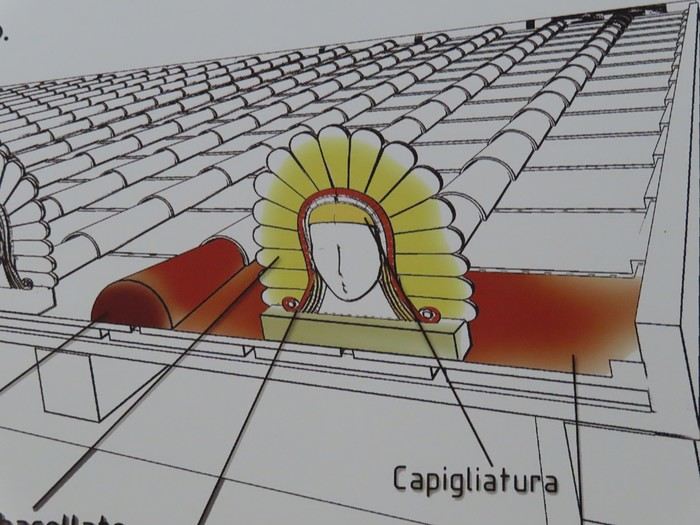
This is a decorative roof element (made of clay), and its position is better illustrated by a diagram than by words. The edges of the roof were decorated this way.
The other Etruscan pieces I noticed were bronze objects from the Lake of the Idols (Lago degli Idoli). This lake is located high up near the source of the Arno, and since its discovery in 1838, over 2,000 small votive bronze objects (mainly statuettes) have been recovered. It's believed the lake served as a sanctuary, but an open-air one with no trace of construction (the site has been excavated several times). No decent photos possible due to reflections in the display cases.
I continued and finished the walk through the streets I started yesterday morning. The Palazzo Vecchietti-Poltri is built on the ruins of a castle, of which only a tower remains.
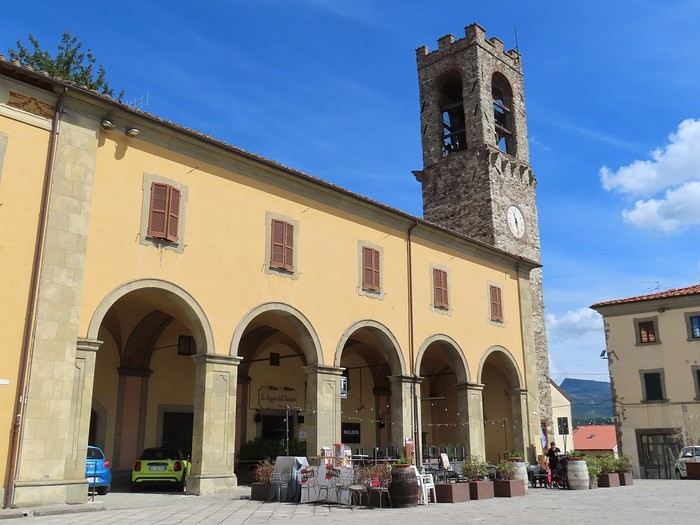
A few steps away, a panoramic terrace overlooks the Casentino. You can see the Castle of Poppi (visited 4 days ago) and, in the distance, the Pratomagno mountain range.
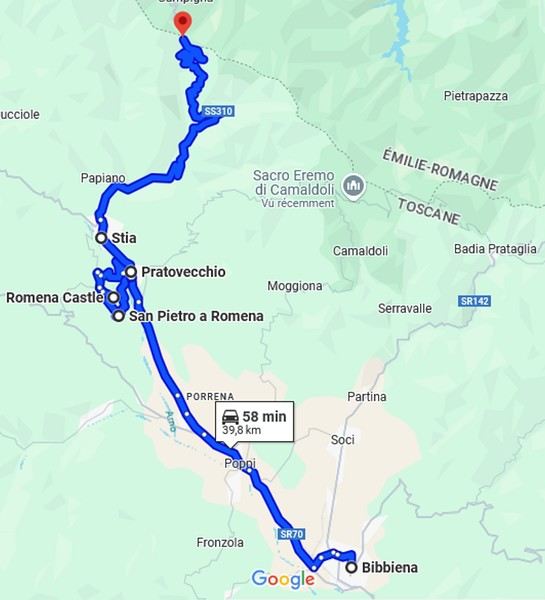
Map for days 11 and 12.
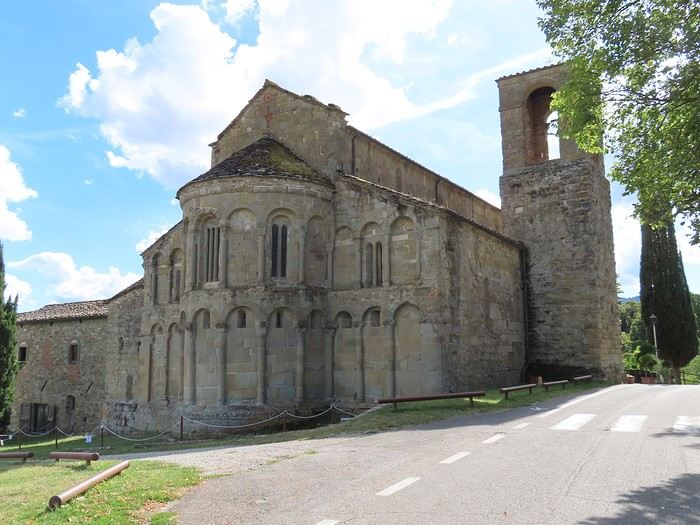
In the afternoon, I followed the Arno Valley up to Pratovecchio. Just after the bridge over the Arno, a small road on the left leads up to the "Pieve di Romena" (Parish Church of Saint Peter), built in the 12th century in pure Romanesque style. It's set in the countryside in a lovely setting. Three naves, sculpted pillars, and an impressive apse (best visited in the morning for the lighting).
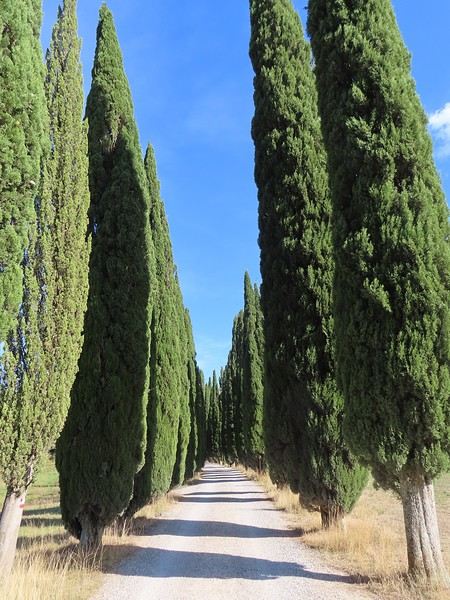
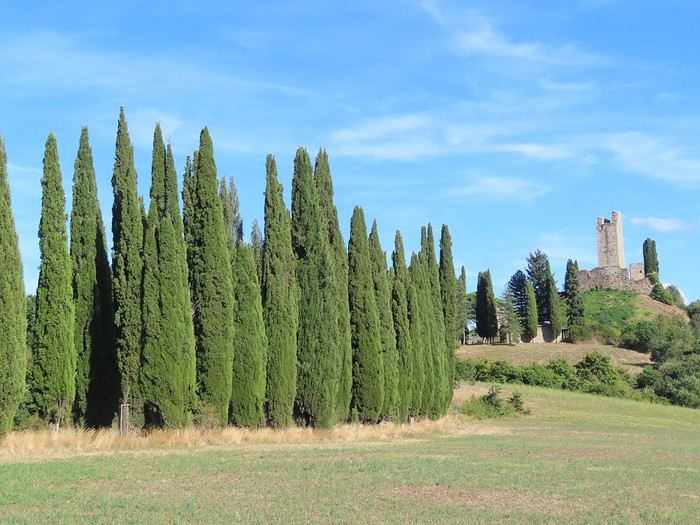
Continuing up another small road, I reached the Castle of Romena. Accessed via a cypress-lined avenue that evokes Tuscany—since I started my trip in the mountains of the Apennines, this was the first time I’d seen it on this journey—I couldn’t resist photographing it.
And I lingered a while around the castle grounds.
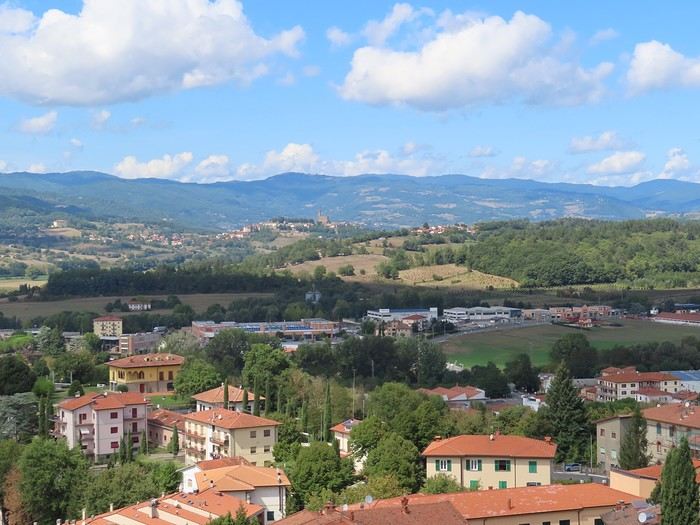
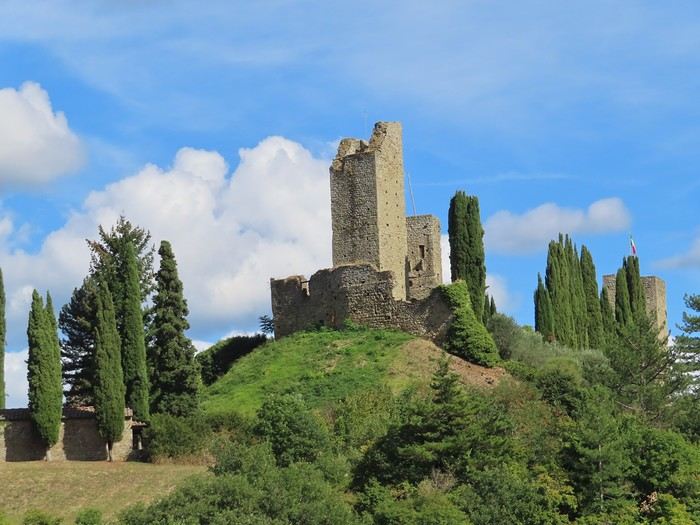
It sits atop an elongated hill, the summit of which was flattened to create a parade ground. At either end of the parade ground are the preserved ruins—towers that served various functions. It’s all in ruins (not much to visit), but the location is stunning, offering views of the entire valley and the mountains. You can see why the castle had strategic importance in the Middle Ages for controlling the valley. Like the Castle of Poppi, it belonged to the Counts Guidi family. In the center of the photo, you can see a block of buildings, and to the far right, behind a row of cypress trees, a prison tower separated from the previous block by the parade ground.
Back to Soci.
This is a decorative roof element (made of clay), and its position is better illustrated by a diagram than by words. The edges of the roof were decorated this way.
The other Etruscan pieces I noticed were bronze objects from the Lake of the Idols (Lago degli Idoli). This lake is located high up near the source of the Arno, and since its discovery in 1838, over 2,000 small votive bronze objects (mainly statuettes) have been recovered. It's believed the lake served as a sanctuary, but an open-air one with no trace of construction (the site has been excavated several times). No decent photos possible due to reflections in the display cases.
I continued and finished the walk through the streets I started yesterday morning. The Palazzo Vecchietti-Poltri is built on the ruins of a castle, of which only a tower remains.
A few steps away, a panoramic terrace overlooks the Casentino. You can see the Castle of Poppi (visited 4 days ago) and, in the distance, the Pratomagno mountain range.
Map for days 11 and 12.
In the afternoon, I followed the Arno Valley up to Pratovecchio. Just after the bridge over the Arno, a small road on the left leads up to the "Pieve di Romena" (Parish Church of Saint Peter), built in the 12th century in pure Romanesque style. It's set in the countryside in a lovely setting. Three naves, sculpted pillars, and an impressive apse (best visited in the morning for the lighting).
Continuing up another small road, I reached the Castle of Romena. Accessed via a cypress-lined avenue that evokes Tuscany—since I started my trip in the mountains of the Apennines, this was the first time I’d seen it on this journey—I couldn’t resist photographing it.
And I lingered a while around the castle grounds.
It sits atop an elongated hill, the summit of which was flattened to create a parade ground. At either end of the parade ground are the preserved ruins—towers that served various functions. It’s all in ruins (not much to visit), but the location is stunning, offering views of the entire valley and the mountains. You can see why the castle had strategic importance in the Middle Ages for controlling the valley. Like the Castle of Poppi, it belonged to the Counts Guidi family. In the center of the photo, you can see a block of buildings, and to the far right, behind a row of cypress trees, a prison tower separated from the previous block by the parade ground.
Back to Soci.